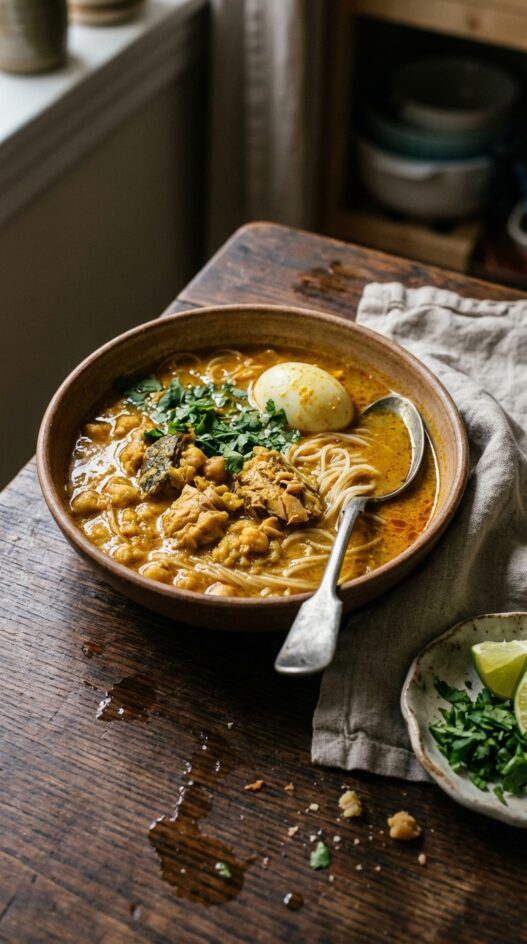
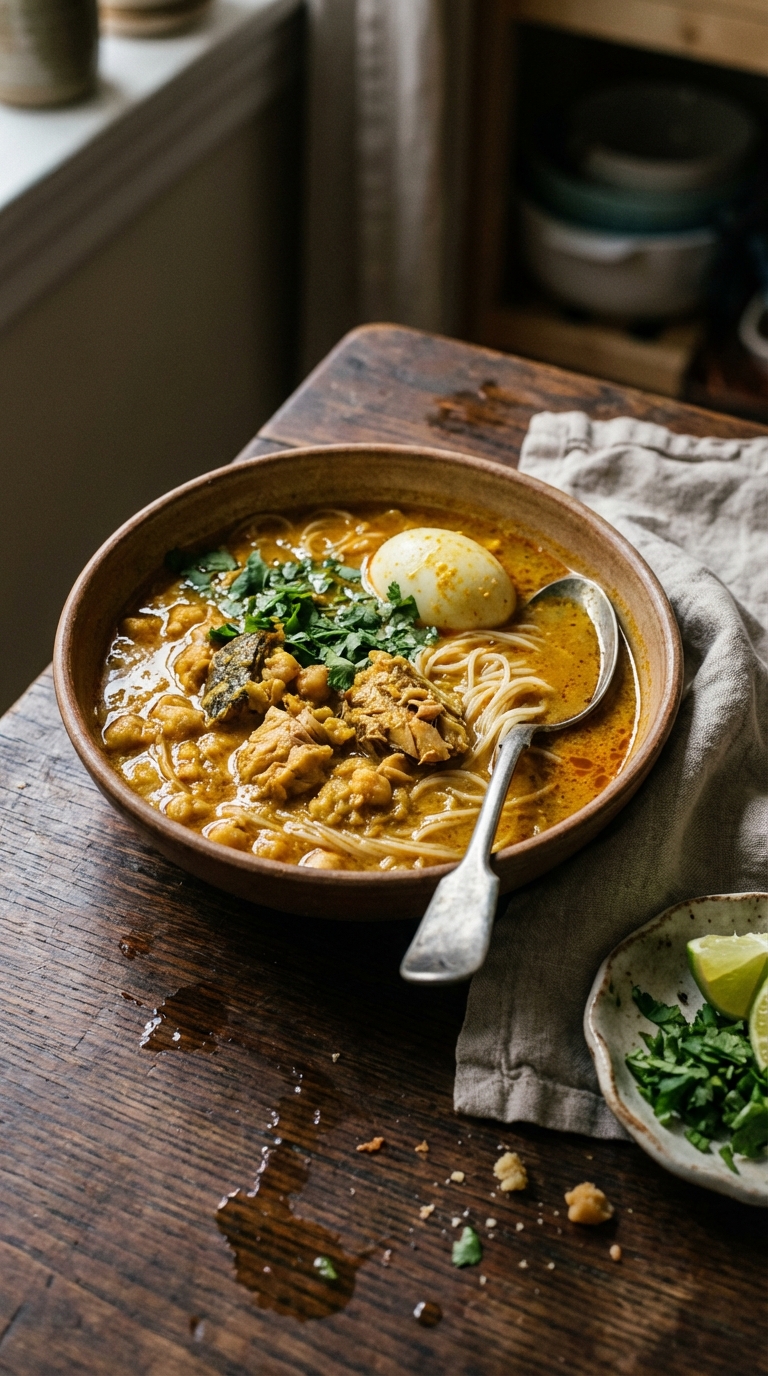
Mohinga is a cherished Burmese noodle soup, traditionally savored at breakfast, but just as delicious for lunch or dinner. Its flavorful fish broth, infused with spices, paired with rice vermicelli and topped with boiled egg, is an awesome introduction to Myanmar’s culinary heritage.
In the vast realm of Southeast Asian cuisine, Mohinga holds a special place for the Burmese. Think of it as Myanmar’s answer to the morning ritual, akin to how others crave a coffee or a croissant. This noodle soup, often considered Myanmar’s unofficial national dish, is more than just a meal; it’s a cultural symbol.
Now, don’t be fooled by it’s place as a morning dish in Burma – it is the perfect comfort food for any time of day. Lunch? Yup. Dinner? Hell yeah!
The foundation of Mohinga is its awesome fish broth. Slow-cooked with ingredients like lemongrass, garlic, and ginger, the broth develops a depth of flavor that’s robust and soul-warming at the same time. Thin rice noodles, slightly slippery and soft, are then submerged into this broth, absorbing its essence.
But the beauty of Mohinga lies in the many ways it can be served. Across Myanmar, from the bustling streets of Yangon to the quiet corners of Bagan, you’ll find countless variations. Some feature slices of tender fish, while others might add boiled eggs or crispy fritters, providing crunch and substance. Fresh cilantro, chopped onions, or lime wedges are almost always the finishing touch, offering bursts of freshness.
No matter where you encounter Mohinga, its essence remains the same – a comforting bowl of delicious soup.
How to make Mohinga at home:
Ingredients Preparation:
Prepare all your ingredients: Measure out the spices, clean the fish fillets, halve the hard-boiled eggs, and have your rice vermicelli noodles ready. It’s always helpful to set everything out before diving into the cooking process.
Broth Preparation:
Starting the broth: In a large pot, place the fish head along with the bruised lemongrass, bashed garlic cloves, quartered red onion, and ground turmeric.
Simmering: Pour in cold water, ensuring the fish head is fully submerged. Bring the contents to a boil. As the broth boils, skim off any impurities that rise to the surface. Reduce the heat to a low setting and let it simmer gently for 20 minutes.
Straining and Cooking Fillets: After the initial simmer, strain the broth to remove solids and return the clear broth to the pot. On a gentle heat, immerse the catfish fillets into the broth. Allow them to cook for about 15-20 minutes or until fully cooked through.
Flaking the Fillets: Once cooked, remove the fillets from the broth. Using forks, gently flake the fillets into sizable chunks. Keep them aside for later. Ensure your broth stays on a low heat during this time.
Spice Paste Preparation:
Creating the Spice Base: In a mortar (or food processor for ease), combine the finely sliced lemongrass, red chilis, rough-chopped red onion, diced garlic, and sliced ginger. Grind these ingredients until you achieve a smooth paste.
Cooking the Paste: Heat the grape seed oil in a separate saucepan. Introduce the freshly made paste into the hot oil and sauté it for about 20 minutes. Don’t be alarmed by the amount of oil; it will integrate well.
Adding in the Remaining Ingredients: Stir in the shrimp paste, ground turmeric, and sweet paprika to the sautéed paste. Follow this with the previously flaked fish, ensuring you mix gently to keep the fish in chunks. Let this mixture cook on a low flame for an added 5 minutes.
Finalizing the Broth:
Merging Broth and Paste: Return to your pot of simmering broth and carefully mix in the sautéed fish mixture.
Introducing Chickpeas and Onions: Add the mashed chickpeas and the chopped half of the red onion into the pot.
Seasoning: Season the broth with fish sauce, adjusting according to your taste preferences.
Simmering: Allow the entire broth to simmer for another 30 minutes.
Serving the Mohinga:
Preparing the Vermicelli: Cook the rice vermicelli noodles as instructed on their packaging. Once done, distribute them among serving bowls.
Assembling the Bowls: Over the noodles, ladle the aromatic fish broth, making sure you include chunks of flaked fish from the pot.
Garnishing: Top each bowl with a half of a hard-boiled egg, a generous sprinkle of chopped cilantro, and a spritz of lime juice for that fresh zing.
Print
Mohinga – Recipe for Burmese Fish Noodle Soup
- Total Time: 105 minutes
- Yield: Serves 4
- Diet: Pescatarian, Omnivore
Description
Spicy, umami broth with slippery noodles, a perfect egg, and a lime wedge. Comfort food at its finest!
Ingredients
- Rice vermicelli noodles
- Hard-boiled eggs (halved)
- Chopped cilantro (to garnish)
- Lime wedges (to serve)
- 1 Head of fish (if you had to choose, catfish is fine)
- 1 Lemongrass stem (bruised)
- 2 Garlic cloves (bashed)
- 1 tsp ground turmeric
- 3 tbsp (45 ml) cooked chickpeas (mashed (i used jarred jovial))
- 1 Red onion (quartered)
- 1/2 Red onion (chopped)
- Fish sauce (to taste)
- 1 1/2 lbs (680 g) Catfish fillet (cleaned and de-boned)
- 3 lemongrass stems (finely sliced, white part only)
- 2-4 red chilis (to taste)
- 1/2 Red onion (rough chopped)
- 4 Garlic cloves (diced)
- 1 inch piece of fresh ginger (peeled and sliced)
- 1/2 cups (118 ml) grape seed oil
- 2 tsp shrimp paste
- 1 tsp sweet paprika
Instructions
For the broth
- Place the fish head in a large pot with the lemongrass, garlic, red onion quarters, and turmeric.
- Pour in enough cold water to cover the head and bring to a boil.
- Skim off any muck, then reduce the heat to low and simmer for 20 minutes.
- Strain the broth and return it to the pot. Keep the heat low, and gently lower the fish fillets into the broth and cook for 15-20 minutes.
- Remove the fillets and flake them into chunky pieces using forks. Set aside. Keep the broth pot on low.
- While the broth is simmering, make the paste:
- In a mortar, pound the lemongrass, chilies, chopped onions, garlic, and ginger into a smooth paste. A food processor may also be used.
- In a saucepan, heat up the grape seed oil. Add in the paste and sauté for 20 minutes.
- Stir in the shrimp paste, turmeric, and paprika.
- Add in the flaked fish; mix gently and cook on low for an additional 5 minutes.
- Return the fish mixture to the pot of broth.
- Add the mashed chickpeas and chopped red onions. Season with fish sauce to taste.
- Stir to combine, and let simmer for 30 minutes.
To serve
- Cook vermicelli noodles according to package instructions and divvy them into soup bowls.
- Ladle soup over noodles, ensuring chunks of flaked fish are included.
- Top with a half hard-boiled egg and a generous amount of chopped cilantro.
- Spritz with lime juice.
Notes
- For a richer broth, roast the fish head and aromatics (lemongrass, garlic, onion) before simmering.
- If you don’t have grape seed oil, substitute with vegetable or canola oil.
- Leftovers can be stored in the refrigerator for up to 3 days. Reheat gently to avoid overcooking the fish.
- Prep Time: 30 minutes
- Cook Time: 75 minutes
- Category: Soup
- Method: Simmering
- Cuisine: Burmese
Nutrition
- Serving Size: 1.5 cups
- Calories: 450
- Sugar: 5
- Sodium: 700
- Fat: 25
- Saturated Fat: 5
- Unsaturated Fat: 15
- Carbohydrates: 50
- Fiber: 5
- Protein: 30
- Cholesterol: 150
Frequently Asked Questions
What type of fish is best for the broth in Mohinga?
A firm white fish, such as catfish or tilapia, works well for the broth as it provides a good flavor and texture.
How do I ensure the rice vermicelli noodles are cooked perfectly?
Soak the rice vermicelli noodles in hot water for about 10-15 minutes until they are soft, then drain them before adding to the broth.
Can I add other toppings to my Mohinga?
Yes, you can customize your Mohinga with toppings like boiled eggs, crispy fritters, fresh cilantro, chopped onions, or lime wedges for added flavor and texture.
If You Liked This Recipe, You’ll Love These
- How to Make Cioppino: Italian-American Seafood Stew
- Whole Grilled Branzino with Lemon Olive Oil and Fresh Herbs
- Brodetto di Pesce: Italian Tomato Seafood Stew
- Buckwheat Soba Noodle Salad with Sambal Chili Dressing