



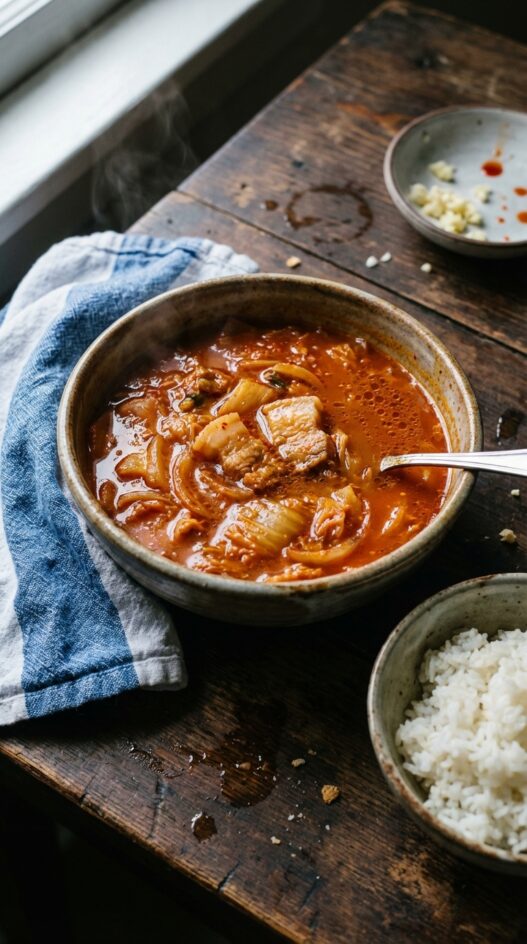
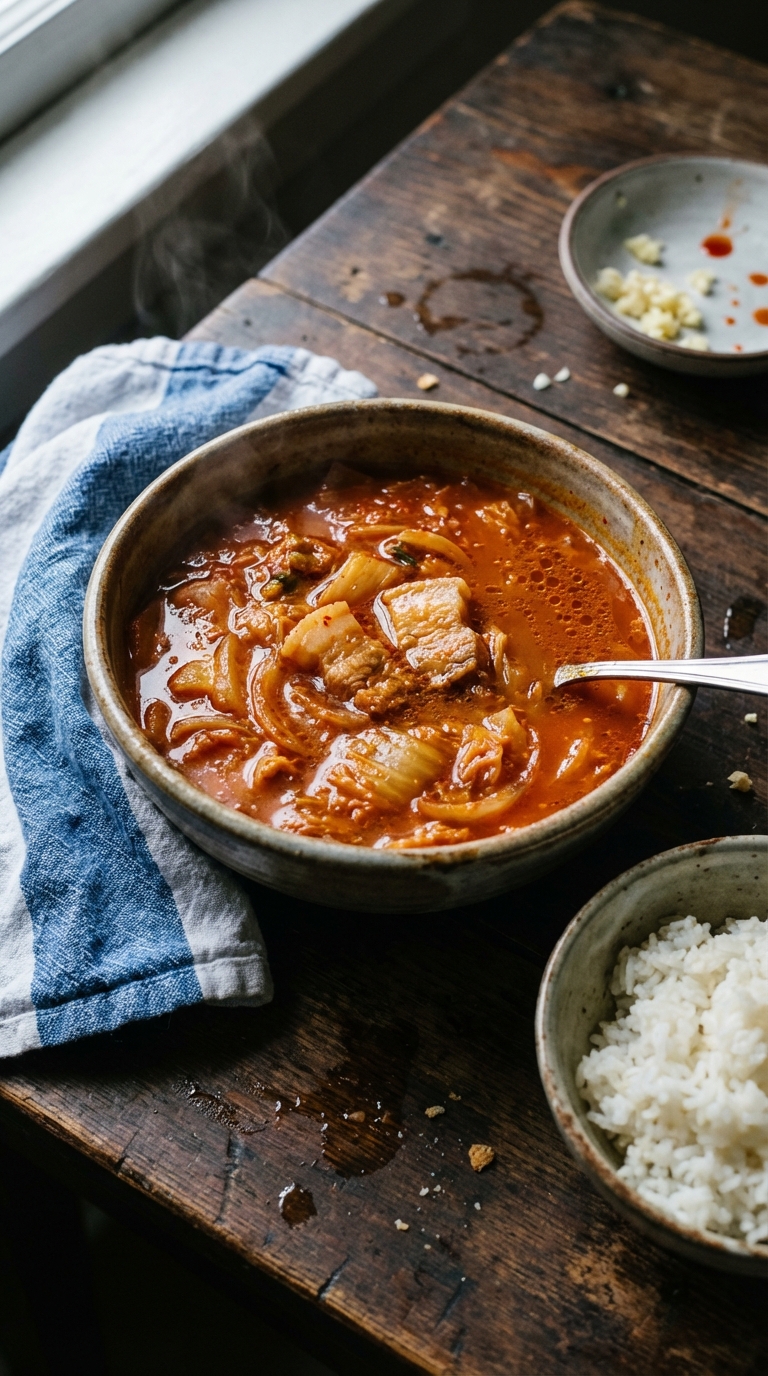
This dish is a way of employing sour, overripe kimchi; kimchi that is too fresh won’t lend the same depth to the broth as kimchi that has been given more time to mature. You could definitely make jjiggae without the pork belly, but with it, the layer of fat tenderizes to silk as the soup bubbles away, melting into and bulking up the broth without making it oily. Print
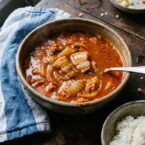
Kimchi Jjiggae
- Total Time: 55 minutes
- Yield: Serves 4
- Diet: Omnivore
Description
A spicy Korean stew, perfect for a chilly evening. Pork belly simmers with kimchi for a rich, comforting flavor.
Ingredients
- 3 cups (710 ml) sour kimchi, chopped to one-inch pieces
- 1.5 liters (64 oz) water
- 0.5 cups (118 ml) onion, sliced
- 0.3 cups (71 ml) kimchi juice (drain or squeeze kimchi from a jar to get the juice)
- 0.5 pounds (227 g) pork belly, chopped to one-inch cubes
- 2 cloves garlic, minced
- 1 teaspoon sesame oil
Instructions
- Fill a pot with water and bring to a boil.
- Add pork belly and boil for ten minutes, skimming the layer of film from the top of the water as it forms.
- Add kimchi, onion, garlic, and kimchi juice.
- Continue boiling for thirty minutes until pork and kimchi are tender and broth becomes rich and creamy.
- Remove from heat and stir in sesame oil.
- Serve hot with steamed white rice.
Notes
- For a deeper flavor, marinate the pork belly in gochujang (Korean chili paste) for 30 minutes before cooking.
- If you prefer a less spicy stew, reduce the amount of kimchi and/or add a tablespoon of sugar.
- Leftovers can be stored in the refrigerator for up to 4 days and will develop even more depth of flavor.
- Prep Time: 15 minutes
- Cook Time: 40 minutes
- Category: Soup
- Method: Braising
- Cuisine: Korean
Nutrition
- Serving Size: 1.5 cups
- Calories: 400
- Sugar: 10
- Sodium: 800
- Fat: 25
- Saturated Fat: 10
- Unsaturated Fat: 10
- Carbohydrates: 40
- Fiber: 5
- Protein: 25
- Cholesterol: 80
Note: To help kimchi ripen further and quickly, let it sit out at room temperature for a day or two. Also, you could add gochugaru (Korean dried red pepper powder), gochujang (Korean red pepper paste), green onions, and garlic to taste if you feel like you need to supplement the flavor of whatever kimchi you can find. Most kimchi jjigae recipes also call for firm tofu, which you could add ten or fifteen minutes before your stew is finished.

Frequently Asked Questions
How fermented should the kimchi be before using it in jjigae?
Older, more sour kimchi gives the stew a deeper, tangier flavor and is generally preferred for jjigae over fresh kimchi. If your kimchi is newly made, it will still work but the broth will be milder.
What cut of pork works best in kimchi jjigae?
Pork belly is the traditional choice because its fat renders into the broth and adds richness. Pork shoulder is a leaner option that still has enough flavor for a satisfying stew.
Can I add tofu to this jjigae?
Firm or medium tofu is a classic addition. Cut it into cubes and add it in the last 10 minutes of simmering so it absorbs the broth without breaking apart.