
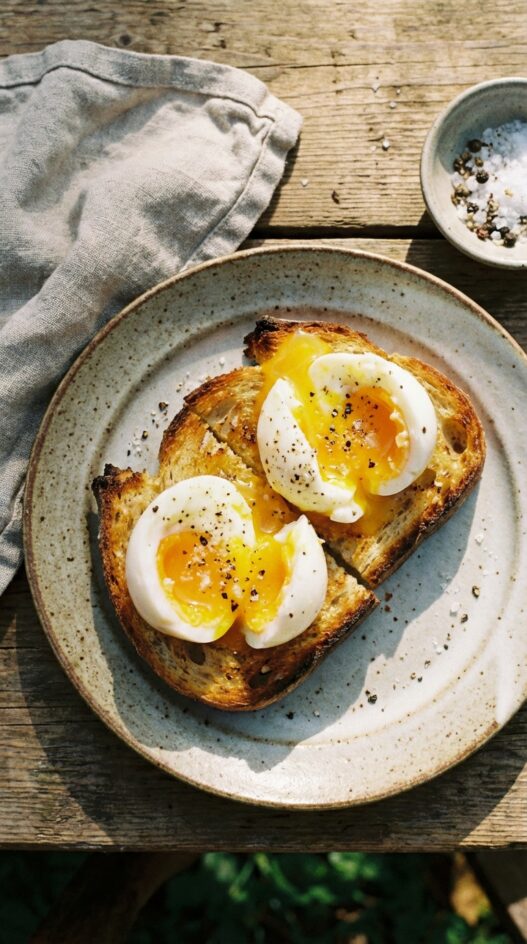
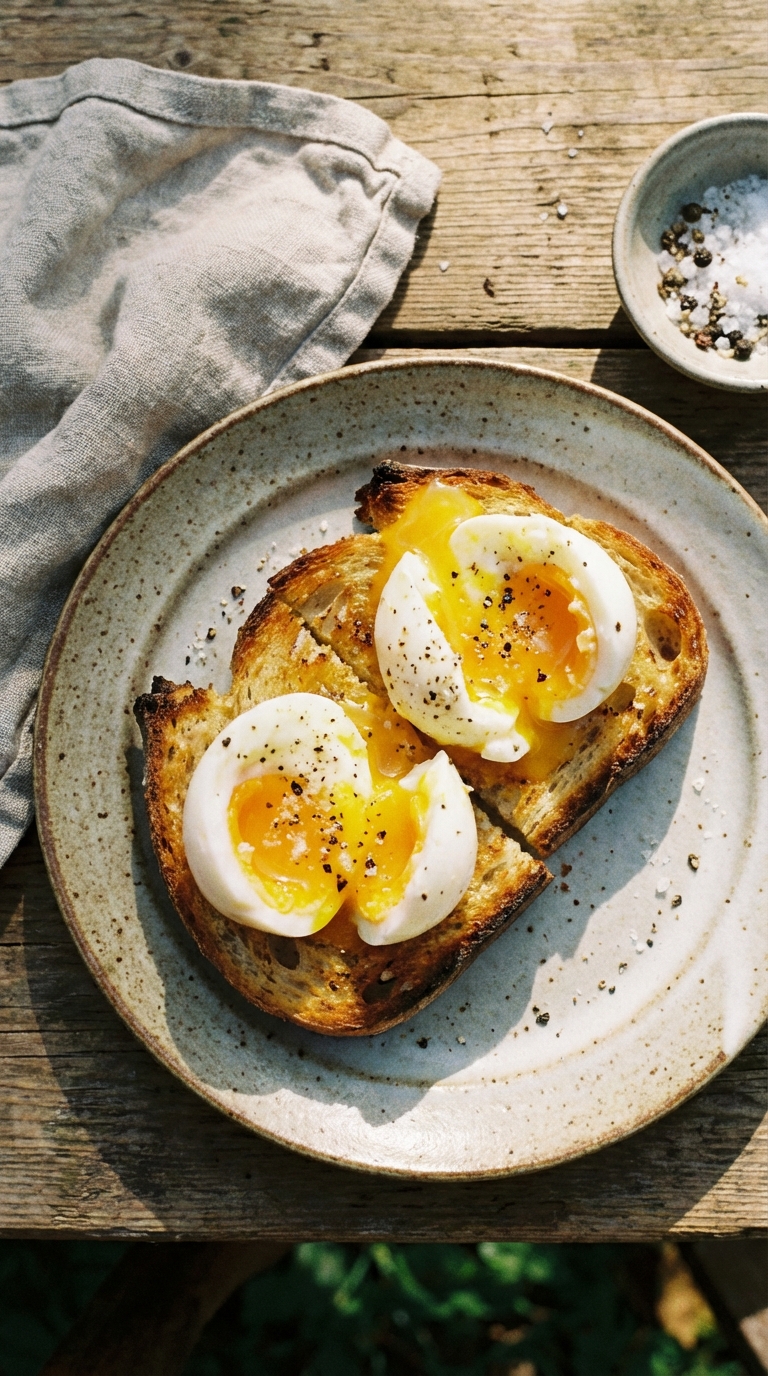
When I lived in Paris, the first meal that I ordered in a restaurant was oeufs à la coque. The description of ingredients sounded like an omelet, but that it was not. Instead, I received a salad and two piping hot, completely uncooked eggs. Uncooked to the point that I wasn’t even sure they were edible. But, out of embarrassment, I ate every last bite. (The added irony? The French word for omelet is omelette. Whoops.)
I never quite got used to eating runny egg whites, but later in my time abroad discovered oeufs mollet—essentially a creamier version of American soft-boiled eggs. The whites are cooked, but still moist, and the yoke is just touched by heat, so that you still have to crack it open to release the golden liquid I like to think of as “egg butter.”
Of course, I experimented with all different ways to achieve the same effect at home, and found that the best results came from water that was heated to a piping hot boil, then removed from the heat. Out of laziness or sheer genius, I decided my electric kettle (a staple in French kitchens) was the perfect place to achieve this effect, as it did an even better job than a stove-top pot of retaining heat after having stopped boiling.
Hence, my invention of “kettle eggs.” To this day, it’s still my favorite breakfast.
Print
Kettle Eggs
- Total Time: 8 minutes
- Yield: Serves 2
- Diet: Omnivore
Description
Perfectly cooked eggs, poached in a kettle for a quick and elegant breakfast. Serve on toast for a simple yet satisfying meal.
Ingredients
- 2 each eggs
- Toasted bread
- Water
Instructions
- Fill a large electric or stove top kettle 3/4 of the way.
- Bring to a full, piping-hot boil.
- Turn off the heat.
- Gently place two eggs into the kettle and close the top.
- Time six minutes, swiftly remove eggs and promptly rinse with cold water until cool enough to handle.
- Crack eggs open (carefully) and scoop the insides out onto the toasted bread of your choice.
- Sprinkle with salt and pepper to taste.
Notes
- For perfectly formed eggs, use very fresh eggs – they hold their shape better.
- Adjust cooking time depending on your desired level of doneness; start by checking at 5 minutes.
- Leftover cooked eggs can be stored in the refrigerator for up to 2 days and used in salads or other dishes.
- Prep Time: 2 minutes
- Cook Time: 6 minutes
- Category: Breakfast
- Method: Poaching
- Cuisine: French-Inspired
Nutrition
- Serving Size: 1 serving
- Calories: 150
- Sodium: 100
- Fat: 10
- Saturated Fat: 5
- Unsaturated Fat: 5
- Carbohydrates: 10
- Fiber: 1
- Protein: 10
- Cholesterol: 200
Frequently Asked Questions
What are kettle eggs, and how are they different from boiled eggs?
Kettle eggs are an improvised method for making oeufs mollets, which are eggs with a set white and a soft, runny yolk. The technique uses a kettle or small pot to achieve gentle, consistent heat.
How long should I cook the eggs for a mollet texture?
About five to six minutes in gently simmering water will give you a fully set white with a yolk that’s still soft and slightly flowing. Timing is important, so use a timer.
Why is this called an ‘expat recipe’?
It’s a resourceful adaptation for making a classic French preparation with limited kitchen equipment. When you don’t have a full stovetop setup, a simple kettle or small pot can do the job.
If You Liked This Recipe, You’ll Love These
- Salade Niçoise: Classic French Tuna Salad
- Herbed Skillet Ratatouille
- Apfel Kuchen: Traditional German Apple Cake
- Fried Rice with Kimchi and Pork Belly
- Easy Béarnaise Sauce: The Foolproof Method



I had a flatmate who did this, then made tea with the boiled water.