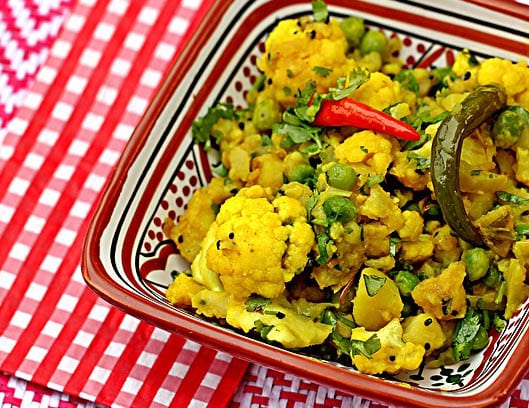

Aloo Gobi: Bengali-Style Curried Potatoes and Cauliflower
- Total Time: 35 mins
- Yield: 2 servings
Description
This Bengali vegetarian stir-fry is a perfect for a light meal for breakfast or dinner.
Ingredients
- 2 tbsp (30 ml) oil (peanut or mustard)
- 1 tsp nigella seeds (kalo jire or kalonji)
- 1 medium sized white onion, cut into a fine dice
- 1 tbsp (15 ml) freshly grated ginger
- 1 Idaho potato, peeled and diced (about 3/4 cup / 180 ml)
- Salt to taste
- 3/4 tsp turmeric
- 1/2 head of cauliflower, cut into small pieces (1 1/2 cups / 360 ml, about 3/4 lb / 340 g)
- 3/4 cup (180 ml) water
- Handful of frozen peas
- Chopped cilantro
Instructions
- Heat the oil on medium heat for about a minute and add in the nigella seeds and wait till the seeds begin to sizzle.
- Add in the onion and cook until the onions is soft and transluscent.
- Add in the ginger and sauté lightly for 30 seconds or so.
- Add in the potato and the salt, turmeric and chilies and mix well. Stir the mixture well and cover and cook on low heat until the potatoes are partially cooked.
- Add in the cauliflower and mix well.
- Add in the water and the peas and simmer the mixture stirring occasionally until the vegetables are soft and the water is absorbed.
- Mix well, stir in the cilantro and serve.
- Prep Time: 10 mins
- Cook Time: 25 mins
- Category: Main
- Cuisine: Indian
Nutrition
- Serving Size: 1 serving
- Calories: 220
Aloo gobi is a North Indian favorite, potatoes and cauliflower cooked down dry and turmeric yellow, and you have most likely eaten a version of it somewhere. This version is Bengali, and the difference is actually just in how you get started.
Start by adding nigella seeds into hot oil. They are called kalo jire in Bengali, but kalonji on most jars, and they are small matte black seeds that taste peppery with a faint onion edge to them. They are one of the foundations of Bengali cooking and they are the reason this tastes more like Calcutta than Delhi. You can absolutely leave them out and still have a good dinner, but you will have made a different dish.
So, heat the oil, wait for the nigella to sizzle, then add a finely diced onion until it goes soft and see-through. Next, add grated ginger for half a minute. Finally the diced potato with salt, turmeric and chilies, stirred through and covered on a low heat until it is part of the way cooked.
Only then does the cauliflower go in, along with a splash of water and a handful of peas. Let it all simmer, stirring now and then, until the vegetables are soft and the water has cooked away completely. Cook it right down, because aloo gobi is a dry dish and it should cling to the fork.
If You Liked This Recipe, You’ll Love These
- Eggplant and Cauliflower Curry with Tofu
- Malaysian Potato and Chicken Curry
- Indian Inspired Cauliflower Kofta in Tomato Curry
- General Tso’s Cauliflower
Frequently Asked Questions
What are nigella seeds and can I skip them?
Nigella seeds (also called kalo jire or kalonji) are small black seeds with a peppery, slightly onion-like flavor that are foundational to Bengali cooking. They are bloomed in hot oil at the start of this recipe before the onion goes in — skipping them will noticeably change the flavor profile of the dish.
Why does the recipe call for covering the potatoes partway through cooking?
The potatoes are covered on low heat until partially cooked before the cauliflower is added. This lets the denser potato pieces begin to soften without overcooking the cauliflower, so both vegetables finish tender at the same time when you add the 3/4 cup of water and simmer until absorbed.
Which oil works best — peanut or mustard?
Both peanut and mustard oil work. Mustard oil is the more traditional Bengali choice and gives the dish a pungent, sharp depth, while peanut oil produces a milder result. Either works; the choice is largely personal preference.