
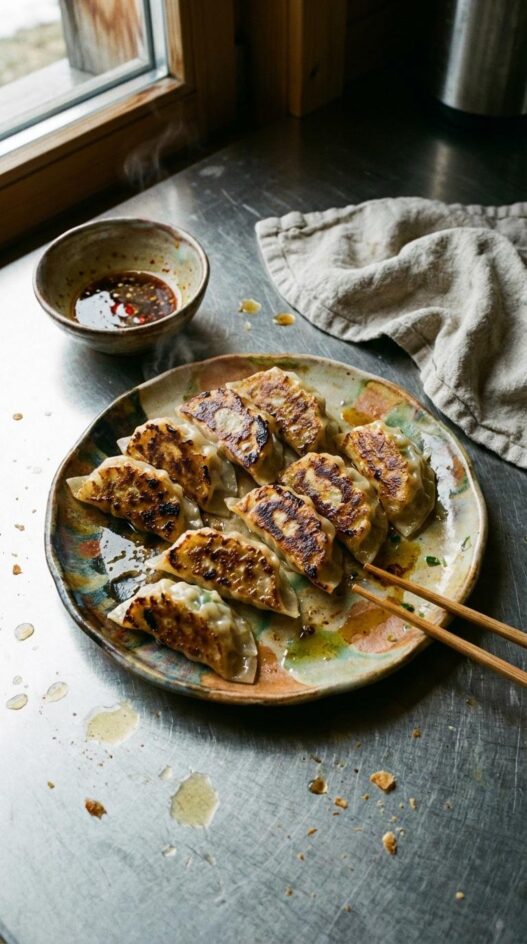
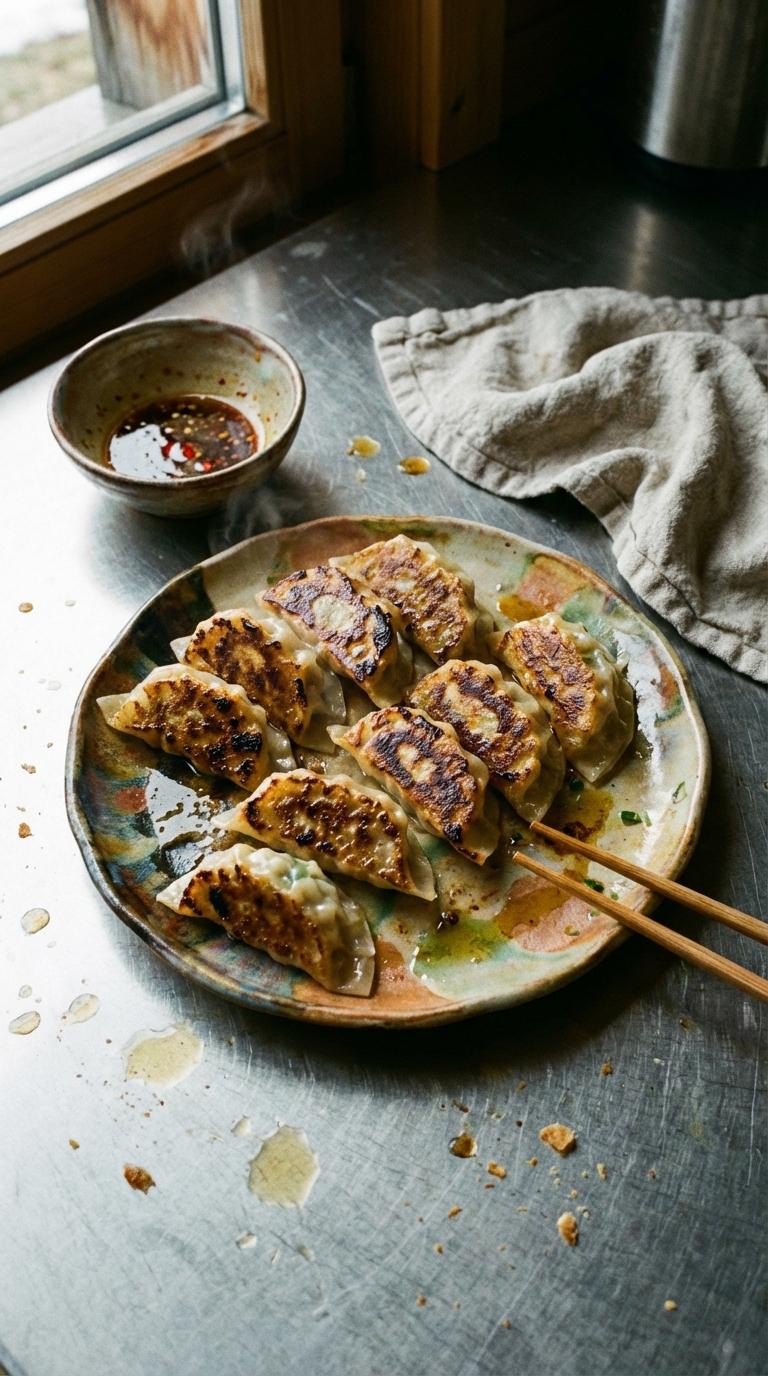
Homemade gyoza are one of those projects that seem intimidating until you actually try them. The filling is simple: ground pork, finely chopped napa cabbage, garlic chives, ginger, and a bit of sesame oil. The technique is what makes them special. You sear the bottoms until they are golden and crispy, add a drizzle of water, cover the pan, and let steam finish the cooking.
The result is a dumpling that is simultaneously crunchy, chewy, and juicy. It is hard to beat. The most important step happens before you even start filling wrappers.
Salting the cabbage and squeezing out every drop of moisture keeps the filling from turning soggy and leaking through the wrapper during cooking. Do not rush this step. Once the filling is ready, the pleating takes a bit of practice, but even ugly gyoza taste great.
This recipe makes about 40, which sounds like a lot, but they disappear fast. The good news is that uncooked gyoza freeze on a sheet pan and transfer to a bag for up to two months. Cook them straight from frozen, adding an extra minute of steaming time.
Serve with a dipping sauce of soy, rice vinegar, and chili oil.
How to Make Gyoza at Home
Prepare the Gyoza Filling:
Toss the chopped napa cabbage with the salt in a bowl and let sit for 10 minutes.
Squeeze out as much liquid as possible using a clean kitchen towel, this prevents soggy gyoza.
Combine the wrung-out cabbage with the ground pork, garlic, ginger, scallions, soy sauce, sesame oil, sugar, and white pepper in a large bowl.
Mix thoroughly in one direction (this develops a slightly springy texture in the filling).
How to Fold Gyozas:
Hold a gyoza wrapper in your palm.
Place about 1 tablespoon of filling in the center.
Dip your finger in water and moisten the edge of the wrapper.
Fold the wrapper in half, then pleat one side 5-6 times, pressing it against the flat side to seal.
The gyoza should sit flat on its bottom with a pleated crescent shape on top.

Classic: Gyoza
- Total Time: 60 minutes
- Yield: 40 dumplings
Description
Japanese gyoza are the descendant of Chinese jiaozi, adapted after World War II by Japanese soldiers returning from Manchuria. They are thinner-skinned and more garlicky than their Chinese ancestors, and they are almost always pan-fried using the distinctive yaki-gyoza method — seared on the bottom until golden and crisp, then steamed to cook the filling through. The contrast between the crunchy bottom and the tender, juicy dumpling is what makes them so addictive.
Ingredients
- 1/2 pound ground pork
- 2 cups napa cabbage, finely chopped
- 2 cloves garlic, finely minced
- 1 tablespoon fresh ginger, grated
- 2 scallions, finely chopped
- 1/3 cup nira (garlic chives), finely chopped — the defining aromatic of Japanese gyoza; substitute extra scallion if unavailable
- 1 tablespoon soy sauce
- 1 tablespoon toasted sesame oil
- 1 teaspoon granulated sugar
- 1/2 teaspoon kosher salt
- 1/4 teaspoon white pepper
- 1 package round gyoza wrappers (about 40 wrappers)
- 2 tablespoons vegetable oil
- 1/3 cup water
- For dipping sauce: 2 tablespoons rice vinegar, 1 tablespoon soy sauce, 1 teaspoon chili oil, 1 teaspoon toasted sesame oil
Instructions
- Prepare the filling: Toss the chopped napa cabbage with the salt in a bowl and let sit for 10 minutes. Squeeze out as much liquid as possible using a clean kitchen towel — this prevents soggy gyoza.
- Combine the wrung-out cabbage with the ground pork, garlic, ginger, scallions, soy sauce, sesame oil, sugar, and white pepper in a large bowl. Mix thoroughly in one direction (this develops a slightly springy texture in the filling).
- To fold: Hold a gyoza wrapper in your palm. Place about 1 tablespoon of filling in the center. Dip your finger in water and moisten the edge of the wrapper. Fold the wrapper in half, then pleat one side 5-6 times, pressing it against the flat side to seal. The gyoza should sit flat on its bottom with a pleated crescent shape on top.
- Heat 1 tablespoon of vegetable oil in a large non-stick skillet over medium-high heat. Arrange the gyoza in a single layer, flat side down, without overcrowding. Let them sear undisturbed for 2-3 minutes until the bottoms are golden brown.
- Add the water to the pan and immediately cover with a tight-fitting lid. Reduce heat to medium and steam for 4-5 minutes until the water has evaporated and the wrappers are translucent and cooked through.
- Remove the lid and let any remaining moisture cook off for 30 seconds to re-crisp the bottoms. Transfer to a plate, crispy side up.
- Mix the dipping sauce ingredients together. Serve the gyoza immediately with the dipping sauce on the side.
Notes
- Squeezing the moisture from the salted cabbage is the most important prep step — wet cabbage creates soggy, leaking gyoza.
- The sear-then-steam method (yaki) is the signature technique. The order matters: searing first creates the crispy bottom, then steaming cooks the filling through without drying out the dumpling.
- Freeze uncooked gyoza in a single layer on a parchment-lined sheet pan. Once frozen solid, transfer to a freezer bag. Cook from frozen — just add an extra minute of steaming time.
- Category: Main Course
- Cuisine: Japanese
Nutrition
- Serving Size: 1 serving
Frequently Asked Questions
What is important to know about making Gyoza?
Squeeze the moisture from the salted cabbage before anything else. Wet cabbage makes soggy, leaking gyoza.
What technique matters most for Gyoza?
The sear-then-steam method (yaki) is the signature technique. The order matters: searing first creates the crispy bottom, then steaming cooks the filling through without drying out the dumpling.
How should I serve Gyoza?
Serve them hot from the pan, crispy side up, with the dipping sauce on the side — rice vinegar, soy sauce, chili oil, and toasted sesame oil stirred together. Dip each gyoza right before you eat it so the seared bottom stays crisp instead of softening in the sauce.


Had no cabbage on hand so subbed in some spinach. Worked nicely for a lighter filling. Happy I gave it a try!
Totally nailed the crispy edges, so satisfying.
Nailed it, soooooo goooood!
Managed to get that nice sear on the outside, but I think the filling could use a bit more seasoning. Overall fun to make.