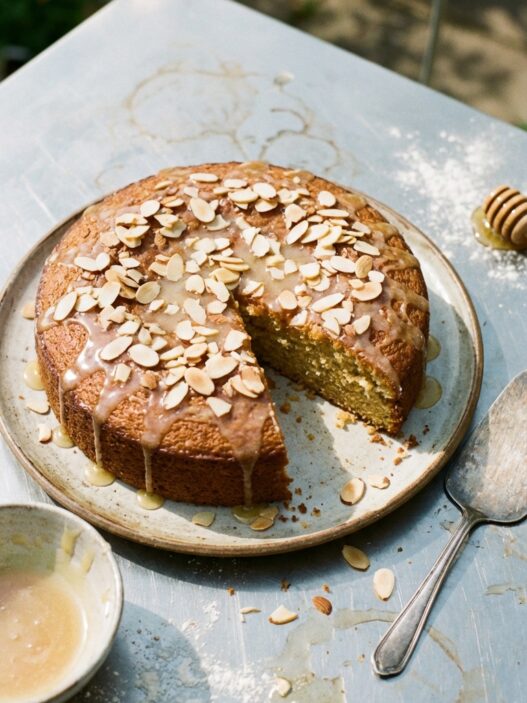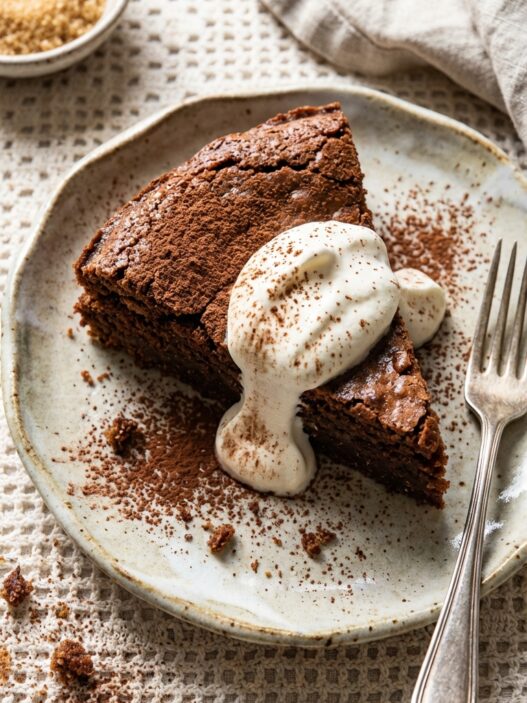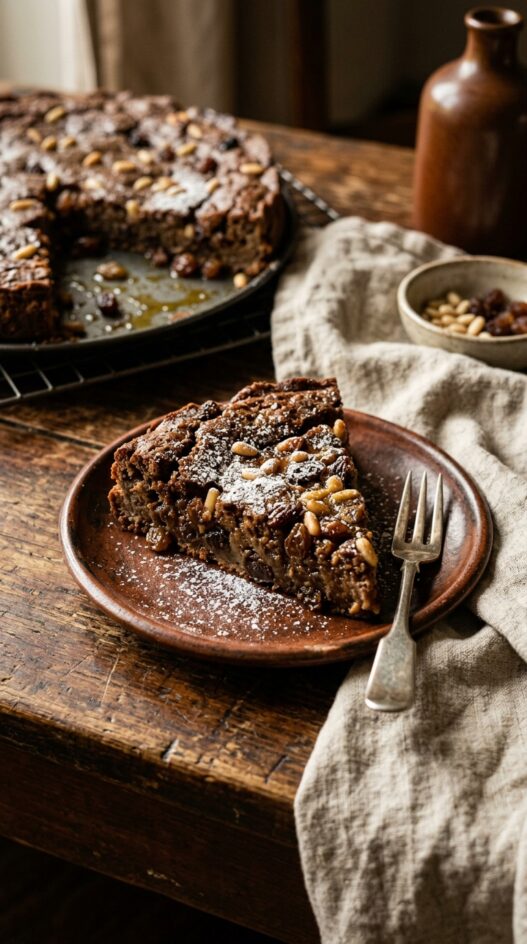
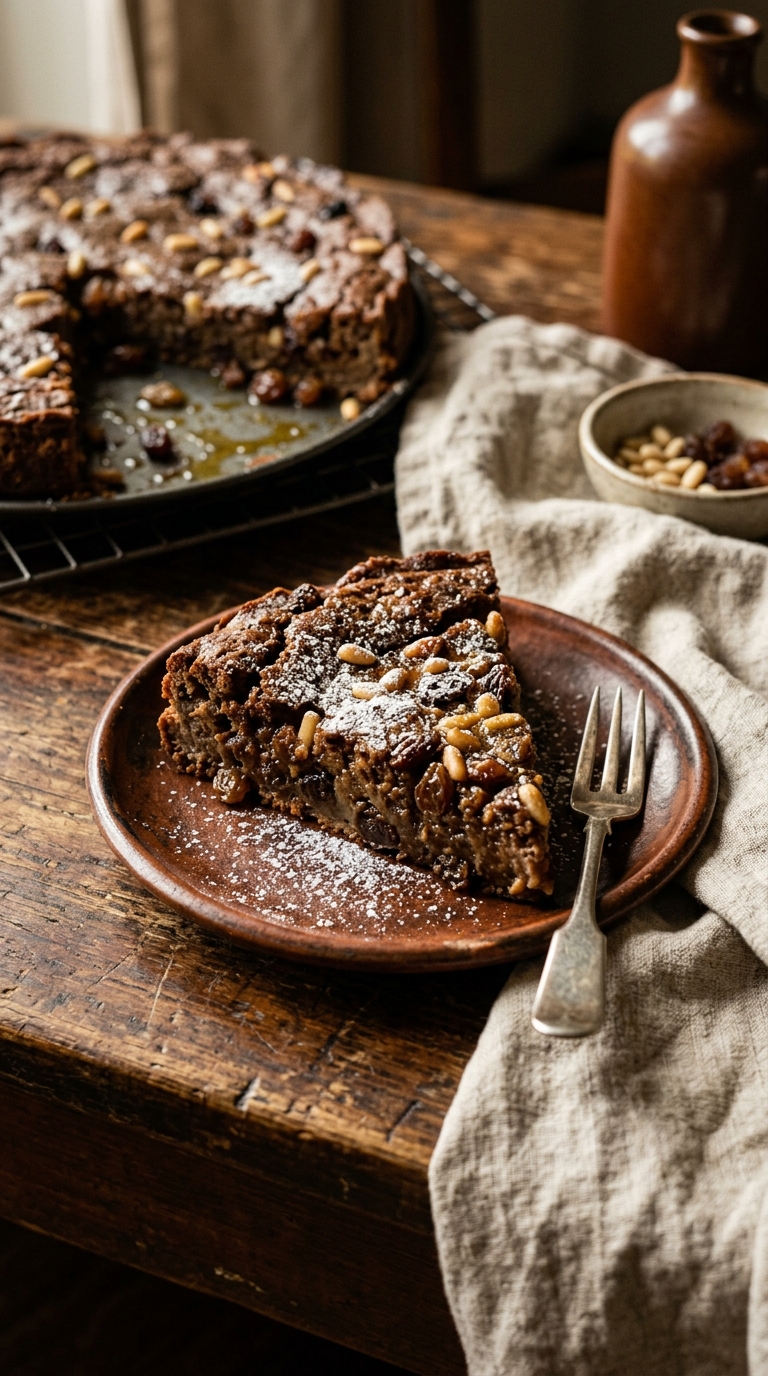
Castagnaccio is traditional Italian cake made from chestnut flour, olive oil, nuts and dried fruit.
By Tamara Novakovic
I tried my first castagnaccio in Siena, Tuscany. It is their typical dessert, often eaten as a snack with a cup of espresso. This rustic cake is an acquired taste. It is dense and rich, since the batter contains no raising agent, and subtly sweet. All the sweetness comes from dried fruit, generally raisins. There are variations where rosemary sprigs are also added to the batter.
Castagnaccio is best served with a cup of espresso or sweet wine like vin santo.
Castagnaccio – Italian chestnut cake
- Total Time: 1 hour 50 minutes
- Yield: 8 servings
Description
Rustic cake from the heart of Italy
Ingredients
- 13 oz (375 g) chestnut flour
- 1 pint (570 ml) water
- 2 oz (50 g) extra virgin olive oil
- 5 tbsp (75 g) pine nuts
- 5 oz (125 g) raisins
- a pinch of salt
Instructions
- Soak raisins in water for an hour, drain them and discard the water.
- Into a large boil, whisk 570 ml water with 25 g olive oil and pinch of salt. Gradually add chestnut flour and whisk until it forms into a smooth batter. Add raisins and pine nuts.
- Brush baking pan with olive oil and pour the mixture into it. Scatter the remaining half of the olive oil on top of the mixture.
- Preheat oven to 375F (190C). Bake for 35 minutes.
- Let cool, slice and serve. You can dust with powdered sugar before serving.
- Prep Time: 15 minutes
- Cook Time: 35 minutes
- Category: Dessert
- Cuisine: Italian
Nutrition
- Serving Size: 1 slice
- Calories: 270
If You Liked This Recipe, You’ll Love These
- Lemon Cream Cake: Light, Buttery, and Irresistible
- Spring Strawberry Cake Roll
- Apfel Kuchen: Traditional German Apple Cake
- Sicilian Orange Cake
Frequently Asked Questions
What does chestnut flour taste like, and where do I find it?
Chestnut flour has a naturally sweet, earthy flavor — quite different from wheat flour. I describe the finished castagnaccio as “subtly sweet,” with all the sweetness coming from the raisins and the flour itself since the batter contains no added sugar. You can find it at Italian specialty stores, health food shops, and online.
Why is there no baking powder or leavening agent in this cake?
I do this intentionally: castagnaccio “contains no raising agent,” which makes it dense and rich — characteristic of the rustic Tuscan original. I describe it as “an acquired taste” for exactly this reason.
What is the traditional way to serve castagnaccio?
Castagnaccio is typically eaten as a snack with a cup of espresso in Siena, Tuscany. I specifically recommend pairing it with espresso or a sweet wine like vin santo. You can also dust it with powdered sugar before serving.