Highly trained and acclaimed baker from the U.K., Richard Bertinent, has debuted another cookbook that will take your bread to the next level. His two previous books, Dough and Crust, have won a number of awards, including James Beard. If you know a bread lover, an aspiring home baker or just a carb nerd, this newest book is for them.
“Your three most important tools are free: your hands, your instincts, and patience.”
Bread baking is an inexpensive hobby to get into. The tools can be relatively simple and the ingredeints are quite affordable. Don’t feel like you need to get sucked into fancy gadgets, just get baking and keep baking and baking and testing and tasting and baking some more. Get a feel for what a good dough feels like and be patient. Good bread, a soft crumb, takes time.
Understand the Difference in Flours
Richard’s book breaks down the difference between all-purpose four, strong and very strong bread flour. Take some time to read up how the protein levels vary in each type. AND take the time to find the perfect flour for the bread you’re making. Think about how the level of protein will alter how much water you use and how much time you mix the bread. It will make your life easier as you make the bread and will make the loaf come out so much better.
The Key is a Good Routine
Richard recommends trying the same bread recipe over and over again. Tweak the amount of water, notice the difference in proofing times compared to the weather and take notes. The key to getting good at making bread it routine and rhythm. Once you have a rhythm down, you will better be able to adapt your bread dough to each situation and make a better loaf.
Leave Your Oven Door Open a Crack
When you’re baking breads that should have a nice crust, like a baguette or sourdough) leave your oven door open a crack for the last 5 to 10 minutes of baking. This allows steam to escape and create a dry heat environment that lets the bread finish baking while creating a crisp crust.
Want a more flavorful bread? Make a basic starter!
Richard lays it our plainly, “By starting with even the most basic ferment made with strong flour, water and yeast, you will enhance the depth of flavor and texture of the crumb and crust.”
Sourdough and taking care of a sourdough starter shouldn’t be scary! It’s a great thing to have on hand for any of your bread doughs or to make a pizza crust. Crumb has easy-to-understand instructions on how to start and take care of a ferment or how to make one for a particular loaf.
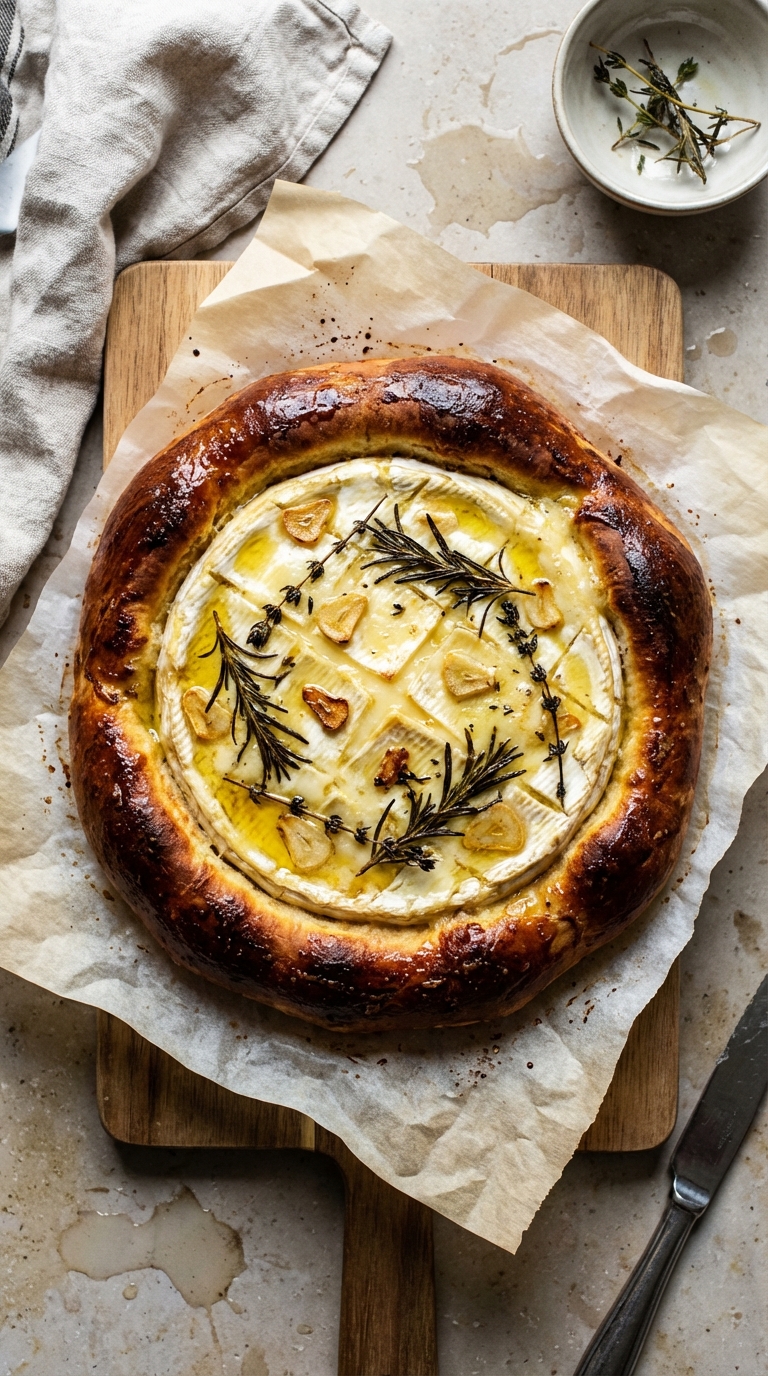
Check out this recipe from the book for an enriched dough, brioche, that is served with brie in the center.
Print
Brie in brioche
- Total Time: 60 minutes
- Yield: Serves 8 to 10
- Diet: Omnivore
Description
Warm brie baked in a homemade brioche ring—a showstopping lunch or party appetizer. Serve with a simple green salad for a complete meal.
Ingredients
- 1 quantity Multicolored buns dough
- strong white bread flour
- 2 lbs (1 kg) large ripe brie
- 2 cloves garlic cloves
- a few small sprigs of fresh rosemary and thyme
- 2 tbsp (30 ml) good extra virgin olive oil
- dash of Pernod
- 2 quantity eggs
- pinch of fine sea salt
Instructions
- Make the dough.
- When the dough has rested, lightly flour your work surface and roll the dough into a rough circle.
- Place a large baking ring (about 12 inches in diameter) on top of a baking sheet, then press in a large sheet of parchment paper.
- Lower the dough into the paper, and use your fingertips to gently press it down in the center, and outwards into the shape of the ring, creating an indent big enough to hold the brie, while forming a rim around the outside of the cheese.
- Put in the brie, and score the surface with a sharp knife in a criss-cross fashion.
- Push the slices of garlic into the cuts, along with the sprigs of fresh rosemary and thyme. Drizzle with olive oil, then finish with a dash of Pernod, if you like.
- Cover with a large freezer bag and leave to rise for about 45 minutes.
- While the dough is rising, preheat the oven to 375°F (190°C), and beat the eggs with the salt for the glaze.
- Brush the rim of the dough with the egg glaze, and transfer the baking sheet to the preheated oven.
- Turn down the heat to 350°F (177°C), and bake for about 30 to 40 minutes, until the cheese has melted, and the rim of the brioche is a dark golden brown. Check that the base of the brioche is also dark golden brown by carefully lifting the parchment paper.
- Remove from the oven, and holding the parchment paper, lift the brioche from the ring onto a board.
Notes
- For a richer flavor, add a tablespoon of honey to the egg wash before brushing the brioche.
- If you don’t have Pernod, you can substitute with white wine or even a touch of lemon juice.
- To easily remove the baked brie from the ring, let it cool slightly before lifting it.
- Prep Time: 20 minutes
- Cook Time: 40 minutes
- Category: Baking
- Method: Baking
- Cuisine: French-Inspired
Nutrition
- Serving Size: 1 large slice
- Calories: 450
- Sugar: 5
- Sodium: 300
- Fat: 30
- Saturated Fat: 15
- Unsaturated Fat: 10
- Carbohydrates: 40
- Fiber: 2
- Protein: 10
- Cholesterol: 100
Crumb: Bake Brilliant Bread by Richard Bertinent © 2019 Kyle Books, and photographs © Jean Cazals.
Frequently Asked Questions
What type of flour should I use for this bread recipe?
It’s important to choose the right flour based on protein levels; consider using strong or very strong bread flour for the best results.
How can I tell if my dough is at the right consistency?
A good dough should feel elastic and slightly tacky to the touch; practice will help you develop your instincts.
Why is patience emphasized in this bread baking process?
Good bread takes time to develop flavor and structure, so allow for adequate rising and resting periods to achieve a soft crumb.