
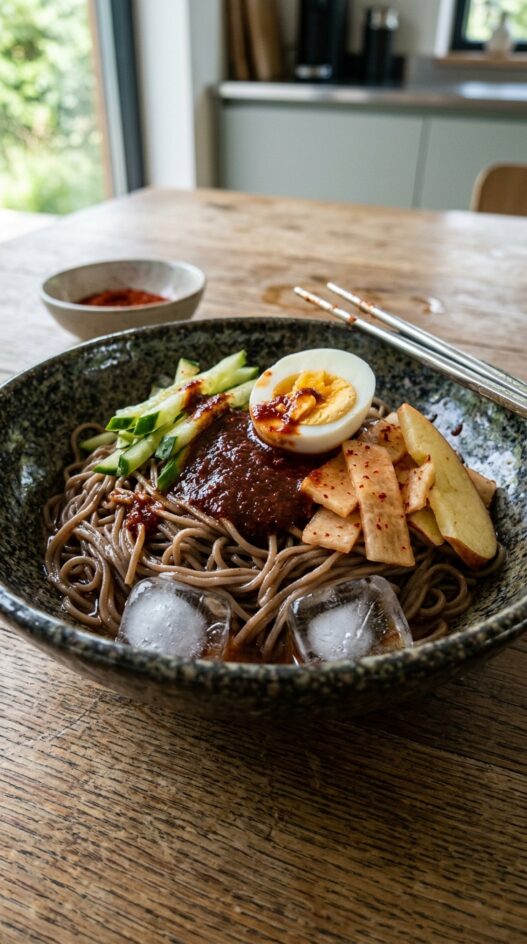
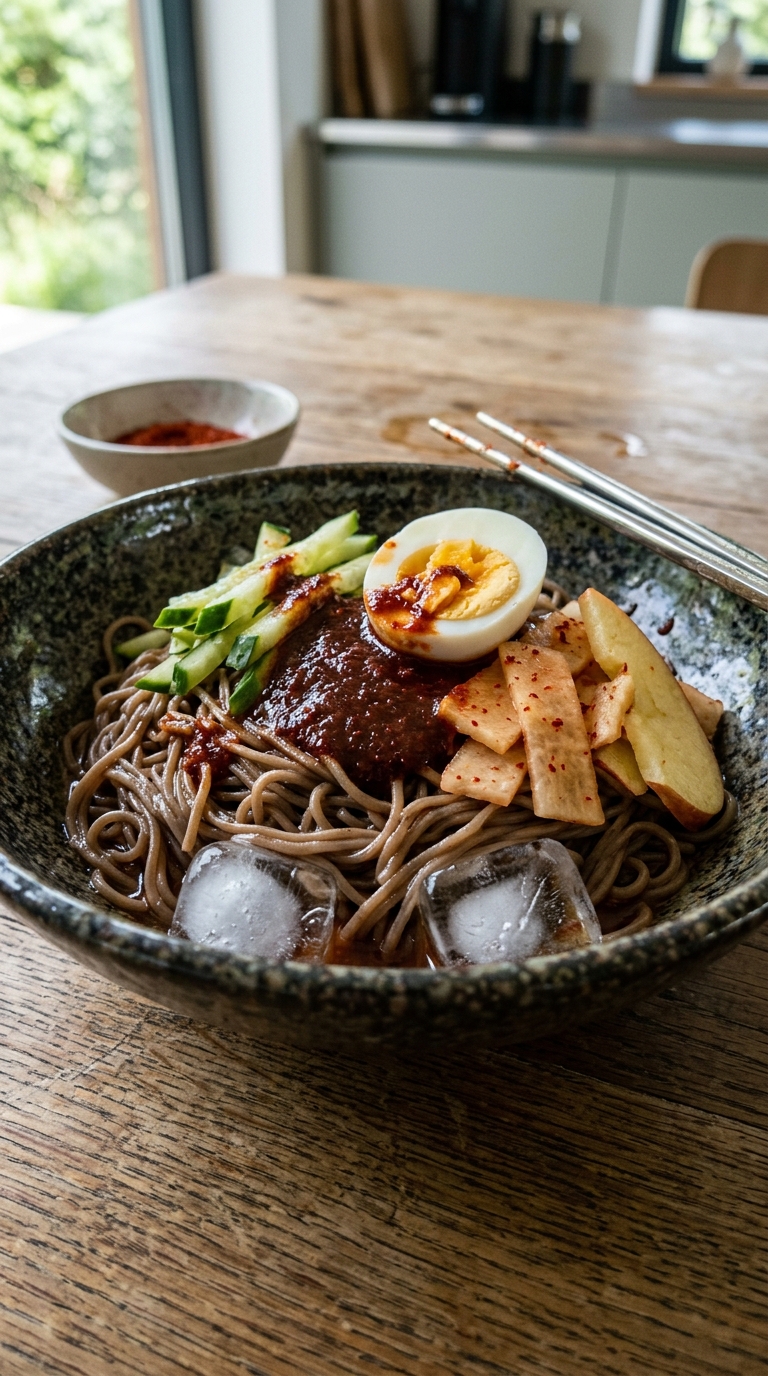
To tuck into a bowl of cold, sour, spicy buckwheat noodles is to confront a mood of heat-induced apathy, fists swinging, though what you’ll really want to do is dance. Come summer, a good naengmyeon restaurant in Seoul is packed with long queues that extend out the door and around the block. On a sultry day, naengmyeon stimulates, refreshes, and leaves your lips tingling.
There are two main kinds of naengmyeon: wet and dry. Mainly, the difference between them is mul, naengmyeon’s icy sour broth and bibim naengmyeon’s red pepper sauce. Bibim naengmyeon, or mixed naengmyeon, resembles bibimbap, or mixed rice, in that the components are thoroughly mixed with gochujang-based sauce. Often bibim naengmyeon is served with a small side of cold broth and added by the spoonful to the bowl of noodles, where the noodles in mul naengmyeon arrive to the table already flooded in the same cold broth.
Though naengmyeon was originally reserved for the wealthy citizens of Northern Korea, it became widespread throughout the peninsula following the Korean War. These days, naengmyeon is easy to find and affordable in South Korea, so not many people make it at home. But you can. And it’s not at all as daunting as the ingredient list might suggest.
Naengmyeon’s noodles are rod-shaped with a girth between capellini and spaghetti and a length said to signify longevity. Many restaurants will snip them tableside to make them easier to eat, and you could do the same at home.
Incendiary, sour, sweet, and salty, a well-balanced sauce is key, and herein lies the bulk of the recipe’s workload. The payoff, however, extends beyond that first bowl of naengmyeon, as the excess sauce is versatile and will take you through the week. Use it in fried rice, scrambled eggs, or toss with raw vegetables for a quick, spicy side dish.
The measurements below are a guideline. Do adjust to your personal taste. Hye Rae taught me to adjust with more sea salt instead of soy sauce, which darkens and thins the sauce, and what you want is a redder sauce with a thicker consistency. Do the same if your sauce needs more saltiness. When we made this together recently on a very hot day, she sliced fresh watermelon (optional) and fanned it out next to the half slice of hardboiled egg (mandatory). Sounds a little strange, but the mix of crisp, juicy fruit with soft, stretchy noodles was excellent. In other words, don’t skip the apple at the end.
bibim = mixed
naeng = cold
myeon = noodles
Print
Bibim Naengmyeon
- Total Time: 25 minutes
- Yield: Serves 2
- Diet: Omnivore
Description
Cold buckwheat noodles with a spicy kick.
Perfect for a hot day, this Korean classic is surprisingly easy to make.
Ingredients
For the Pickled Radish
- 2-inch piece Korean or daikon radish
- 1 tablespoon salt
- 1/2 teaspoon gochugaru
- 1/2 teaspoon apple vinegar
- 1/2 teaspoon sugar
For the Sauce
- 1/2 small onion (118 ml) peeled and roughly chopped
- 1/2 apple (118 ml) peeled, cored, and roughly chopped
- 2 tablespoons (30 ml) water or more
- 2 tablespoons (30 ml) gochujang (red pepper paste)
- 1 clove garlic, minced
- 2 teaspoons soy sauce
- 1 teaspoon gochugaru (red pepper powder)
- 1 tablespoon (15 ml) apple vinegar
- 1 teaspoon toasted sesame seeds
- 1/2 teaspoon honey
- 1/4 teaspoon salt
For the Noodles
- 1 package fresh buckwheat naengmyeon noodles (or substitute dried)
- 1 egg, hard-boiled, peeled, and sliced in half
- 1/2 an apple (118 ml) sliced
- 1/2 a cucumber (118 ml) cut into matchsticks
- ice cubes
Instructions
- Peel and slice radish into thin rectangles, mix with salt, and let sit for 30 minutes. Rinse with cold water and drain. Then mix in gochugaru, vinegar, and sugar.
- Puree onion, apple, and water until completely smooth. Add more water by the teaspoon if the sauce is too thick to blend. Add the remaining sauce ingredients and mix thoroughly. Taste, and adjust with more salt, honey, or vinegar.
- Bring a pot of water to a boil and drop in one bunch of fresh buckwheat noodles. Cook for 40 seconds. Drain and rinse with cold water for thirty seconds until the noodles are chilled. If using dried noodles, follow the package cooking instructions.
- Put a fistful of cold noodles at the bottom of each bowl. Top with pickled radish, cucumber, apple, half the hard-boiled egg, and a couple of ice cubes. Add two or three tablespoons of sauce to the middle. Mix well.
Notes
- For a milder spice level, reduce the amount of gochugaru used in both the radish and sauce mixtures.
- To make this recipe vegan, omit the egg and honey, or substitute with a vegan egg and maple syrup.
- Leftover sauce can be stored in an airtight container in the refrigerator for up to a week.
- Prep Time: 20 minutes
- Cook Time: 5 minutes
- Category: Main Course
- Method: No-Cook
- Cuisine: Korean
Nutrition
- Serving Size: 1 bowl
- Calories: 450
- Sugar: 15
- Sodium: 600
- Fat: 15
- Saturated Fat: 5
- Unsaturated Fat: 10
- Carbohydrates: 80
- Fiber: 5
- Protein: 10
- Cholesterol: 100
Frequently Asked Questions
What kind of noodles are used in bibim naengmyeon?
Traditional bibim naengmyeon uses thin buckwheat noodles, which have a firm, slightly chewy texture and a faint earthy flavor. They are typically sold dried or fresh at Korean grocery stores and need only a brief boil followed by a cold water rinse.
How spicy is the bibim sauce, and can I adjust it?
The sauce is built around gochujang and gochugaru, so it lands fairly hot at standard ratios. You can reduce the gochugaru for less heat while keeping the gochujang for depth, and a little sugar or sesame oil helps round out the spice without diluting the flavor.
Why do you rinse the noodles in cold water after cooking?
Rinsing stops the cooking immediately and removes surface starch, which keeps the noodles from clumping or turning gummy. The cold water also firms the texture, which is essential for naengmyeon since the dish is served cold.


Wow, I am Korean . I do know that is hard to make !.
You are so great and look so yummy ~~
Yes, Christine! Love to eat naengmyeon the ways you mentioned, especially with grilled beef. :)
Looks great!! Happy to see a posting about Naengmyeon here. Naengmyeon also goes really well with SuYook (boiled pork) or Galbi (Korean BBQ short ribs). :)
It is, Amanda! Well, anything except for a face mask…might sting a bit. If you try the sauce let me know what kinds of creative uses you find for it!
This sauce sounds like it would be great on ANYTHING! Total comfort food.