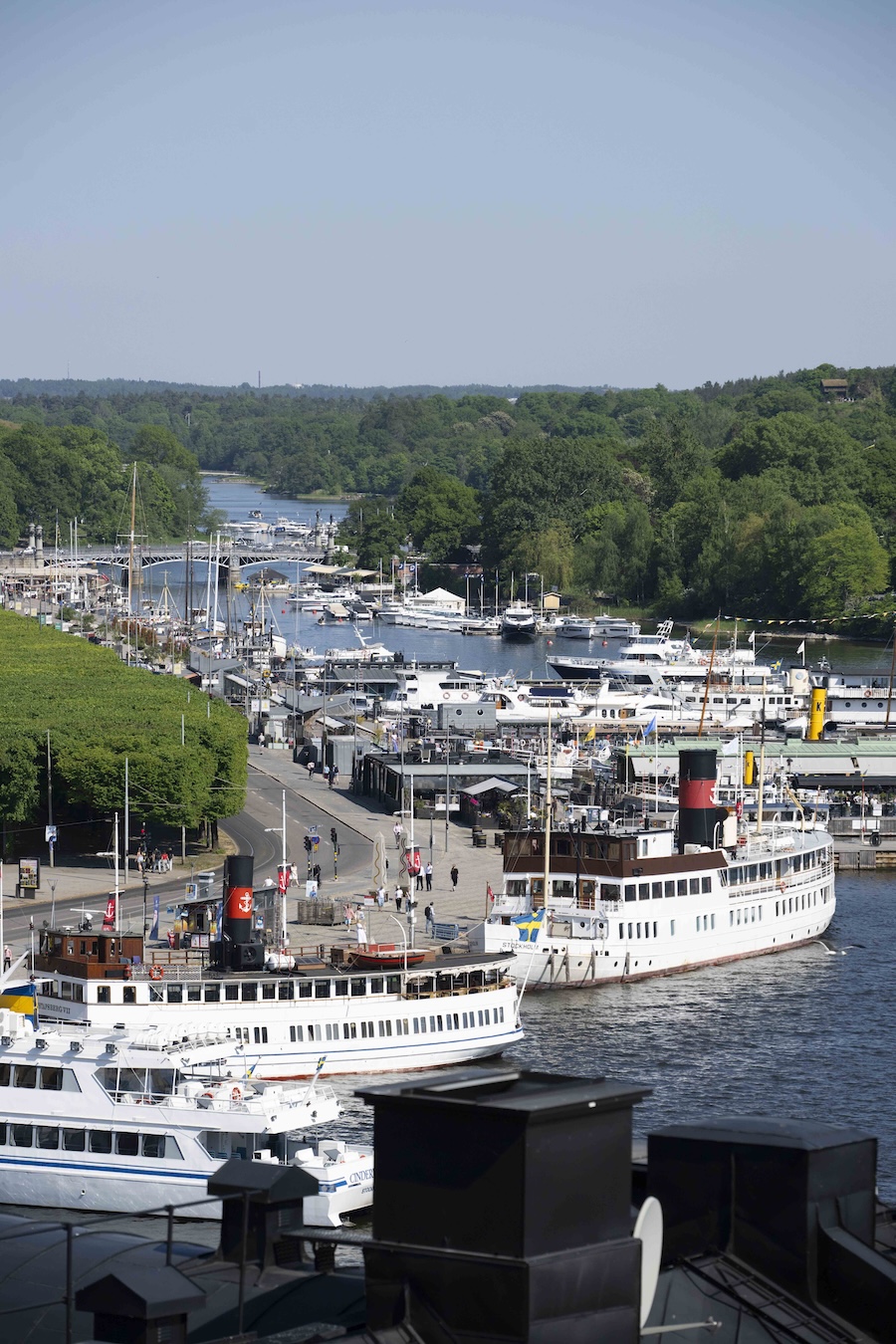
Stockholm, in spring and summer, is a city that lives outdoors. The light stretches deep into the evening and the entire population seems to migrate to terraces, parks and waterfronts the moment the cold breaks. It is a city that does not need a great hotel to seduce its visitors. The water, the architecture, the long northern dusk are the main characters. Hotels here are, traditionally, where you sleep between the things you came to see.
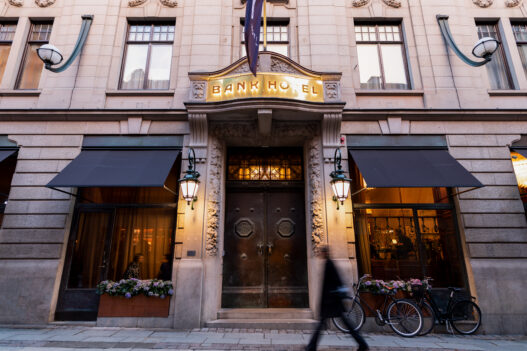
Bank Hotel, on Arsenalsgatan 6, has spent the years since 2018 making a different argument.
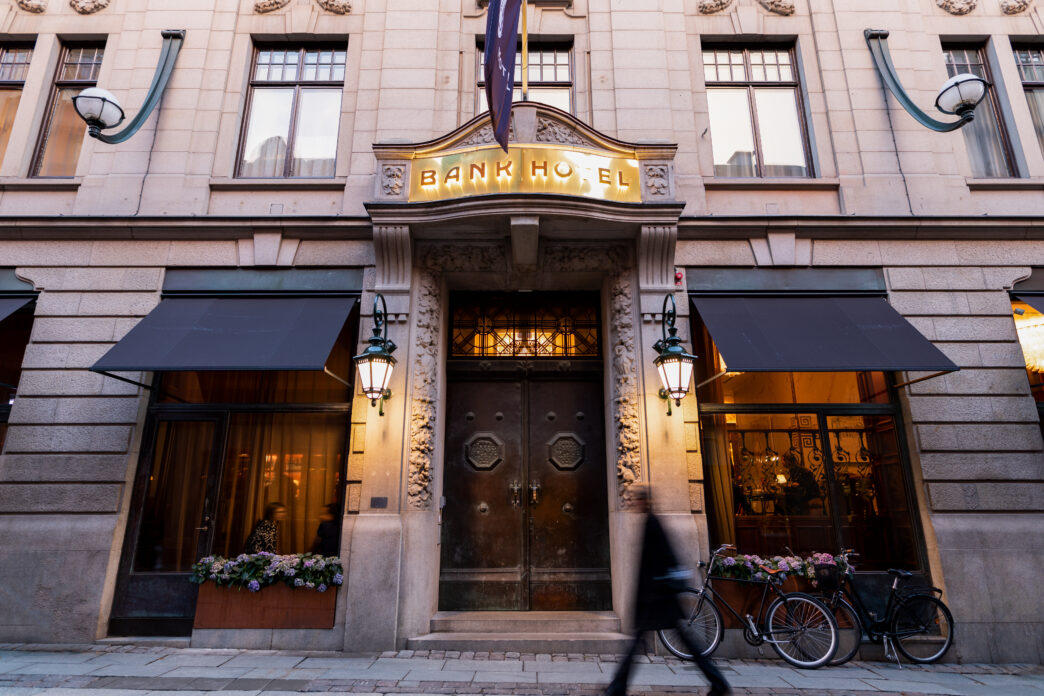
The building it occupies was completed in 1910, at the close of the Art Nouveau period. Thor Thorén designed it as the headquarters of Bankaktiebolaget Södra Sverige, conceived as a bold, modern interpretation of a Renaissance palace, blending the extravagance of the era with the gravity expected of a banking institution. Over the decades, its rooms changed hands. Svenska Handelsbanken passed through. Diskontobank. Wermlands Enskilda Bank. Later, Orrefors used it as an exhibition hall, and later still it became a library. Each tenant left a layer of itself behind. The heavy bronze doors at the entrance still bear the octagonal emblem of Södra Sverige BAB, a shape now echoed in Handelsbanken’s contemporary logo. The owl and the squirrel carved into the stone, the wise one and the frugal one, still keep watch from the façade. The owl, in particular, has been adopted by the hotel as its emblem and now appears, with the lightest of touches, in places where guests find it without being told to look.
What was once a building for storing money is now a building for storing memory.
A Lobby That Knows Your Name
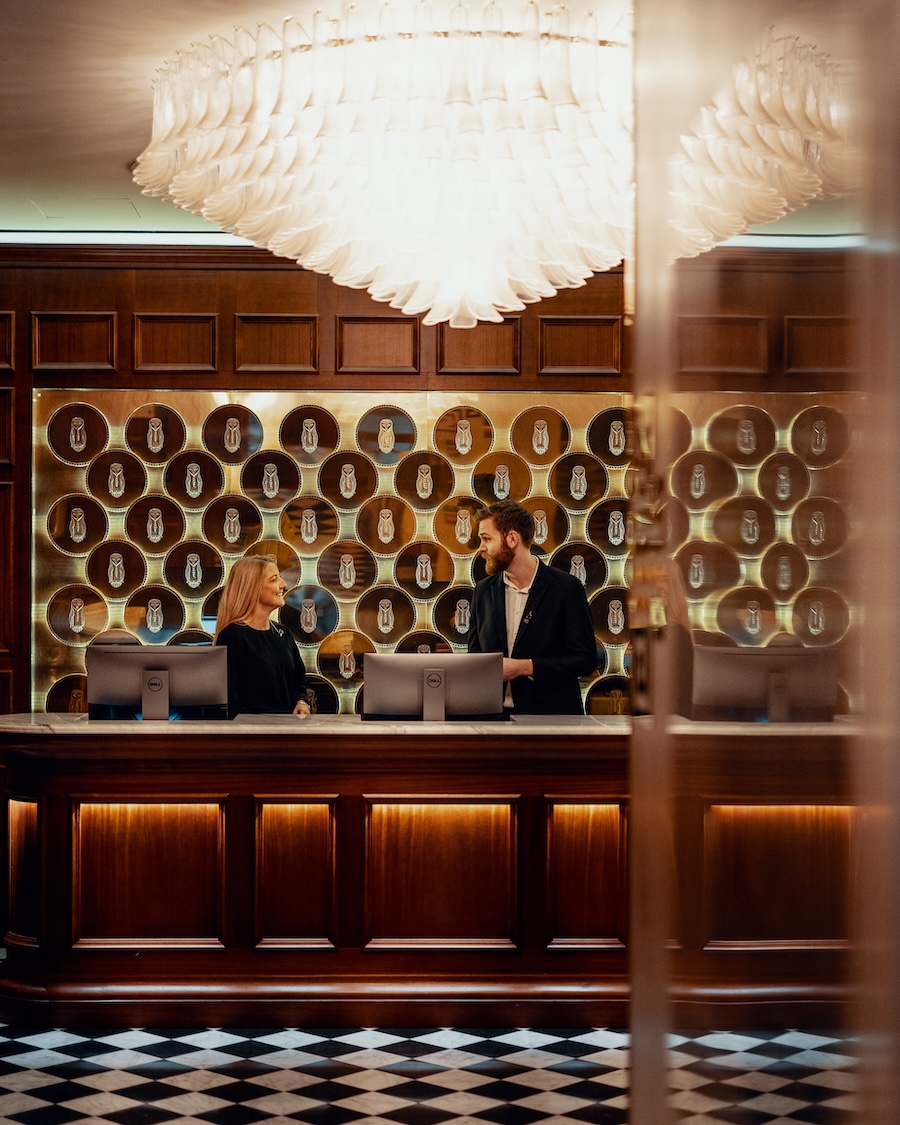
had not been across the threshold for more than a few seconds before the front desk knew where I had flown from and what time my onward dinner reservation was. None of this was performed. It was offered the way a good host offers a glass of wine when you arrive at his house, as though the hosting had already begun before I’d thought to expect it. The sensation is the one captured in the theme song of the old American television series Cheers, and anyone who has ever wanted to walk into a room where everybody knows their name will recognise the feeling immediately.
This is not, on its own, remarkable. Many five-star hotels train their staff in the choreography of recognition. What is unusual at Bank Hotel is that the choreography never seems to be choreographed. The recognition is delivered with the unselfconsciousness of people who genuinely enjoy the work of hosting. By the end of a stay you are not a guest, you become something closer to a regular.
The lobby itself is small. Mahogany panelled walls, diamond-pattern flooring, a Venetian chandelier overhead. There is room for a sitting area and not much else, because the public spaces of Bank Hotel are not concentrated in the lobby. They are scattered through the building, each one with its own personality.
One Hundred and Eleven Rooms and the Feel of a Boutique
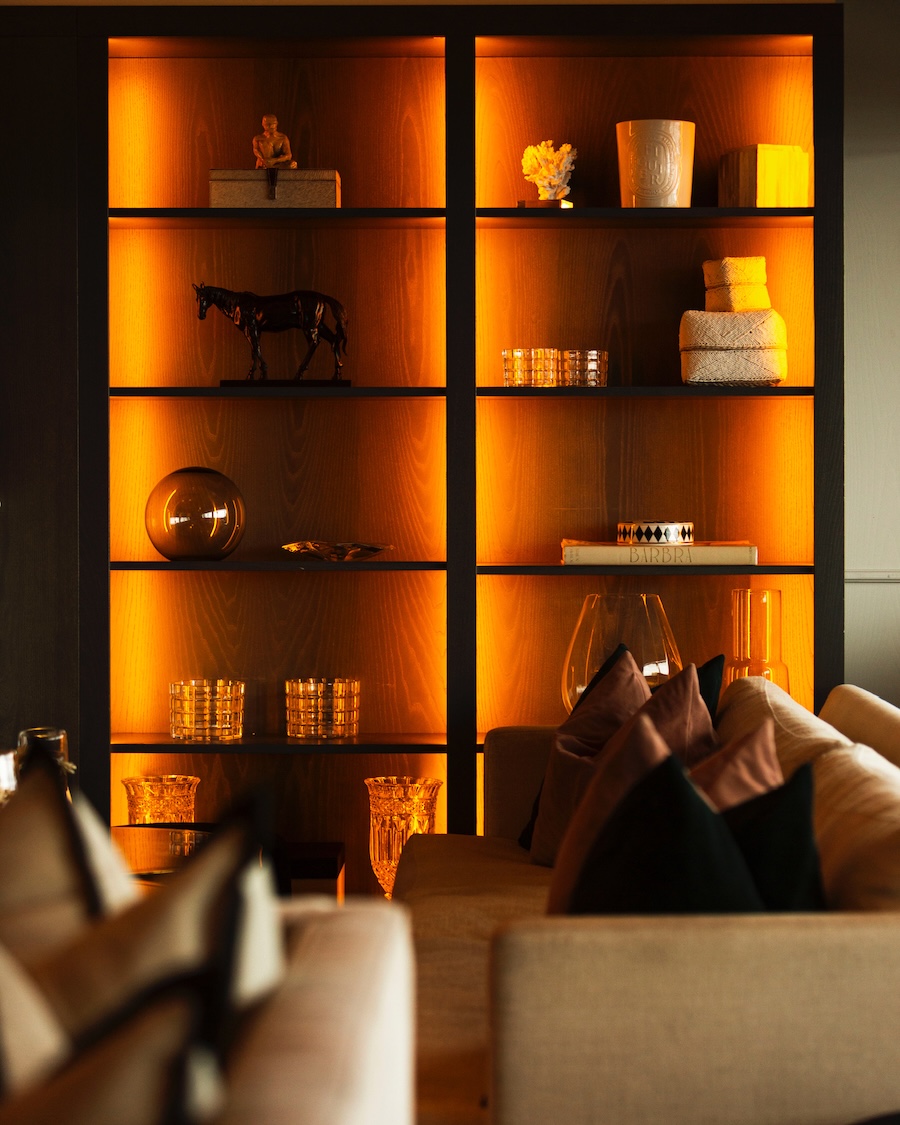
The hotel has 111 rooms and suites across six categories. On paper, this is a meaningful number, large enough to support a full F&B programme, a serious art collection, a wine cellar inside the original vault. In practice, the hotel feels considerably smaller than that. The architecture refuses the visual signature of the generic five-star. Instead, the building unfolds into small, characterful spaces that each feel like their own room within a private residence. The Vault category, at the entry level, leans into the heritage of the building: twenty-three square metres, designed in muted palettes to rest the eyes, with marble bathrooms behind a glass wall and the kind of soundproofing that produces a quality of silence ordinarily reserved for the countryside. At the other end of the scale, the Penthouse Executive Terrace Suite stretches across two architectural rooms and opens onto a terrace that runs the entire length of the suite, with rooftops unfolding across one of Europe’s most beautiful capital cities.
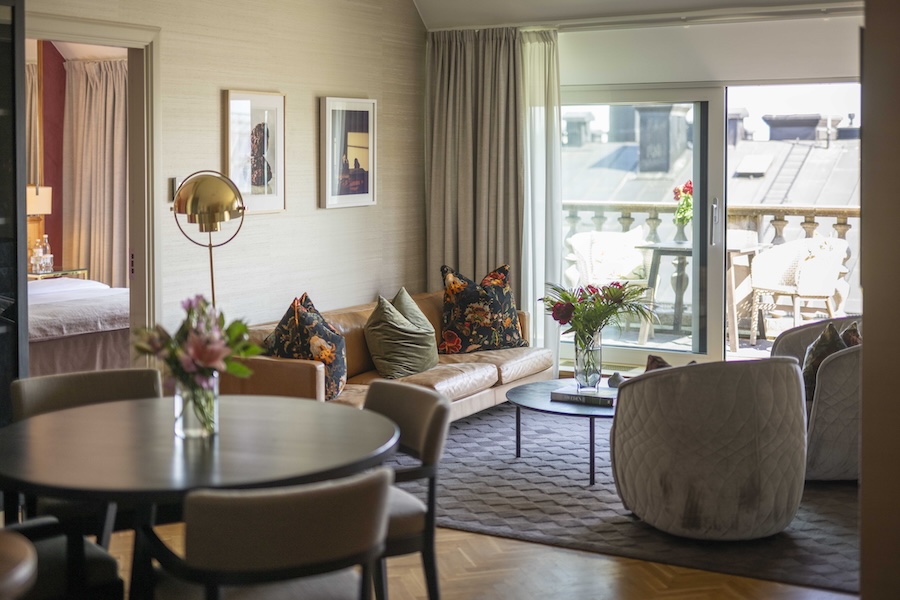
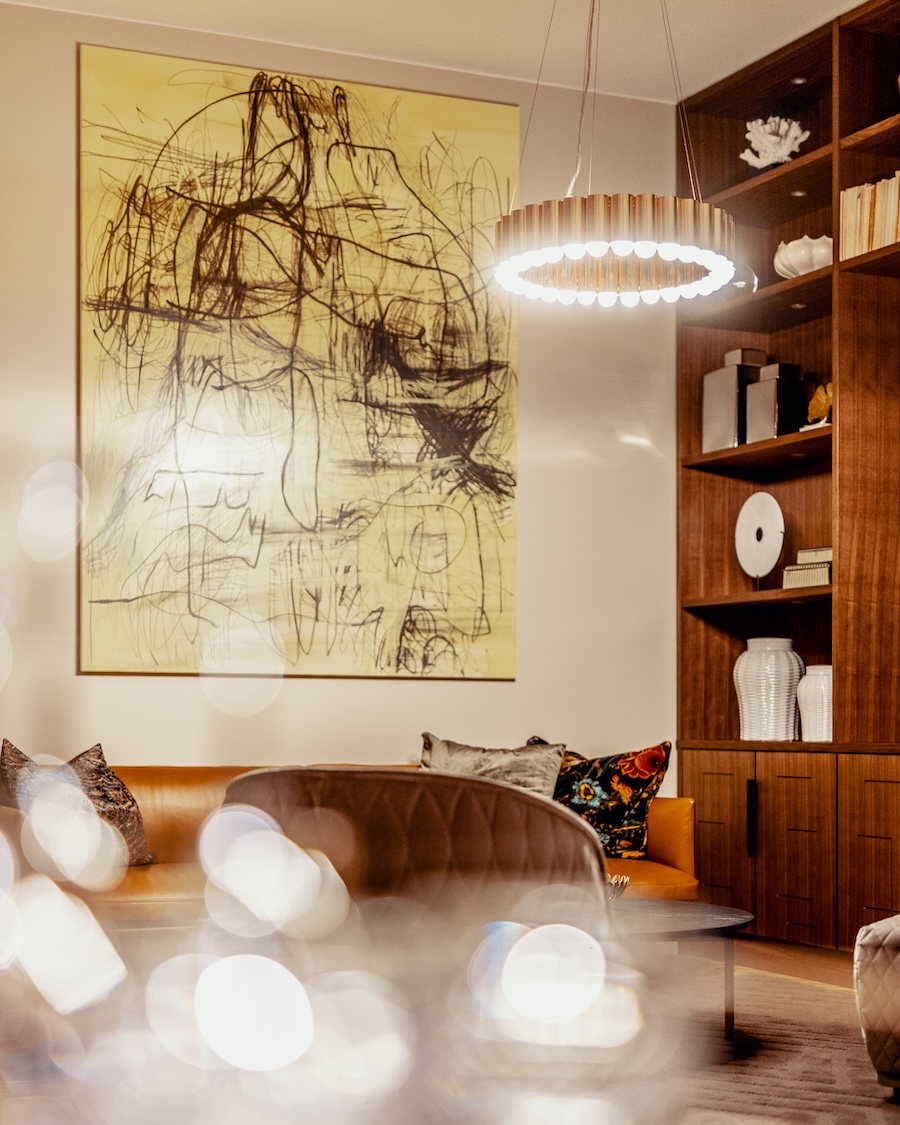
The beds are comfortable, the linen soft. Diptyque toiletries in the bathrooms. A Lavazza coffee machine in the room. A tea selection developed with the Swedish house Tehuset, including a Bank Hotel signature blend with rose petals and sunflowers. A small wooden box of essentials one might have forgotten to pack. Robes and souvenir slippers stamped with the hotel’s owl. Red and green tassels for housekeeping signals. And there is even a different contemporary artwork in every room.
The Patina That Should Not Be There
There is something about Bank Hotel that becomes disconcerting in the best possible way: the building feels as though it has been a hotel forever.
Bank Hotel opened in 2018. The renovation that transformed the bank into a hotel was completed less than a decade ago. And yet to walk through the lobby, the bar or the restaurant is to walk through a building whose patina seems to predate any reasonable accounting of the years it has actually been occupied as a hotel. The wood panels carry the weight of decades. The velvet seats look as though they have welcomed generations of guests. The brass fittings glow with the depth that brass acquires only over time.
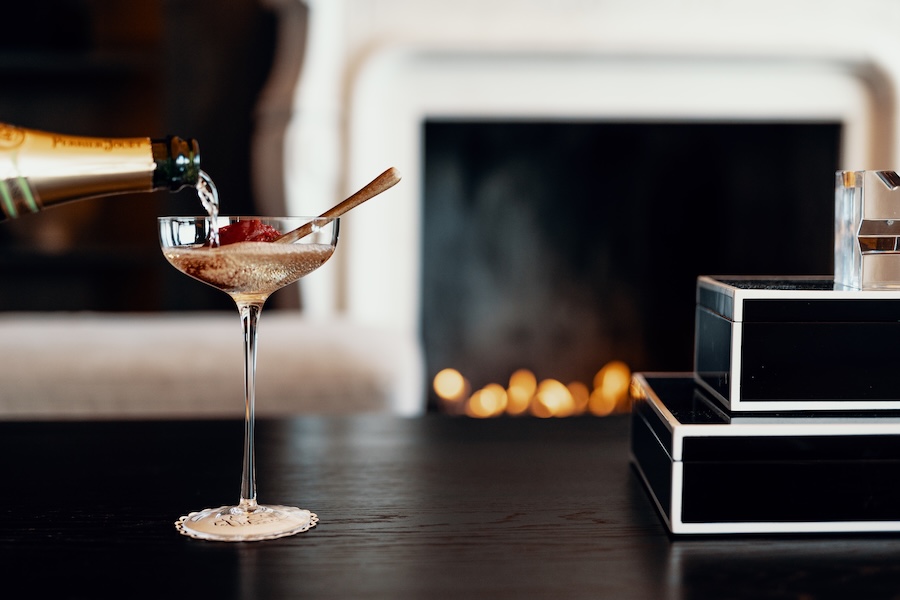
The clearest demonstration of this care is in Papillon, the cocktail bar on the ground floor occupying what was once the office of the bank’s director. He, by all surviving accounts, was an admirer of butterflies; which is the reason the bar takes its name in French. Papillon retains the noble wood panelling, the wall-to-wall carpeting, the softly lit corners and the proportions of a private executive’s chamber. The shakers behind the bar are not standard-issue cocktail equipment. They have been commissioned specifically for Papillon, with owl heads worked into the tin in a way that reads, at first glance, as a surviving piece of Art Nouveau craftsmanship from the building’s earliest decades. It takes a moment to register that they cannot be, that they have been made within the past few years and aged into the room’s vocabulary.
An Art Collection in Plain Sight
Bank Hotel does not announce its art programme. There is no curator’s wall text. The works simply appear, in the corridors and the rooms and the bar areas, as a private collector might hang them.
The collection itself is serious. Among contemporary Swedish names, originals by Jaume Plensa, Olafur Eliasson, Julian Opie and Carina Seth Andersson are part of the public-area programme. Kristina Matousch’s works hang in the guest rooms, one per accommodation, so that no two rooms share the same artistic environment. The collection sits alongside a deeper partnership with the Stockholm gallery CF Hill, which curates the Bank Art Collection and brings in works from international names such as Albert Watson and Annie Morris, alongside emerging Swedish talent through the Young Art platform.
Bonnie’s, the Restaurant Inside the Bank Hall
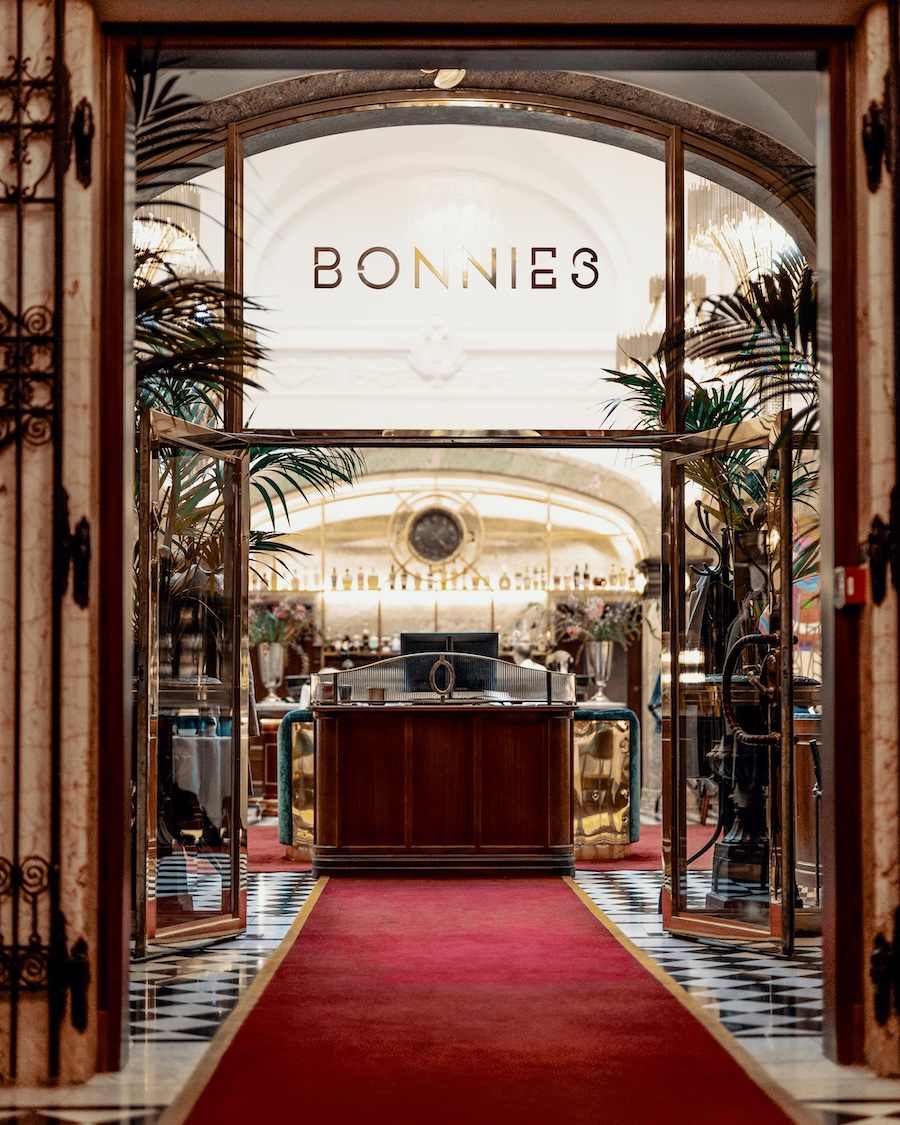
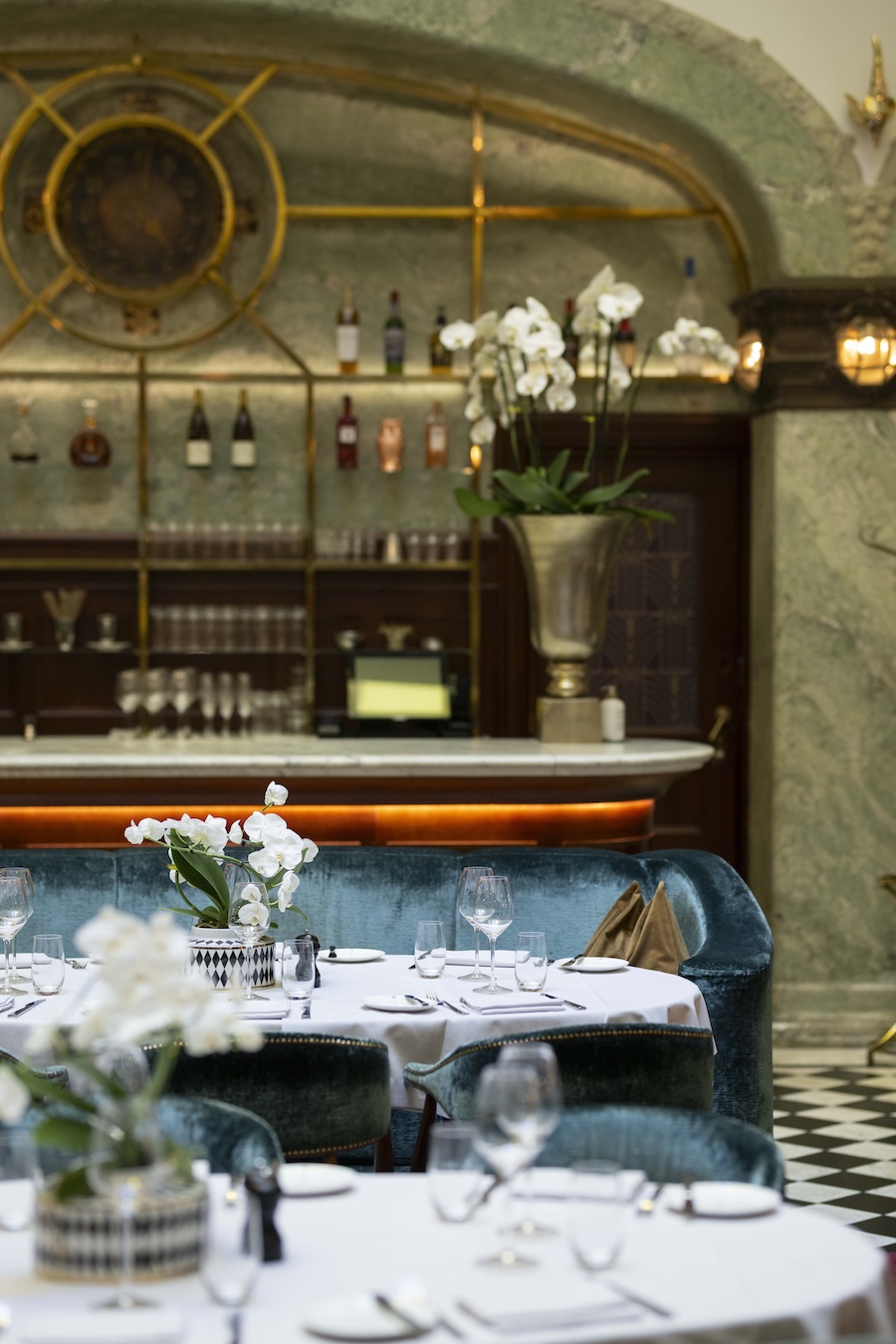
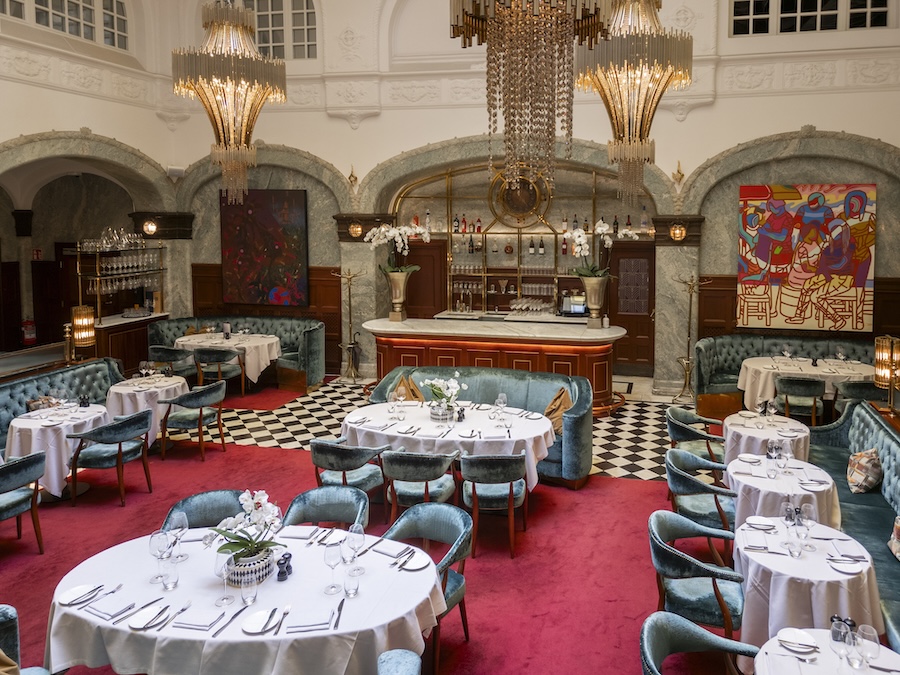
The restaurant is named after Bonnie Parker of the bank-robbing duo. It occupies the original bank hall, beneath a glass ceiling that rises six metres above the floor, with light flooding in across green scagliola vaults and chequered black-and-white marble. Velvet booths in deep emerald. Crystal chandeliers contemporary in design but classical in their proportions.
At breakfast, a continental buffet on silver platters is supplemented by a hot menu (the cardamom buns are spoken of with reverence in the trade), a green juice with a jalapeño edge, eggs of every kind. At lunch and dinner the rhythm shifts. The menu draws on coastal European influences with a subtle French leaning, and the hotel classics, the Caesar salad among them, are well executed. The signature dessert, a chocolate piggy bank filled with meringue, blackcurrant compote, vanilla parfait and fudge, is a self-aware nod to the building’s heritage that manages, somehow, never to feel like a gimmick.
Below the restaurant, in the original bank vault, La Voûte now functions as a private events space and wine cellar. The vault door, heavy, original, unmistakably bank, still opens and closes. The treasure hidden now is a serious bottle collection.
Le Hibou, on the Roof
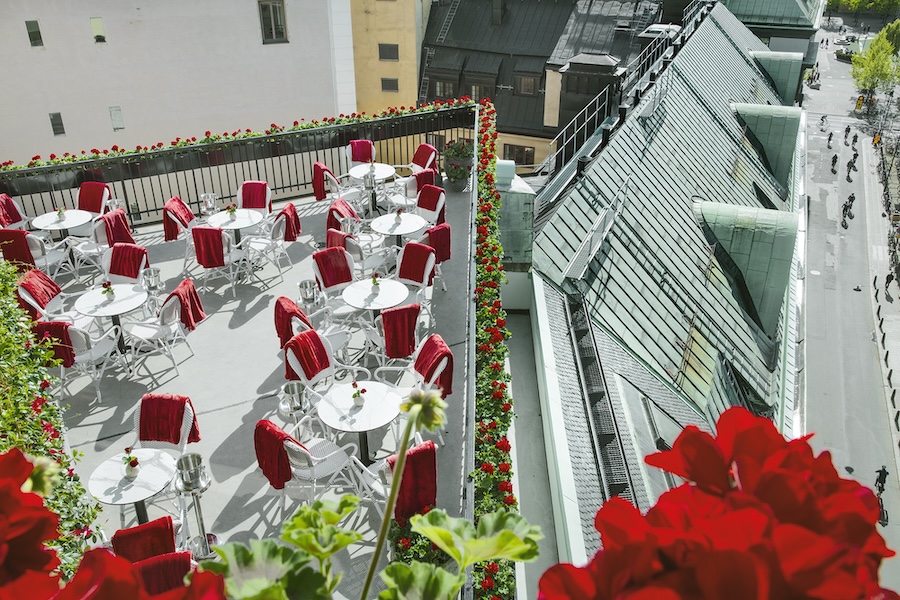
If Bonnie’s is the bank hall and Papillon is the director’s office, Le Hibou is what happens when you climb to the top of the building and find that someone has built a Parisian apartment on the roof. Brass ceilings, white sofas, expressive art on the walls, two outdoor terraces opening over the rooftops of Norrmalm. It is reached, by a quirk of the building’s geometry, through a separate entrance and elevator next door, which has the unintended consequence of making Le Hibou feel less like a hotel bar and more like a destination one is fortunate to discover.
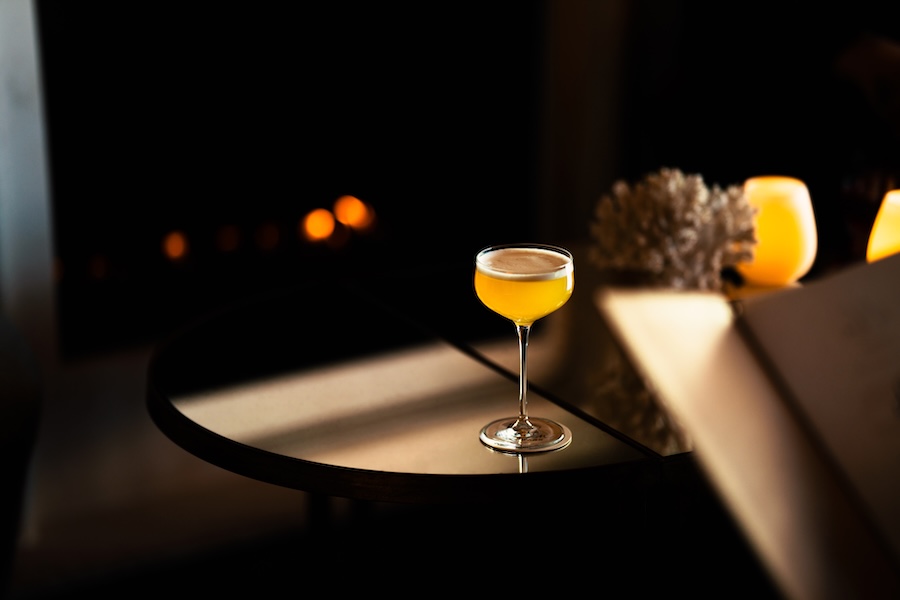
In 2026, Le Hibou was named Sweden’s Best Hotel Bar by Falstaff Nordics. In 2025, it won both Best Cocktail Bar and Best Cocktail Menu at the Bartender’s Choice Awards. The menu reads like a love letter to produce in all its temporal states: ripe and green mango, ripe and green Swedish strawberries, rhubarb at every stage of its season. The Green Banana, with Bacardi Superior, green banana and yuzu, is the signature, but the off-menu requests are where the bar’s depth becomes visible. The staff will build a drink to your mood.
A Bank of Memories
A hotel is, in the end, a deposit. You leave something there, a few days of your life, a state of mind, an evening that mattered, and you trust the institution to keep it for you. The best hotels are the ones from which the deposit can be withdrawn years later, intact: a sentence overheard in the bar, a piece of soap that smelt of orange blossom, the particular angle of light through a window at six in the morning.
Bank Hotel was, for over a century, where Stockholm kept its money. It is now where the city’s visitors keep something harder to value. That is the only renovation that matters.
Bank Hotel. Arsenalsgatan 6, 111 47 Stockholm, Sweden
www.bankhotel.se