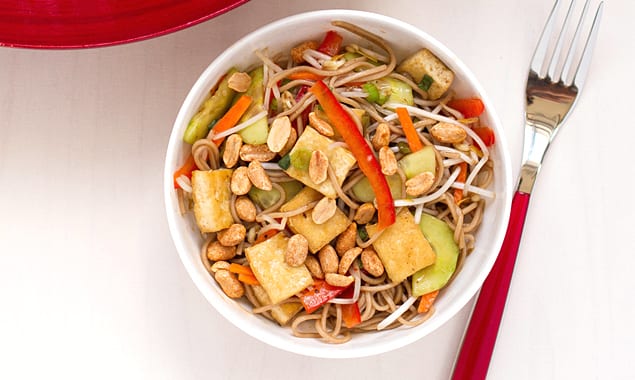
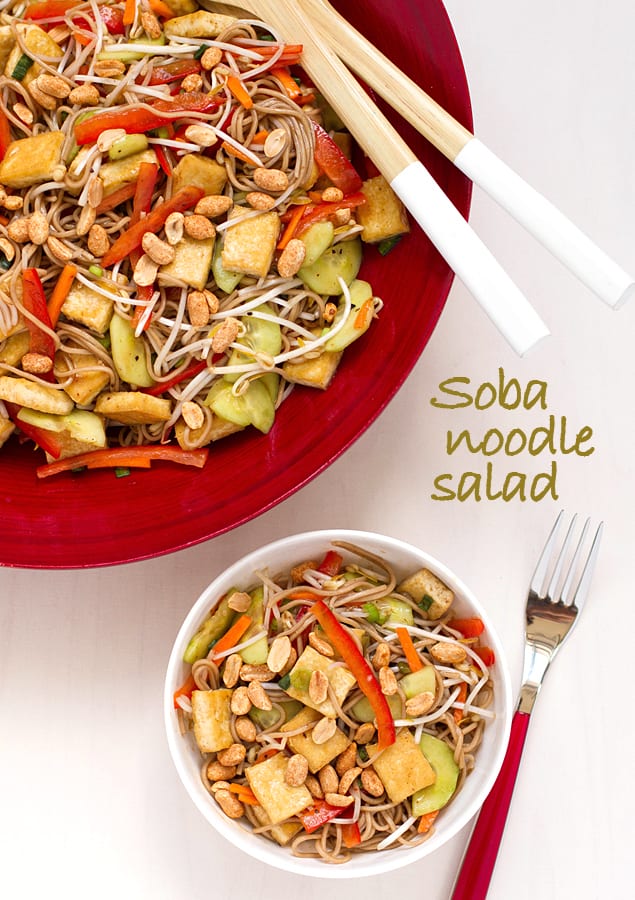
In this salad, Japanese buckwheat noodles are tossed with a fusion of ingredients inspired by Pad Thai.
Soba noodles are great in a salad – firm to the bite and give a lovely earthy balance to fresh vegetables, chewy tofu, crunchy peanuts and deliciously sweet and tangy sauce.
Some notes on tamarind paste: There are several different kinds that have wildly different strengths and textures. I used to buy one that is quite liquid, in a bottle. If you use one like that, you won’t need any water to thin the sauce but you may need to add more paste because it has a milder flavour. Recently, though, I found a tamarind paste that is just that – squashed tamarinds. It’s a block which is quite solid. If you use one like this, you will probably need to add a little water to thin the sauce and you’ll get more flavour to your spoonful of paste. If you get a jar or tub that is somewhere between these extremes, just use your judgment. Note, also, that if you use block paste, you may need to use a blender to mix the sauce.
Find the recipe for the noodle sauce here.
Print
Tofu Soba Noodle Salad
- Total Time: 35 minutes
- Yield: 4 servings
Description
Soba noodles are dressed in a sweet sauce and served with fresh vegetables, peanuts, and tofu.
Ingredients
The sauce
- 2-3 tbsp (30-45 ml) tamarind paste (see note)
- 2 tbsp (30 ml) fish sauce (or soy sauce for vegan)
- 1-2 tbsp sugar (palm sugar or brown sugar preferred)
- 1 tbsp (15 ml) fresh lime juice
- 1 small garlic clove, finely grated
- 1-2 tbsp warm water (to thin, if needed)
- Chili flakes or fresh chili, to taste (optional)
The salad
- 400 g (14 oz) firm tofu
- 2 tbsp (30 ml) peanut oil
- 250 g (9 oz) soba noodles
- 2 spring onions (scallions), chopped
- 1 large red bell pepper (capsicum), julienned
- 15 cm (6-inch) piece English cucumber, peeled and sliced
- 1 medium carrot, peeled and julienned
- 250 g (about 1/2 lb) mung bean sprouts, rinsed and drained
- 1/2 cup (120 ml) roasted peanuts, for garnish
Instructions
- Make the sauce: using the smaller quantity of tamarind and sugar first, whisk together the tamarind paste, fish sauce, sugar, lime juice, and garlic in a bowl. Add a tbsp of warm water if the sauce is too thick (this depends on the style of tamarind paste — see note). Taste and adjust the ratios for your preference of sweet versus tangy. Set aside.
- Press the tofu dry between sheets of paper towel, then cut into bite-sized pieces. Heat peanut oil in a large skillet and fry the tofu until crisp and brown, a few minutes on each side — work in batches if necessary. Remove from heat and spread on paper towel to drain and cool slightly. They will become chewy as they cool.
- Cook the soba noodles according to the package directions — they are better slightly undercooked. Drain, rinse with cold water, drain again well, and toss in a large bowl with the sauce.
- Combine the dressed noodles, tofu, and all the vegetables. Refrigerate until well chilled.
- Sprinkle with roasted peanuts just before serving.
Notes
- Tamarind paste comes in very different strengths depending on the type: a liquid bottle variety is milder and may need more paste, while a solid block is more intense and will likely need thinning with a little water.
- If you use block paste, a blender helps get the sauce smooth.
- Start with less and taste as you go.
- Prep Time: 20 minutes
- Cook Time: 15 minutes
- Category: Salad
- Cuisine: Asian Fusion
Nutrition
- Serving Size: 1 serving
- Calories: 430
Frequently Asked Questions
What type of tamarind paste should I use for the sauce?
You can use either a liquid tamarind paste from a bottle, which may require more paste for stronger flavor, or a solid block paste that will need some water to thin it out.
How should I prepare the tofu for this salad?
You should cook the tofu until it’s chewy, which adds a great texture to the salad; you can pan-fry, bake, or grill it based on your preference.
How do I know when the soba noodles are cooked properly?
Soba noodles should be firm to the bite, so follow the package instructions for timing and taste a strand a minute or two before the suggested cooking time to ensure they are not overcooked.
If You Liked This Recipe, You’ll Love These
- Spicy Peanut Tofu
- Grilled Tofu Tacos with Pickled Radishes
- Warm Asparagus Salad with Bacon, Egg, and Hazelnuts
- Lemony Chickpea Salad with Spring Onions and Harissa Mustard Dressing