
We apologize to traditional fried chicken, but it’s time to move over and welcome a new Emperor.
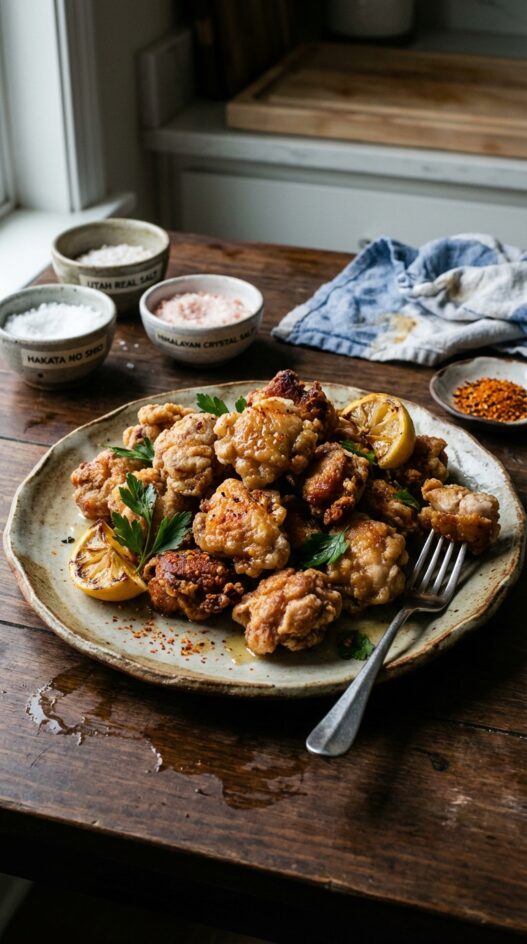
Chicken Karaage is everyone’s favorite Japanese style fried chicken dish. It is made by marinating bite-sized pieces of chicken, typically thigh for its richer flavor and succulent texture, in a mixture of soy sauce, sake, ginger, and garlic.
The marinade infuses the meat with a blend of kick-ass flavors, and also ensures that each bite stays moist and aromatic throughout the frying process. The chicken is then dredged in potato starch or cornstarch, giving it a unique texture that sets it apart from other fried chicken varieties.
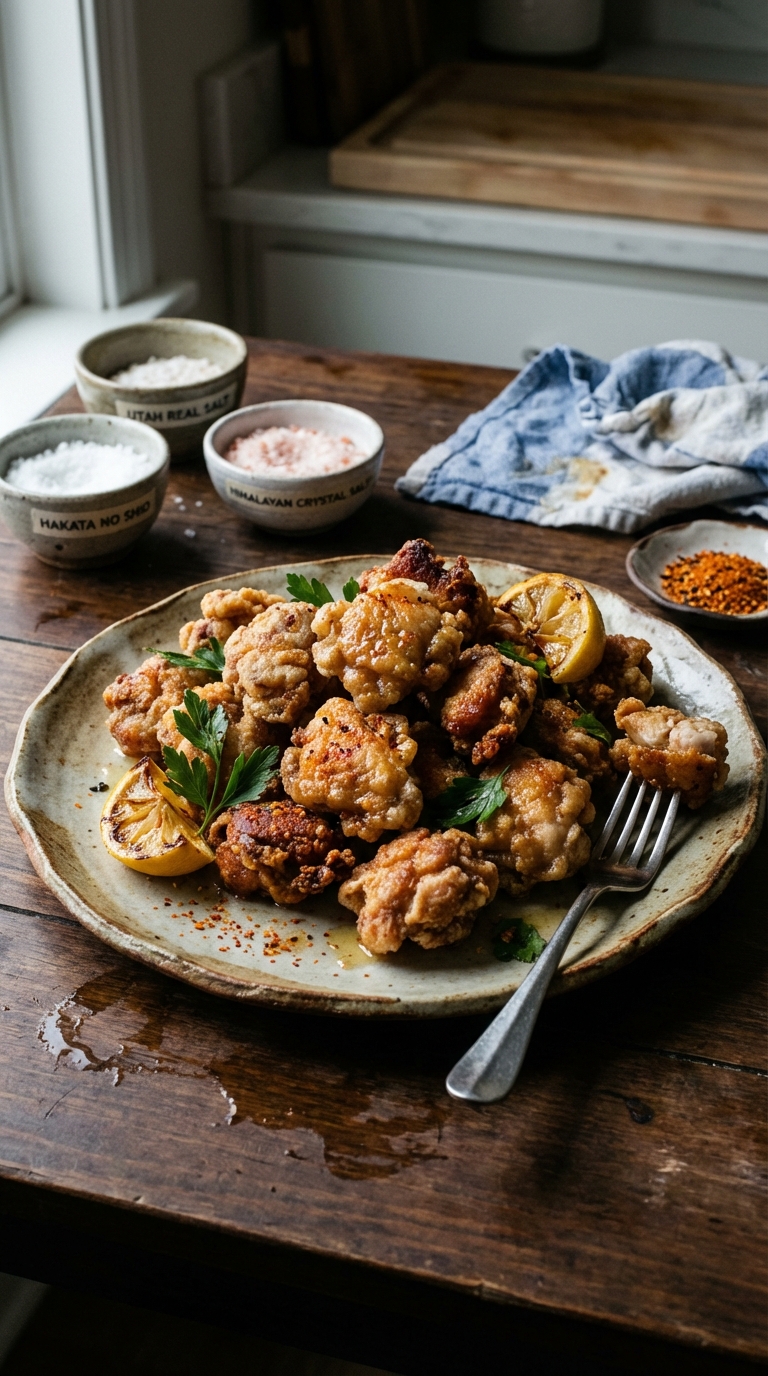
The result is a golden, crispy exterior that encases the tender, flavorful meat within, creating perfect texture and flavor that is as satisfying as it is addictive.
Sorry Colonel!
How to Make Chicken Karaage
Marinate the Chicken:
- In a non-reactive bowl, mix together the sake, soy sauce, shredded garlic, shredded ginger, powdered fish broth, and shichimi togarashi.
- Add the chicken pieces to the bowl, ensuring each piece is well coated with the marinade. Cover the bowl and refrigerate for at least 10 minutes.
Prepare for Frying:
- Heat vegetable oil in a deep fryer or a tall-sided heavy pot on the stove to 350°F (177°C). If using a pot, fill it no more than half full.
- Place potato starch in a shallow dish for dredging.
Fry the Chicken:
- Remove chicken from the marinade and dredge each piece in potato starch, tapping off the excess.
- Fry the chicken in batches to avoid crowding, for about 5 minutes or until golden brown and cooked through.
- Remove chicken from oil and drain on a tray lined with paper towels to remove excess oil.
Serving:
- Arrange the fried chicken on a warmed serving platter.
- Garnish with lemon wedges, parsley, and a sprinkle of shichimi togarashi.
- Serve immediately with your choice of salt varieties on the side for dipping.
Recipe Notes:
- Ensure chicken pieces are dried before marinating to allow better absorption of flavors.
- Test oil temperature by dropping a small amount of potato starch; if it sizzles, it’s ready.
- Do not overcrowd the frying pot; it lowers the oil temperature and can lead to soggy chicken.
- Letting the chicken rest for a few minutes after frying can enhance its crispiness.

How to Make Chicken Karaage
- Total Time: 35 minutes
- Yield: Serves 4
- Diet: Omnivore
Description
Crispy, juicy chicken karaage—so much better than regular fried chicken! A Japanese classic, perfect for a weeknight dinner.
Ingredients
- 1 Tbsp + 1 tsp sake
- 2 tsp soy sauce
- 0.75 tsp garlic, shredded
- 0.75 tsp ginger, shredded
- 1 tsp powdered fish broth
- Pinch of shichimi togarashi (seven flavor chili pepper)
- 1.5 lbs (680 g) chicken thighs or breasts, boneless, skin on or off, cut into 1-inch pieces
- Vegetable oil for deep frying
- 0.5 cups (118 ml) potato starch
- Lemon wedges, for garnish
- Parsley, for garnish
- Optional for serving: real salt from Utah, Himalayan crystal salt, hakata no shio (salt from Ehime, Japan)
Instructions
Marinate the Chicken
- In a non-reactive bowl, mix together the sake, soy sauce, shredded garlic, shredded ginger, powdered fish broth, and shichimi togarashi. Add the chicken pieces to the bowl, ensuring each piece is well coated with the marinade. Cover the bowl and refrigerate for at least 30 minutes and up to several hours.
Prepare for Frying
- Heat vegetable oil in a deep fryer or a tall-sided heavy pot on the stove to 350°F (177°C). If using a pot, fill it no more than half full. Place potato starch in a shallow dish for dredging.
Fry the Chicken
- Remove chicken from the marinade and dredge each piece in potato starch, tapping off the excess. Fry the chicken in batches to avoid crowding, for about 5 minutes or until golden brown and cooked through. Remove chicken from oil and drain on a tray lined with paper towels to remove excess oil.
Serving
- Arrange the fried chicken on a warmed serving platter. Garnish with lemon wedges, parsley, and a sprinkle of shichimi togarashi. Serve immediately with your choice of salt varieties on the side for dipping.
Notes
- For extra crispy karaage, double dredge the chicken in potato starch, ensuring each piece is fully coated.
- If you don’t have potato starch, cornstarch can be used as a substitute, but the texture might be slightly different.
- Store leftover karaage in an airtight container in the refrigerator for up to 2 days. Reheat in a 350°F oven for optimal crispiness.
- Prep Time: 15 minutes
- Marinating Time: 30 mins
- Cook Time: 20 minutes
- Category: Main Course
- Method: Deep-Frying
- Cuisine: Japanese
Nutrition
- Serving Size: 150g
- Calories: 400
- Sugar: 2
- Sodium: 600
- Fat: 25
- Saturated Fat: 5
- Unsaturated Fat: 15
- Carbohydrates: 20
- Fiber: 2
- Protein: 30
- Cholesterol: 100
Frequently Asked Questions
How long should I marinate the chicken for the best flavor?
You should marinate the chicken for at least 30 minutes, and up to several hours, to allow the flavors from the sake, soy sauce, ginger, and garlic to infuse into the meat.
Is it necessary to use potato starch for dredging the chicken?
Yes, potato starch is recommended for dredging because it creates a unique crispy texture that sets Chicken Karaage apart from other fried chicken varieties.
What temperature should the oil be for frying the chicken?
Heat the vegetable oil to 350°F (177°C) for optimal frying, ensuring the chicken cooks evenly and achieves a golden, crispy exterior.



Fabulous! Am thinking potato starch definitely is the way to go. I used Indian black salt and Himalayan pink salt as garnishes.
Indian black salt sounds like a great topping!!
Once you karaage you never go back.
I have tried so many fried chicken recipes over the years and they ALWAYS seem to find ways to disappoint. This one did NOT. Fantastic, so perfectly crispy, tender and still juicy. I have finally found it!!!
Shoutout from Asia! Great recipe, this is exactly how fried chicken should taste!
I made this tonight, and I have to say that it is by far the best fried chicken I have ever made at home. I felt like a proper chicken-chef tbh!!!
Hotdang this is great. Just like at my local izakaya when I visited Tokyo last spring!