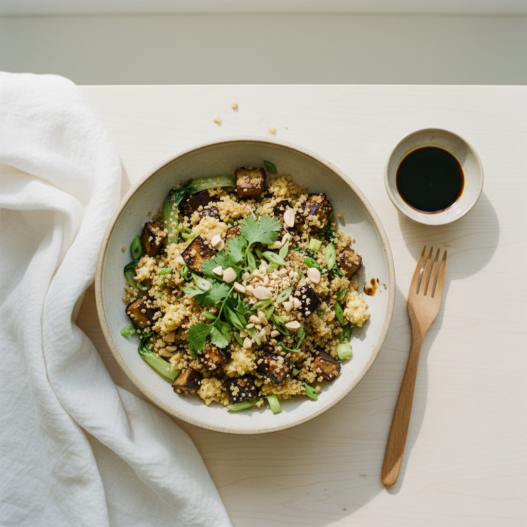
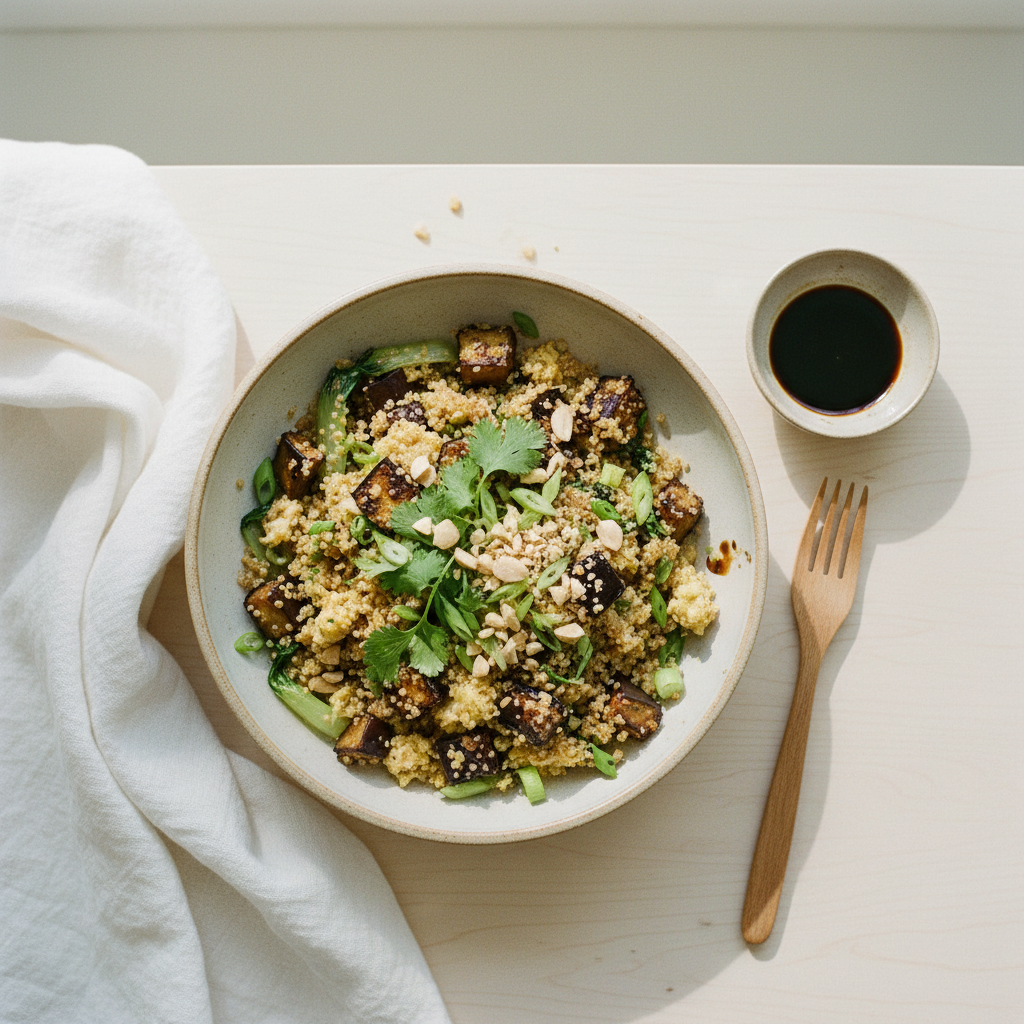
This is the kind of meal you make after a grueling day at work that turns into an even longer night of a few too many pre-dinner drinks to compensate the above stated stress. Whether overworked, over stressed, or hung-over, this is the perfect recovery food salty, fatty, lip smacking delicious, that also happens to be good for both your body and soul.
I have never been a late-night-Chinese-take-out food kinda gal, but several months back, I got home from a long day turned into night to an empty fridge, with nothing but leftover, quinoa, a bag of frozen peas, eggs, and soy sauce. Without much hesitation, or a plan mapped out, everything magically landed on the pan and came together beautifully in minutes, though as messy as I felt. Every single craving I might have been having was immediately satisfied, one bite at a time. Sweet peas popping one after the other coated in salty miso and soy, laced in velvety egg and spiked with spicy ginger. Delicious.
Because my immediate crush on this newly discovered recipe was not going naway, I decided to build on it and develop a recipe that was as delicious but slightly more complex. I wanted to explore the potential of using different vegetable combinations to achieve a layered flavor experience. Since the end of summer is upon us, eggplant was the vegetable of choice. To balance the eggplant’s creaminess I incorporated bok choy for crunch and freshness. The perfect balance of earthy eggplant and herbaceous bok choy served as the perfect foil to the salty combination of soy and miso.
This recipe is flexible, and you should feel empowered to work with whatever ingredients the season brings as long as that soy-miso-ginger to egg and quinoa balance remains intact. I can’t wait to try a version during fall with cauliflower and some sort of squash, or even carrots and sweet potatoes could be amazing, or during early spring a combination of wild leeks and peas. The key here being to keep it simple, while still experimenting with the flavor profiles and textures you like.
Print
Fried Quinoa with Eggplant and Chinese Cabbage
- Total Time: 45 minutes
- Yield: Serves 2
- Diet: Gluten-Free, Omnivore, Vegetarian
Description
Salty, fatty, and lip-smacking delicious! This fried quinoa bowl balances earthy eggplant and bok choy with savory soy and miso.
Ingredients
- 1 cups (237 ml) quinoa
- 1 cups (237 ml) vegetable broth or water
- 1 pinch of salt
- 1 cups (237 ml) eggplant cubed small, from half a large eggplant
- 2 tbsp. vegetable or sunflower oil
- 2 garlic cloves, peeled and diced
- 1 small onion, diced small
- 2 tbsp. tamari, or soy sauce
- 1 tbsp. water
- 1 tbsp. miso paste
- 1-inch knob fresh ginger, peeled and grated
- 1 bunch Chinese cabbage (bok choy)
- 2 eggs
- 1 handful fresh cilantro
- 2 green onions, sliced
- 1 tbsp. roasted peanuts or sunflower seeds
Instructions
- Place quinoa in a large bowl with enough water to cover it by an inch. Stir quinoa a couple of times, then drain through a sieve.
- In a pot, place 1 cup of vegetable broth or water with 1 cup of quinoa and a pinch of salt.
- Bring water to a boil, and then reduce heat to medium-high.
- Simmer until most of the water has been absorbed.
- Turn heat to low, cover and cook for another 10-15 minutes.
- Quinoa is cooked when translucent, a small white ring will emerge around the grain when ready.
- Remove from heat and set aside until ready to use.
To make Fried Quinoa
- Place a cast iron pan over high heat.
- When hot, add a tablespoon of oil and eggplant.
- Cook, stirring occasionally, for about ten minutes until eggplant is soft throughout and crispy on the edges.
- Add another tablespoon of oil if necessary.
- Place another large sauté pan over high heat.
- Add another tablespoon of oil, diced onions and garlic.
- Reduce heat to medium and cook until translucent and soft (about 5-8 minutes).
- In a separate cup whisk together soy sauce, miso paste, and ginger.
- Add soy-miso paste into the pan and stir.
- Reduce heat to low.
- Add cooked quinoa and eggplant. Stir until well incorporated.
- Thinly slice Chinese cabbage and add to pan, cover for a couple of minutes, until cabbage starts to wilt.
- Whisk two eggs together then pour over quinoa.
- Stir constantly for two minutes until softly scrambled and well incorporated.
- Remove from heat.
- Add chopped cilantro, green onions and peanuts over quinoa.
- Serve immediately with a side of soy sauce.
Notes
- For a richer flavor, use a combination of vegetable broth and water to cook the quinoa.
- If you don’t have fresh ginger, you can substitute 1/2 teaspoon of ground ginger.
- To prevent the quinoa from becoming mushy, be sure to fluff it with a fork after cooking and before adding it to the pan.
- Prep Time: 15 minutes
- Cook Time: 30 minutes
- Category: Main Course
- Method: Stir-Frying
- Cuisine: Asian
Nutrition
- Serving Size: 1.5 cups
- Calories: 450
- Sugar: 5
- Sodium: 600
- Fat: 20
- Saturated Fat: 4
- Unsaturated Fat: 14
- Carbohydrates: 60
- Fiber: 8
- Protein: 15
- Cholesterol: 100
Frequently Asked Questions
Do I need to cook the quinoa before frying it?
Yes, cook and cool the quinoa first. Spreading it on a sheet pan to cool helps remove excess moisture, which is what gives you a crispy texture when it hits the hot pan.
How do I keep the eggplant from absorbing too much oil?
This recipe skips salting — cook the cubed eggplant directly in a hot cast iron pan with just a tablespoon of oil, stirring occasionally for about 10 minutes until it’s soft throughout and crispy at the edges. The high, dry heat keeps it from soaking up excess oil; add another tablespoon of oil only if the pan looks dry.
What type of Chinese cabbage should I use?
Bok choy is the variety used in this recipe. Shred it into thin strips and add it near the end of cooking so it wilts slightly but keeps some crunch.