Last month I attended a blogger event at Borough Market, my favorite food market in all of London (and possibly the world). Borough Market hosts chefs at its demonstration kitchen for temporary “residencies,” allowing visitors to the market to learn tips and tricks for using the market’s freshest ingredients. This month, Italian food expert Ursula Ferrigno, who is regularly featured on BBC Good Food and is an instructor at my alma mater, Leith’s School of Food and Wine, is the featured chef. I spent a few hours with Ursula and other bloggers learning how to make fresh pasta. It. Was. Life. Changing.
I’ve always thought of making pasta from scratch as really intimidating and quite frankly, out of my league. I don’t have an Italian nonna (grandmother). Even though my people invented noodles, the limitless shapes, sizes and kinds of Italian pasta always struck me as a mystery. A tasty, beautiful mystery, but a mystery nonetheless.
As it turns out, Ursula Ferrigno showed us a method for making pasta without a machine, and it couldn’t be more straightforward. The key with making pasta, as I’ve learned both in culinary school and in Ursula’s class, is to make sure your dough is pliable and smooth. It should feel kind of like refrigerated silly putty by the time you’ve finished kneading it. If it’s sticky, pillowy, or cracks easily — well, I hate to say it, but you’re not going to make good pasta.
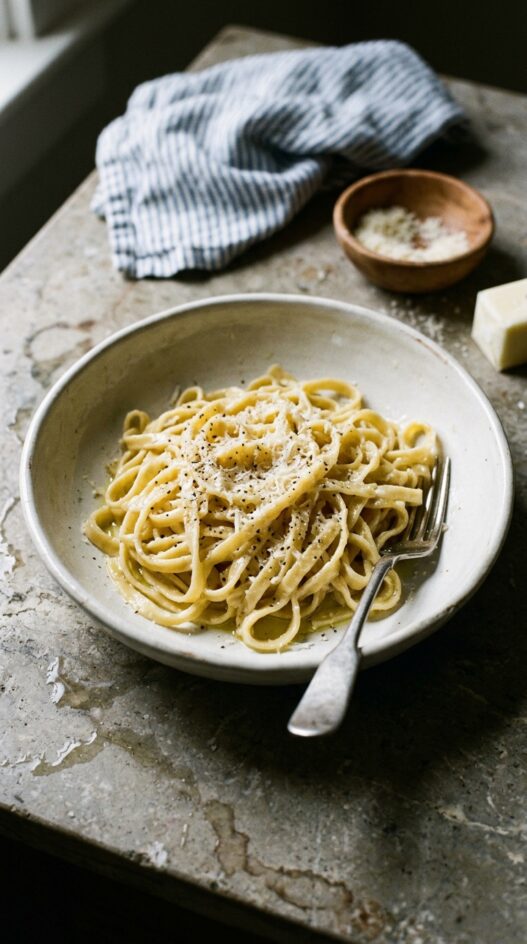
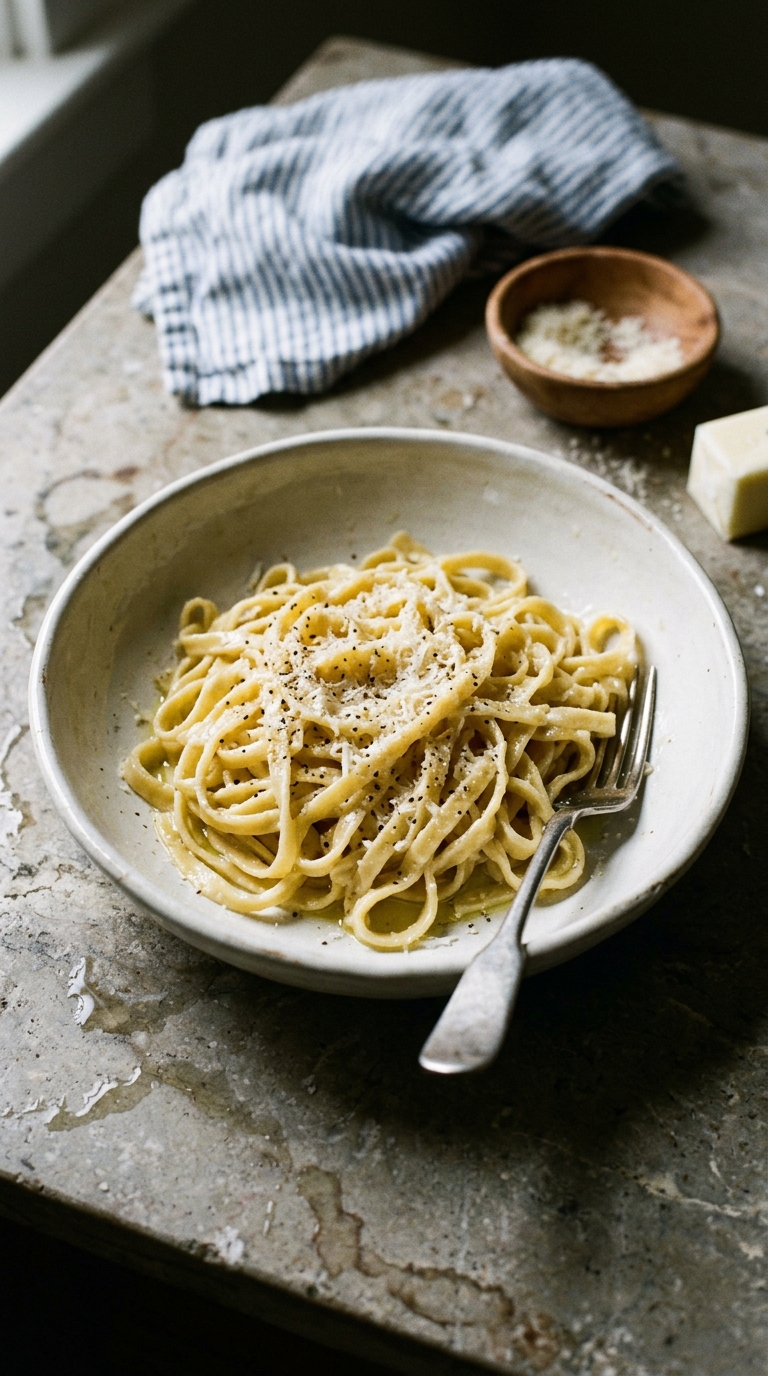
The pasta that this recipe produces is gorgeous — just the right amount of bite, with a heavenly mix of doughiness. I love that I can make enough pasta for appetizers for my whole family using this recipe. I mean, I could easily double it and make enough for dinner-sized portions, but really, I don’t want to spoil my family into thinking that they can come home after a long day and sit down to a meal of fresh pasta like, every night.
Print
Fresh Pasta without a Machine
- Total Time: 24 minutes
- Yield: Serves 2
Description
Homemade pasta doesnt need a fancy machine. This recipe shows you how to make fresh pasta from scratch, easily.
Ingredients
- 4 oz (100 g) tipo "00" flour
- 4 oz (100 g) semolina flour
- 2 high-quality eggs
- splash of good quality olive oil
- freshly grated Parmesan cheese
- salt
- pepper
Instructions
- Mix together the flours on a flat surface and make a well in the center. Crack both eggs into the well and add the oil. Using a fork, whisk together the eggs until light and fluffy. Gradually incorporate the flours into the center until a dough forms.
- Using the fleshy part of your palms, knead the pasta dough until smooth and silky. Flatten the dough into a disk, wrap with plastic wrap, and refrigerate for 10 minutes.
- Cut the chilled dough in half and shape each half into a ball. Begin rolling out the dough with a long rolling pin, shaping the sides to create a long oval.
- Continue rolling the dough until it is thin enough to see your hand through it. Fold the ends into the middle, then fold the folded ends in again toward the middle. Repeat one more time.
- Trim the edges of the folded pasta and cut thin strips. Weave your knife through the folds, shaking the knife to loosen the pasta threads.
- Boil the pasta in heavily salted water for around 4 minutes until al dente.
- Serve with grated Parmesan cheese, salt, pepper, and olive oil.
Notes
- If the dough is too dry, add a teaspoon of water at a time until it comes together.
- For a richer flavor, use a combination of “00” and whole wheat flour.
- To prevent sticking, dust the pasta with semolina flour before cutting and after cooking.
- Prep Time: 20 minutes
- Cook Time: 4 minutes
- Category: Main Course
- Cuisine: Italian
Nutrition
- Serving Size: 1 serving
- Calories: 350
- Sugar: 2
- Sodium: 200
- Fat: 15
- Saturated Fat: 5
- Unsaturated Fat: 10
- Carbohydrates: 60
- Fiber: 4
- Protein: 10
- Cholesterol: 150
Frequently Asked Questions
What should the texture of the pasta dough be like after kneading?
The dough should be pliable and smooth, resembling refrigerated silly putty.
How can I tell if my pasta dough is too sticky or too dry?
If the dough is sticky or pillowy, it may need more flour; if it cracks easily, you may need to add a little water.
What is an essential technique for rolling out the pasta without a machine?
You should use a rolling pin to evenly roll out the dough, ensuring it’s thin and even without tearing.
If You Liked This Recipe, You’ll Love These
- Tuscan Meatballs in Tomato Sauce
- Vegetarian Carbonara with Greek Yogurt
- Vegan Lemon Pepper Pasta
- Vegan: Creamy Tomato Pasta Sauce