
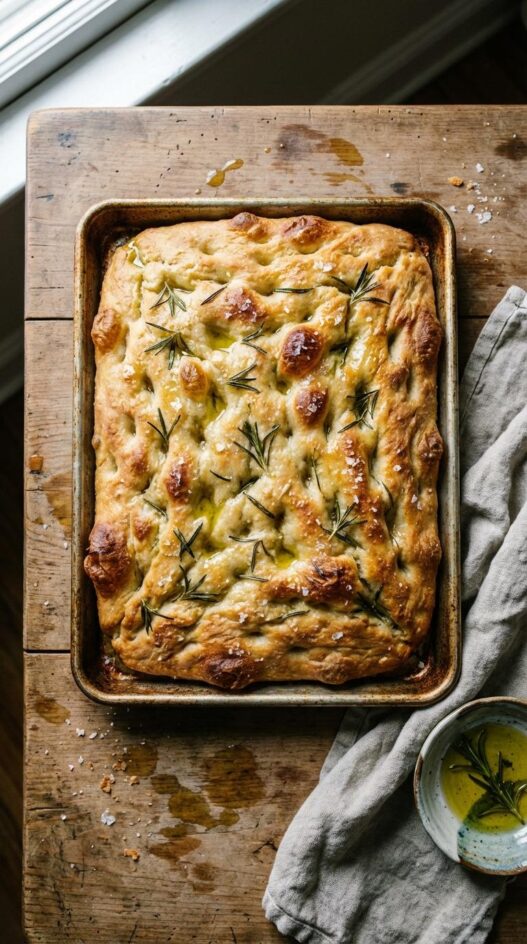
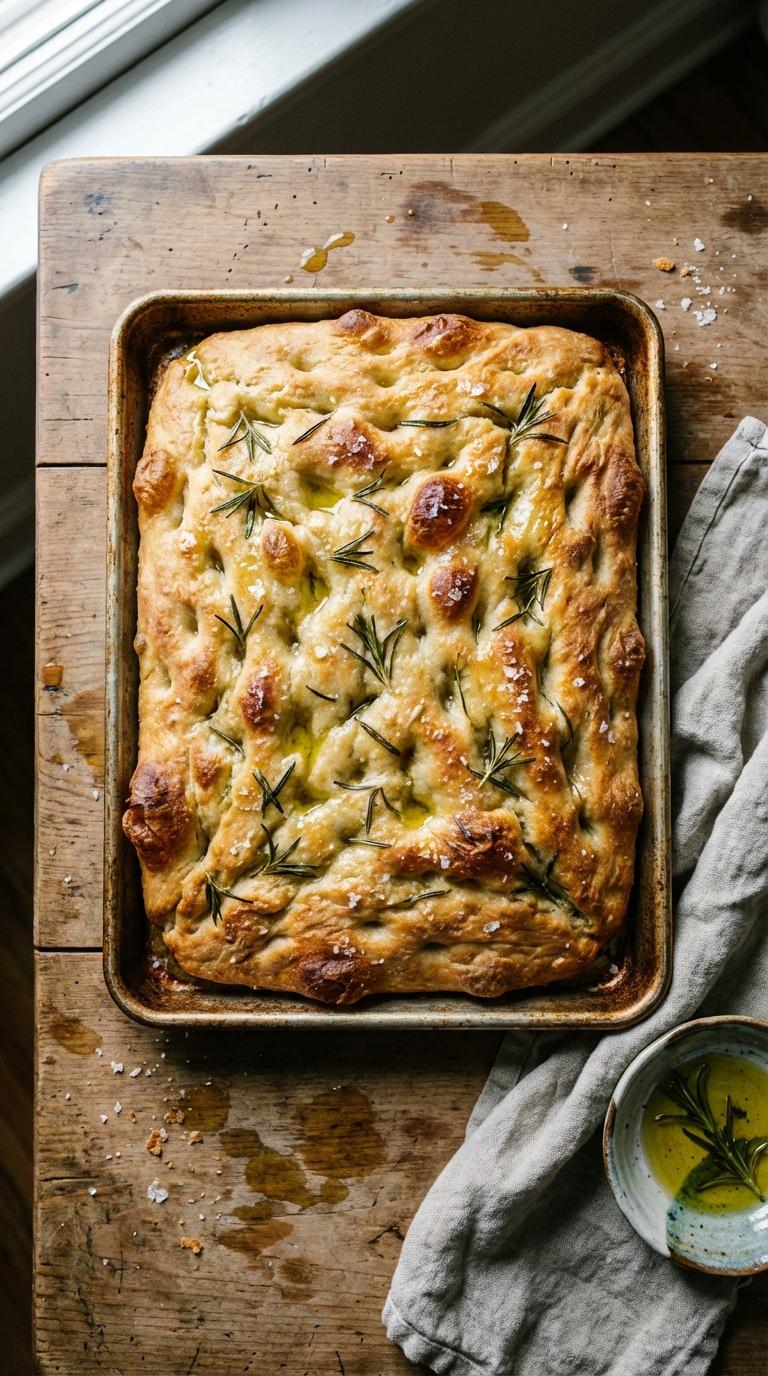
Focaccia is the best entry point into bread baking. Not because it is simple to master but because it is forgiving in ways that leaner doughs are not. The generous amount of olive oil in the pan and throughout the dough creates a buffer between you and disaster. Even a slightly underproofed or slightly over-dimpled focaccia still comes out of the oven with a crispy bottom, an open interior. Enough olive oil flavor to make it worth eating warm with nothing else.
This version uses stretch-and-folds instead of traditional kneading, which handles the high-hydration dough without the mess. Three rounds of folds with 15-minute rests between them builds structure without overworking anything. When you dimple the dough before baking, press all the way to the bottom of the pan: those deep craters hold pools of olive oil and flaky salt. Clean flavors. Rosemary and flaky sea salt is the classic topping, and there is no real reason to complicate it. Eat it the same day, or reheat at 375F for a few minutes to bring the crust back. This one earned its place in our weekend baking rotation the first time we made it.
Mix and Stretch-and-Fold
Whisk together flour, yeast, and salt. Add warm water and olive oil, then stir until a very wet, shaggy dough forms. Cover and rest for fifteen minutes. With wet hands, perform a stretch-and-fold: grab one side of the dough, stretch it up, and fold it over the center. Rotate the bowl ninety degrees and repeat. Do this four times total, then cover and rest fifteen minutes. Repeat the stretch-and-fold process two more times with fifteen-minute rests between. This builds gluten without traditional kneading.
Oil the Pan and Let It Rise
Pour olive oil into a large rimmed baking sheet or nine-by-thirteen-inch pan, coating the bottom completely. Transfer the dough to the pan and gently press it toward the edges with oiled hands. It will not fill the pan yet. Cover and let rise for about one hour until puffy and nearly filling the pan. The dough should look airy and feel soft.
Dimple Deeply and Bake
Drizzle more olive oil over the top of the risen dough. Press your fingertips straight down all the way to the bottom of the pan, creating deep dimples across the entire surface. Do not be gentle. Scatter rosemary and flaky salt over the top. Let rest uncovered for twenty minutes while the oven preheats to 425F. Bake for twenty-five to thirty minutes until deeply golden on top and the bottom is crisp. Let cool slightly before slicing.
Print
Focaccia
- Total Time: 180 minutes
- Yield: 8 servings
Description
A golden, olive oil-rich Italian flatbread with a crispy bottom, pillowy interior, and dimpled top that catches pools of oil and flaky salt. Focaccia is both a satisfying bread on its own and a canvas for toppings like fresh rosemary, cherry tomatoes, or olives. The generous amount of olive oil and high hydration create its distinctive open, airy crumb.
Ingredients
- 4 cups (520g) bread flour
- 2 teaspoons instant yeast
- 2 teaspoons fine sea salt
- 2 cups (475ml) warm water (105-110F)
- 6 tablespoons extra-virgin olive oil, divided
- 1 tablespoon fresh rosemary leaves
- Flaky sea salt for topping
Instructions
- In a large bowl, whisk together the flour, yeast, and fine salt. Add the warm water and 2 tablespoons of olive oil. Stir until a shaggy, very wet dough forms. Cover and let rest for 15 minutes.
- With wet hands, perform a series of stretch-and-folds: grab one side of the dough, stretch it up, and fold it over to the other side. Rotate the bowl 90 degrees and repeat. Do this 4 times (one full round), then cover and let rest 15 minutes. Repeat the stretch-and-fold process 2 more times, resting 15 minutes between each round.
- Pour 2 tablespoons of olive oil into a 9×13-inch or rimmed half-sheet pan, coating the bottom evenly. Transfer the dough to the pan. With oiled hands, gently spread the dough toward the edges — it won’t fill the pan yet. Cover and let rise for 1 hour.
- After 1 hour, the dough should be puffy and nearly filling the pan. Drizzle the remaining 2 tablespoons of olive oil over the top. With your fingertips, press firmly into the dough all the way to the bottom of the pan, creating deep dimples across the entire surface.
- Scatter the rosemary leaves and flaky salt over the top. Let rest uncovered for 20 minutes while you preheat the oven to 425F (220C).
- Bake for 25-30 minutes until the top is golden brown and the bottom is crisp. The edges should be deeply golden and pull away from the pan.
- Remove from the oven and let cool in the pan for 5 minutes, then transfer to a cutting board. Slice and serve warm.
Notes
- The dough is intentionally very wet and sticky — use oiled hands instead of floured hands when handling it.
- The stretch-and-fold method replaces traditional kneading for high-hydration doughs.
- Don’t be shy with the dimpling — press all the way to the bottom of the pan to create the signature craters that hold olive oil.
- Focaccia is best eaten the day it’s made, but it reheats well in a 375F oven for 5-8 minutes.
- Category: Main Course
- Cuisine: Italian
Nutrition
- Serving Size: 1 serving
- Calories: 325
- Sugar: 0g
- Sodium: 590mg
- Fat: 11g
- Carbohydrates: 49g
- Protein: 8g
Frequently Asked Questions
Why is my focaccia dense instead of airy?
The most likely issue is adding too much flour. The dough should feel very wet and sticky. Use oiled hands, not floured hands, when handling it. Also make sure you are letting it rise long enough until it looks puffy and airy.
How deep should I press when making the dimples?
Press your fingertips all the way down to the bottom of the pan. Shallow dimples will puff up and disappear during baking. Deep dimples stay visible and create the characteristic texture.
Can I make focaccia dough ahead of time?
Yes. After the stretch-and-fold rounds, refrigerate the dough for up to twenty-four hours. The cold fermentation develops more flavor. Bring to room temperature, transfer to the oiled pan, and proceed with rising and dimpling.





Did the three rounds of stretch and folds with wet hands and it came out great.