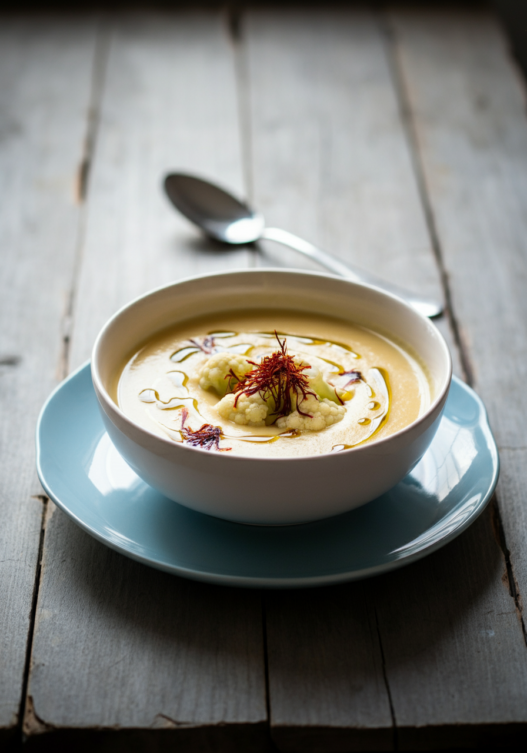
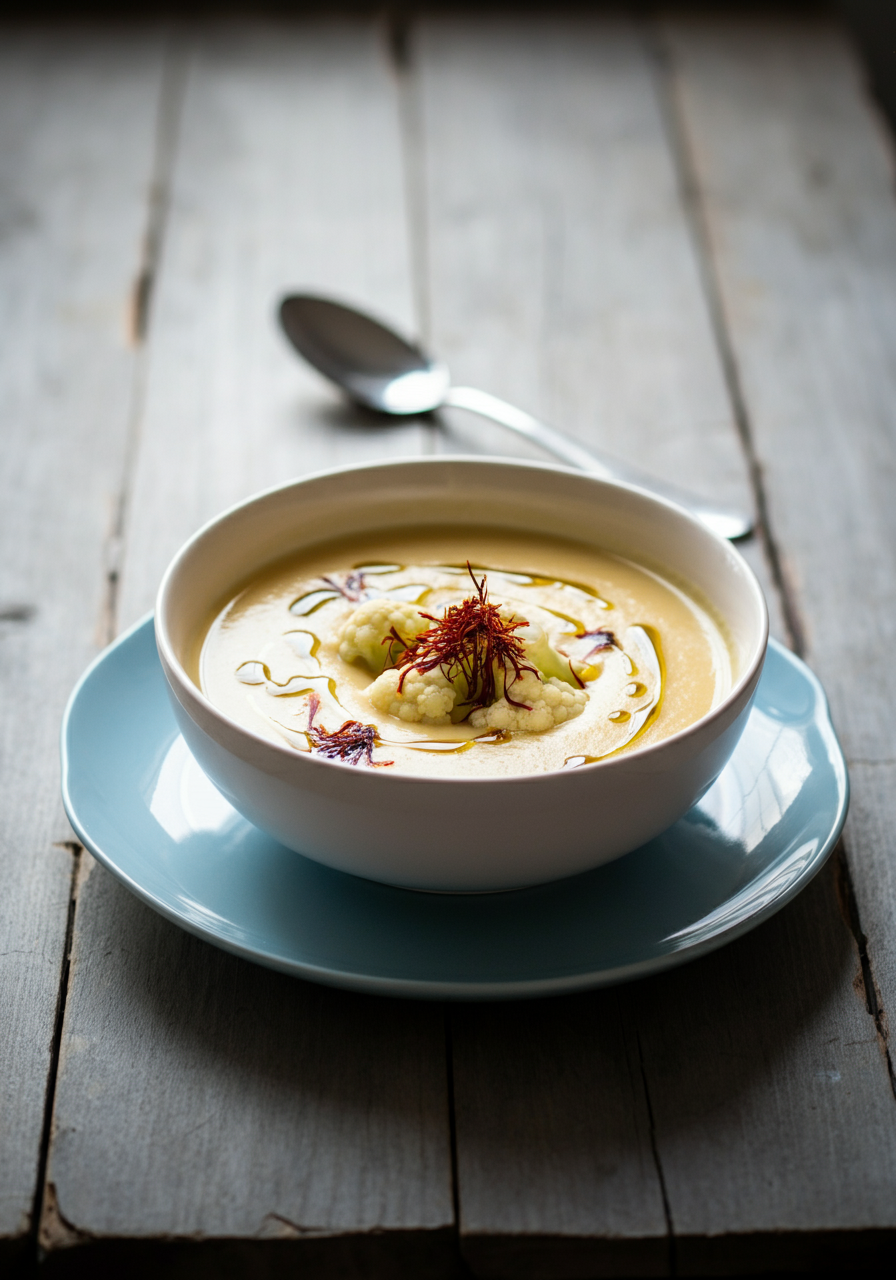
Saffron in soup sounds like it belongs in a restaurant kitchen, but this recipe makes it completely accessible, and the payoff is real. Try it. Cauliflower blends into an almost silky base, and then saffron steeps into it off the heat, turning the whole pot this warm golden amber that looks like you planned it for a dinner party. The sumac oil on top is sharp and citrusy, and it cuts from the the blended cauliflower in exactly the way you want. I first made this on a gray Wednesday when I had a big bag of frozen cauliflower and nothing else particularly interesting in the kitchen, and it turned into my go-to cold-weather soup. Frozen cauliflower works just as well as fresh here, which makes this genuinely pantry-friendly for weeknights when you didn’t plan dinner.
How to Make Creamy Saffron Cauliflower Soup with Sumac Oil
Steep the saffron properly
Turn the heat off before adding the saffron threads. Hot liquid extracts the flavor and color, but boiling destroys some of the more delicate aromatic compounds. Let it steep covered for a full 20 minutes. You’ll see the color shift as it sits. Don’t skip the lid, it keeps the temperature up.
Blending for texture
Blend in batches if you’re using a countertop blender, and don’t fill it more than halfway. Hot soup expands when blended and the pressure can blow the lid. An immersion blender is easier and safer. Blend until completely smooth, no chunks, it should pour like heavy cream.
The sumac oil finish
Whisk together olive oil, sumac, lemon juice, and salt just before serving. Spoon it over each bowl rather than stirring it in, so you get that visible drizzle and a burst of tartness in every few bites. If you can’t find sumac, a squeeze of fresh lemon over the top does similar work.
Creamy Saffron Cauliflower Soup with Sumac Oil
- Total Time: 60 minutes
- Yield: Serves 6
- Diet: Gluten-Free, Vegan, Vegetarian
Description
A vibrant, creamy soup showcasing saffrons delicate flavor. Perfect for a cozy weeknight dinner or a special occasion.
Ingredients
- 2 tbsp extra virgin olive oil
- 1 cups (237 ml) medium onion, chopped
- 2 large garlic cloves, chopped
- 2 lbs (907 g) frozen or fresh cauliflower florets
- 1/2 tsp salt
- 1/4 tsp ground black pepper
- 5 cups (1183 ml) water or vegetable broth
- 20 saffron threads
- 2 tbsp plus 2 tsp sumac
- 4 tbsp extra virgin olive oil
- 1 tbsp fresh squeezed lemon juice
- 1/4 tsp salt
Instructions
- Sauté onion and garlic in olive oil in a large soup pot over medium heat until the onion is translucent, about 10 minutes.
- Add cauliflower florets, salt, and pepper; cook for 10-12 minutes.
- Add 5 cups of water, bring to a boil, and simmer until the cauliflower is tender, 20-25 minutes.
- Turn off the heat. Add saffron, stir, and cover. Let the saffron steep for about 20 minutes.
- Blend the soup in a blender until creamy.
- Serve hot or warm with a drizzle of sumac oil.
- Sumac Oil
- Whisk all ingredients together until well combined.
Notes
- For a richer flavor, use homemade vegetable broth instead of water.
- If you don’t have sumac, you can omit it or substitute with a pinch of paprika for a subtle smoky note.
- Leftover soup can be stored in an airtight container in the refrigerator for up to 4 days. Reheat gently before serving.
- Prep Time: 15 minutes
- Cook Time: 45 minutes
- Category: Soup
- Method: Simmering
- Cuisine: Mediterranean
Nutrition
- Serving Size: 1.5 cups
- Calories: 250
- Sugar: 5
- Sodium: 300
- Fat: 15
- Saturated Fat: 3
- Unsaturated Fat: 10
- Carbohydrates: 35
- Fiber: 5
- Protein: 5
Frequently Asked Questions
Can I use saffron powder instead of threads?
You can, but use about half the amount since powder is more concentrated. Threads give you better control over the flavor intensity and a cleaner golden color.
What is sumac, and where do I find it?
Sumac is a deep red spice made from dried, ground berries. It tastes tangy and slightly fruity, similar to lemon. Find it at Middle Eastern grocery stores or in the spice aisle of well-stocked supermarkets.
Can I make this soup without a blender?
An immersion blender works directly in the pot and is the easiest option. If you only have a standard blender, let the soup cool slightly before blending in batches with the lid vented to avoid pressure buildup.
If You Liked This Recipe, You’ll Love These
- Salade Niçoise: Classic French Tuna Salad
- Herbed Skillet Ratatouille
- Sigeumchi Namul: Korean Spinach Banchan
- Mangú – Mashed Plantains
- Cauliflower Gnocchi with Pea Pesto