
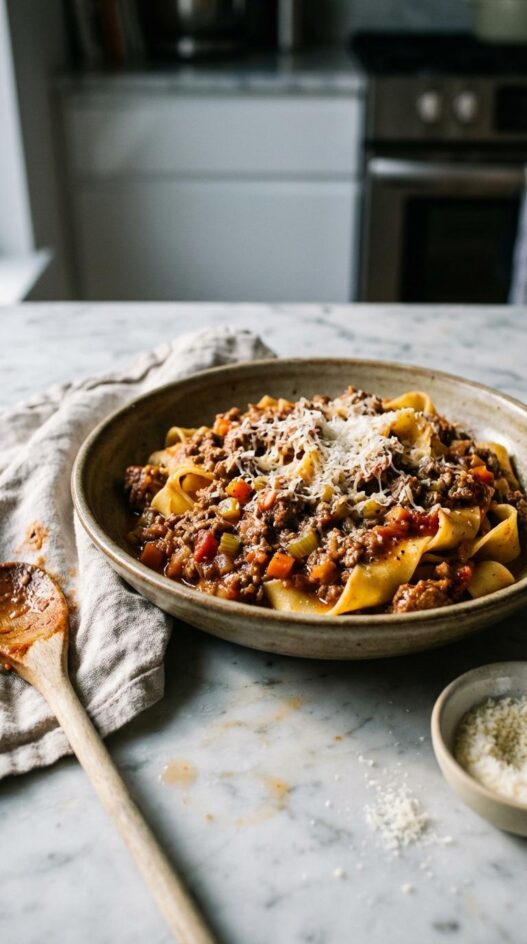
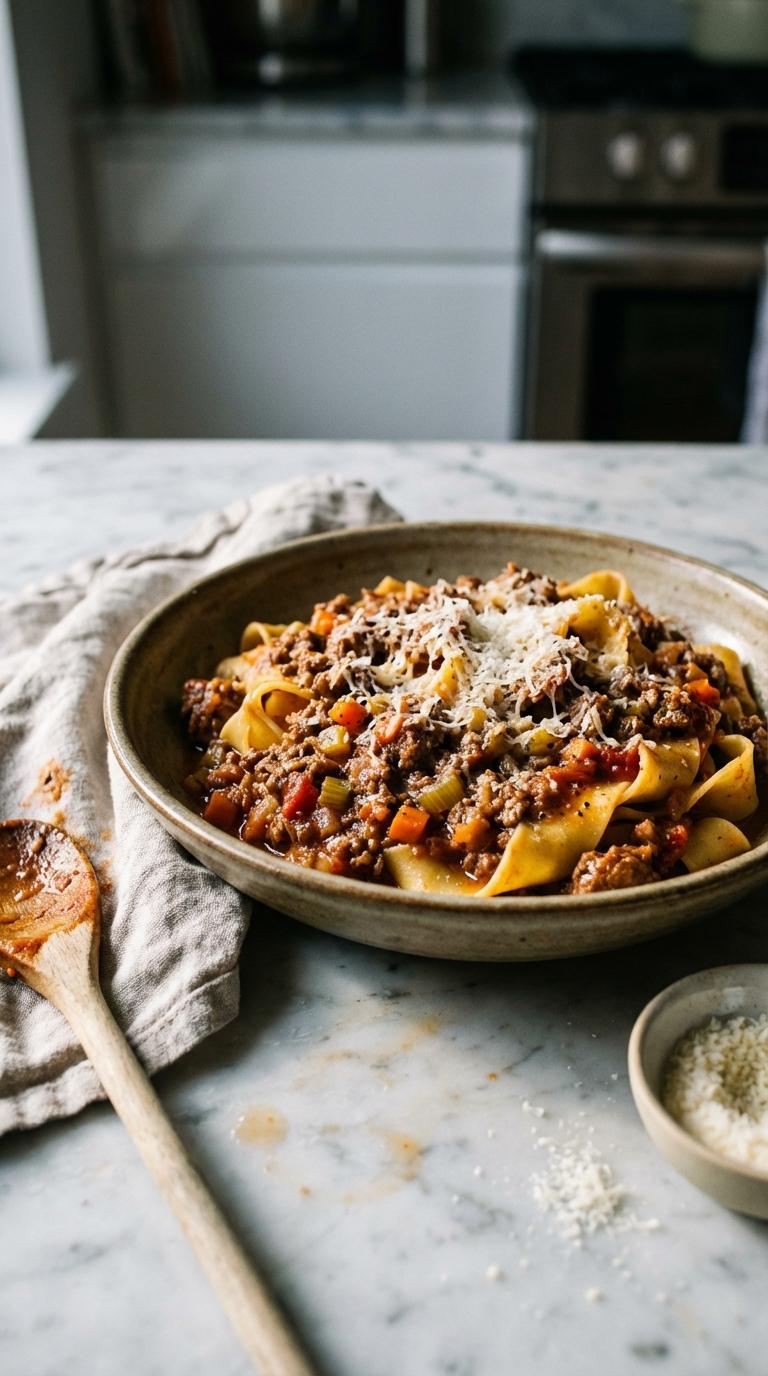
Bolognese is one of those sauces that separates a quick weeknight pasta from something you’d remember eating. Bologna takes slow cooking seriously, and this ragù reflects it. You need a Sunday afternoon, a Dutch oven, and the patience to let ground beef, wine, and milk do their work over low heat for two hours. Nothing about this is difficult. This is the version we stopped tinkering with.
It just requires time. What distinguishes this version from generic meat sauce is the milk, added before the wine and simmered until absorbed. It coats the beef proteins and produces a texture that is silky rather than grainy. The nutmeg is quiet but important. Pappardelle or tagliatelle are the right choices here: wide, flat pasta that grabs the thick ragù and holds it. This sauce freezes well, so making a double batch on the weekend pays dividends for weeks.
Cook the Soffritto Until Completely Soft
Heat olive oil and butter in a large Dutch oven over medium heat. Add very finely diced onion, carrot, and celery – the pieces should be no larger than a grain of rice. Cook slowly for about eight minutes, stirring occasionally, until the vegetables are completely soft and translucent. Do not let them brown. This soffritto is the aromatic base of the sauce, and it needs to be cooked thoroughly before you add the beef.
Add Milk First, Then Wine
Increase the heat and brown the ground beef, breaking it into fine crumbles. Once browned, pour in the milk and let it simmer, stirring occasionally, until mostly absorbed – about eight minutes. This step is what makes it Bolognese instead of regular meat sauce. The milk tenderizes the meat and creates a creamy texture. After the milk is absorbed, add the wine and simmer until that’s mostly absorbed too, another eight minutes. Only then do you add the tomatoes.
Simmer Low and Slow for At Least Two Hours
Stir in crushed tomatoes, tomato paste, bay leaf, nutmeg, salt, and pepper. Bring to a gentle simmer, then reduce heat to the lowest setting. Partially cover the pot and cook for at least two hours, stirring every 20 minutes. The sauce should reduce and thicken, with the meat completely broken down and integrated into the sauce. If it gets too thick, add a dash of broth. Serve tossed with wide pasta like pappardelle or tagliatelle and plenty of grated Parmesan.
Print
Beef Bolognese
- Total Time: 150 minutes
- Yield: 6 servings
Description
A real Bolognese is not a quick meat sauce — it is a slow-simmered ragù that transforms ground beef, aromatics, wine, milk, and tomato into something deeply savory and silky. The milk does the quiet work: it tenderizes the meat and its sweetness offsets the acidity of the tomatoes. This takes time, but the result is worth every minute.
Ingredients
- 2 tablespoons olive oil
- 2 tablespoons unsalted butter
- 1 medium yellow onion, finely diced
- 2 medium carrots, finely diced
- 2 stalks celery, finely diced
- 1 1/2 lbs ground beef (80/20)
- 1 cup whole milk
- 1 cup dry white wine
- 1 can (28 ounces) crushed tomatoes
- 2 tablespoons tomato paste
- 1 bay leaf
- 1/2 teaspoon freshly grated nutmeg
- 2 teaspoons kosher salt
- 1/2 teaspoon freshly ground black pepper
- 1 lb pappardelle or tagliatelle
- Grated Parmesan for serving
Instructions
- Heat olive oil and butter in a large Dutch oven over medium heat. Add the onion, carrots, and celery. Cook 8 minutes until soft and translucent.
- Increase heat to medium-high. Add the ground beef and cook, breaking into crumbles, until browned, about 8 minutes.
- Pour in the milk. Simmer, stirring occasionally, until the milk has mostly absorbed, about 8 minutes. This step tenderizes the meat.
- Add the wine and simmer until mostly absorbed, about 8 minutes.
- Stir in the crushed tomatoes, tomato paste, bay leaf, nutmeg, salt, and pepper. Bring to a gentle simmer.
- Reduce heat to low, partially cover, and cook 2 hours, stirring every 20 minutes. The sauce should be thick and deeply flavored.
- Cook the pasta. Toss with the ragù and serve with Parmesan.
Notes
- The milk step is traditional, and a real Bolognese needs it. It coats the meat proteins and creates a silky texture.
- Two hours is the minimum. Three is better. The longer this simmers, the more the flavors develop and the meat melts into the sauce.
- Wide, flat pasta like pappardelle or tagliatelle is traditional — the broad surface catches the thick ragù better than spaghetti.
- Prep Time: 15 minutes
- Cook Time: 135 minutes
- Category: Main Course
- Cuisine: Italian
Nutrition
- Serving Size: 1 serving
- Calories: 540
- Sugar: 8
- Sodium: 780
- Fat: 24
- Carbohydrates: 50
- Fiber: 3
- Protein: 32
- Cholesterol: 85
Frequently Asked Questions
Why does this recipe use milk?
The milk is traditional in Bolognese and serves two purposes: it tenderizes the meat and adds a subtle sweetness that balances the acidity of the tomatoes.
Can I make this ahead?
Yes. Bolognese is one of those sauces that’s better the next day. Make it a day ahead, refrigerate, and reheat gently before serving.
What pasta shape is traditional?
Wide, flat pasta like pappardelle or tagliatelle. The broad surface catches the thick ragù better than thin strands like spaghetti.


If i only have semi skimmed will the milk step still do its job?