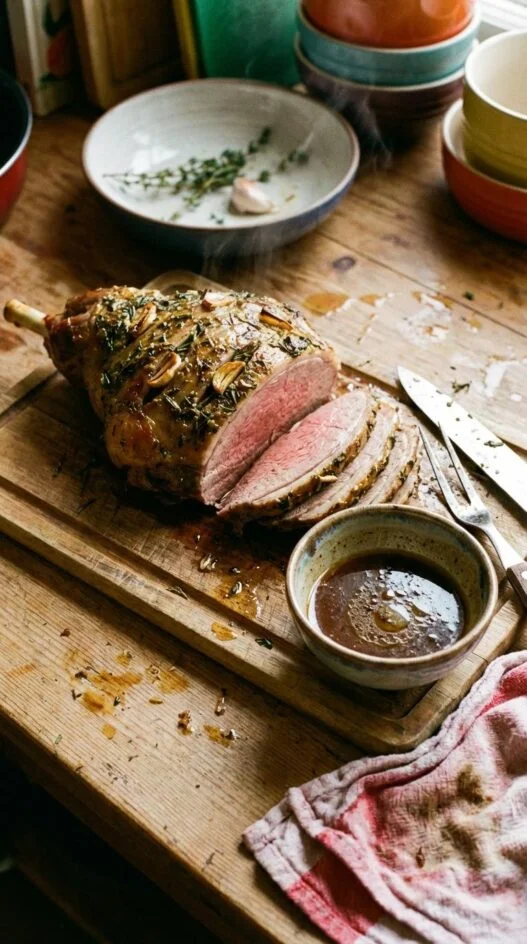
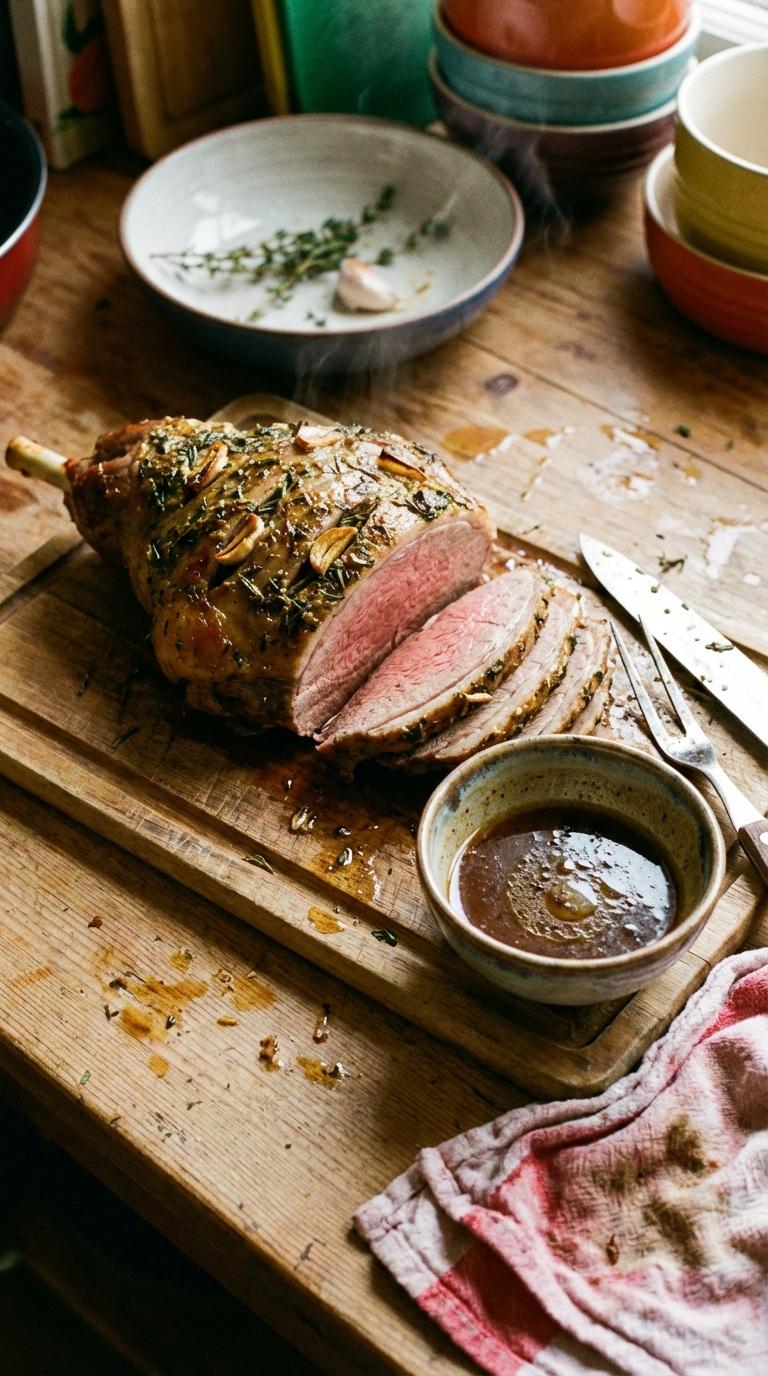
A roasted leg of lamb turns a regular Sunday dinner into something memorable. It sits at the intersection of impressive and approachable: a large, bone-in cut rubbed with garlic, rosemary, thyme, and Dijon mustard, roasted at a moderate temperature until the crust is deeply browned and the interior stays rosy and juicy. Lamb has a richness and depth that beef cannot quite match, and the leg is the most forgiving large roast you can work with. It feeds eight comfortably and looks spectacular when you bring it to the table for carving. Studding the meat with garlic slivers is worth the five minutes it takes. You make small slits all over the leg and push thin pieces of garlic deep inside, so the flavor permeates the meat from within rather than just sitting on the surface. Nobody left any the last time we made this for a crowd.
So the flavor permeates the meat from within rather than just sitting on the surface. Pull the lamb at 130 degrees for medium-rare and let it rest a full twenty minutes before carving. The temperature will climb to about 135 to 140 degrees as it rests. The juices will redistribute so they stay in the meat instead of running onto the cutting board. The pan jus, made from the drippings with a small pour of wine and a bit of butter, takes three minutes and brings everything together. Serve alongside roasted potatoes and steamed haricots verts, with a bottle of something from the Rhone Valley.
Season the Lamb
Pat the lamb dry with paper towels. Make a paste with minced garlic, chopped rosemary, lemon zest, olive oil, salt, and pepper. Rub it all over the lamb, including the underside and in any crevices. Let the lamb sit at room temperature for 30 to 60 minutes before roasting. This allows the meat to come to room temperature, which helps it cook more evenly.
Roast at Two Temperatures
Place the lamb on a rack in a roasting pan and roast at 450°F for 15 minutes to develop a crust. Lower the temperature to 325°F and continue roasting until the internal temperature reaches 130 to 135°F for medium-rare, about 60 to 75 minutes depending on the size of the leg. Use a meat thermometer inserted into the thickest part, avoiding the bone. Check frequently as it gets close to temperature.
Rest and Carve
Remove the lamb from the oven, tent loosely with foil, and let it rest for 15 to 20 minutes. Resting allows the juices to redistribute, so they don’t spill out when you carve. Carve the lamb by slicing parallel to the bone, working your way around the leg. Serve with the pan drippings spooned over the top.
Print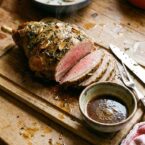
Roasted Leg of Lamb
- Total Time: 150 minutes
- Yield: 8 servings
Description
A roasted leg of lamb is the centerpiece that turns any dinner into an event. Studded with garlic and rosemary, rubbed with olive oil and Dijon, and roasted until the exterior is crusty and bronzed while the inside stays pink and juicy — this is a cut that rewards patience and technique. It feeds a crowd, fills the house with an incredible aroma, and carves beautifully at the table.
Ingredients
- 1 bone-in leg of lamb (6 to 7 lbs)
- 8 cloves garlic, cut into thin slivers
- 3 tablespoons olive oil
- 2 tablespoons Dijon mustard
- 2 tablespoons fresh rosemary, finely chopped
- 1 tablespoon fresh thyme leaves
- 2 teaspoons kosher salt
- 1 teaspoon freshly ground black pepper
- 1 cup chicken broth
- 1/2 cup dry red wine
- 2 tablespoons unsalted butter
- 1 tablespoon all-purpose flour
Instructions
- Remove the lamb from the fridge 1 hour before roasting. Preheat the oven to 350°F.
- Using the tip of a sharp paring knife, make 20 to 25 small slits all over the lamb, about 1 inch deep. Push a sliver of garlic into each slit.
- Mix the olive oil, Dijon mustard, rosemary, thyme, salt, and pepper into a paste. Rub it all over the lamb, working it into every crevice.
- Place the lamb on a rack in a roasting pan. Pour the chicken broth and wine into the bottom of the pan.
- Roast for about 1 hour and 45 minutes to 2 hours for medium-rare, until the internal temperature reaches 130°F at the thickest part (not touching bone). Baste with the pan juices every 30 minutes.
- Transfer to a carving board and tent with foil. Rest 20 minutes. The temperature will rise to 135°F to 140°F.
- Make the jus: place the roasting pan on the stovetop over medium heat. Whisk the flour into the drippings and cook 1 minute. Add a splash of broth if needed. Whisk in the butter and season to taste. Strain through a fine-mesh sieve.
- Carve the lamb and serve with the pan jus.
Notes
- Studding the lamb with garlic slivers distributes flavor deep into the meat, not just on the surface.
- Use a thermometer and pull at 130°F for medium-rare. Lamb leg has varying thicknesses, so the thinner end will be more done — offer guests their preferred doneness.
- Rest it a full 20 minutes; a roast this size needs it. The juices need time to redistribute, or they run out when you carve.
- Prep Time: 20 minutes
- Cook Time: 120 minutes
- Category: Main Course
- Cuisine: French
Nutrition
- Serving Size: 1 serving
- Calories: 480
- Sugar: 1
- Sodium: 720
- Fat: 28
- Carbohydrates: 4
- Protein: 44
- Cholesterol: 135
Frequently Asked Questions
How much lamb should I buy?
Plan on about 12 ounces of bone-in lamb per person, which accounts for the bone and shrinkage. A 5 to 6-pound leg will serve 6 to 8 people.
Can I cook this on the grill?
Yes. Set up a two-zone fire and roast the lamb on the cool side with the lid closed, turning occasionally, until it reaches temperature. Finish over the hot coals for a charred crust.
What if I want it more done?
For medium, pull the lamb at 140 to 145°F. For well-done, pull at 155 to 160°F. Be aware that lamb is best served medium-rare to medium. Well-done lamb can be dry and tough.