Risotto has a reputation for being fussy, which is slightly unfair. What it actually requires is attention, not skill. You need to stay close to the pot, add the warm broth in increments, and know when to stop cooking. The 18-to-22-minute window is real: pull the rice when it still has the faintest bite at the center of each grain. Carnaroli holds its texture better than Arborio and is worth tracking down if you can find it.
But Arborio works well and is in every grocery store. The step that separates a decent risotto from a great one is the mantecatura: pulling the pan off the heat and beating in a tablespoon of cold butter and the Parmigiano-Reggiano vigorously. The cold fat emulsifies into the starchy liquid and creates that characteristic creamy, flowing texture. Do not rinse the rice before cooking, do not let the broth cool down, and do not walk away for ten minutes at a stretch. Treat it as a stand-at-the-stove dish and it will reward you every time.
Toast Rice in Fat
Warm broth in a saucepan and keep at a bare simmer. In a separate large, wide pan, heat olive oil and butter over medium heat. Add diced shallot and cook until softened. Add rice without rinsing and stir to coat in the fat. Toast for one to two minutes until the edges of the grains turn translucent. Pour in white wine and stir until completely absorbed.
Add Broth Gradually
Begin adding warm broth one ladleful at a time, stirring frequently. Wait until each addition is mostly absorbed before adding the next. The rice should always look loose and slightly soupy, not dry. Stir often but not constantly. Continue this process for eighteen to twenty-two minutes. The rice is done when tender with a slight bite in the center of each grain.
Beat in Butter and Cheese
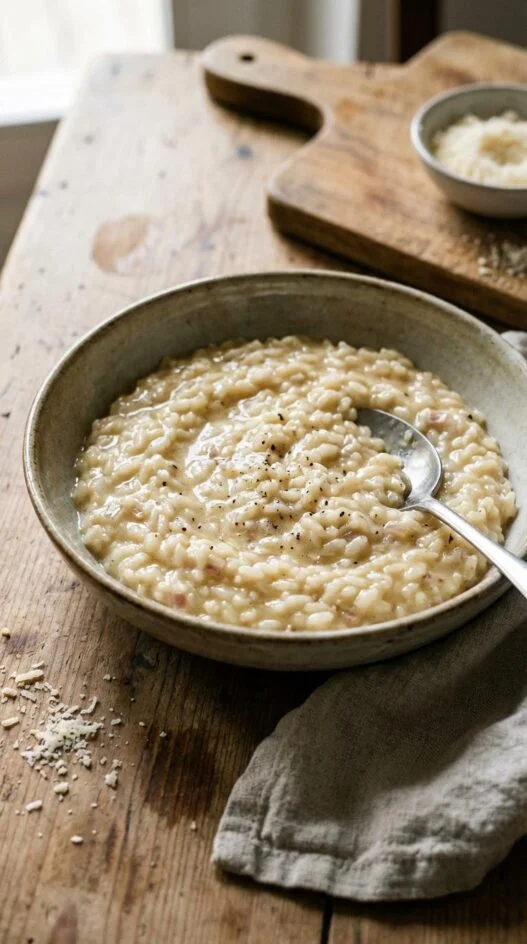
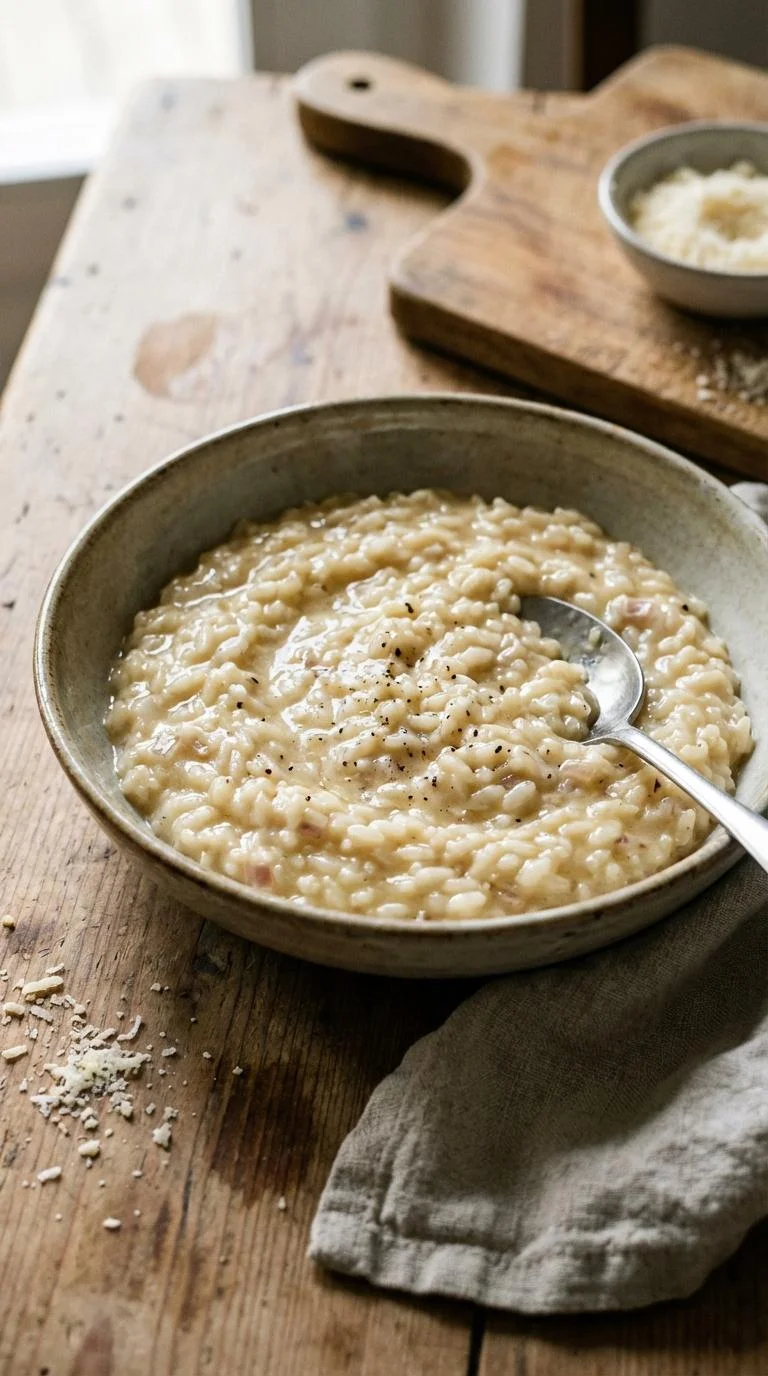
Remove from heat. Add cold butter and grated Parmigiano-Reggiano. Beat vigorously with a wooden spoon for thirty seconds to one minute. This final step, called mantecatura, emulsifies the fat and cheese into the starchy liquid and creates the signature creamy, flowing texture. Season with salt and pepper. The risotto should flow and spread slowly when plated, not sit in a stiff mound.
Print
Risotto
- Total Time: 40 minutes
- Yield: 4 servings
Description
A creamy, luxurious Italian rice dish where starchy short-grain rice is gradually cooked with warm broth, stirred constantly to release its starch and create a velvety, flowing sauce. This is a foundational technique that teaches patience and attention — the reward is a dish of extraordinary richness and elegance from humble ingredients.
Ingredients
- 1 1/2 cups (300g) Arborio, Carnaroli, or Vialone Nano rice (do not rinse)
- 5 cups chicken or vegetable broth, warmed and kept at a gentle simmer
- 1/2 cup dry white wine
- 1 medium shallot or small onion, finely diced
- 2 tablespoons unsalted butter, divided
- 1 tablespoon extra-virgin olive oil
- 3/4 cup (about 2.5 ounces / 70g) finely grated Parmigiano-Reggiano
- Fine sea salt and freshly ground black pepper to taste
Instructions
- Warm the broth in a saucepan and keep it at a bare simmer over low heat throughout the cooking process. Using cold broth would shock the rice and slow cooking.
- In a large, wide saucepan or shallow Dutch oven, heat the olive oil and 1 tablespoon of butter over medium heat. Add the shallot and cook for 2-3 minutes until softened and translucent.
- Add the rice (do not rinse — you need the surface starch) and stir to coat in the fat. Toast for 1-2 minutes until the edges of the grains turn translucent. Pour in the wine and stir until it is completely absorbed.
- Begin adding the warm broth one ladleful (about 1/2 cup) at a time, stirring frequently. Wait until each addition is mostly absorbed before adding the next. Stir often but not constantly — every 30 seconds or so is fine. The risotto should always look loose and slightly soupy, not dry.
- Continue this process for 18-22 minutes. The rice is done when it is tender but still has a slight bite in the very center of each grain (al dente). The overall texture should be creamy and flowing, not stiff like a rice pilaf.
- Remove from heat. Stir in the remaining tablespoon of cold butter and the Parmigiano-Reggiano vigorously — this final step, called mantecatura, creates the signature creamy finish. Season with salt and pepper.
- Serve immediately in warm bowls. When you tap the bowl, properly made risotto should flow and spread slowly — Italians call this all’onda, or like a wave.
Notes
- Do not rinse the rice — the surface starch is what creates risotto’s creamy consistency.
- Carnaroli rice is considered the best for risotto (more forgiving and creamier), but Arborio is widely available and works well.
- Keep the broth warm. Adding cold liquid slows the cooking and produces uneven results.
- The final mantecatura (beating in cold butter and cheese off the heat) is what transforms good risotto into great risotto.
- Risotto should flow when plated, not sit in a mound. If it’s too thick, add a splash more broth before serving.
- Prep Time: 10 minutes
- Cook Time: 30 minutes
- Category: Main Course
- Cuisine: Italian
Nutrition
- Serving Size: 1 serving
- Calories: 475
- Sugar: 2
- Sodium: 900
- Fat: 14
- Carbohydrates: 63
- Fiber: 2
- Protein: 12
Frequently Asked Questions
Do I really need to stir risotto constantly?
You need to stir frequently, about every thirty seconds, but not literally constantly. Constant stirring is overkill. Frequent stirring releases starch and ensures even cooking. You can step away briefly, but check and stir regularly.
Why should I not rinse risotto rice?
The surface starch is what creates the creamy consistency. Rinsing removes that starch and produces rice that is more like pilaf with separate grains instead of creamy risotto.
What does all’onda mean?
All’onda means like a wave. Properly made risotto should flow and spread slowly when you tap the bowl or plate, not sit in a stiff mound. This flowing consistency comes from the right balance of liquid and the emulsification from the final butter and cheese.