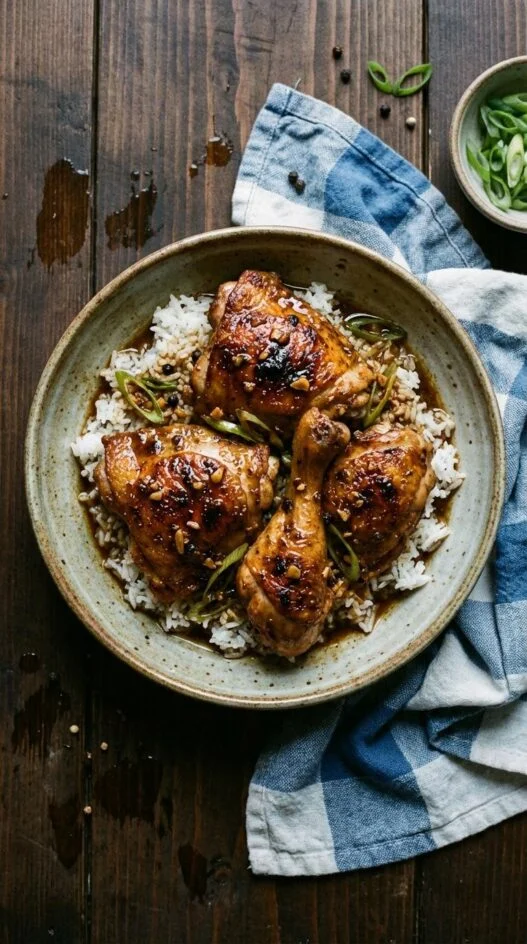
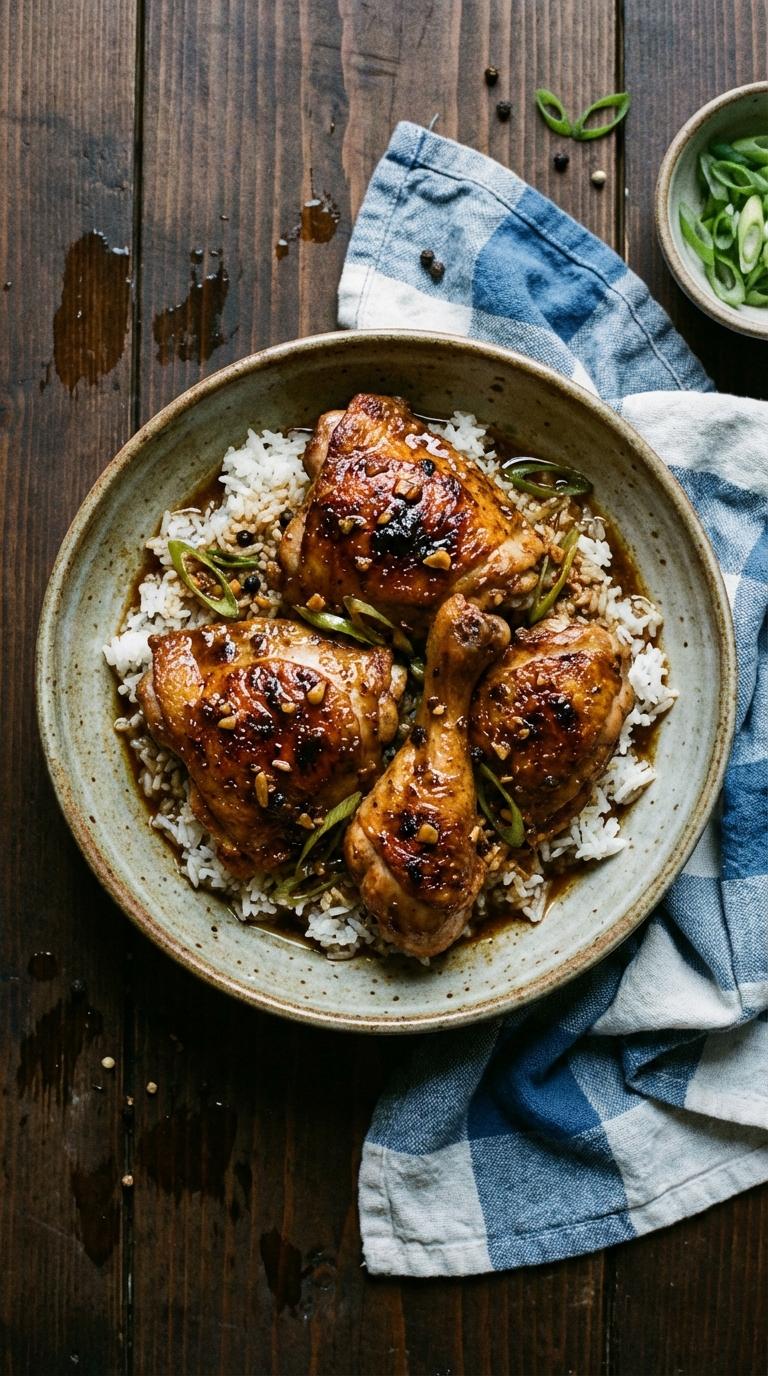
Filipino chicken adobo sounds too simple to be as good as it is, and we did not believe it either until we made it. Chicken thighs and drumsticks braised in soy sauce, white vinegar, a whole head of crushed garlic, bay leaves, and black peppercorns. That is the entire ingredient list for the braise. No complicated spice blends, no obscure ingredients you need to track down. The magic happens during the cooking: the vinegar mellows as it simmers, the soy and garlic meld into a dark, savory backbone, and the chicken turns fork-tender in about 30 minutes.
What sets this version apart is the crispy skin. After braising, the chicken gets pulled out and seared skin-side down in hot oil until the skin turns golden and crackling. Meanwhile, the braising liquid gets reduced with a tablespoon of brown sugar into a thick, glossy glaze. You get tender, fall-apart meat with a crust that shatters when you bite into it, all coated in that concentrated soy-vinegar sauce. One important note: add the vinegar cold and bring it up to temperature with everything else. Pouring vinegar into a hot pan makes it harsh and overly sharp. Serve this over steamed jasmine rice, because you will want something to catch every drop of that sauce.
Braise the Chicken Gently in the Soy-Vinegar Liquid
Combine soy sauce, vinegar, water, crushed garlic, bay leaves, and black peppercorns in a large pot or Dutch oven. Add the chicken pieces and turn to coat. Bring to a boil, then reduce to a simmer, cover, and cook for 30 minutes, turning the chicken once halfway through. The liquid should bubble gently, not boil aggressively. Rough boiling will make the chicken tough. The chicken is done when the meat is tender and pulls easily from the bone.
Reduce the Braising Liquid to Concentrate Flavor
After braising, remove the chicken and strain the liquid to remove the bay leaves and peppercorns. Return the liquid to the pot, stir in a tablespoon of brown sugar, and simmer uncovered for about 10 minutes until reduced by about half. The sauce should be thick, glossy, and intensely flavored. This reduction concentrates all the soy, vinegar, and garlic into a potent glaze that coats the chicken. Don’t skip this step. The unreduced liquid is too thin and tastes watery.
Sear the Chicken for Crispy Skin
While the sauce reduces, heat oil in a large skillet over medium-high heat. Sear the braised chicken skin-side down for three to four minutes until the skin is deeply browned and crispy. Flip and cook for one more minute. This final sear turns soft skin into a genuinely crispy crust. The braised chicken is tender but the skin is soft. Searing it after braising crisps the skin and adds caramelization. Return the chicken to the reduced sauce, spoon the glaze over the top, and serve over rice.
Print
Crispy-Skin Filipino Chicken Adobo
- Total Time: 50 minutes
- Yield: 4 servings
Description
Filipino adobo is arguably the national dish of the Philippines — chicken braised in a sauce of soy sauce, vinegar, garlic, bay leaves, and black peppercorns until the meat is fall-apart tender and the sauce reduces to a dark, tangy, salty glaze. It uses pantry staples, takes almost no effort, and produces flavor that is disproportionate to its simplicity. Every Filipino family has their own version. This one is a good place to start.
Ingredients
- 3 lbs bone-in, skin-on chicken thighs and drumsticks
- 1/2 cup soy sauce
- 1/2 cup white vinegar (distilled or cane)
- 1 cup water
- 1 head garlic (about 10 cloves), peeled and crushed
- 3 bay leaves
- 1 tablespoon whole black peppercorns
- 2 tablespoons vegetable oil
- 1 tablespoon brown sugar
- Steamed jasmine rice for serving
- Sliced green onions for garnish
Instructions
- Combine soy sauce, vinegar, water, garlic, bay leaves, and peppercorns in a large Dutch oven or heavy pot. Add the chicken pieces and turn to coat.
- Bring to a boil over medium-high heat. Reduce to a simmer, cover, and cook 30 minutes, turning the chicken once halfway through.
- Remove the chicken. Strain the braising liquid, discarding the bay leaves and peppercorns. Return the liquid to the pot and stir in brown sugar. Simmer uncovered 10 minutes until reduced by about half.
- While the sauce reduces, heat oil in a large skillet over medium-high heat. Sear the braised chicken skin side down for 3 to 4 minutes until the skin is deeply browned and crispy. Flip and cook 1 minute more.
- Return the chicken to the reduced sauce. Spoon the glaze over the chicken.
- Serve over steamed jasmine rice with the sauce poured over everything and sliced green onions on top.
Notes
- Sear the braised chicken at the end. It turns the skin from flabby to crisp and adds a caramelized layer the braise alone cannot achieve.
- The vinegar should be added cold and brought up to temperature with the other ingredients. Adding vinegar to a hot pan makes it harsh and overly acidic.
- Traditional Filipino adobo uses cane vinegar, but distilled white vinegar is a widely available substitute. Do not use balsamic or red wine vinegar.
- Prep Time: 10 minutes
- Cook Time: 40 minutes
- Category: Main Course
- Cuisine: Filipino
Nutrition
- Serving Size: 1 serving
- Calories: 420
- Sugar: 4
- Sodium: 880
- Fat: 24
- Carbohydrates: 8
- Protein: 36
- Cholesterol: 145
Frequently Asked Questions
Can I use boneless chicken?
Bone-in chicken is traditional and tastes better because the bones add flavor to the braising liquid. Boneless thighs will work but braise faster, about 20 minutes instead of 30. Boneless breasts are not recommended because they dry out easily during the long braise.
Can I make adobo ahead of time?
Yes. Adobo tastes even better the next day as the flavors meld. Braise the chicken and reduce the sauce, then refrigerate. When ready to serve, reheat the chicken in the sauce on the stove, then sear the skin in a hot skillet. The make-ahead version is actually preferred by many Filipinos.
What kind of vinegar should I use?
Traditional Filipino adobo uses cane vinegar, which has a mild, slightly sweet flavor. If you cannot find it, distilled white vinegar is the best substitute. Do not use balsamic, apple cider, or red wine vinegar. They will change the flavor too much. White vinegar is sharp and clean, which is what you want.
If You Liked This Recipe, You’ll Love These
- Filipino Adobong Dilaw Chicken
- How to Make Filipino Chicken Adobo
- Filipino Grilled Chicken Adobo
- Filipino Pianono Cake Roll