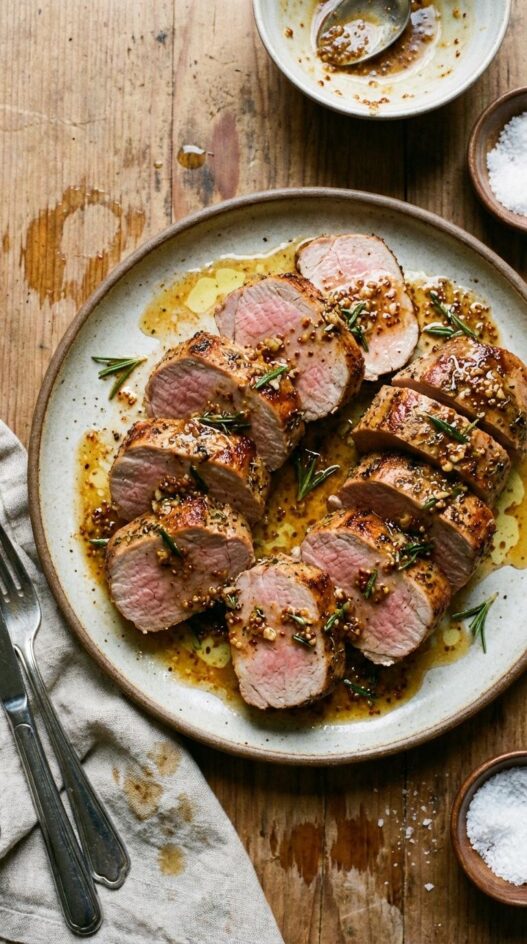
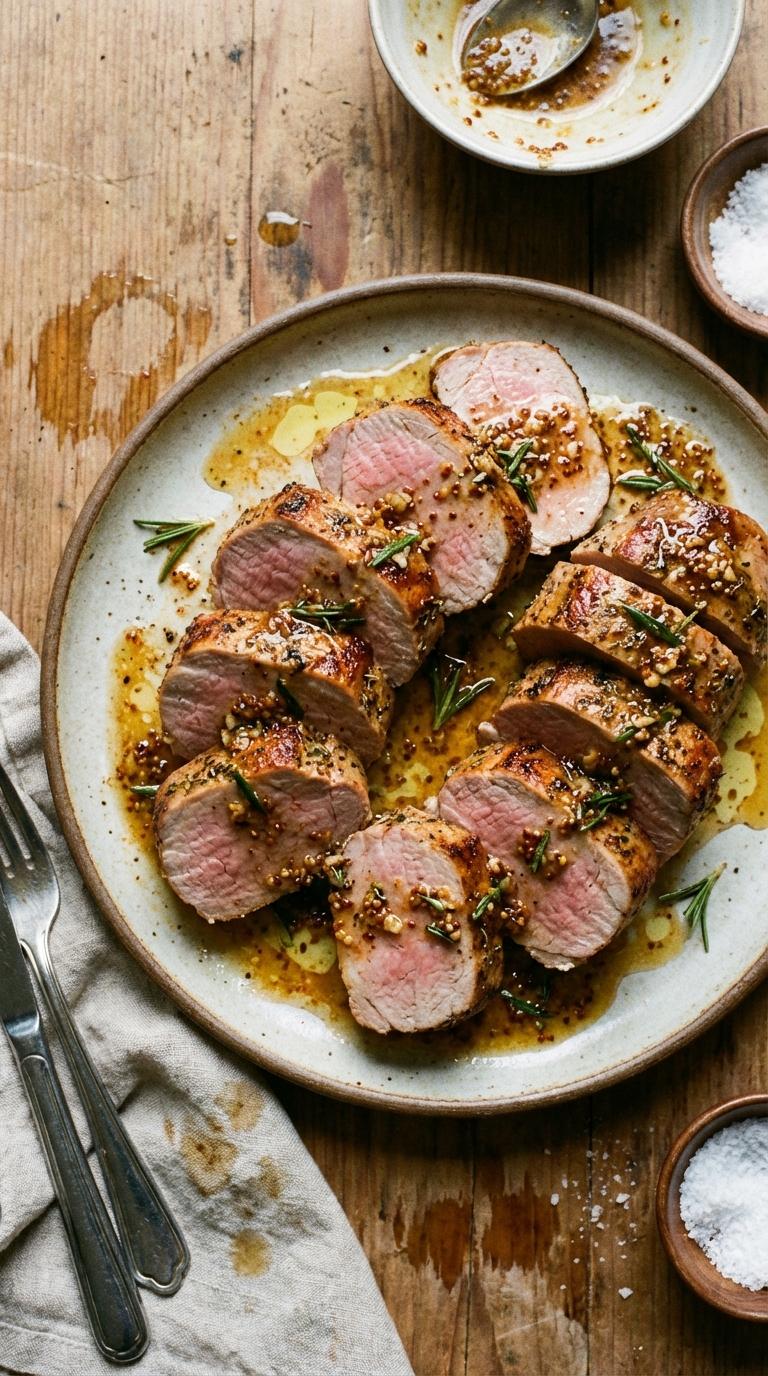
Pork tenderloin is our answer whenever someone says good meat is expensive. It is lean, it is affordable, and when handled properly it has a silky, almost buttery texture that rivals cuts costing three times as much. The problem is that most people overcook it, following outdated guidelines that turn this elegant cut into something dry and chalky. Cooked to 140 degrees with a proper rest, it stays juicy and blush-pink in the center, and that is where this recipe lives. A hard sear, a short roast, and a thermometer are all you need.
The honey-mustard glaze here does more than add flavor. Whole-grain mustard creates a crust that holds in moisture, while the honey caramelizes in the oven and gives the outside a lacquered finish. Rosemary and garlic round it out without overwhelming the mild pork. This is a weeknight-friendly cut that cooks in about twenty minutes total oven time, and it pairs well with nearly anything: roasted vegetables, a simple salad, mashed potatoes, or sliced thin for sandwiches the next day. You can prep and season the tenderloins in the morning, then sear and roast when you get home.
Remove Silver Skin and Season
Remove the thin, shiny membrane called silver skin from the tenderloin before cooking. Slide a knife under one end and pull it off. Silver skin doesn’t render during cooking and will cause the meat to curl. Pat the tenderloins dry and season all over with salt, pepper, garlic powder, dried thyme, and smoked paprika. Let them sit at room temperature for 15 minutes while you preheat the oven to 400 degrees.
Sear and Glaze
Heat olive oil in a large oven-safe skillet over high heat. Sear the tenderloins on all sides, about two minutes per side, until a golden brown crust forms. In a small bowl, mix together whole-grain mustard, honey, minced garlic, and minced rosemary. Brush this glaze over the seared tenderloins. The glaze adds flavor and helps create a beautiful caramelized exterior during roasting.
Roast and Rest
Transfer the skillet to the oven and roast for 15 to 20 minutes until the internal temperature reaches 140 degrees. Remove from the oven immediately. Transfer the tenderloins to a cutting board and top with butter. Tent loosely with foil and rest for 10 minutes. The temperature will rise to 145 degrees during the rest. Slice into half-inch medallions and serve with any accumulated juices spooned over the top. The pork should be juicy with a slight blush of pink in the center.
Print
Roast Pork Tenderloin
- Total Time: 35 minutes
- Yield: 4 servings
Description
Pork tenderloin is the leanest, most tender cut of pork, and when cooked properly it rivals a fine filet mignon in texture. The key is a quick sear followed by a short roast, pulling the meat at the right internal temperature so it stays juicy and blush-pink inside.
Ingredients
- 2 pork tenderloins (about 1 pound each), silver skin removed
- 1 1/2 teaspoons kosher salt
- 1/2 teaspoon black pepper
- 1 teaspoon garlic powder
- 1 teaspoon dried thyme
- 1/2 teaspoon smoked paprika
- 2 tablespoons olive oil
- 2 tablespoons unsalted butter
- 2 tablespoons whole-grain mustard
- 1 tablespoon honey
- 2 cloves garlic, minced
- 1 tablespoon fresh rosemary, minced
Instructions
- Preheat the oven to 400°F. Pat the tenderloins dry and season all over with salt, pepper, garlic powder, dried thyme, and smoked paprika.
- Heat the olive oil in a large oven-safe skillet over high heat. Sear the tenderloins on all sides, about 2 minutes per side, until a golden brown crust forms.
- In a small bowl, mix together the whole-grain mustard, honey, minced garlic, and rosemary. Brush this mixture over the seared tenderloins.
- Transfer the skillet to the oven and roast for 15 to 20 minutes, until the internal temperature reaches 140°F.
- Remove from the oven, transfer the tenderloins to a cutting board, and top with the butter. Tent loosely with foil and rest for 10 minutes — the temperature will rise to 145°F.
- Slice into 1/2-inch medallions and serve with any accumulated juices spooned over the top.
Notes
- Remove the silver skin before cooking — it doesn’t render and will cause the meat to curl.
- Pork tenderloin is safe and juicy at 145°F; the old recommendation of 160°F is outdated and produces dry pork.
- This cut goes from perfect to overcooked very quickly, so use a thermometer.
- The mustard-honey glaze can be swapped for a soy-maple, chimichurri, or herb-butter variation.
- Prep Time: 10 minutes
- Cook Time: 25 minutes
Nutrition
- Serving Size: 1 serving
- Calories: 410
- Sugar: 5
- Sodium: 700
- Fat: 21
- Carbohydrates: 6
- Fiber: 1
- Protein: 48
Frequently Asked Questions
Is it safe to eat pork at 145 degrees?
Yes, the USDA lowered the safe temperature for whole cuts of pork to 145 degrees followed by a three-minute rest. At this temperature, pork is juicy and slightly pink. The old recommendation of 160 degrees is outdated and produces dry pork.
What is silver skin and why must I remove it?
Silver skin is the thin, shiny membrane on the tenderloin. It doesn’t break down during cooking and causes the meat to curl and become tough. Always remove it before cooking by sliding a knife under it and pulling it off.
Can I use this technique for pork chops?
The technique works for thick-cut pork chops, but they cook faster. Sear on both sides, then roast for eight to ten minutes until they reach 140 degrees. Thinner chops don’t need the oven; just finish them in the pan.