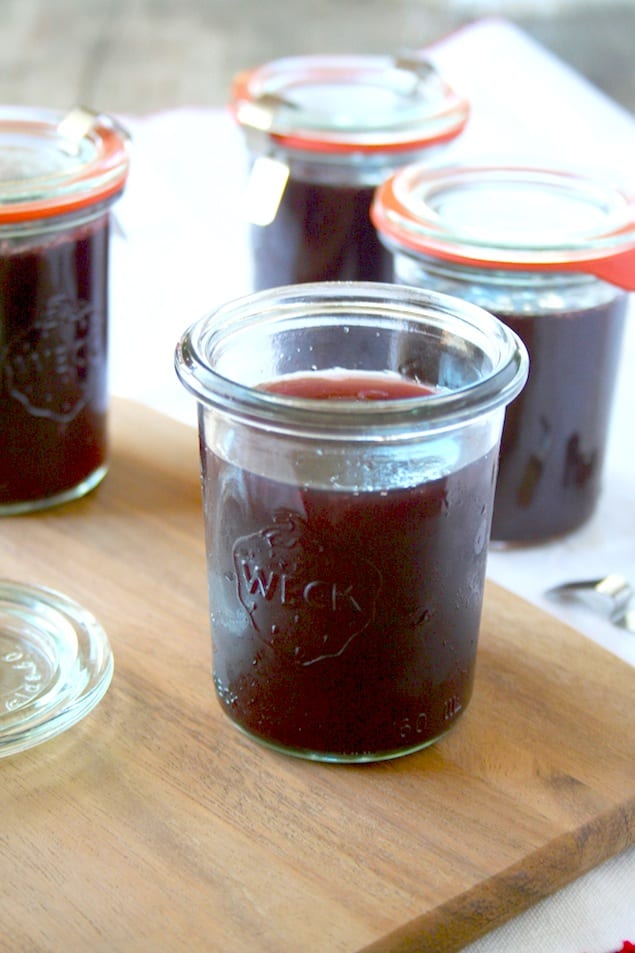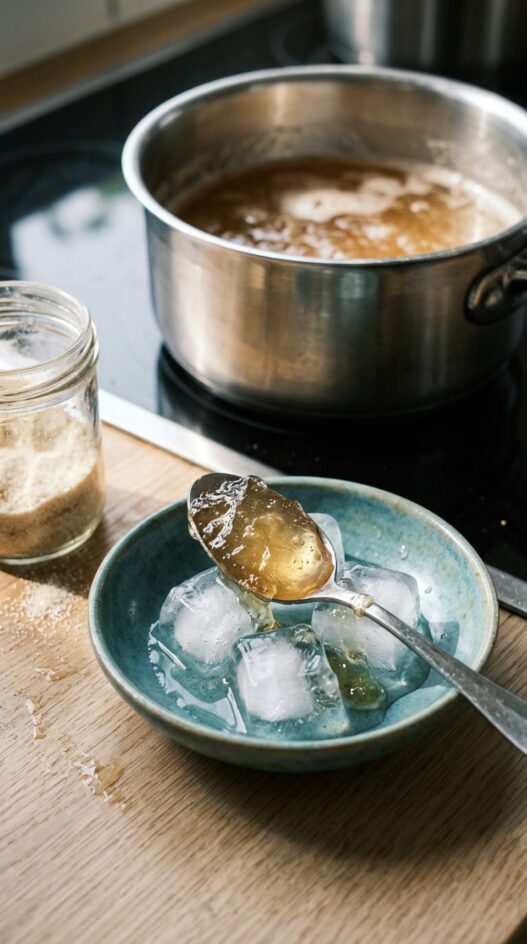
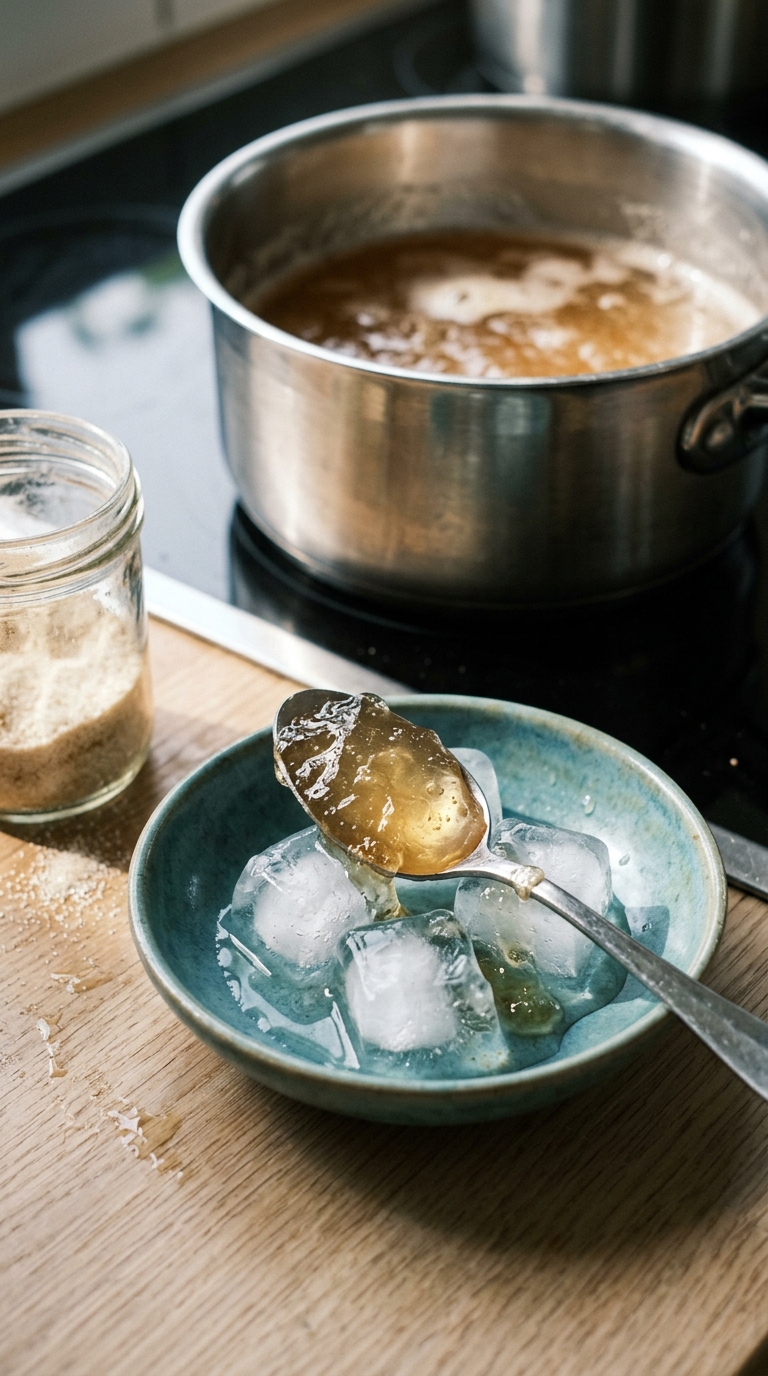
Jam or preserves is made by using crushed fruit. So it ends up being filled with the fruit pulp. Jelly on the other hand is made with fruit juice. So it ends up being clear and gelatinous. Jelly, in my opinion is a great option for winter canning since you can readily buy great organic fruit juices free of sugar at your local organic markets. To make the grape jelly it takes about 10 minutes. I prefer to sweeten my jelly with organic sugar to ensure a thicker consistency. For jams, my sweetener of choice is honey. To make the grape jelly, all you need to do is heat up the fruit juice in a heavy bottomed sauce pan, add the calcium solution and lemon juice, and then bring that to a boil. Once the grape juice has come to a boil, add 2 cups of organic sugar mixed in with the pectin and whisk through for 2 minutes. You’ll know the jelly is done by giving it the spoon test. Scoop out a spoonful of the grape jelly and immediately place it on top of an ice cube to cool. If it is thickened and sticks to the spoon it is ready.
Canned Fruit Juice Jelly
- Total Time: 20 minutes
- Yield: 4-5 pints
Description
This homemade grape jelly is made from organic fruit juice and sweetened with organic sugar, creating a clear and gelatinous spread perfect for winter canning.
Ingredients
- 4 cups (960 ml) organic fruit juice
- 1/4 cup (60 ml) lemon or lime juice
- 4 tsp calcium water
- 2 cups (480 ml) organic sugar
- 4 tsp pectin powder
Instructions
- In a heavy-bottomed saucepan, combine 4 cups of organic fruit juice, 1/4 cup of lemon or lime juice, and 4 tsp of calcium water. Heat the mixture over medium heat and bring it to a boil.
- In a separate bowl, mix 2 cups of organic sugar with 4 tsp of pectin powder until thoroughly combined.
- Once the fruit juice mixture reaches a boil, add the sugar and pectin mixture to the pan. Whisk the mixture continuously for 2 minutes to ensure the pectin is fully dissolved.
- Perform the spoon test: Scoop a spoonful of the jelly and place it on top of an ice cube to cool. If the jelly thickens and sticks to the spoon, it is ready.
- Once the jelly passes the spoon test, remove it from the heat and let it cool slightly before transferring it to sterilized jars for storage.
Notes
- For best results, use organic fruit juice free of added sugar.
- The spoon test is crucial to ensure the jelly has reached the right consistency.
- Store the jelly in sterilized jars to extend its shelf life.
- You can substitute lemon juice with lime juice for a different flavor profile.
- Prep Time: 10 minutes
- Cook Time: 10 minutes
- Category: Condiment
- Cuisine: American
Nutrition
- Serving Size: 1 tablespoon
- Calories: 50
- Sugar: 13
- Sodium: 0
- Fat: 0
- Carbohydrates: 13
- Fiber: 0
- Protein: 0
- Cholesterol: 0
If You Liked This Recipe, You’ll Love These
- Cheese’s Best Friend: Sweet and Spicy Pepper Jelly
- Savory Tomato Jam
- How to Make Pumpkin Jam
- The Perfect Condiment: Garlic and Thyme Confit
Frequently Asked Questions
What is the difference between this jelly and a regular jam?
The article explains the distinction directly: jam and preserves are made from crushed fruit and contain the pulp, while jelly is made from fruit juice only, making it clear and gelatinous. This recipe uses 4 cups of organic fruit juice with no added fruit solids, so the finished product will be smooth and translucent.
What is the spoon test and how do I know when the jelly is ready?
Scoop a spoonful of the hot jelly and place it immediately on top of an ice cube to cool it quickly. If the jelly thickens and sticks to the spoon once cooled, it has set correctly and is ready to jar. If it stays liquid, return the pot to the heat and continue cooking.
What is calcium water, and why does this recipe use it?
Calcium water is a solution made from the calcium powder included with Pomona’s Universal Pectin — it activates the low-methoxyl pectin used in this recipe. Unlike standard high-sugar pectin, this calcium-activated system (4 tsp calcium water + 4 tsp pectin) gels reliably with the 2 cups of organic sugar the recipe specifies, which the article notes produces a thicker consistency than honey-sweetened versions.