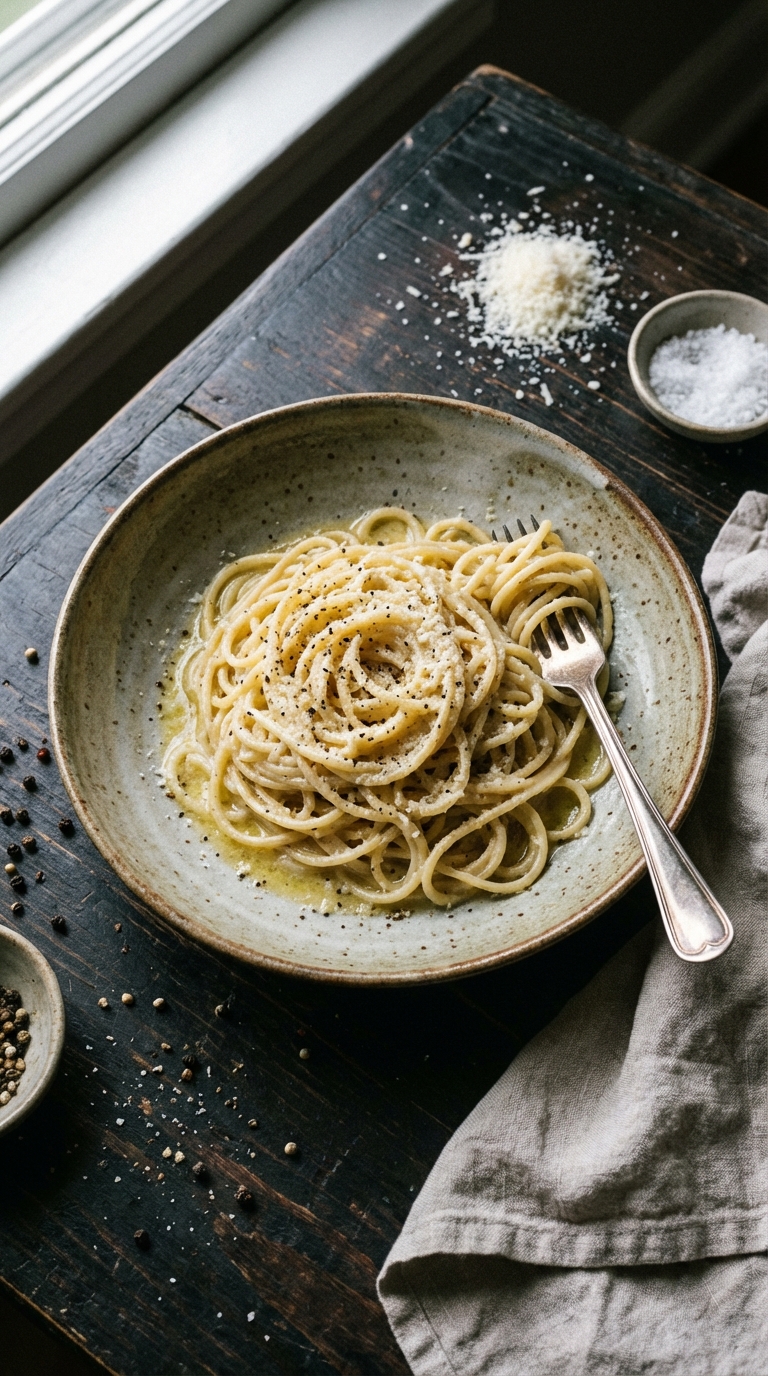
Pasta is always my go-to meal for busy nights since it’s fast, cheap, and satisfying. A big bowl of pasta and a nice glass of wine is probably my all time favorite comfort meal. It fills my belly, helps me forget about the day, and always makes me nice and sleepy for an early, cozy bedtime.
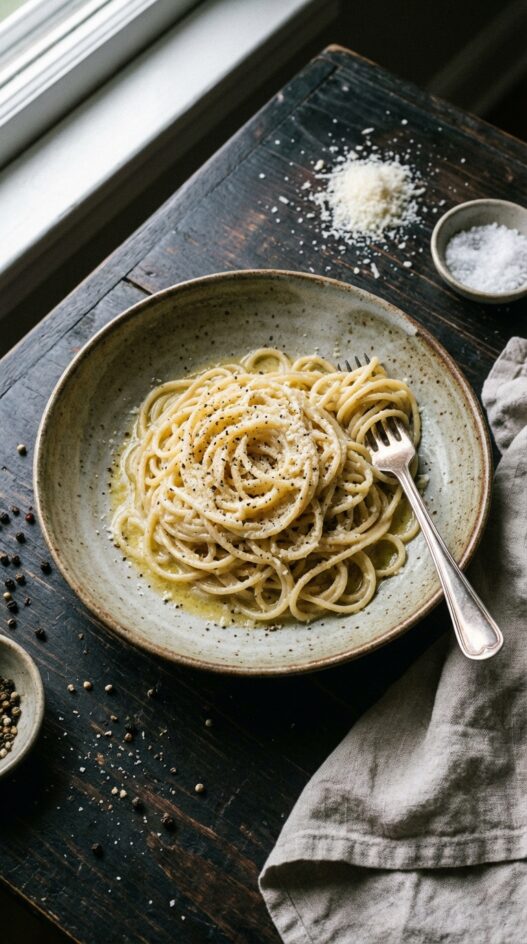
Cacio e Pepe is a classic pasta dish from Rome. It’s one of those dead simple, few-ingredient, yet totally mind-blowing recipes that Italy is known for. Cacio refers to the Roman name for Pecorino Romano cheese and Pepe means pepper. That’s basically all it is: pasta with cheese and pepper. It sounds rather unassuming, but like so many other Italian recipes, it all boils down to technique. (That was a pasta pun just in case you missed it.)
Without proper technique you can easily wind up with something that’s mushy, watery, oily, overly salty, and/or clumpy. But when you take your time and do it right, you’ll end up with a bowl of perfectly al dente pasta in a velvety, salty-but-not-too-salty, and definitively peppery sauce. It’s no wonder why this formerly overlooked classic has gotten so much attention lately. It’s absolutely dream-worthy.
There are a few key tricks to getting Cacio e Pepe just right. First, lets talk about the pasta water. Typically I always stress the importance of cooking pasta in a large pot of heavily salted water in order to season the pasta and give it room to move around as it cooks. However, for this recipe it’s important to use as little water as possible and to make sure the water isn’t too salty. We’ll be using that pasta water to make the sauce along with lots of Pecorino Romano cheese. And since the cheese is very salty, we need to make sure we don’t overdo it with the water (something I learned the hard way). In addition, cooking the pasta in less water will ensure that it becomes extra starchy, and extra starchy water will reduce down to make the sauce thick and creamy.
Freshly cracked black pepper is crucial. After all, it’s in the name. I like to coarsely grind lots of fresh pepper straight into a warm pan with some butter. Toasting the pepper before making the sauce helps to coax out and enhance it’s flavor. Cooking the pasta super al dente is also essential, as it will continue to cook in the pan. Even a slightly mushy texture will throw the whole dish out of whack. Transfer some pasta water into the pan with the pepper and let it reduce down a bit.
Add the pasta, then turn the heat down super low. Add the cheese a little bit at a time while tossing so that it melts gently into the sauce and ensures every piece of pasta is coated. Do it too quickly with the heat too high and it will clump up into gummy gobs. Patience, grasshoppers. Good quality ingredients here are key. Use the best Pecorino Romano cheese you can get your hands on (I like Locatelli best). Some recipes will tell you that you can swap out a parmesan, like Reggiano or Grana Padano, for the Pecorino, but I disagree. That sharp, salty bite just can’t be replicated with any other cheese.
A little bit of butter is all we need to finish the sauce and make it extra rich and glossy. I like to finish it with even more freshly cracked black pepper and of course more grated cheese. There’s always room for more grated cheese.
Print
Classic Cacio e Pepe
- Total Time: 20 minutes
- Yield: Serves 2
- Diet: Omnivore
Description
When you need dinner to be fast, easy, and affordable, cacio e pepe is where it’s at. This is the classic rendition of the legendary recipe.
Ingredients
- Salt
- 4 tbsp unsalted butter
- 1 tsp freshly ground black pepper
- 1/2 lb spaghetti or other long pasta
- 1 cup (237 ml) finely grated Pecorino Romano cheese
Instructions
- Bring a medium pot of water to a boil. Add enough water to cover the spaghetti. Season with salt. Add spaghetti and cook until al dente according to package directions. Reserve 1 cup of pasta water, then drain.
- Melt 2 tablespoons of butter in a medium skillet. Add the pepper and cook for 1 minute, until fragrant and toasted.
- Add 1/4 cup of pasta water to the pan and bring to a boil. Add the pasta and turn off the heat.
- Add half of the cheese, tossing and swirling the pasta. Add the remaining cheese and butter. Continue tossing until a thick, velvety sauce forms. Add more pasta water, a little at a time, to thin the sauce as needed. Season to taste.
- Transfer to bowls and serve immediately with additional pepper and cheese.
Notes
- Use a high-quality Pecorino Romano cheese for the best flavor.
- If the sauce is too thick, add pasta water, one tablespoon at a time, until desired consistency is reached.
- For a richer flavor, add a tablespoon of white wine to the pan with the pepper and butter.
- Prep Time: 5 minutes
- Cook Time: 15 minutes
- Category: Main Course
- Method: Boiling
- Cuisine: Italian
Nutrition
- Serving Size: 1 serving
- Calories: 500
- Sugar: 2
- Sodium: 600
- Fat: 25
- Saturated Fat: 15
- Unsaturated Fat: 8
- Carbohydrates: 60
- Fiber: 2
- Protein: 15
- Cholesterol: 20
Frequently Asked Questions
What type of cheese should I use for the Cacio e Pepe?
You should use Pecorino Romano cheese, as it is the traditional cheese used in this classic Roman dish.
How do I ensure the pasta sauce is creamy without clumping?
To achieve a creamy sauce, be sure to reserve some pasta cooking water and gradually add it to the cheese and pepper mixture, stirring continuously to create an emulsion.
Can I adjust the amount of pepper in the recipe?
Yes, you can adjust the amount of freshly cracked black pepper to your taste; however, keep in mind that it’s a key flavor component of Cacio e Pepe.
If You Liked This Recipe, You’ll Love These