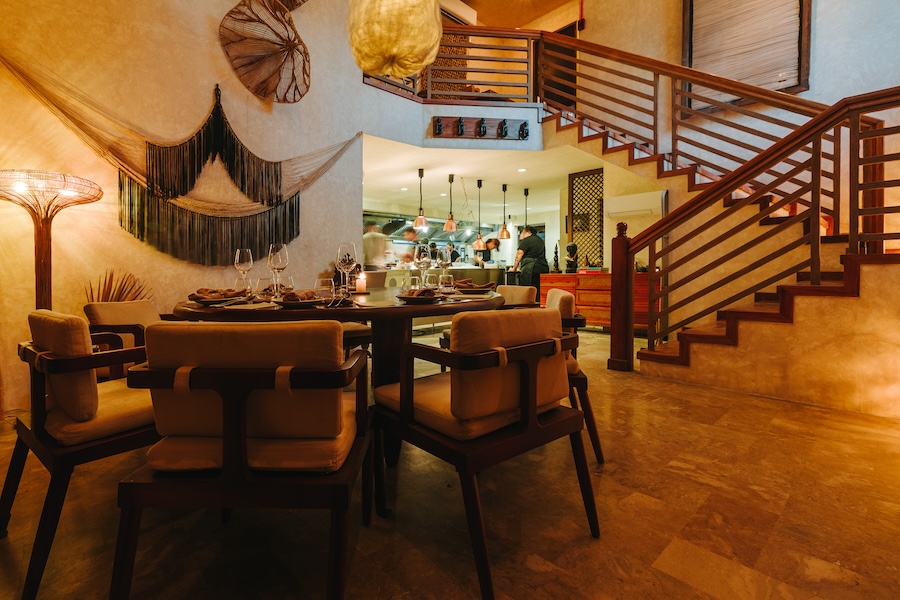
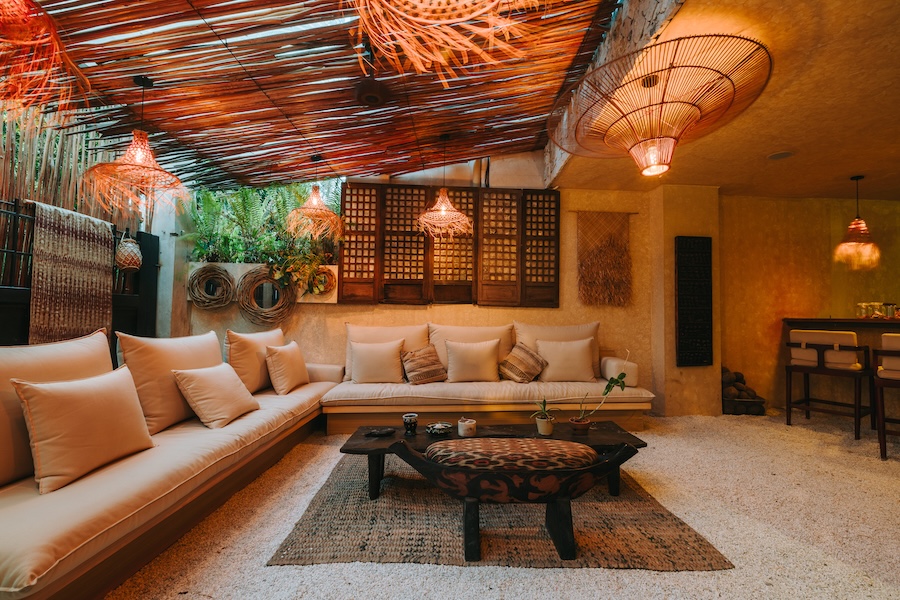
Poblacion doesn’t do serenity. Makati’s oldest district is a dense tangle of dive bars, hostels, karaoke joints and third-wave coffee, a neighbourhood that reinvented itself from red-light strip to the most electric few blocks in Manila without ever pausing for breath. Tricycles cough past speakeasies. The heat presses down like a hand. And then, on Palma Street, you push through the doors of a two-storey house and the city simply lets go of you. White stone gravel underfoot, like a beach at low tide. Straw cloche lamps throwing warm light. Macramé, pottery, tropical prints, a teardrop-shaped wooden chef’s table facing an open kitchen. You have not left Manila; you have arrived at the islands.
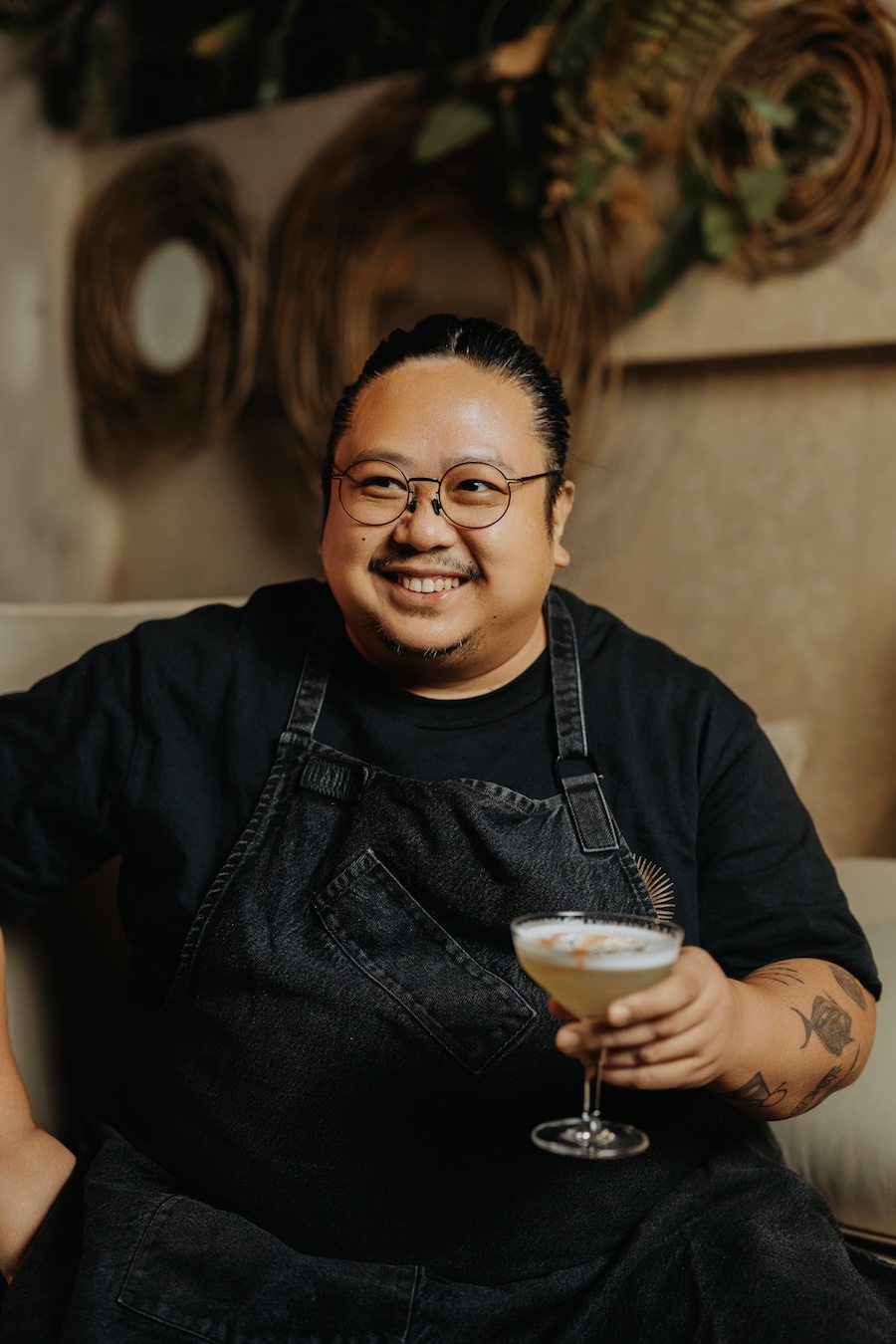
This is Kása Palma, the house that chef Aaron Isip built, and “built” is barely a metaphor. He found the property nearly dilapidated, on the same street as his own home, and shaped every corner of it himself: no architect, no interior designer, just his personal collection of furniture, art and handmade ceramics, some of them repaired with gold in the Japanese art of kintsugi, because at this house even the broken things are given a second life. That detail turns out to be the whole story.
A Big Family, and a Fridge Raided at Midnight
Isip is the sixth of seven children. His father came from Pampanga, the province Filipinos will tell you produces the country’s most competent cooks; his mother from the Iloilo region in the Visayas, facing waters so generous he compares them to Alaska. “My mother loved cooking seafood. My father loved to eat it,” he says. “That’s how I developed my love for fish and seafood.” She died when he was seven, and a cook from her island took over the family kitchen, sometimes making the Hainanese chicken and pepper crab she had learned working in Singapore. The boy hung around, and late at night, when nobody could stop him, he raided the fridge and improvised. “It was either good or bad, but at least I tried.”
Nothing suggested a chef. He studied political science, then marketing, then spent his early twenties producing electronic music raves in Manila, a job he came to loathe. What he had instead of a vocation was an appetite, a family in which the conversation at lunch was already about dinner, and one decisive trait he names without hesitation when asked who Aaron is: “I think I’m someone driven by curiosity. It was curiosity that brought me to France at 21, and it kept me there for almost fifteen years.”
He applied to Le Cordon Bleu online without telling his father, who was stunned to learn his son with the business degree wanted to cook. This was the early 2000s, before chefs were stars; the young Isip’s culinary universe consisted of Paul Bocuse and the books of Anthony Bourdain. The plan was one year in Paris. Life, as it tends to, had other plans: Aaron spent one decade and a half in the French capital.
The Education of a Palate
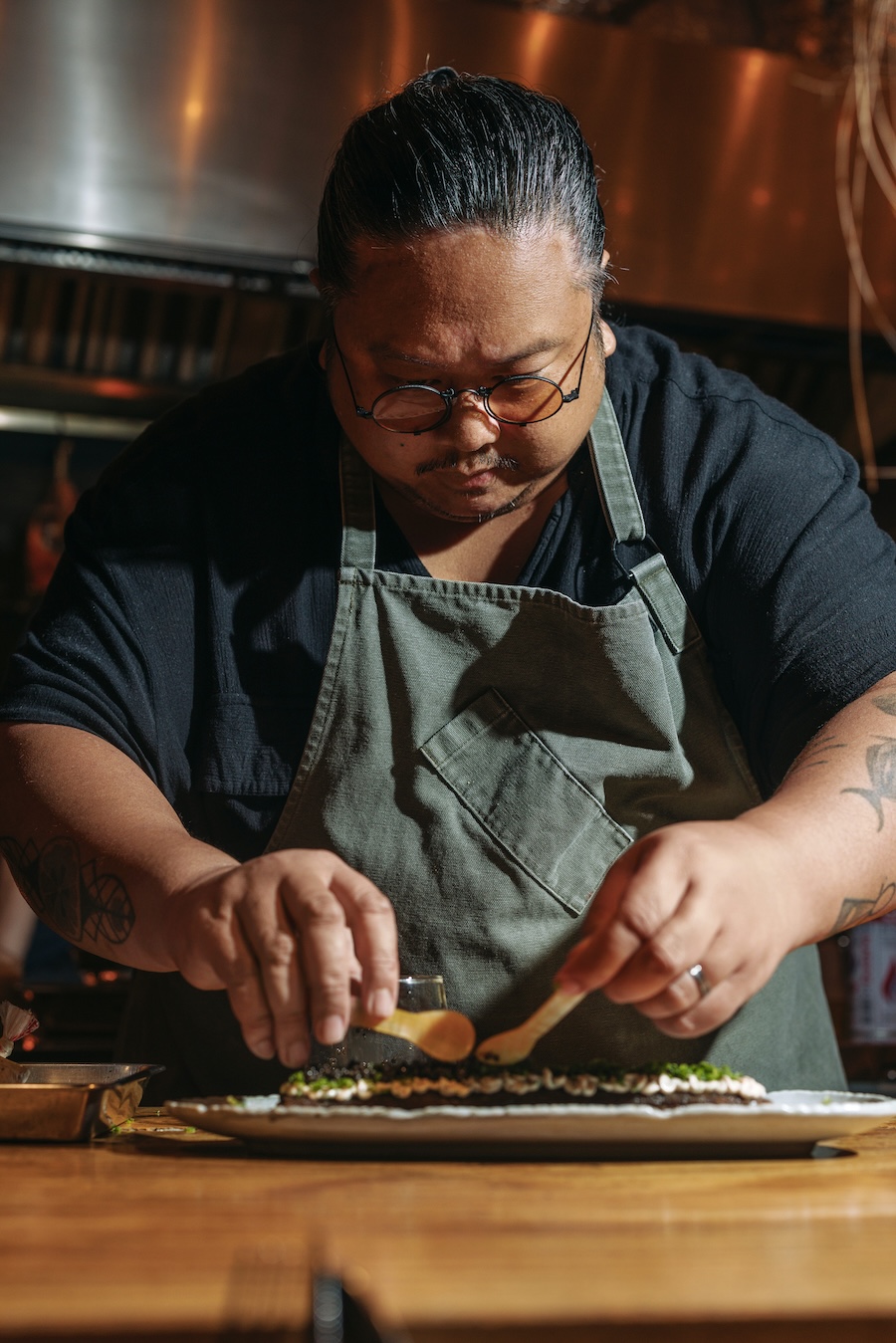
What follows reads like a syllabus for the cuisine he would eventually invent, because Isip chose his kitchens with an agenda. “I specifically chose chefs who used Asian ingredients in their cooking, because I knew that one day I would do the same. I wanted to learn all the techniques I could and apply them to the flavors and produce of the Philippines.”
So he went to Senderens, the two Michelin-starred successor to Lucas Carton, drawn by the fact that Alain Senderens, one of the fathers of nouvelle cuisine and the inventor of modern wine pairing, had been among the first French chefs to cook with Southeast Asian fish sauce. He passed through Drouant. And then he found his mentor: William Ledeuil at Ze Kitchen Galerie, the Michelin-starred Paris kitchen where French technique flirts openly with lemongrass and galangal. He stayed more than three years, worked every station, and experienced something that had never happened to him before: a chef who collaborated instead of commanding. Ledeuil would ask him to create dishes, taste them, send them back, and put the results on the menu and in his cookbooks.
It was Ledeuil who handed him the sentence that still organises his cooking. “He told me: your palate can never be trained, not like butchering a fish or mastering a technique. The palate is the most important thing a chef can harness.” Isip took the lesson personally. “Anyone can learn to chop. But the palate is only up to you, your experiences, where you eat, when you travel. I’m a foodie first, before I’m a chef. Some cooks don’t even love to eat. For me, eating comes first.”
The Paris years ended in a scene a screenwriter would reject as too neat. As head chef of Dix-Huit, a bistro he had built creatively from scratch, he turned down Top Chef France three times, then fell out with a partner. The very day he resigned, the phone rang: Gault & Millau, telling him they had eaten at the restaurant four times, that they had never tasted flavor combinations like his, and that he was Chef Espoir 2015 for Île-de-France, one of the guide’s young chef of the year awards, and the first time they had seen a Filipino cooking at that level in Paris. He won the accolade and lost the restaurant in the same breath.
From Paris to Barcelona and Back to Manila
He moved to Barcelona to learn Spanish, living near the Adrià-restaurants in Poble Sec, plotting a stage in that universe. Four months into language school, the call came from Manila: his father had stage four lung cancer. Isip flew home to nurse him, and buried him about six months later. “It was supposed to be a temporary return, but it became permanent,” he says. “Looking back, that unexpected detour became the most important journey of all. We all pivot when faced with obstacles, and because of that pivot, that’s where I am now.”
The pivots kept coming. Dreading a return to Manila after a Parisian adult life (“I even think in French sometimes”), he planned instead to open in El Nido, Palawan, and spent two years finding the perfect hilltop property facing the sea, mangroves below, architect engaged, plans drawn. That was the end of 2019. The pandemic turned El Nido into a ghost town and the project to dust. Stranded in Manila and needing to earn, the former saucier asked himself what all those locked-down home cooks were missing, and the answer was sauces: an Entrecôte sauce made with Vietnamese herbs, a Beurre blanc built on yuzu, his own chimichurri, followed by steak-frites kits with sous-vide meat that sold sixty boxes a day out of his flat.
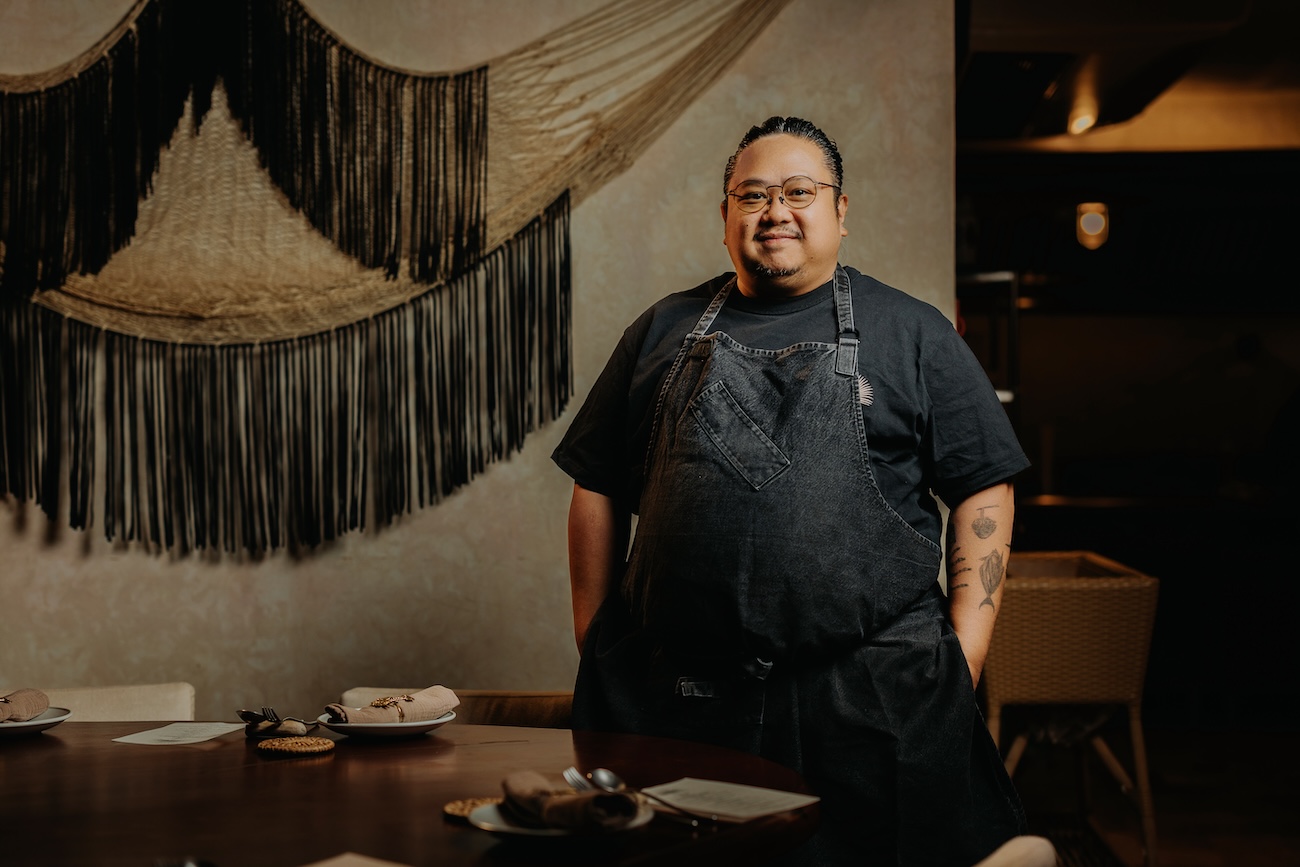
When the world cracked open again, he opened his own front door. Balai Palma, named for the word meaning small house in his mother’s island dialect, was private dining in his actual home: one table of eight in the dining room, a professional kitchen behind it, and soon a six-month waiting list that colonised the rest of the house, his bedroom becoming a private dining room, the rooftop an open-air terrace, the little cinema a couples’ table. The boy who cooked for his big family in his father’s house was now – twenty years and nine thousand kilometres of detour later – cooking for strangers in his own home. When a bigger, half-derelict house turned up for sale on the same street, the small house became a big one: balai became kása, a word phonetically borrowed from the Spanish for house.
Jekyll, Hyde and the Jungle
Kása Palma, which opened in 2024 and earned its Michelin star in the Philippines’ inaugural 2026 guide after a year and a half of service, is really two restaurants breathing the same tropical air, and Isip is precise about the relationship. “It’s more like Dr Jekyll and Mr Hyde. One person, two personalities.”
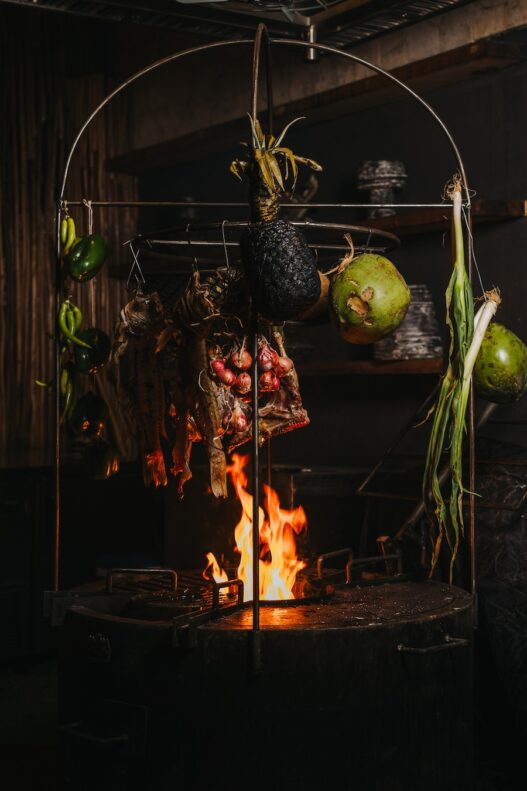
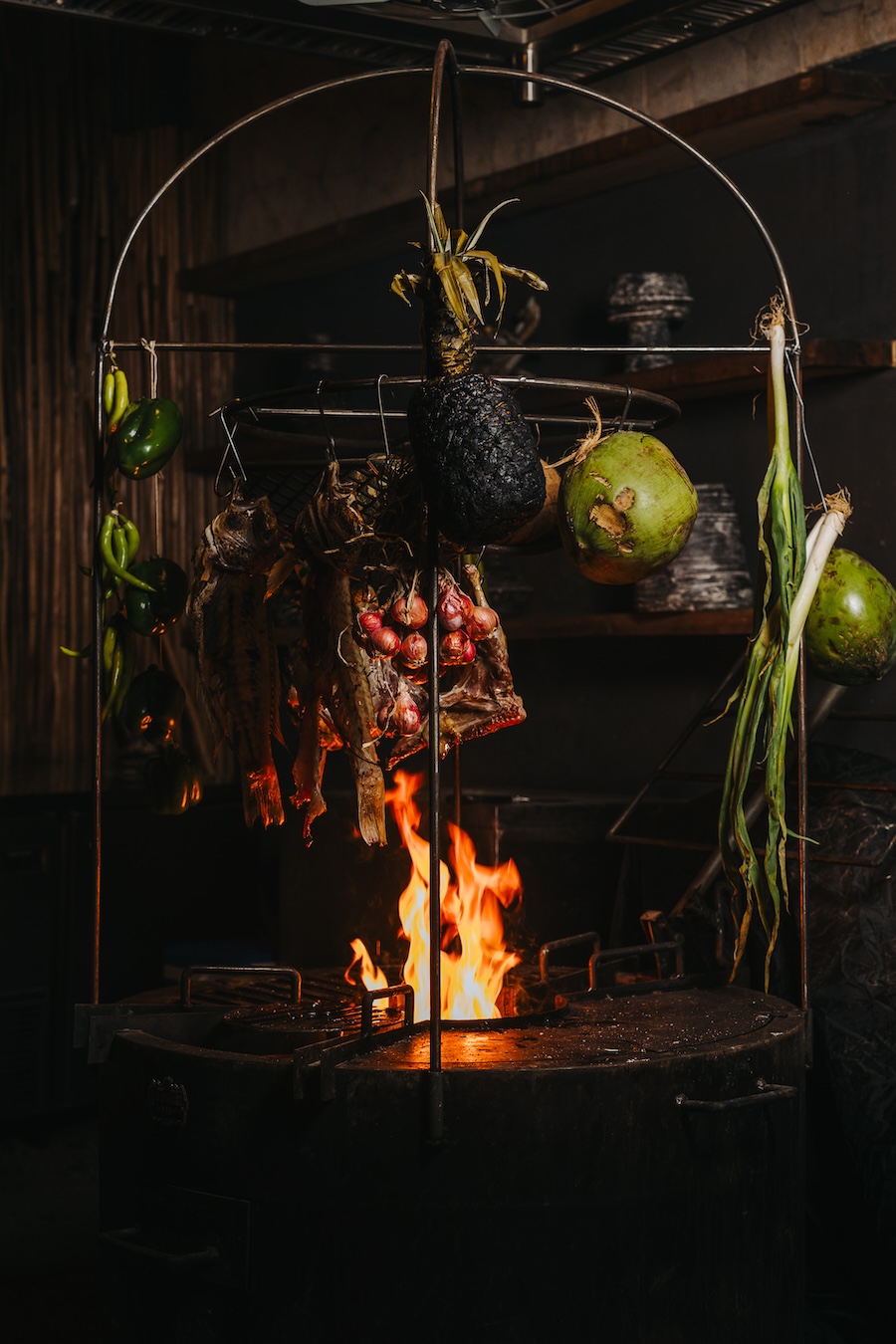
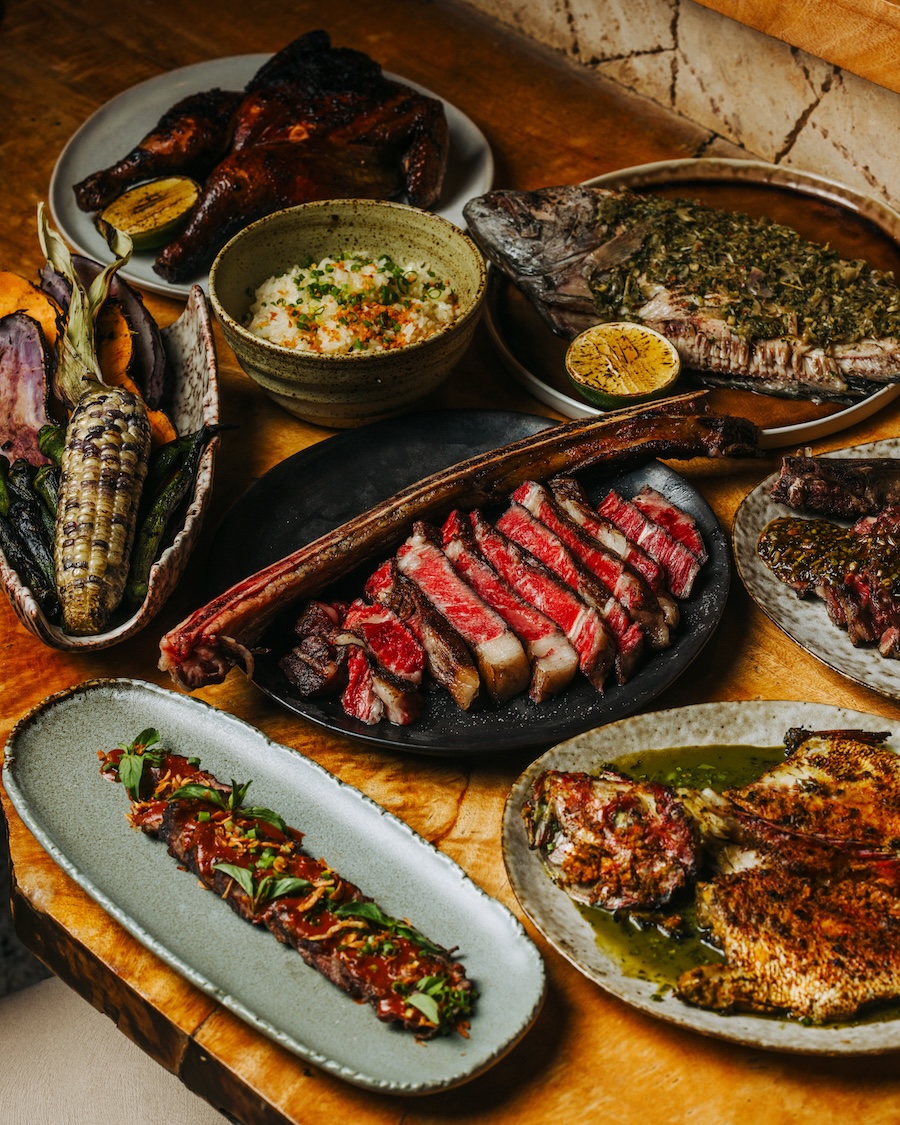
The first personality is the Tasting Kitchen, the fine dining room with its dégustation menus, sous-vide and modern equipment, where, in his words, there is “more depth, art and thought in the process, more storytelling.” The second lives out back, where a dead garden once stood. Isip resurrected it as the Jungle Kitchen, a semi-outdoor counter where everything is cooked over local firewood and nothing else. “There’s no electricity, no gas. We only cook with fire from different woods,” he says. “The cooking is very primal, very straightforward, but the bold flavors of the islands are there.” It is, quite literally, the ghost of El Nido: the island restaurant the pandemic killed, rebuilt in the city. Different teams run each kitchen so that neither dilutes the other, “like running two restaurants in one place.”
What unites Jekyll and Hyde is the sea. The Philippines sits at the centre of the Coral Triangle, the most biodiverse marine region on the planet, and yet, Isip points out with real exasperation, most Manila restaurants cook imported fish because it arrives with one phone call. He refused, and paid the price of his conviction: with no supply chain for the rare local species he wanted, he invented his own, walking the markets himself, building a network supplier by supplier, insisting on live clams and live lobster. The menu now carries fish most Filipinos have never seen on a plate: unicorn fish from Palawan, or stonefish, more venomous than fugu until the dorsal fin comes off, with the texture of monkfish but juicier. Kása Palma is the only fine dining room in Manila that dares to serve it.
Three Dishes from a Cuisine d’Auteur
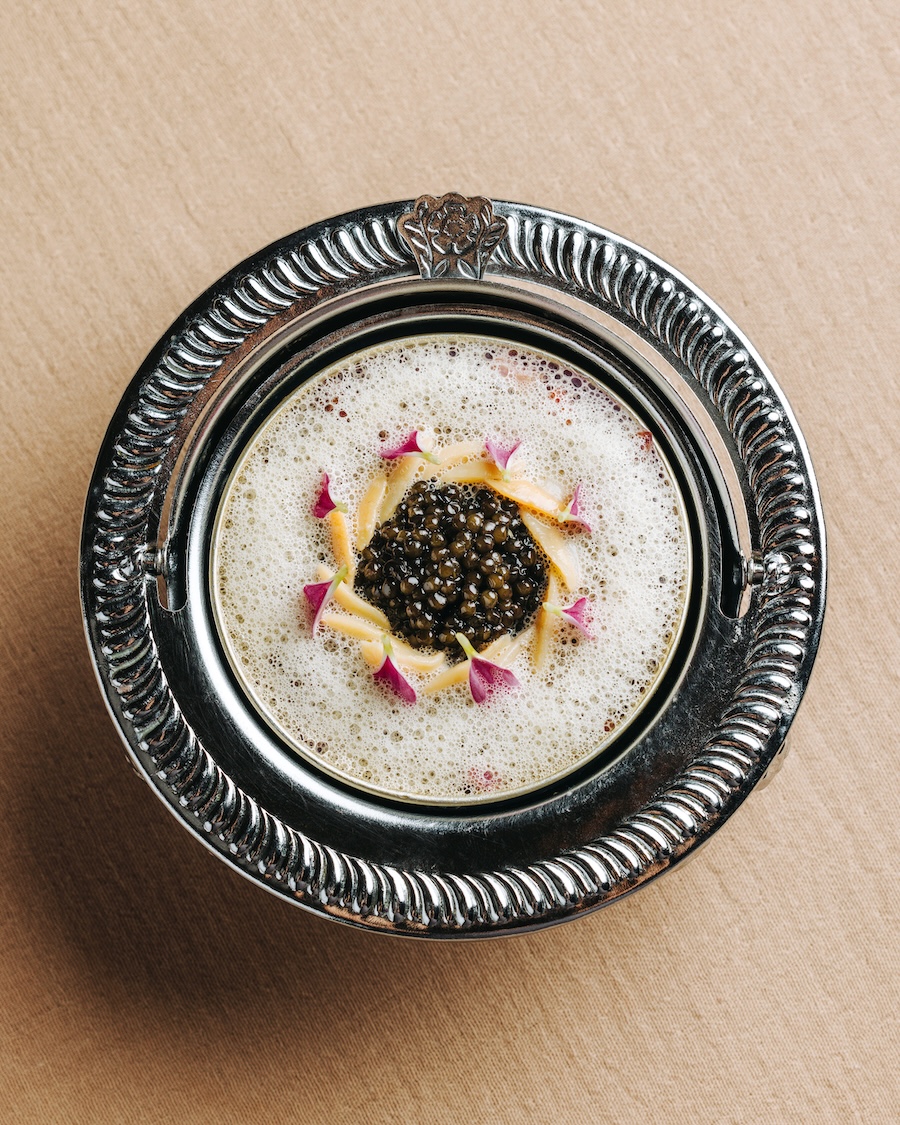
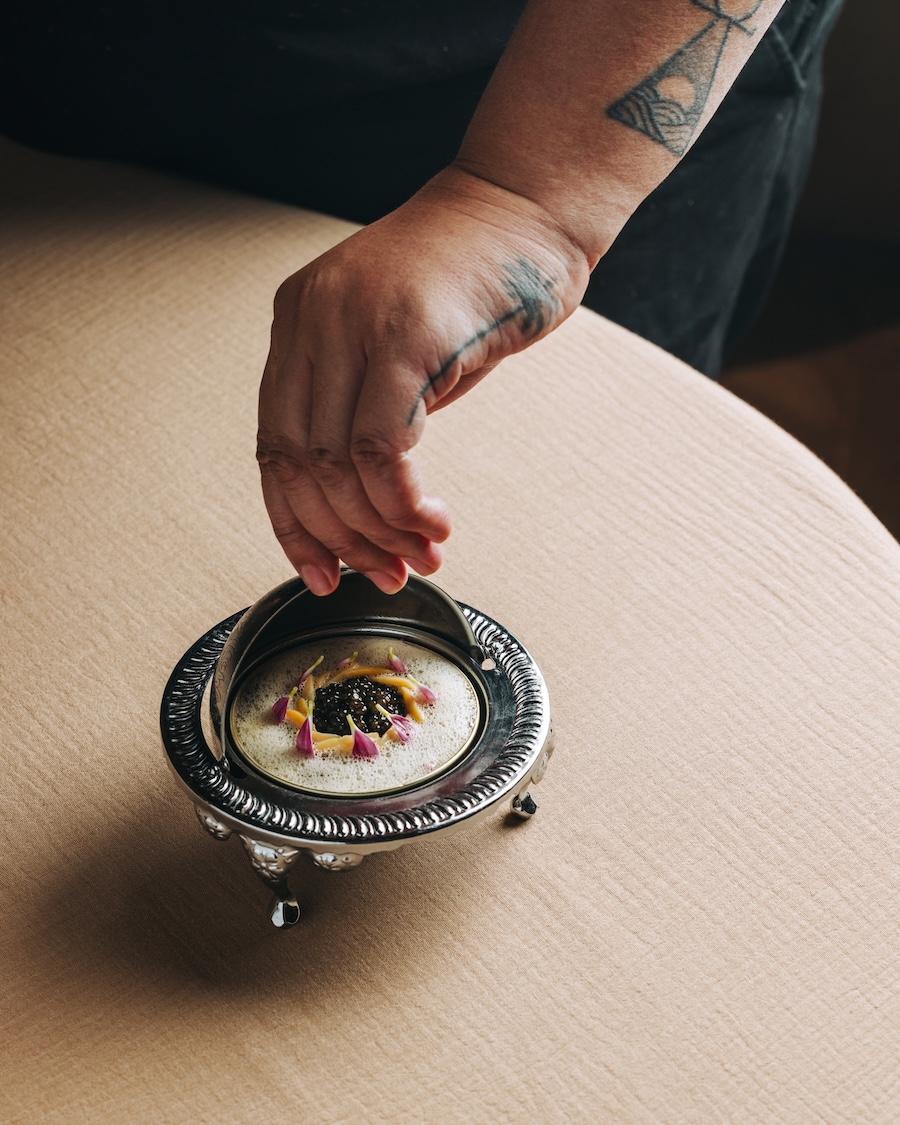
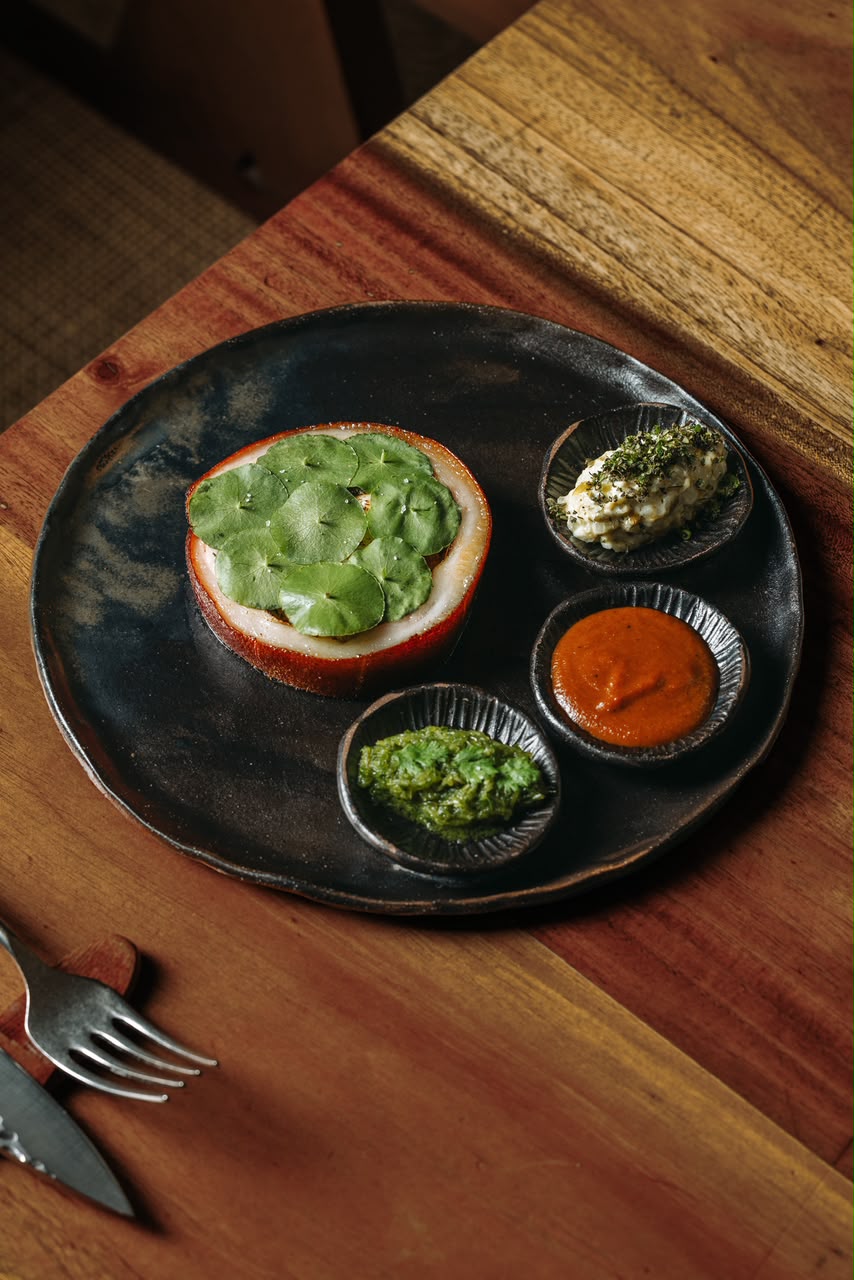
Every signature here doubles as autobiography. Ube in Three Textures, the dish he cannot take off the menu, is a memory of his first job at Apicius in Paris, where a deceptively simple plate of waxy potatoes, spring onion and a snowfall of caviar gave a young commis his first taste of both caviar and revelation. His remake swaps potato for ube, the purple yam Filipinos have eaten since before the galleons came, its earthy sweetness set against briny Oscietra and an emulsion made from live Manila clams. “People said, I’ve never tried ube like this,” he laughs. “So I’ve never removed it.”
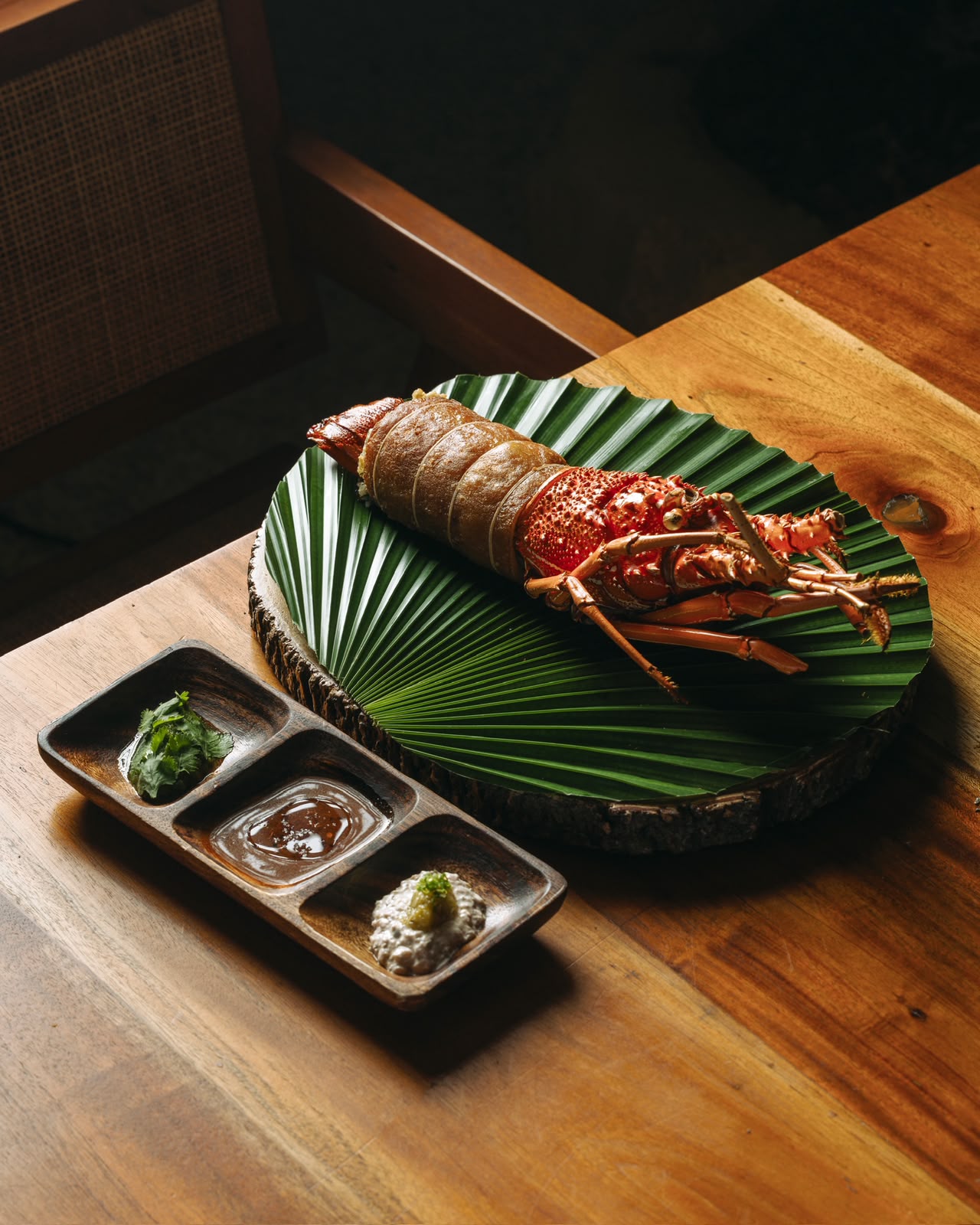
The Lechón Lobster is his most quoted invention, a marriage of the Filipino roast suckling pig with the spiny lobster of Palawan: the lobster wrapped in pork belly that has cooked sous-vide for sixteen hours, then roasted until the skin crackles while the lobster gently steams inside, basted from within by the pig itself. Regulars phone ahead to order a whole one alongside the à la carte.
And then there is the tupig, the dish that made a grown man cry. Tupig is a roadside snack, glutinous rice with coconut grilled over charcoal, bought for pennies on the drive to the mountains. Isip turned it savoury: a mousse of mascarpone and tinapa, the Philippines’ smoky dried fish, crowned with caviar the kitchen smokes three times over its own wood. It began as an off-menu treat for visiting friends until one guest tasted it and wept at the table, undone, Ratatouille-like, by the memory of sharing the original with his late mother. “After that I thought, this dish has a lot of effect,” Isip says. It is now the best-selling plate in the house.
The menus carry the same double identity as the kitchens. The current eight-course is an homage to France through Filipino ingredients: a crème brûlée that turns out to be blue swimmer crab, a croque madame of yellowtail tuna and sea urchin. The ten-course reverses the flow, revisiting traditional Filipino dishes through the sea. Around them orbit the flavors of a life: a sikil p’aak from his beloved Yucatán made with local pumpkin seeds, tortillas pressed from purple mountain rice, Vietnamese accents that arrive via his wife. “I can’t say I do strictly Filipino cuisine,” he says. “It’s more of a personal journey.” The French have a name for it, and he has adopted it: Cuisine d’Auteur.
A Will to Share Discovery
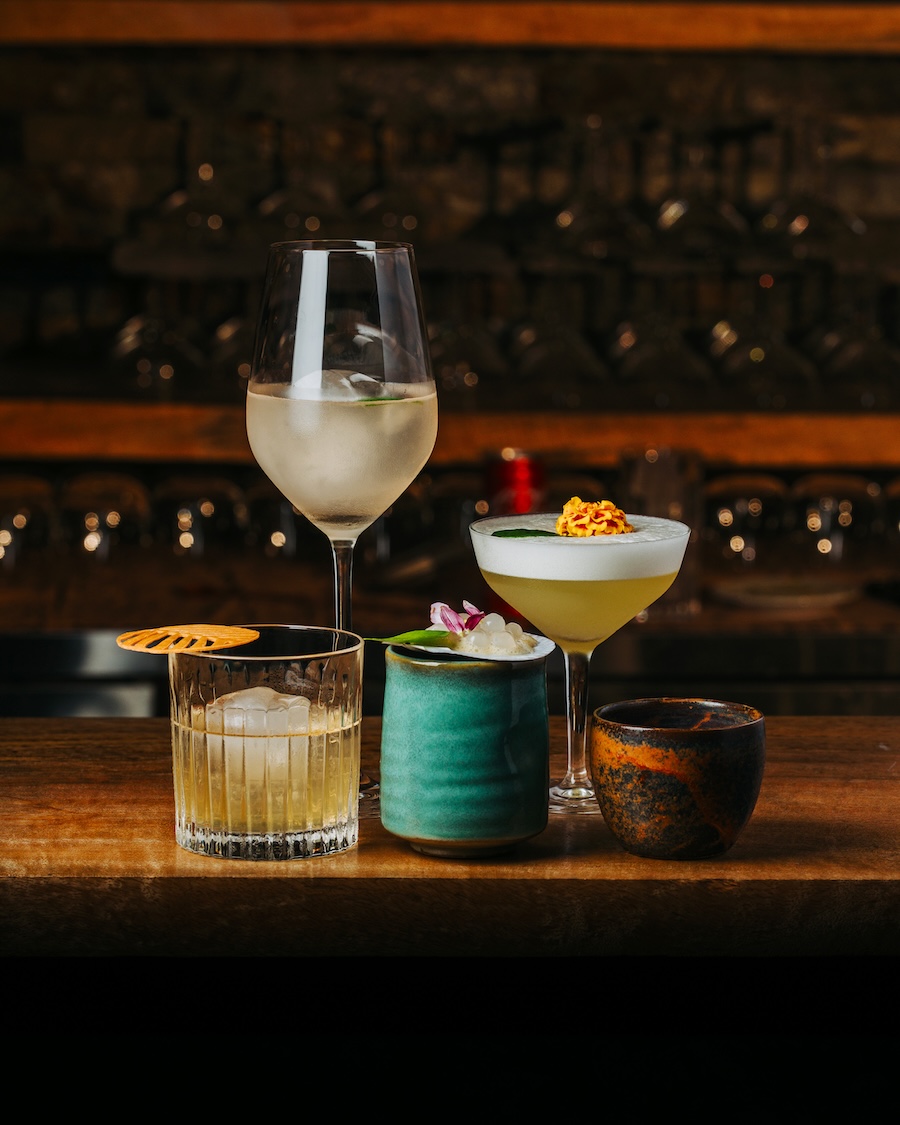
The beverage programme has grown serious since sommelier Sebastian Narciso, formed in Melbourne, joined in early 2025: wine pairings that run from grower Champagne to junmai daiginjo sake, and a by-the-glass list that slips orange Grüner Veltliner between the Riesling and the Gamay. The cocktails are Isip in liquid form, none more than the Kása Grande, a mezcal sour sharpened with yuzu, calamansi and lemongrass, the Yucatán and the Philippines shaking hands over the ice. For the sober-curious there is a house tepache and a delicately sparkling jasmine tea whose fine bead, he notes with satisfaction, toasts an anniversary as elegantly as Champagne.
Ask him what he dreams of hearing as guests step back out into the Poblacion night, and the answer has nothing to do with stars. “I would love for them to say: I never knew about this fish. It’s the first time I tried it and I loved it,” he says. “I really want our produce to shine and be at par with global standards. One day we will be the ones exporting the fish.”
It is a modest-sounding ambition that is anything but. In a house he rebuilt with his own taste, staffed by two kitchens with one soul, Aaron Isip is doing for the Philippine larder what he watched his mentors do for their own: taking what the world overlooked and cooking it until the world pays attention. The curiosity that pulled a lost marketing graduate to Paris at 21 has come home, lit a wood fire behind an old house in Makati, and started telling the sea’s stories one plate at a time.
Kása Palma
6042 Palma Street, Poblacion, Makati, Philippines.
www.kasapalma.com