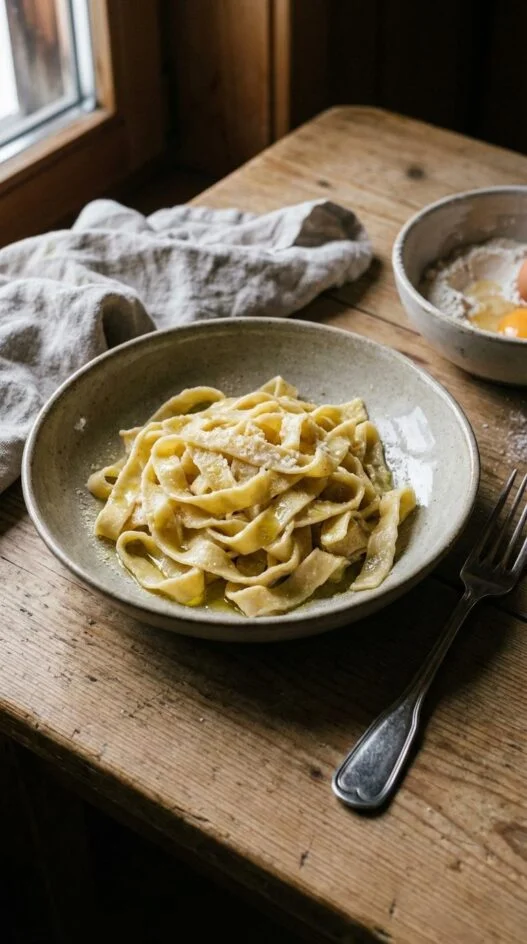
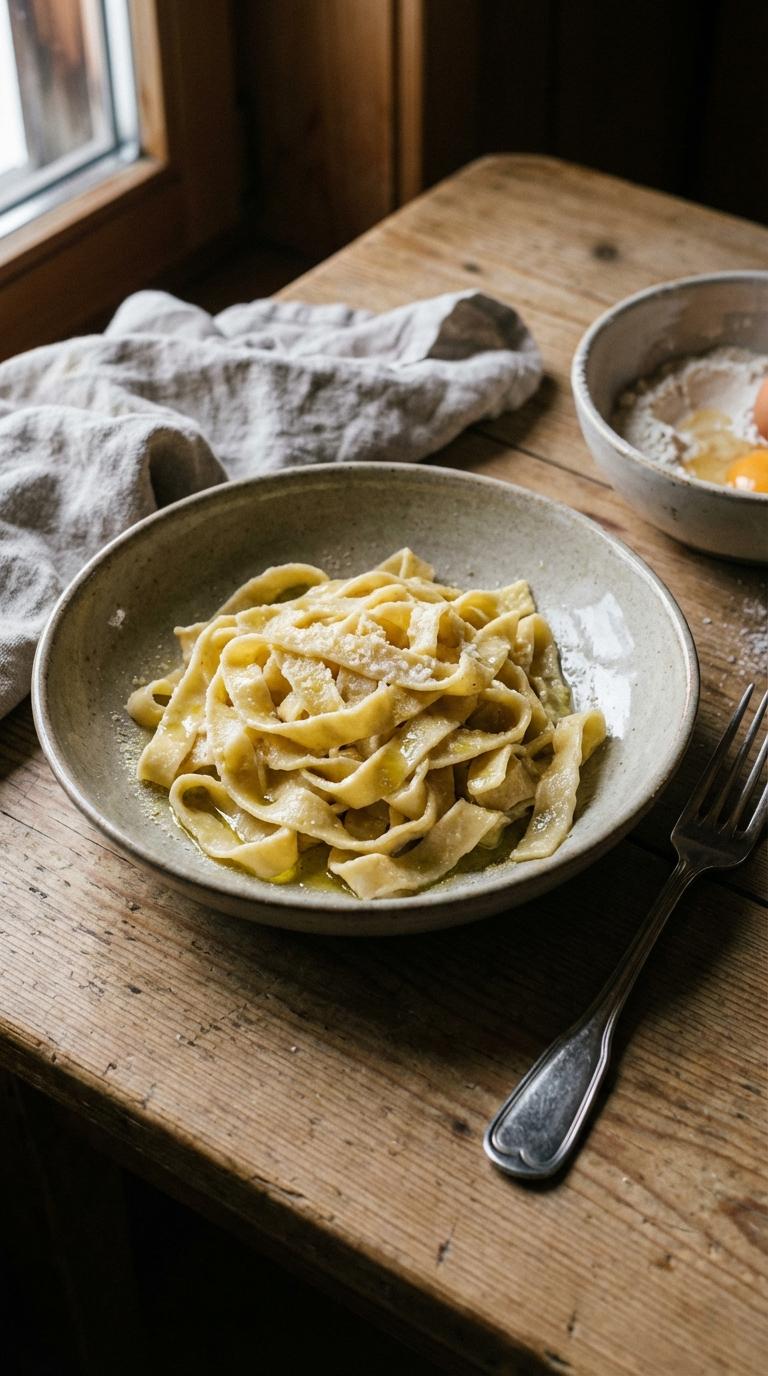
We were slow to start making pasta from scratch and slower to stop. Just flour, eggs, olive oil, and salt, kneaded into a smooth, elastic dough that rolls out into silky golden sheets. Fresh egg pasta has a tender bite and rich flavor that dried pasta simply cannot replicate, and once you get comfortable with the technique, it becomes a surprisingly meditative process rather than a stressful one. This is the foundational dough for fettuccine, tagliatelle, lasagna sheets, and filled pastas like ravioli.
The two things that matter most are kneading and resting. Eight to ten minutes of firm kneading develops the gluten structure that gives the pasta its chew and elasticity. Then you have to walk away for thirty minutes while the dough rests wrapped in plastic. That rest period relaxes the gluten so the dough rolls out smoothly instead of springing back every time you try to thin it. Use 00 flour if you want a silkier result, but all-purpose works well. Roll the sheets as thin as you can manage, dust the cut pasta generously with semolina to prevent sticking, and remember that fresh pasta cooks in two to three minutes. Dried takes eight to ten. Watch it carefully, because the window between tender and mushy is small.
Form a Well and Mix
Mound flour on a clean work surface and create a wide well in the center like a volcano crater. Crack eggs into the well and add olive oil and salt. Use a fork to beat the eggs gently, then gradually pull flour from the inner walls of the well into the eggs. Continue incorporating flour until the mixture becomes too thick to stir. Switch to your hands and bring the dough together, kneading in the remaining flour from the edges.
Knead Until Smooth
Knead the dough firmly for eight to ten minutes, pushing it away with the heel of your hand, folding it over, and rotating a quarter turn. The dough will be rough and shaggy at first, but keep going. It is ready when it becomes completely smooth, elastic, and springs back slowly when poked. It should feel like a firm, smooth earlobe. Wrap tightly in plastic wrap and rest at room temperature for thirty minutes.
Roll and Cut
Divide the rested dough into four pieces. Working with one piece at a time and keeping the rest wrapped, flatten into an oval and roll through a pasta machine at the widest setting. Fold in thirds, rotate ninety degrees, and roll again. Repeat three or four times to develop a smooth sheet. Then progressively reduce the thickness setting until you reach the desired thinness. Cut into your chosen shape and toss with semolina flour to prevent sticking.
Print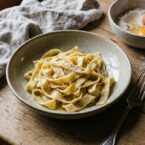
Fresh Egg Pasta, Kneaded and Rested
- Total Time: 60 minutes
- Yield: 4 servings
Description
Silky, golden homemade egg pasta with a tender bite and rich flavor that no dried pasta can match. The same dough becomes fettuccine, tagliatelle, lasagna sheets, or filled pastas like ravioli. Rolling it by hand takes a few tries before the sheets come out even.
Ingredients
- 2 cups (260g) all-purpose flour or 00 flour
- 3 large eggs
- 1 tablespoon extra-virgin olive oil
- 1/2 teaspoon fine sea salt
- Semolina flour or extra all-purpose flour for dusting
Instructions
- Mound the flour on a clean work surface and create a wide well in the center, like a volcano crater. Crack the eggs into the well, add the olive oil and salt.
- Using a fork, beat the eggs gently in the center while gradually pulling in flour from the inner walls of the well. Continue incorporating flour until the mixture becomes too thick to stir with a fork.
- Switch to your hands and bring the dough together, folding the remaining flour in from the edges. It will be shaggy and rough at first.
- Knead the dough firmly for 8-10 minutes, pushing it away with the heel of your hand, folding it over, and rotating it a quarter turn. The dough is ready when it is smooth, elastic, and springs back slowly when poked. It should feel like a firm, smooth earlobe.
- Wrap the dough tightly in plastic wrap and rest at room temperature for 30 minutes. This is essential — it relaxes the gluten so the dough rolls out smoothly instead of springing back.
- Divide the dough into 4 pieces. Working with one piece at a time (keep the rest wrapped), flatten it into an oval and roll through a pasta machine starting at the widest setting. Fold in thirds, rotate 90 degrees, and roll through the widest setting again. Repeat this 3-4 times to develop a smooth sheet, then progressively reduce the thickness setting until desired thinness is reached.
- Cut the sheets into your desired shape. Toss cut pasta with semolina flour to prevent sticking. Cook in generously salted boiling water for 2-3 minutes until tender but still slightly firm.
Notes
- 00 flour produces a silkier pasta, but all-purpose flour is perfectly acceptable and easier to find.
- Give the dough its full 30-minute rest. Skip it and the gluten stays too tight, and the dough will fight you the whole time you are rolling.
- If you don’t have a pasta machine, you can roll by hand with a rolling pin — roll as thin as possible, aiming for near-translucent sheets.
- Fresh pasta cooks in 2-3 minutes, much faster than dried. Watch it carefully and taste early.
- Uncooked pasta nests can be frozen on a parchment-lined tray, then transferred to a bag. Cook from frozen, adding 1 minute to the cooking time.
- Cuisine: Italian
Nutrition
- Serving Size: 1 serving
- Calories: 320
- Sugar: 1
- Sodium: 340
- Fat: 8
- Carbohydrates: 50
- Fiber: 2
- Protein: 12
Frequently Asked Questions
Can I make fresh pasta without a pasta machine?
Yes. Use a rolling pin and roll the dough as thin as possible, aiming for near-translucent sheets. It requires more work and strength, but many excellent pasta makers work entirely by hand.
Why does my pasta dough keep shrinking back when I try to roll it?
The gluten is too tight. Make sure you let the dough rest for a full thirty minutes after kneading. If it still fights back, let it rest another ten minutes.
How long does fresh pasta take to cook?
Fresh pasta cooks much faster than dried, usually two to three minutes in boiling salted water. Start tasting after two minutes. It should be tender with a slight bite in the center.