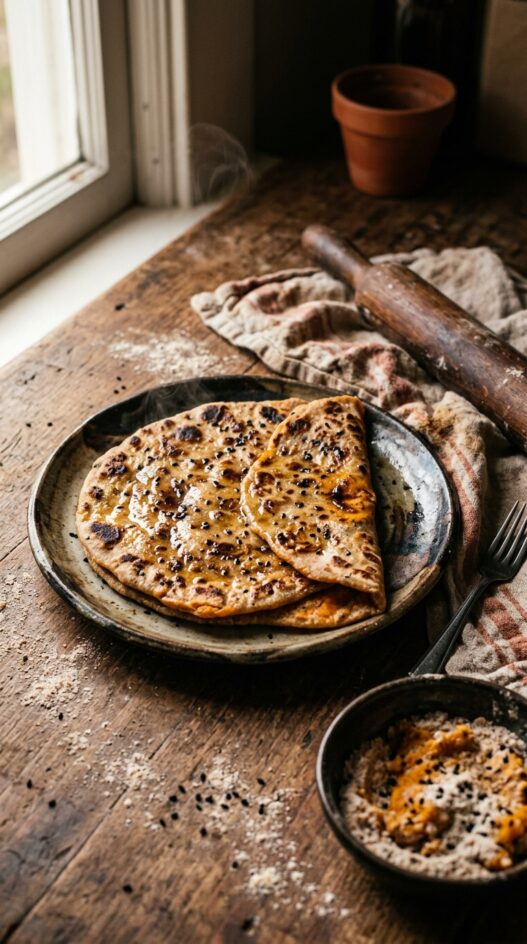
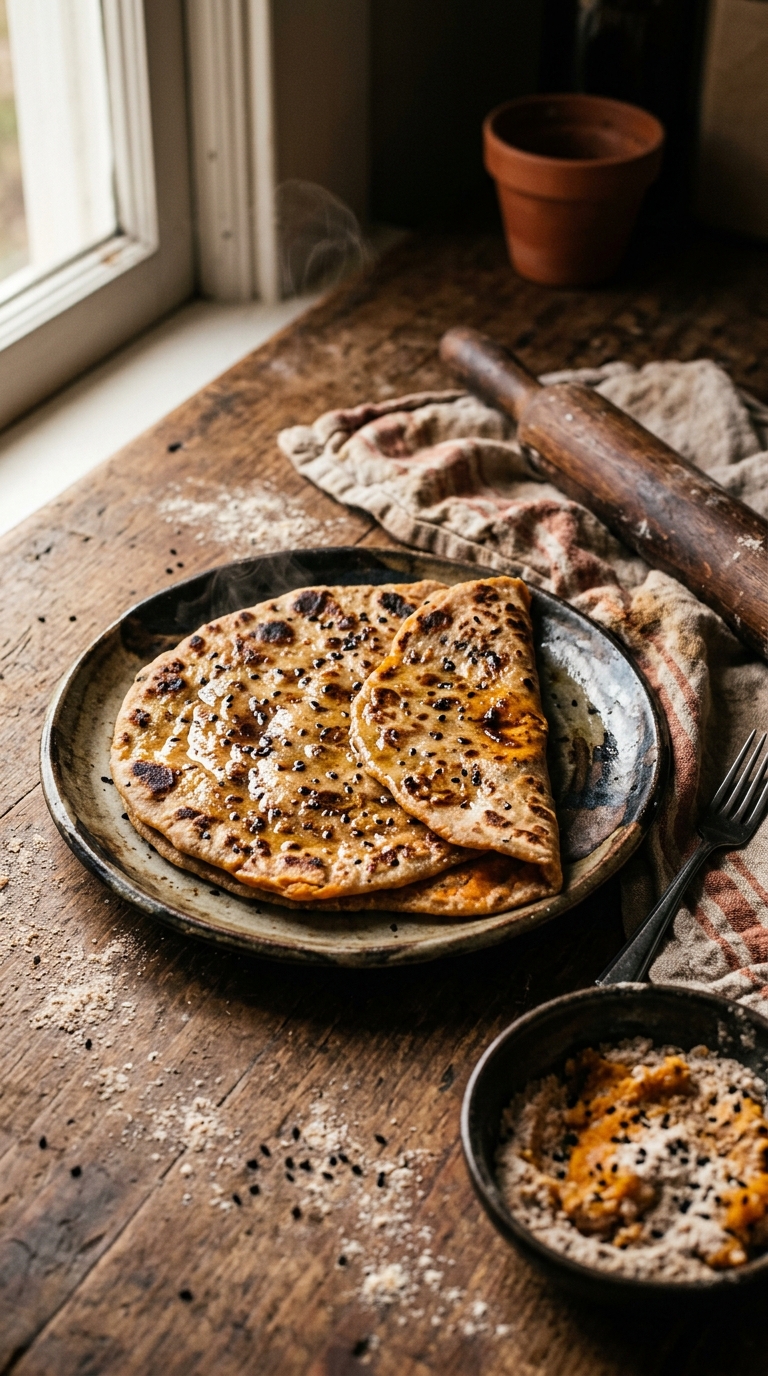
I can say with confidence that with all of its buttery goodness, this will be one of the softer paratha flatbreads you would have ever made. The flavors are clean and ingredients are simple. Roasting intensifies the sweetness of the butternut squash. The recipe calls for no water at all as the roasted squash pulp contains sufficient moisture to bind with the whole wheat flour.
Print
Butternut Squash and Kalonji Flatbread
- Total Time: 1 hour 15 minutes
- Yield: 2
Description
This indian paratha flatbread is a wonderfully delicious side dish, to be enjoyed at any time.
Ingredients
- 1 small organic butternut squash
- 1-1/2 cups (360 ml) stone ground whole wheat flour or Atta + 1/4 cup (60 ml) more for dusting
- 1 tbsp kalonji / Nigella seeds (aka black caraway seeds or onion seeds)
- salt to taste
- oil for pan roasting
other:
- rolling-pin and board (prefer wood, steel or stone)
Instructions
Roasting the squash:
- Preheat oven to 400° F.
- Wash, towel dry and cut the butternut squash in half. scrape out the seeds and pith with a spoon or peeler tip.
- Line a baking tray with aluminium foil and place the squash halves face down on the sheet with space in between them. Bake for 30 minutes or until the skin is browned (also juices start running).
- Remove from the oven and wrap the foil to cover to let it cook in its own steam for 10 mins. Unwrap, let cool and scoop out all the pulp into a large mixing bowl. Sprinkle salt and kalonji and mix well. Add whole wheat flour little at a time mixing it with squash pulp until all the flour is incorporated. Add more flour if required until a pliable non-sticky dough is formed. Knead for a couple of mins, cover the bowl and let the dough rest for 15 mins before making parathas. Resting makes the dough absorb all the moisture and become softer.
- If not for roasting, alternatively, either steam the squash halves or cook in just enough boiling water until soft and follow the remaining steps. This method needs more flour as the water content is more. Or, simply stir fry with a drizzle of oil until soft, purée and use.
make parathas:
- Knead the resting dough again for a few mins. Pull a small portion of dough, the size of a small lemon and roll it into a ball. Dust this dough ball with dry flour on both sides and roll out flat into a small circle with a rolling-pin. Fold into quarter, dust and roll out again to a triangle shape. Roast on a heated griddle or ‘tava’ on medium-high heat until brown spots appear on both the sides. Drizzle a few drops of oil on either sides. Remove parathas and keep in a covered container to preserve softness. Repeat with the remaining dough.
- Serve hot with a drizzle of ghee with a side of your choice and yogurt on the side.
Notes
- This recipe works equally well with pumpkin and sweet potatoes.
- Also, white s sesame seed and/or kasoori methi (dried fenugreek leaves) can be used with great success in case you don’t ve kalonji on hand.
- You can even spice it up with jeera powder or ground cumin, red chilli powder, black pepper as required.
- Though I have used a small squash, the best ones to buy are those that are big and heavy for their size.
- Make sure that the griddle or tawa is hot enough before pan roasting parathas.
- If the heat is very high or very low, parathas end up becoming burnt or hard.
- Refrigerate remaining dough and thaw on the counter before making parathas again.
- Prep Time: 20 mins
- Cook Time: 1 hour
- Category: Bread
- Cuisine: Indian
Nutrition
- Serving Size: 1 paratha
- Calories: 190
If You Liked This Recipe, You’ll Love These
- Daal Poori: Lentil Stuffed Deep Fried Indian Bread
- Feta and Yellow Squash Salad
- Pistachio Gremolata and Squash Soup
- Cider and Maple Roasted Squash
Frequently Asked Questions
What are kalonji seeds, and what can I substitute if I can’t find them?
Kalonji (also called nigella seeds, black caraway seeds, or onion seeds) are small black seeds with a slightly bitter, onion-like flavor. White sesame seeds or kasoori methi (dried fenugreek leaves) work as direct substitutes with great results. You can also add spice from cumin powder, red chilli powder, or black pepper if you want more complexity.
Why does this recipe add no water to the dough?
I add no water at all because the roasted squash pulp contains sufficient moisture to bind with the whole wheat flour. Roasting the squash and then wrapping it in foil for an extra 10 minutes after it comes out of the oven — so it steams in its own juices — is what maximizes that moisture.
Why does the dough need to rest for 15 minutes before making the parathas?
Resting makes the dough absorb all the moisture and become softer. The squash pulp continues hydrating the flour during those 15 minutes, giving you a more pliable, non-sticky dough that rolls out into thin rounds without tearing.
Can I use pumpkin or sweet potato instead of butternut squash?
Yes — this recipe works equally well with pumpkin and sweet potatoes. Note that steamed or boiled squash releases more water than roasted squash, so you’ll need to add more whole wheat flour to achieve the same pliable dough consistency.