
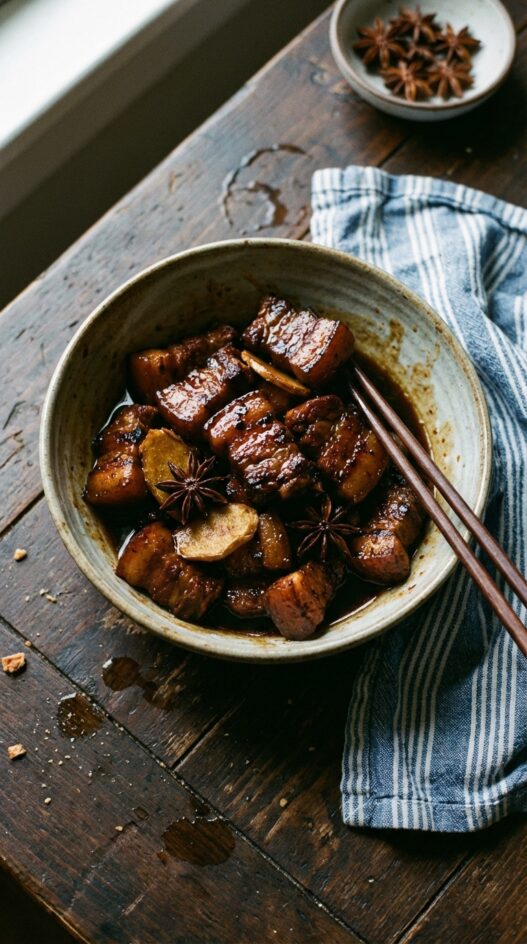
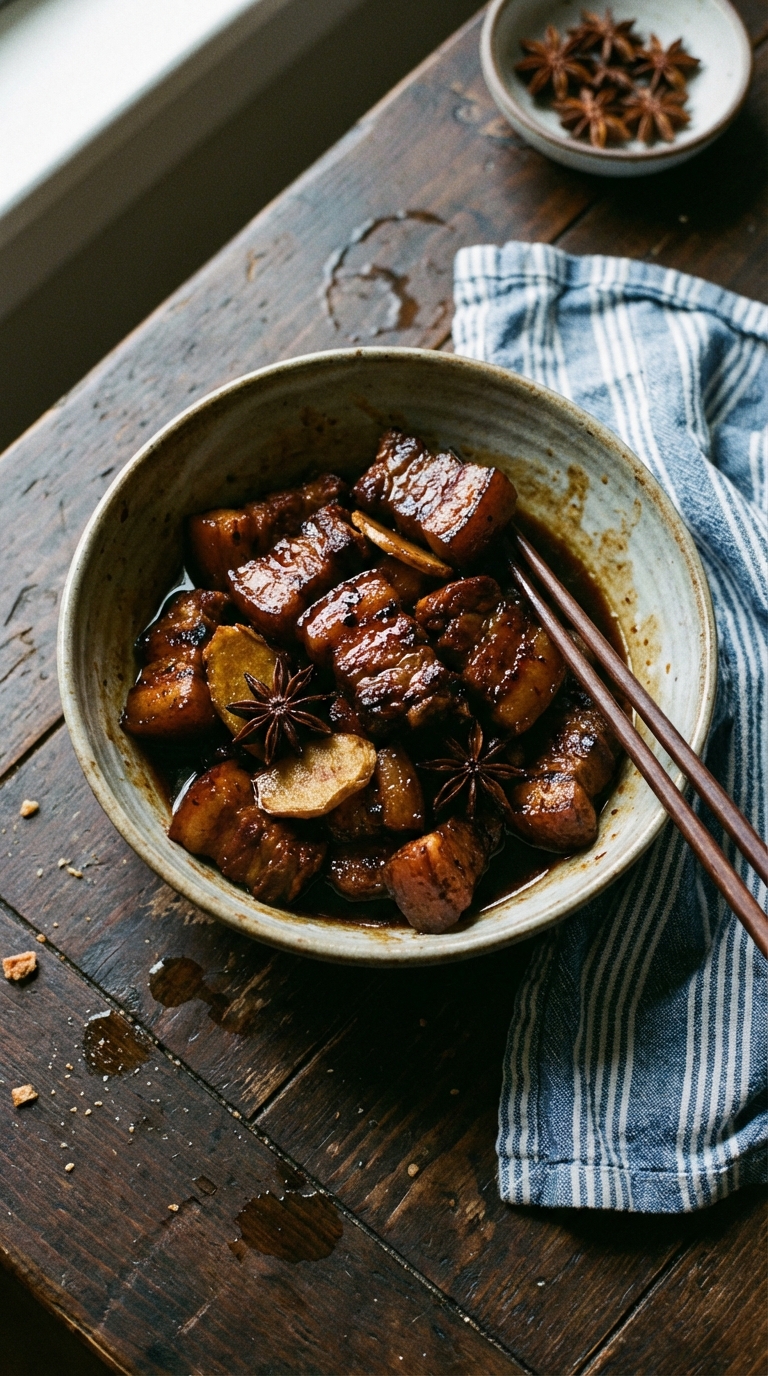
Pork belly has long been prized in Chinese cooking for its balance of meat and fat, and few dishes show it off better than a soy sauce braise. Known in various regional styles — from Hong Shao Rou in Shanghai to Hakka versions flavored with different spices — the method is straightforward: simmer pork belly with soy sauce, rice wine, ginger, sugar, and star anise until the fat turns silky and the sauce reduces to a glossy caramel-like glaze.
This is not a quick weeknight dish, but it isn’t complicated either. Most of the work is letting time and low heat do their job, with a brief flourish at the end when the sauce reduces and coats each piece.
Once you master the basic, you can add other ingredients to layer the flavors. The matched ingredients are spring onion, garlic, dry chili, bay leaf and cinnamon sticks.
Step by Step Guide to Making Soy Braised Chinese Pork Belly
Step 1 – Parboil the pork
Bring a pot of water to a boil. Add the pork belly pieces and boil for 5 minutes. Drain and rinse the pork under cold water to remove impurities. Set aside.
Step 2 – Start the braise
Return the pork to a clean saucepan or Dutch oven. Add the soy sauce, dark soy sauce, rice wine, ginger slices, sugar, and star anise. Pour in just enough water to barely cover the meat.
Step 3 – Simmer
Bring the liquid to a boil, then reduce to a gentle simmer. Cover with a lid and cook for about 60 minutes, until the pork is tender.
Step 4 – Caramelize the sauce
Remove the lid and increase the heat to high. Let the liquid reduce and thicken, stirring and turning the pork pieces so they become evenly coated. You should be left with glossy, caramelized pork belly coated in a rich sauce.
Recipe Notes
Pork belly: Look for cuts with a balance of meat and fat — too much fat and the dish becomes greasy, too lean and it won’t be as tender.
Soy sauces: Dark soy sauce isn’t essential, but it gives the dish its deep, mahogany color.
Cooking vessel: A heavy-bottomed pot helps maintain a steady simmer and prevents scorching during the reduction stage.
Serving ideas: Traditionally served with steamed white rice, but also works well with noodles or steamed buns.
FAQ
Can I make this ahead of time?
Yes. In fact, the flavors deepen after a night in the fridge. Reheat gently on the stove before serving.
What if I can’t find Chinese rice wine?
Dry sherry is a reasonable substitute if Shaoxing wine isn’t available.
Do I have to parboil the pork?
Yes. Parboiling removes impurities and results in a cleaner-tasting braise.
Can I add more spices?
Definitely. Cinnamon sticks, cloves, or dried chilies are sometimes added in regional versions.
What should I serve it with?
Steamed jasmine rice is traditional, but leafy greens like bok choy make a nice balance to the richness.
Chinese Braised Soy Sauce Pork Belly
- Total Time: 85 minutes
- Yield: Serves 4
- Diet: Omnivore
Description
Fall-day comfort food at its finest. Warm, caramelized pork belly with rich soy sauce flavors.
Ingredients
- 3 lbs (1361 g) pork belly
- 1/2 cups (118 ml) Chinese rice wine
- 3 tbsp soy sauce
- 1/2 tbsp dark soy sauce
- 4-5 slices ginger
- 1 tbsp sugar
- 2 star anise
Instructions
- Parboiling — Bring water to a boil in a saucepan. Put pork into the saucepan and boil for 5 minutes. Discard the hot water and wash the pork with cold water.
- Braising — Place pork belly, soy sauce, dark soy sauce, rice wine, ginger, sugar, and star anise in the saucepan. Add water to barely cover the meat. Lower heat to a simmer, cover with a lid, and braise for about 60 minutes.
- Caramelizing — Turn heat to high, remove the lid, and let the liquid evaporate and thicken. Turn and mix the pork to ensure even coating. You should end up with a thick, glistening sauce covering the tender pork belly.
Notes
- For deeper caramelization, increase braising time by 15-20 minutes, checking frequently to prevent burning.
- Dry sherry or mirin can be substituted for Chinese rice wine if needed.
- Store leftover pork belly in the refrigerator for up to 4 days; reheat gently in a pan or microwave.
- Prep Time: 10 minutes
- Cook Time: 75 minutes
- Category: Main Course
- Method: Braising
- Cuisine: Chinese
Nutrition
- Serving Size: 200g
- Calories: 500
- Sugar: 10
- Sodium: 1000
- Fat: 35
- Saturated Fat: 15
- Unsaturated Fat: 15
- Trans Fat: 0g
- Carbohydrates: 20
- Fiber: 2
- Protein: 40
- Cholesterol: 100
If you liked this, you are going to love these favorite Chinese recipes:
Chinese Five Spice Fried Chicken
Chinese-Spiced Chicken Noodle Soup
Warm Chinese Lettuce in Garlic Oil
Good Luck Chinese Seafood Dumplings
Frequently Asked Questions
Why do I need to parboil the pork belly before braising?
Parboiling the pork belly removes impurities and excess fat, resulting in a cleaner flavor and texture in the final dish.
Can I use regular soy sauce instead of dark soy sauce for this recipe?
While you can use regular soy sauce, dark soy sauce adds a deeper color and richer flavor to the braise, enhancing the overall taste of the dish.
How can I adjust the flavor if I want more spice in the braise?
You can add dry chili or additional ginger slices during the braising process to introduce more heat and spice, complementing the sweetness from the sugar.
If You Liked This Recipe, You’ll Love These
- Fried Rice with Kimchi and Pork Belly
- How to Make Flæskesteg: Danish Pork Roast with Crispy Crackling
- How to Make Pork Tamales





I braised a batch low and slow on Sunday and the house smelled incredible all afternoon. It was meltingly tender over rice and is going straight into the rotation. So good!
This is amazing!
Have made this about 10 times and it is always perfect. Thanks for a fantastic recipe. :D
Love this recipe, thank you! :) I added garlic and five spice powder for my second try. But honestly, the original recipe is already very very good. Ginger makes the dish!
This is my favorite recipe, it is soooooo goood!!!
Hi, Ben: It is a dish with the skin on the belly. shallots and coriander will be fine with it.
Hi Lei, I am making this one tonight! I love pork belly but have had so many crispy skin pork bellies, I want to try something different. Should I leave the skin on the belly for this recipe? I am planning to add a few shallots and garnish with coriander, let me know if this is a bad idea!
Cheers, ben