
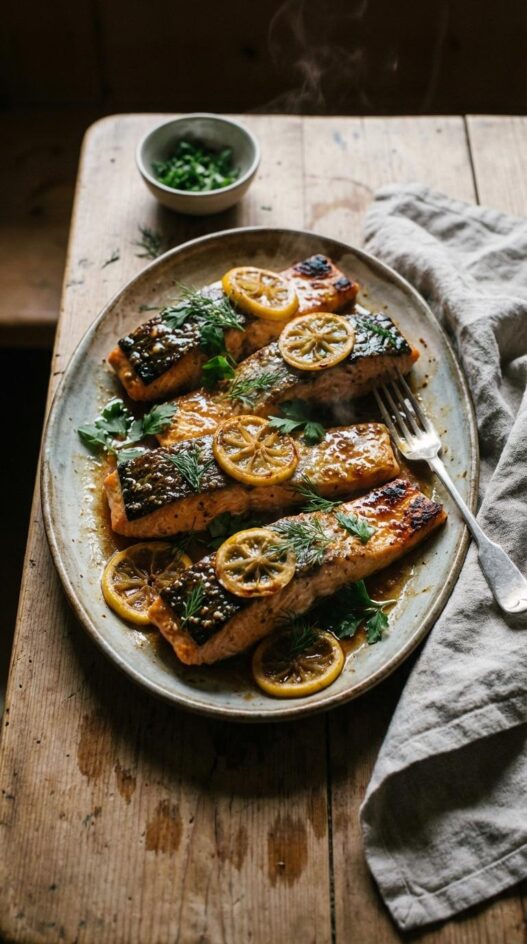
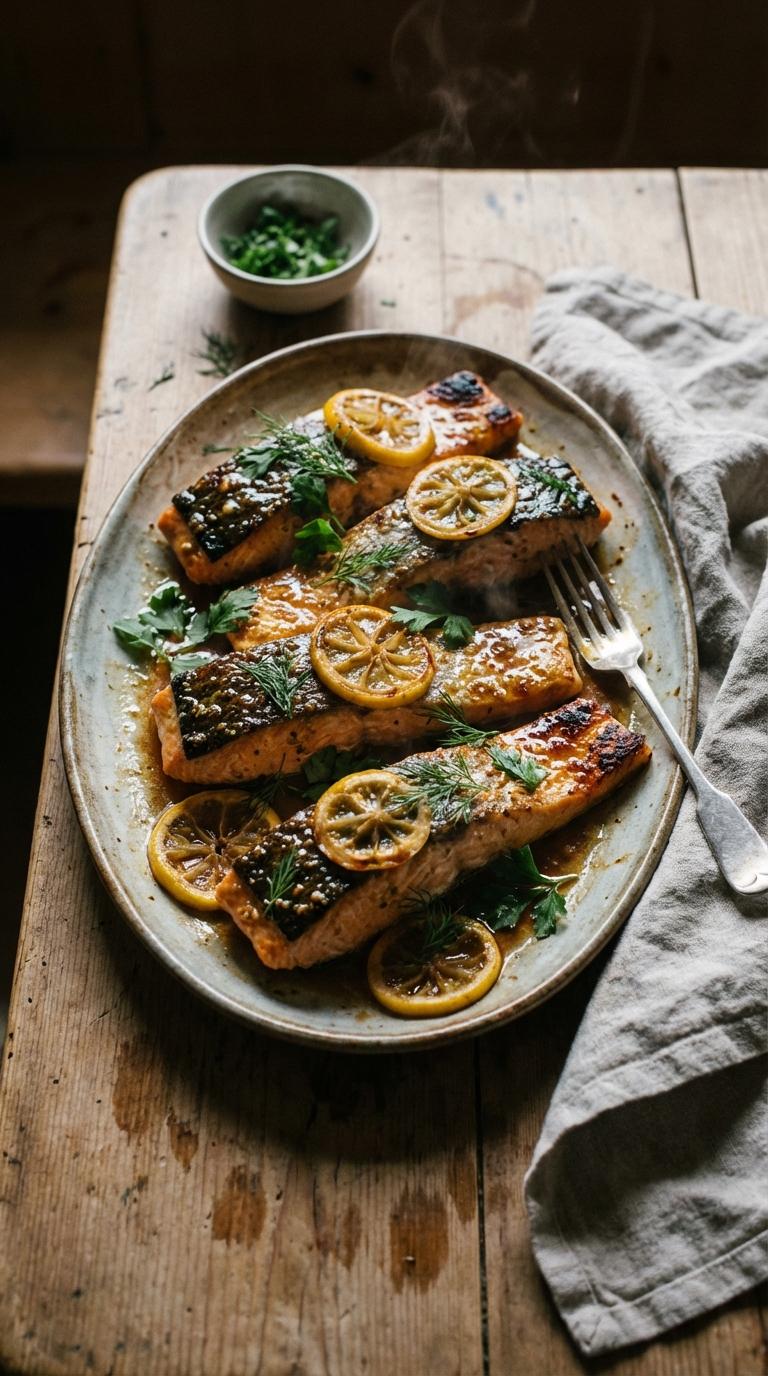
If there is one fish recipe every home cook should have locked down, it is baked salmon. It takes fifteen minutes in a hot oven, requires almost no technique. Produces results that look and taste like you put in far more effort than you actually did.
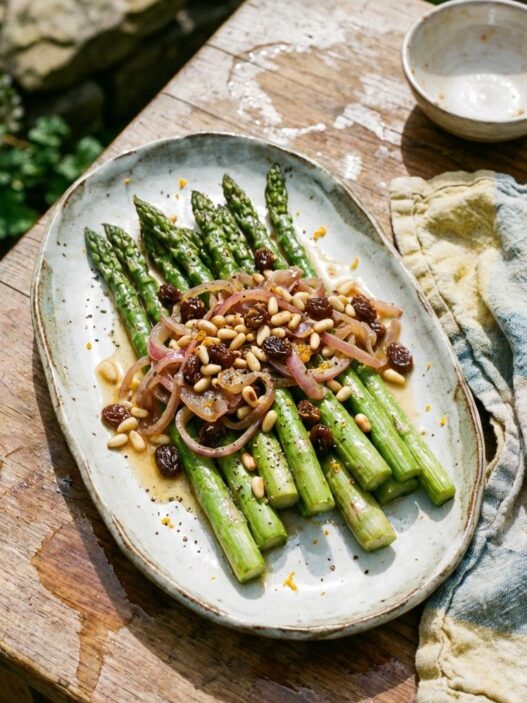
The Dijon-honey-soy glaze here does most of the heavy lifting, caramelizing into a sticky, savory-sweet coating that makes plain baked salmon feel like a distant memory. Pretty damn good for fifteen minutes of effort. This version works just as well on a Tuesday night with steamed rice and broccoli as it does at a dinner party alongside roasted asparagus and a crisp white wine. The key move is pulling the salmon at 125 degrees if you like it silky in the center, since carryover heat will bring it up a few more degrees on the plate.
Leftovers, if you have any, are great cold the next day, flaked over a grain bowl or tucked into a salad with avocado and a bit of lemon.
Prepare and Glaze
Preheat the oven to 425 degrees. Line a sheet pan with parchment paper or aluminum foil for easy cleanup. Pat the salmon fillets completely dry with paper towels and place them skin-side down on the prepared pan. Drizzle with olive oil and season with salt, pepper, and garlic powder. In a small bowl, whisk together Dijon mustard, honey, soy sauce, and lemon juice. Spoon this glaze evenly over the top of each fillet. The glaze adds flavor and helps the exterior caramelize slightly.
Bake at High Heat
Arrange lemon slices around and on top of the salmon. Transfer to the oven and bake for 12 to 15 minutes for farmed salmon, or 10 to 12 minutes for wild salmon, which is leaner and cooks faster. The salmon is done when the flesh is opaque on the outside but still slightly translucent in the very center, and an instant-read thermometer inserted into the thickest part reads 125 degrees for medium. Do not overbake. Salmon that looks fully cooked in the oven will be overcooked on the plate.
Print
Baked Salmon
- Total Time: 25 minutes
- Yield: 4 servings
Description
Baking salmon is one of the simplest and most reliable ways to cook fish, requiring minimal attention and producing consistently moist, flavorful results. A brief stint at high heat gives you a slightly caramelized exterior with a silky, just-set interior that pulls apart in clean flakes.
Ingredients
- 4 skin-on salmon fillets (6 ounces each, about 1 inch thick)
- 2 tablespoons olive oil
- 1 teaspoon kosher salt
- 1/2 teaspoon black pepper
- 1/2 teaspoon garlic powder
- 1 tablespoon Dijon mustard
- 1 tablespoon honey
- 1 tablespoon soy sauce
- 1 lemon, half juiced and half sliced into rounds
- Fresh dill or parsley for garnish
Instructions
- Preheat the oven to 425°F. Line a sheet pan with parchment paper or aluminum foil.
- Pat the salmon fillets dry with paper towels and place them skin-side down on the prepared pan. Drizzle with olive oil and season with salt, pepper, and garlic powder.
- In a small bowl, whisk together the Dijon mustard, honey, soy sauce, and lemon juice. Spoon this glaze evenly over the top of each fillet.
- Arrange the lemon slices around and on top of the salmon.
- Bake for 12 to 15 minutes until the salmon is opaque on the outside and the internal temperature reaches 125°F for medium (slightly translucent in the center) or 145°F for well done.
- Remove from the oven, garnish with fresh dill or parsley, and serve with the roasted lemon slices.
Notes
- Wild salmon is leaner and cooks faster than farmed — reduce time by 2 to 3 minutes.
- The white stuff that seeps out is albumin, a harmless protein; cooking at moderate temperatures minimizes it.
- For the silkiest texture, pull the salmon at 125°F — it will continue cooking from carryover heat.
- Leftover baked salmon is excellent cold in salads or flaked over grain bowls.
- Category: Main Course
- Cuisine: American
Nutrition
- Serving Size: 1 serving
- Calories: 420
- Sugar: 4g
- Sodium: 760mg
- Fat: 27g
- Carbohydrates: 5g
- Protein: 38g
Frequently Asked Questions
What temperature is the salmon done?
For medium, pull at 125F (52C) in the thickest part. The fish continues cooking on the hot pan. For well-done, go to 140F, but the texture will be drier and firmer. Most people prefer salmon with a slightly translucent center.
Should I bake skin-side up or down?
Skin-side down on parchment paper. The skin insulates the flesh from the direct heat of the pan, keeping it moist. The top gets the Dijon-honey-soy glaze that caramelizes under the high heat.
Can I use frozen salmon?
Yes, thaw overnight in the refrigerator and pat very dry before seasoning. Do not bake from frozen, the outside overcooks before the center is warm. Frozen salmon releases more moisture, so thorough drying is especially important.





Fifteen minutes and done, love it!