
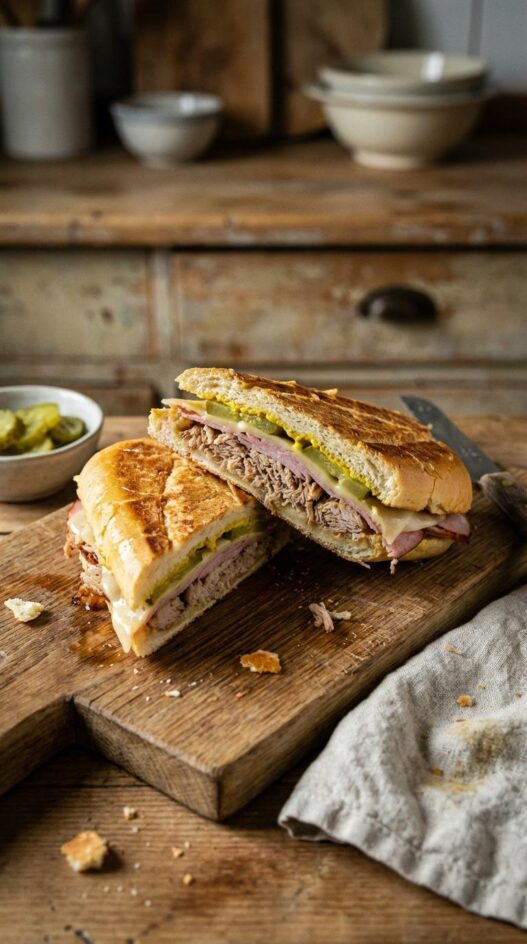
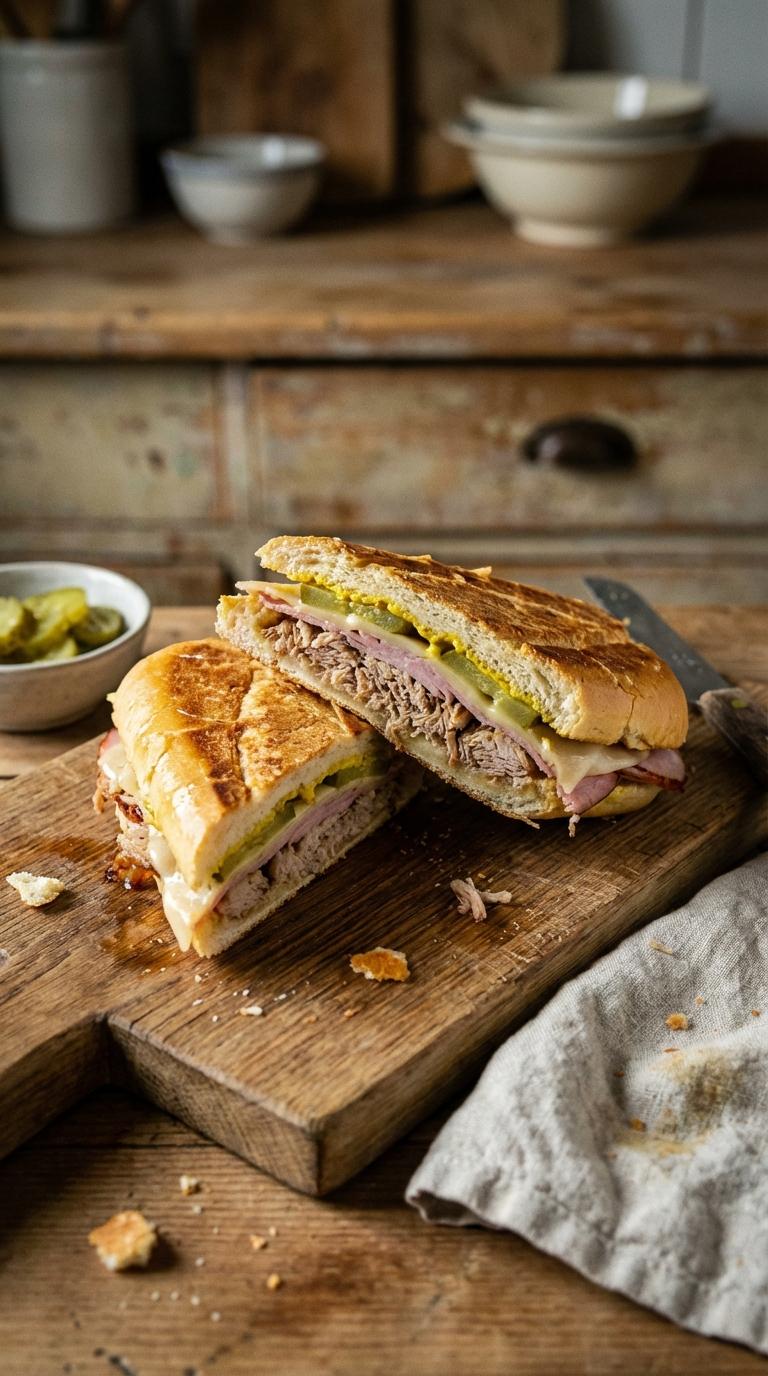
The Cubano is one of America’s great sandwiches, born not in Havana but in the cigar factories of Tampa’s Ybor City, where Cuban, Spanish, and Italian workers traded lunch ideas. It is a sandwich with opinions: yellow mustard, never Dijon. Swiss cheese, never cheddar. Dill pickles, always. And the bread has to be pressed until the outside shatters and the cheese melts into everything. Simple as that. Get those details right and you have something no deli counter version can touch. A full overnight soak in sour orange juice, garlic, cumin, and oregano transforms a cheap pork shoulder into something deeply savory and tender enough to shred with a fork after three hours at 325. Layer that pork with good deli ham, Swiss, pickles, and a serious coat of yellow mustard on proper Cuban bread. Nobody leaves a bite of this one on the plate. Butter the outside, press it in a hot pan until golden and cracking, and you are done. If you cannot find Cuban bread, a good French or Italian loaf works. Make a double batch of the mojo pork on Sunday and you have sandwiches all week.
Marinate Thoroughly
Combine marinade ingredients including spices, acids, and aromatics. Mix until well blended. Add protein and turn to coat every surface completely. Cover and refrigerate for the recommended time. Proper marination allows flavors to penetrate deeply and acid to tenderize proteins. Rushing this step results in surface-level seasoning only. For Cubano Sandwich, overnight marination produces noticeably better results than short marination. The marinade components work together to transform the texture and infuse authentic flavor throughout.
Cook at Proper Temperature
Preheat cooking surface or oven to the specified high temperature. Remove protein from marinade and arrange with space between pieces to prevent steaming. High heat caramelizes the marinade and creates charred edges typical of traditional preparation. Monitor internal temperature carefully to avoid overcooking. The goal is deeply browned, almost blackened exterior with juicy interior. Proper heat management separates excellent results from mediocre ones in this dish.
Rest and Serve Correctly
Let cooked protein rest briefly to redistribute juices before slicing. Cut against the grain for tender texture. Assemble with traditional accompaniments that balance richness and provide textural contrast. Serve immediately while still warm. The pairing of spiced protein, tangy condiments, cool vegetables, and warm bread creates the complete authentic experience expected from properly prepared Cuban cuisine.
Print
Cubano Sandwich
- Total Time: 240 minutes
- Yield: 4 sandwiches
Description
The Cubano is Miami and Tampa’s gift to the sandwich canon — slow-roasted mojo pork, sliced ham, Swiss cheese, pickles, and yellow mustard pressed between Cuban bread until the outside is shatteringly crisp and the cheese inside has melted into everything. Its roots are in the Cuban cigar factories of Tampa’s Ybor City in the late 1800s. The mojo pork is the centerpiece, marinated overnight in a garlic-citrus bath that tenderizes the meat and infuses it with a flavor unlike anything else.
Ingredients
- For the mojo pork:
- 2 pounds pork shoulder (boneless)
- 8 cloves garlic, minced
- 1/2 cup fresh sour orange juice (or 1/4 cup orange juice plus 1/4 cup lime juice)
- 2 tablespoons olive oil
- 1 teaspoon ground cumin
- 1 teaspoon dried oregano
- 1 teaspoon kosher salt
- 1/2 teaspoon freshly ground black pepper
- For the sandwiches:
- 1 loaf Cuban bread (or a soft French or Italian bread), cut into 4 portions
- Yellow mustard
- 8 ounces sliced deli ham
- 8 slices Swiss cheese
- Dill pickle slices, lengthwise
- 2 tablespoons unsalted butter, softened
Instructions
- Combine the garlic, sour orange juice, olive oil, cumin, oregano, salt, and pepper to make the mojo marinade. Place the pork shoulder in a dish or bag, pour the mojo over, and turn to coat. Refrigerate for at least 4 hours, or overnight.
- Preheat the oven to 325°F. Transfer the pork and marinade to a roasting pan. Cover tightly with foil. Roast for 3 hours until the meat is fork-tender and pulls apart easily. Let cool slightly, then shred or slice the pork. Toss with pan juices.
- Split each bread portion lengthwise. Spread yellow mustard generously on both cut sides. Layer sliced ham, mojo pork, Swiss cheese, and dill pickles on the bottom half. Close the sandwich.
- Butter the outside top and bottom of each sandwich. Heat a large skillet, griddle, or panini press over medium heat.
- Place the sandwiches in the pan and press down firmly with a heavy skillet, foil-wrapped brick, or sandwich press. Cook for 3-4 minutes until the bottom is golden and crisp.
- Flip carefully, press down again, and cook for another 3-4 minutes until the second side is golden and the cheese is fully melted. The bread should be shatteringly crisp and compressed.
- Cut on the diagonal and serve immediately.
Notes
- The mojo marinade is what sets a Cubano apart from a generic ham and cheese. The garlic, citrus, and cumin penetrate the pork overnight and create layers of flavor that no quick seasoning can replicate.
- Cuban bread has a thin, crisp crust with a soft, slightly sweet interior. If unavailable, a soft French bread or Italian bread works — do not use a baguette with a hard crust.
- The sandwich must be pressed firmly during cooking. The compression is not just for aesthetics — it melds the layers together and creates maximum surface contact for crisping.
Nutrition
- Serving Size: 1 serving
- Calories: 890
- Sugar: 5g
- Sodium: 1720mg
- Fat: 44g
- Carbohydrates: 58g
- Protein: 62g
Frequently Asked Questions
What makes a Cubano different from a regular ham and cheese?
The mojo pork. Pork shoulder marinated overnight in garlic, sour orange juice, cumin, and oregano, then slow-roasted for 3 hours until fork-tender. That layered citrus-garlic flavor is what defines a real Cubano.
Can I use a panini press instead of a plancha?
Yes, a panini press or a heavy skillet pressed on top of the sandwich both work. The goal is even, firm pressure so the bread compresses and the cheese melts. Brush the outside with butter for a golden, crisp crust.
What bread should I use?
Cuban bread is traditional, soft inside with a thin, slightly crisp crust. If you cannot find it, a soft French or Italian bread works. Avoid anything too crusty or dense, the sandwich needs to compress flat when pressed.

THIS IS THE ONE. couldnt find sour orange anywhere near me so i mixed lime and orange juice, still really good but id like to try it proper sometime