
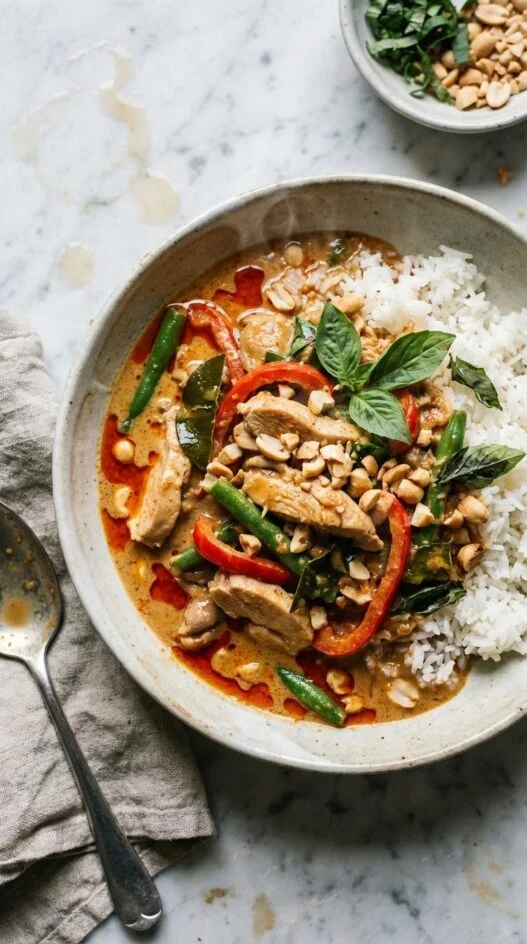
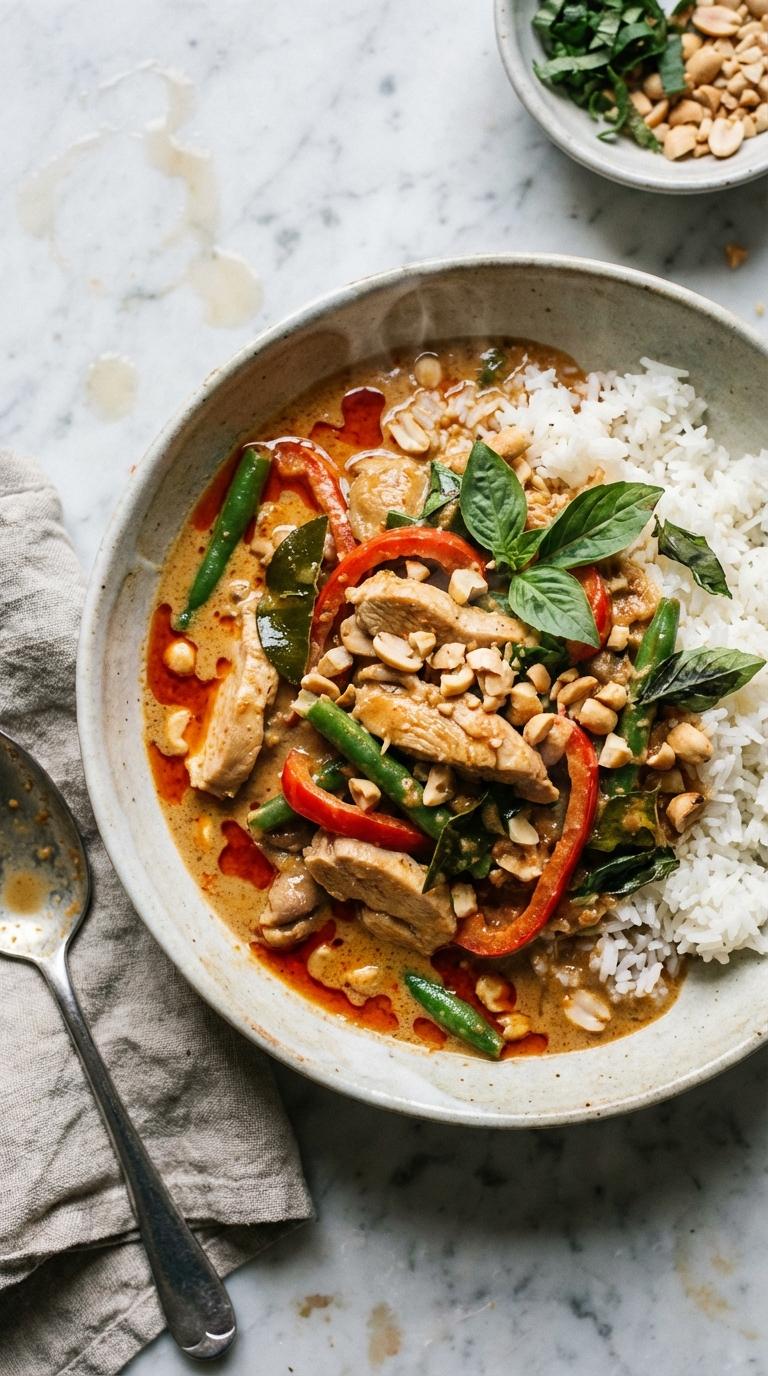
Panang curry sits in its own category among Thai curries. Where green curry is herbal and bright and red curry is loose and spicy, Panang is dense, nutty, and concentrated. It coats the chicken rather than pooling around it. That peanut undertone from the paste is what separates panang from a standard red curry, and it makes this feel more substantial than a typical weeknight stir-fry. This is the one to reach for when you want Thai food that feels genuinely satisfying. We keep a jar of panang paste around just for nights like this.
This version builds the sauce properly: the thick coconut cream is fried separately with the paste until the oil breaks out, which concentrates the flavors before anything else hits the pan. Kaffir lime leaves are essential for fragrance. The chopped peanuts stirred in at the end add texture that holds up through the meal. Serve it over jasmine rice with a little extra Thai basil on the side. Consider doubling the batch since it reheats well the next day.
Bloom the Curry Paste in Coconut Cream
Scoop the thick coconut cream from the top of the can. Heat oil in a wok over medium heat. Add the coconut cream and panang curry paste. Fry for about two minutes until the oil separates and the paste is very fragrant. This step is essential for building deep flavor. The paste should smell intensely aromatic and the oil should float on top.
Add Chicken and Build the Sauce
Add the sliced chicken thighs and stir-fry for about three minutes to coat them in the curry paste. Pour in the remaining coconut milk, fish sauce, and brown sugar. Add the bell pepper, green beans, and torn kaffir lime leaves. Simmer for 12 to 15 minutes until the chicken is cooked through and the sauce has reduced and thickened. The sauce should be thick enough to coat the back of a spoon.
Finish with Peanuts and Thai Basil
Stir in half the chopped roasted peanuts. The peanuts add texture and a subtle nutty flavor to the sauce. Serve over jasmine rice topped with the remaining peanuts and fresh Thai basil. The curry should be thick, rich, and intensely flavored. Each bite should have a balance of creamy, spicy, and nutty.
Print
Thai Panang Curry
- Total Time: 30 minutes
- Yield: 4 servings
Description
Panang curry is the thicker, richer, nuttier Thai curry — less soupy than green or red, with a concentrated sauce that clings to the chicken and vegetables. Peanuts in the curry paste give it a subtle creaminess, and kaffir lime leaves add a citrusy fragrance. It is the Thai curry for people who like bold, intense flavors.
Ingredients
- 1 1/2 lbs boneless, skinless chicken thighs, sliced
- 1 can (14 ounces) full-fat coconut milk
- 3 tablespoons panang curry paste
- 1 tablespoon vegetable oil
- 1 red bell pepper, sliced
- 1 cup green beans, trimmed and cut in half
- 2 tablespoons fish sauce
- 1 tablespoon brown sugar
- 4 kaffir lime leaves, torn (or zest of 1 lime)
- 1/3 cup roasted peanuts, roughly chopped
- Fresh Thai basil
- Steamed jasmine rice
Instructions
- Scoop the thick coconut cream from the top of the can. Heat oil in a wok, add the cream and curry paste. Fry 2 minutes until the oil separates and the paste is very fragrant.
- Add the chicken and stir-fry 3 minutes to coat in the paste.
- Pour in the remaining coconut milk, fish sauce, and brown sugar. Add the bell pepper, green beans, and kaffir lime leaves.
- Simmer 12 to 15 minutes until the chicken is cooked through and the sauce has reduced and thickened.
- Stir in half the peanuts. Serve over rice topped with remaining peanuts and Thai basil.
Notes
- Panang curry paste is available at Asian markets and most grocery stores. Mae Ploy and Maesri are reliable brands.
- The sauce should be noticeably thicker than green or red curry — more like a coating than a soup.
- Kaffir lime leaves are not eaten — they are for fragrance. If using lime zest as a substitute, add it at the very end.
- Prep Time: 10 minutes
- Cook Time: 20 minutes
- Category: Main Course
- Cuisine: Thai
Nutrition
- Serving Size: 1 serving
- Calories: 460
- Sugar: 8
- Sodium: 820
- Fat: 30
- Carbohydrates: 14
- Fiber: 3
- Protein: 36
- Cholesterol: 95
Frequently Asked Questions
What makes panang curry different from other Thai curries?
Panang curry is thicker and nuttier than red or green curry. The paste contains peanuts, which give it a creamy texture and subtle nutty flavor. The sauce is more concentrated and clings to the meat and vegetables.
Can I make this with shrimp or tofu?
Yes. Shrimp cook quickly, so add them in the last five minutes of cooking. For tofu, press and pan-fry it first, then add it to the curry in the last few minutes to heat through.
Can I use a different nut if I have a peanut allergy?
Cashews can substitute for peanuts, but the flavor will be different. Panang curry paste itself contains peanuts, so check the ingredients carefully if you have a severe allergy. Some brands make peanut-free versions.
If You Liked This Recipe, You’ll Love These
- Avocado Green Curry Noodles
- Khao Soi Gai: Northern Thai Curry Noodle Soup
- Coconut Milk Cauliflower Soup with Red Curry
- Comforting Chicken in Red Curry






Better than takeout!