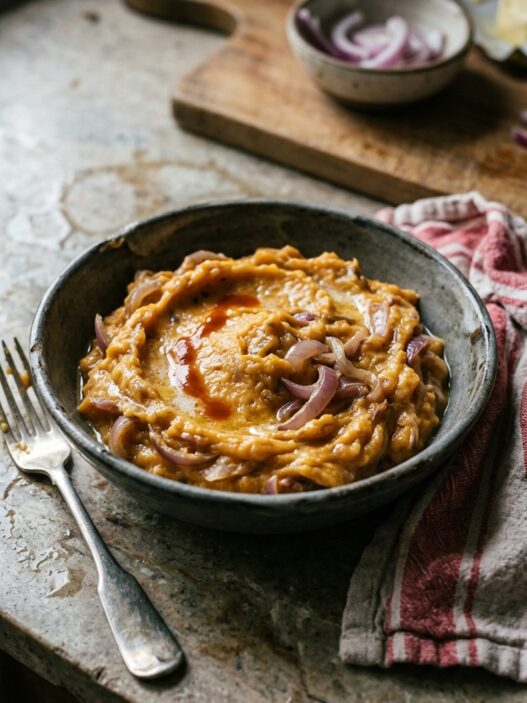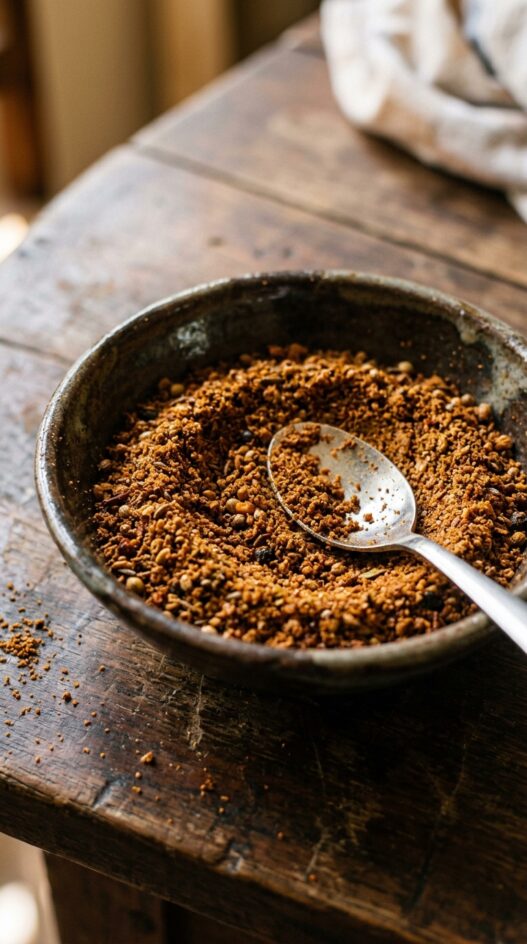
Saaru is the very monicker of quintessential everyday South Indian food. On most days, there’s Anna (steamed rice), Saaru, and everything else is prepared around those two basic pillars of our South Indian meal. A simple Anna-Saaru and a side of green beans stir fried with freshly grated coconut and seasoned with mustard seeds makes for a comforting “feel at home” meal.
Saaru, a typical Karnataka (a state in India) food almost always means a cooked pigeon peas broth with some tangy tamarind pulp stirred in and spiced with either a home made or store bought staple spice mix – “Saaru Podi” popularly known as Rasam Powder. The indispensable spice mix has its roots in Ayurveda and every single ingredient truly has a medicinal property to boast of.
This recipe from my grand dad’s kitchen is always a yard stick of sorts for me. Apparently, there is a method to the madness, a particular order and method to follow to get the most flavorful Saaru Podi. If you read through the recipe, notice how the ingredients are paired and roasted in a particular order? It is neat to note how Coriander seeds and Curry leaves need just about the same time to be roasted and so do fenugreek and hing. Dry roasting them any longer burns their flavors.
Making Saaru Podi from scratch is a happy trip down the satisfaction lane. Nothing quite packs the punch much like a freshly ground home made spice mix.
Print
Mysore Saaru Podi: Karnataka Rasam Spice Powder
- Total Time: 35 minutes
- Yield: About 2 cups
Description
Saaru Podi is a flavorful South Indian spice mix, essential for making the comforting pigeon pea broth known as Saaru or Rasam. This homemade blend brings together aromatic spices and herbs for an authentic taste.
Ingredients
- About 2 cups (480 ml) dried red chillies (approx. 50-60) (ideally a mix of Byadagi and Guntur)
- 1 cup (240 ml) coriander seeds
- 1/4 cup (60 ml) fenugreek (methi) seeds
- 1/4 cup (60 ml) black peppercorns
- 1/4 cup (60 ml) cumin seeds (jeera)
- 1 1/2 tsp turmeric powder
- 1/4 cup (60 ml) curry leaves
- 1/4 tsp asafoetida (hing)
- 1 tbsp (15 ml) oil
- Ghee, for roasting the peppercorns
- Cinnamon
- Mustard seeds
Instructions
- Heat oil in a saute pan or wok and roast the red chillies on low-medium heat. Using two ladles, roast by lifting the chillies from the sides until they are very hot to the touch. Let the chillies not burn or the chilli fumes will take over the kitchen. Spread on a plate and keep aside.
- Add coriander seeds and curry leaves immediately into the pan and dry roast on medium heat until curry leaves are wilted and dry enough to crumble when pinched, but still retain their green color. Empty these onto the red chillies, so the chillies are kept warm enough to be ground.
- Add ghee to the pan followed by black peppercorns and roast until the spluttering frequency reduces but does not stop. Remove on to the plate.
- Add fenugreek seeds and asafoetida and dry roast until fenugreek seeds turn golden brown. Any more roasting will turn them very bitter. Remove on to the plate.
- Add cumin seeds and cinnamon and dry roast until flavorful and the spluttering frequency reduces but does not stop. Remove on to the plate.
- Lastly, dry roast mustard seeds till they begin to splutter. Remove on to the plate.
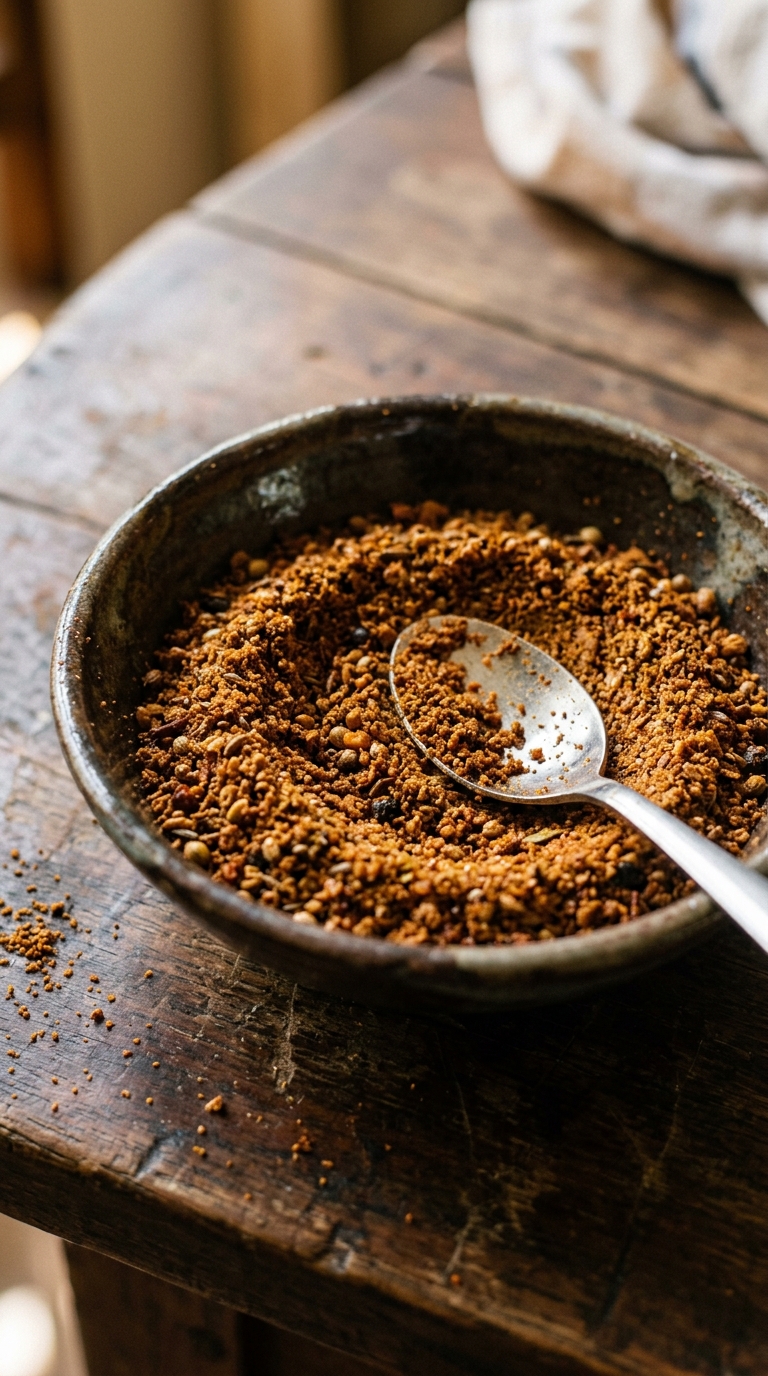
- Grind all the roasted ingredients on the plate together with the turmeric powder in a spice grinder or any Indian mixer (dry jar) until finely powdered. Let the jar cool before opening. Transfer to an airtight container and store in a cool dry place.
Notes
- Use a mixture of mild and hot varieties of red chilli for a mix of color and heat.
- Avoid dry roasting all ingredients together as it results in uneven roasting or burning of ingredients.
- If you wish to store the spice mix for a longer duration, ensure it is kept in an airtight container away from moisture.
- Prep Time: 20 minutes
- Cook Time: 15 minutes
- Category: Condiment
- Cuisine: Indian
Nutrition
- Serving Size: 1 tablespoon
- Calories: 10
- Sugar: 0
- Sodium: 2
- Fat: 0.5
- Carbohydrates: 2
- Fiber: 1
- Protein: 0.5
- Cholesterol: 0
If You Liked This Recipe, You’ll Love These
- Dhingri Matar – Creamy Indian Mushroom and Pea Curry
- Weeknight Chana Masala
- Pumpkin Masala Curry
- Tikka Masala Spiced Chickpeas and Cauliflower
Frequently Asked Questions
Why does this recipe roast the spices in a specific order rather than all together?
I follow a method from my grandfather’s kitchen where ingredients are paired by roasting time: coriander seeds and curry leaves are roasted together, then fenugreek and asafoetida together. This prevents uneven roasting — dry roasting any ingredient longer than needed burns its flavors, and fenugreek in particular turns very bitter if over-roasted.
What are Byadagi and Guntur chillies, and can I use regular dried red chillies instead?
Byadagi chillies are a mild Karnatakan variety prized for their deep red color, while Guntur chillies are hotter and add heat. I call for about 2 cups (50–60 chillies) of ideally a mix of both to get the right balance of color and heat. If unavailable, use a mix of mild and hot dried red chillies.
What is Saaru Podi used for, and what is it known as outside Karnataka?
Saaru Podi is the spice mix I use to flavor Saaru — a cooked pigeon peas broth with tamarind that forms the backbone of everyday Karnataka meals alongside steamed rice. Outside Karnataka it is widely known as Rasam Powder. Every ingredient also has Ayurvedic medicinal properties.
How should the finished Saaru Podi be stored?
Once ground, transfer the spice mix to an airtight container and keep it in a cool, dry place away from moisture. Proper airtight storage is especially important if you want to keep it for a longer duration.