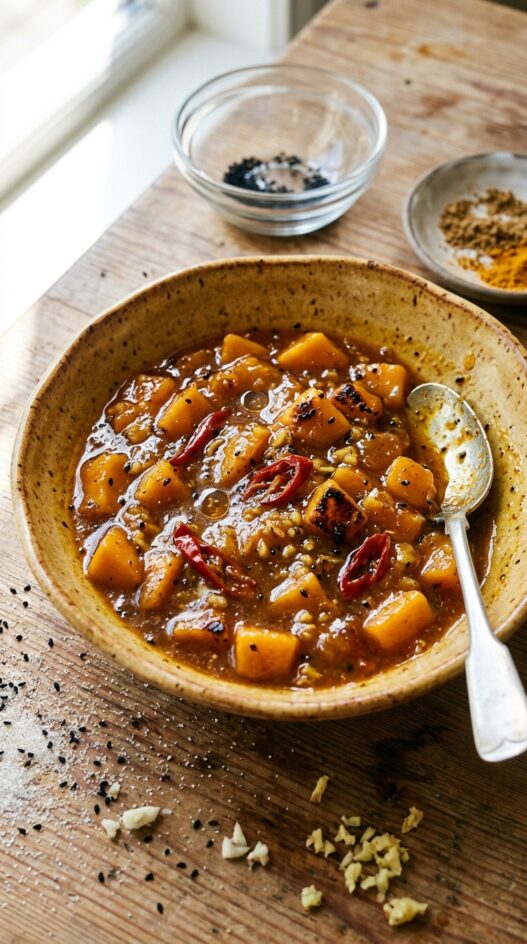
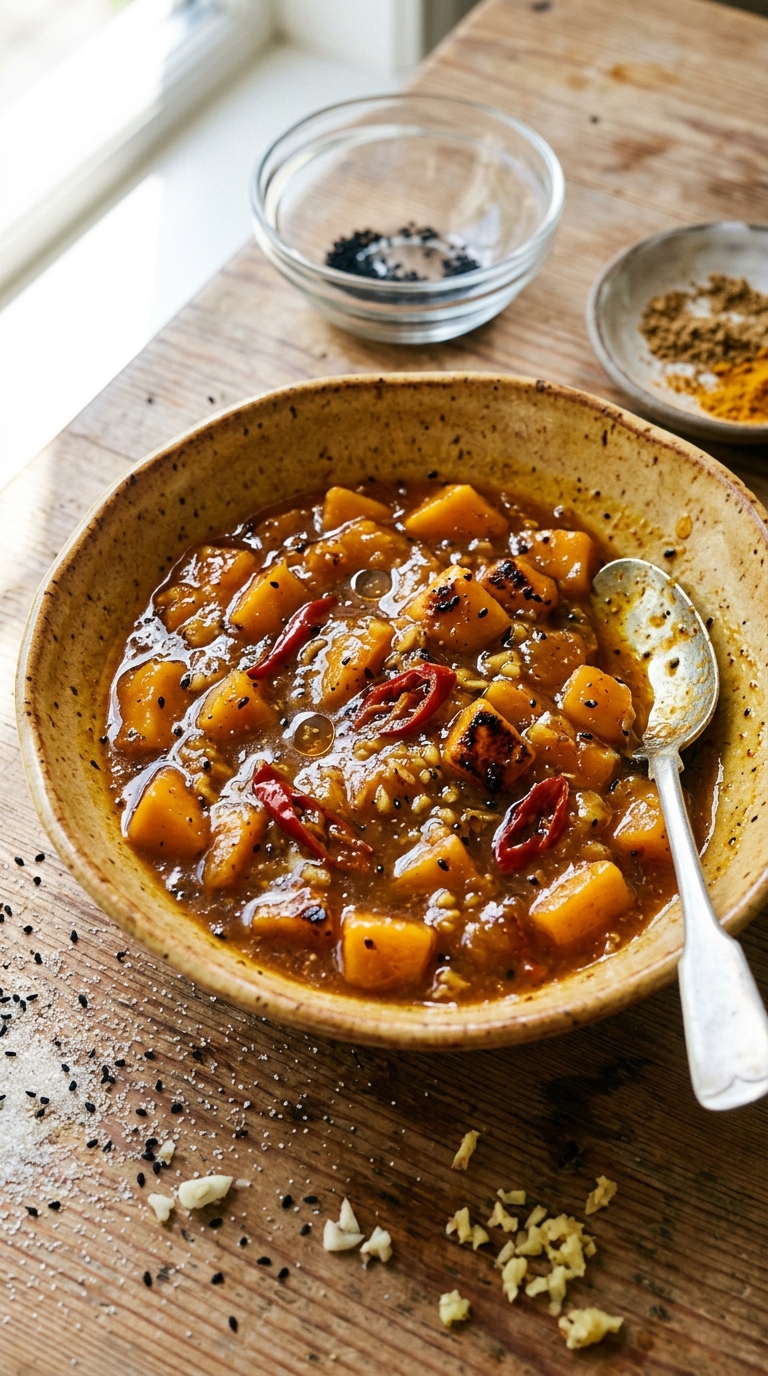
Chutney dates back to 500 BC. Chutneys are endless in variety and ingredients, but they generally consist of fruit, vinegar, and sugar cooked down to a reduction. The word itself is derived from the Sanskrit word chatni, meaning to lick. In other words, finger-lickin’ good!
Here is a recipe I developed a few years ago for an Indian Mango Chutney. It’s sweet and spicy and is delicious either as a spread, a dip, or used in cooking a variety of Indian cuisine (recipes will follow!). Ginger, garlic and red chilies are sauteed in oil and then cumin, coriander, turmeric, cloves, cinnamon and cardamom are added to coax out their robust flavors. Fresh mango, sugar and vinegar is added and it is slowly cooked down to a sticky and delicious concoction.
Another spice that is in this recipe is nigella, which comes from an annual flowering plant native to south and southwest Asia. Other names for it include black cumin, onion seed and kalonji. It’s hard to describe the flavor of nigella. Wikipedia describes them as “a combination of onions, black pepper and oregano, with a bitterness like mustard seeds.” The flavor is really unlike anything you’ve tasted before. It’s fantastic! I love to use it at every possible opportunity when I make Indian or Middle Eastern foods. It’s wonderful in curries and it positively transforms breads and potatoes. Nigella is commonly sprinkled on naan bread in India and is a wonderful spice to use in any “carb-based” dish. It’s adds a delicious dimension of flavor to this mango chutney.
You’ll need about 4-5 ripe mangoes.
Print
Indian Mango Chutney
- Total Time: 1 hour 5 mins
- Yield: 1 jar
Description
Delicious as sweet and spicy spread, dipping sauce, or condiment to add to your curries.
Ingredients
- 1 tablespoon vegetable oil
- 2 teaspoons fresh ginger, finely minced
- 2 cloves garlic, finely minced
- 1 red chili, sliced
- 2 teaspoons whole nigella seeds
- 1 teaspoon ground coriander
- 1/2 teaspoon ground cumin
- 1/4 teaspoon turmeric
- 1/4 teaspoon ground cardamom
- 1/4 teaspoon ground cloves
- 1/4 teaspoon ground cinnamon
- 1/4 teaspoon salt
- 4-5 mangoes, peeled and diced
- 2 cups white granulated sugar
- 1 cup white vinegar
Instructions
- Heat the oil over medium-high in a medium stock pot. Saute the ginger, garlic and red chilies for a minute. Add the spices and saute for another minute. Add the diced mangoes, sugar, salt, and vinegar and stir to combine. Bring it to a rapid boil and reduce to medium-low. Steady simmer for 1 hour. Remove from heat and allow it to cool.
- If you prefer smaller chunks, use a potato masher to mash the mixture to the desired consistency.
- For storage, chutney will keep for a while because of the high acidity content. A conservative time frame would be up to 2 months in the fridge (in a sealed jar) or for several months in the freezer. Canning of course yields the longest shelf-life.
- Prep Time: 5 mins
- Cook Time: 1 hour
- Cuisine: Indian
Frequently Asked Questions
Can I use unripe or semi-ripe mangoes instead of fully ripe ones?
Ripe mangoes are the right call here, you want that natural sweetness to balance the vinegar and the heat from the red chili. Semi-ripe works in a pinch and gives a slightly sharper, more tart chutney, but fully ripe fruit, about 4 to 5 of them diced, gives you the best body and sweetness after the hour-long simmer. Unripe mangoes will taste sour even with 2 cups of sugar. Save those for achaar.
What is nigella seed and can I leave it out?
Nigella, also called kalonji, black cumin, or onion seed, is a small black seed with a flavor that is oniony, peppery, and faintly bitter, something like a cross between oregano and mustard. It’s hard to replicate with anything else, so try to find it at an Indian grocery. If you truly cannot, leaving it out is fine; the chutney will still be excellent. But the 2 teaspoons of whole nigella are what make this version distinctly Indian rather than generic.
How long does this chutney keep, and do I need to can it?
Stored in a sealed jar in the fridge, it keeps comfortably for up to 2 months, the high vinegar and sugar content act as natural preservatives. For longer storage, freeze it. If you want shelf-stable jars you can store at room temperature for months, process them using standard water-bath canning. Canning is optional; refrigerating is the easiest path for most home cooks.
If You Liked This Recipe, You’ll Love These
- Quick Chicken Curry
- Cheese’s Best Friend: Sweet and Spicy Pepper Jelly
- Creamy Curried Pumpkin Soup
- Chilean Pebre Sauce