

There is a lot going on lately around fish and for a very good reason too. The amount of commercial fishing has huge consequences for the ecosystem and fishing with large nets usually means a lot of fish is caught that is not of any commercial value. Young tiny fish or species that are not edible at all and the list goes on. These often just get discarded. And I am not even talking about the damage that the nets cause to the coral reef.
Enough reason in any case to try and eat as much sustainable fish as you can.
But what are the things you need to look at when buying fish? And how do you know if a fish was caught in a sustainable way? 
For starters you would probably like a fresh fish. And since I always pay special attention to that fact I have come to the shocking conclusion that a lot of the fish in the store is really not fresh anymore. It is quite easy to recognize a fresh fish, once you know what to look for and that is easiest in a whole fish. So with skin and head still on. So what to look out for?
1. The easiest is to look at the eyes of the fish. These need to be clear. If the eyes are cloudy it is definitely not a fresh fish anymore.
2. Secondly the layer of slime on top of the skin; a fresh fish has slime on it (and while that doesn’t sound attractive, it is what you want!)
3. The gills need to be fresh and bright red. If they are damaged and brown you can be sure that the fish is not fresh .
4. If you choose to buy fish filets, choose if they are smooth and if the filets look strong. If you buy filets it is advisable to buy them with the skin still on. It will keep the fish compact and it will be easier when baking the fish as the skin will keep the delicate flesh.
Ask your fishmonger how and where the fish is caught. Theoretically you can assume that the fishmonger sells sustainable fish, but in reality that might not be the case. Also pay attention to the RFM-quality label and also check the guides for sustainable fish that will be available in most countries. Here in the Netherlands we have the Viswijzer; which is a very handy tool to quickly check if you’re fish is ok. They also have an app to go along with it.
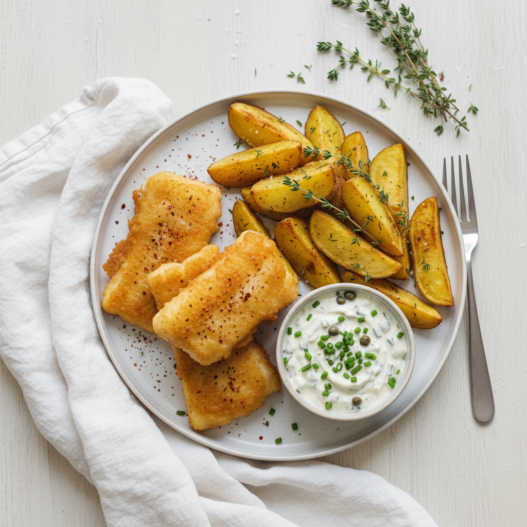
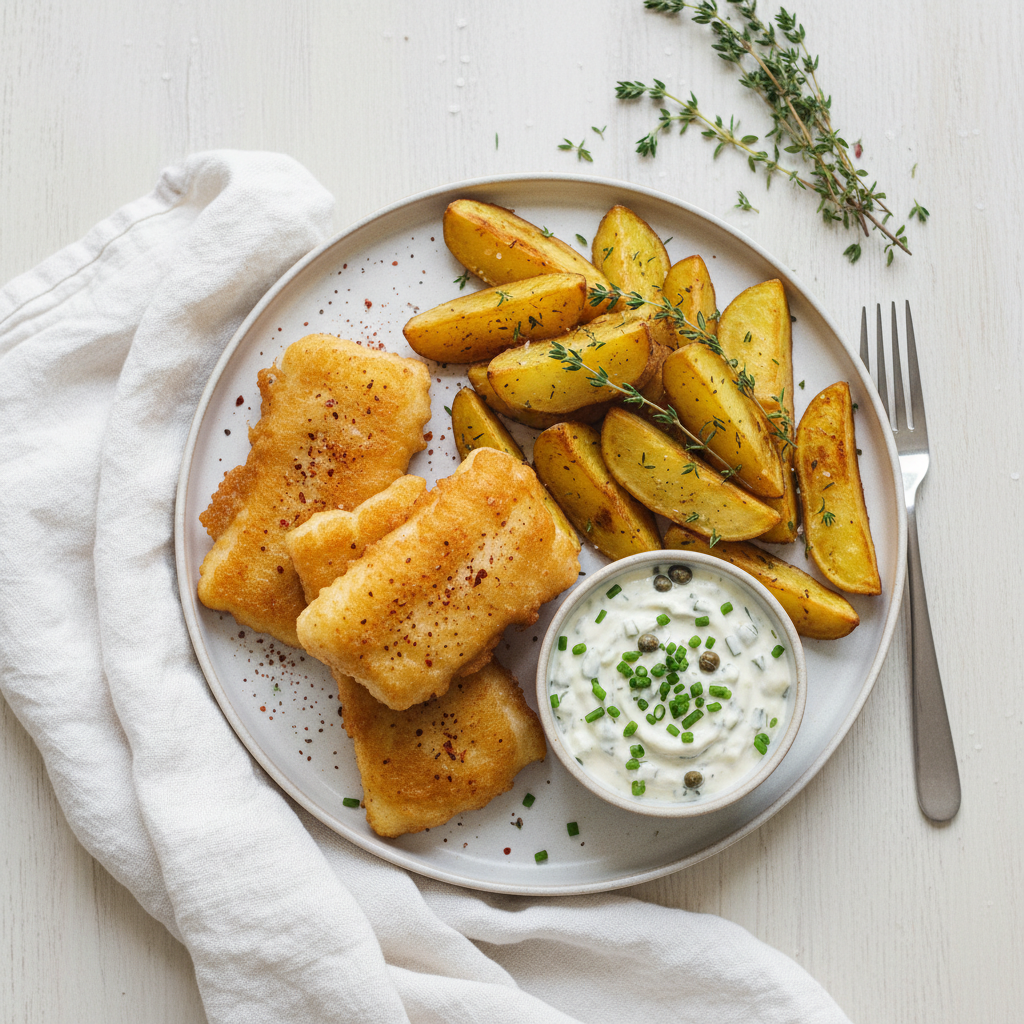
These fish and chips are baked in a beerbatter which gives it a lovely crispy outside layer. Delicious with a homemade tartar sauce.
Print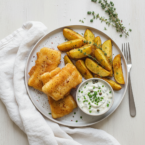
Alaskan Fish and Chips and Seafood Buying Tips
- Total Time: 70 minutes
- Yield: Serves 2
- Diet: Pescatarian, Omnivore
Description
Crispy beer-battered cod and golden potato wedges. Homemade tartar sauce adds a delicious tang.
Ingredients
- 2 lbs (900 g) new potatoes
- olive oil
- 1/2 cups (118 ml) all purpose flour
- 1 egg
- 1 tsp ground garlic
- 1/2 to 1 tsp chili powder
- 1 tsp smoked paprika
- pepper
- salt
- 1/2 tsp dried thyme
- 150 ml (1/2 cups) Mexican beer
- A few good pieces of wild Alaskan cod filets
- 4 tbsp mayonaise
- 4 tbsp Greek yoghurt
- few gherkins
- 2 tbsp capers
- handful of chives
- splash of chipotle tabasco
Instructions
- Preheat oven to 392°F (200°C).
- Put potato wedges on a baking tray, spread them out, and drizzle with olive oil. Season with pepper, salt, and chili powder.
- Bake potatoes for 40 minutes, or until golden and crispy, turning halfway through.
- For the batter: In a large bowl, mix flour and salt. Add chili powder, paprika, garlic powder, thyme, pepper, salt, egg, and beer. Whisk until smooth.
- Heat oil in a large frying pan.
- Lightly flour cod fillets and dredge in batter.
- Fry cod for 5-6 minutes per side, until golden and crispy.
- For the tartar sauce: Mix mayonnaise, yogurt, gherkins, capers, and herbs. Add chipotle Tabasco to taste.
Notes
- For extra crispy potatoes, parboil them for 5-7 minutes before roasting.
- If you don’t have Mexican beer, substitute with another light beer or sparkling water.
- Store leftover fish and chips separately; the fish will keep for 1-2 days in the refrigerator.
- Prep Time: 20 minutes
- Cook Time: 50 minutes
- Category: Main Course
- Method: Frying
- Cuisine: American
Nutrition
- Serving Size: 1 serving
- Calories: 600
- Sugar: 5
- Sodium: 600
- Fat: 30
- Saturated Fat: 10
- Unsaturated Fat: 15
- Carbohydrates: 60
- Fiber: 5
- Protein: 30
- Cholesterol: 100
Frequently Asked Questions
What type of Alaskan fish works best for fish and chips?
Alaskan cod or halibut are the top choices because their firm, flaky white flesh holds up well in batter and frying. Wild-caught Alaskan pollock is a more affordable option that still gives good results.
How do I get a crispy batter that stays crunchy?
Use ice-cold sparkling water or beer in the batter, and make sure your oil is at 350 to 375F before frying. Don’t overcrowd the pot, since adding too many pieces at once drops the oil temperature and leads to greasy, soggy coating.
What should I look for when buying seafood for this recipe?
Look for firm flesh that springs back when pressed, a clean ocean smell with no ammonia odor, and clear, bright eyes if buying whole fish. Buying frozen-at-sea Alaskan fish is often fresher than so-called fresh fish that has been sitting on ice for days.