

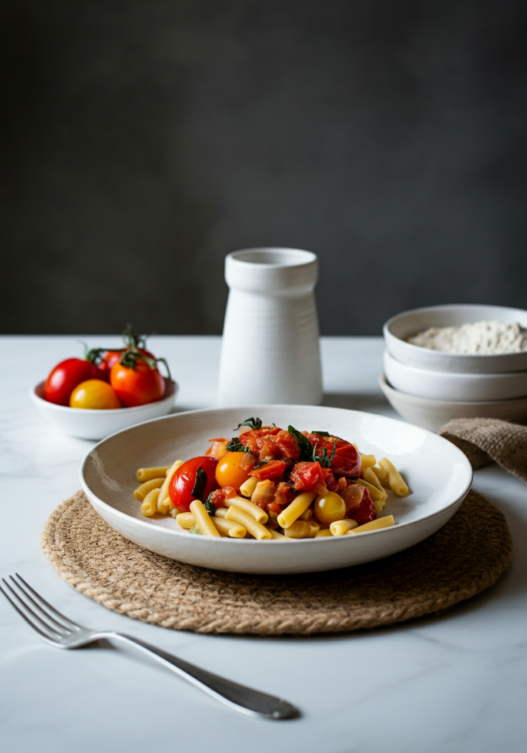
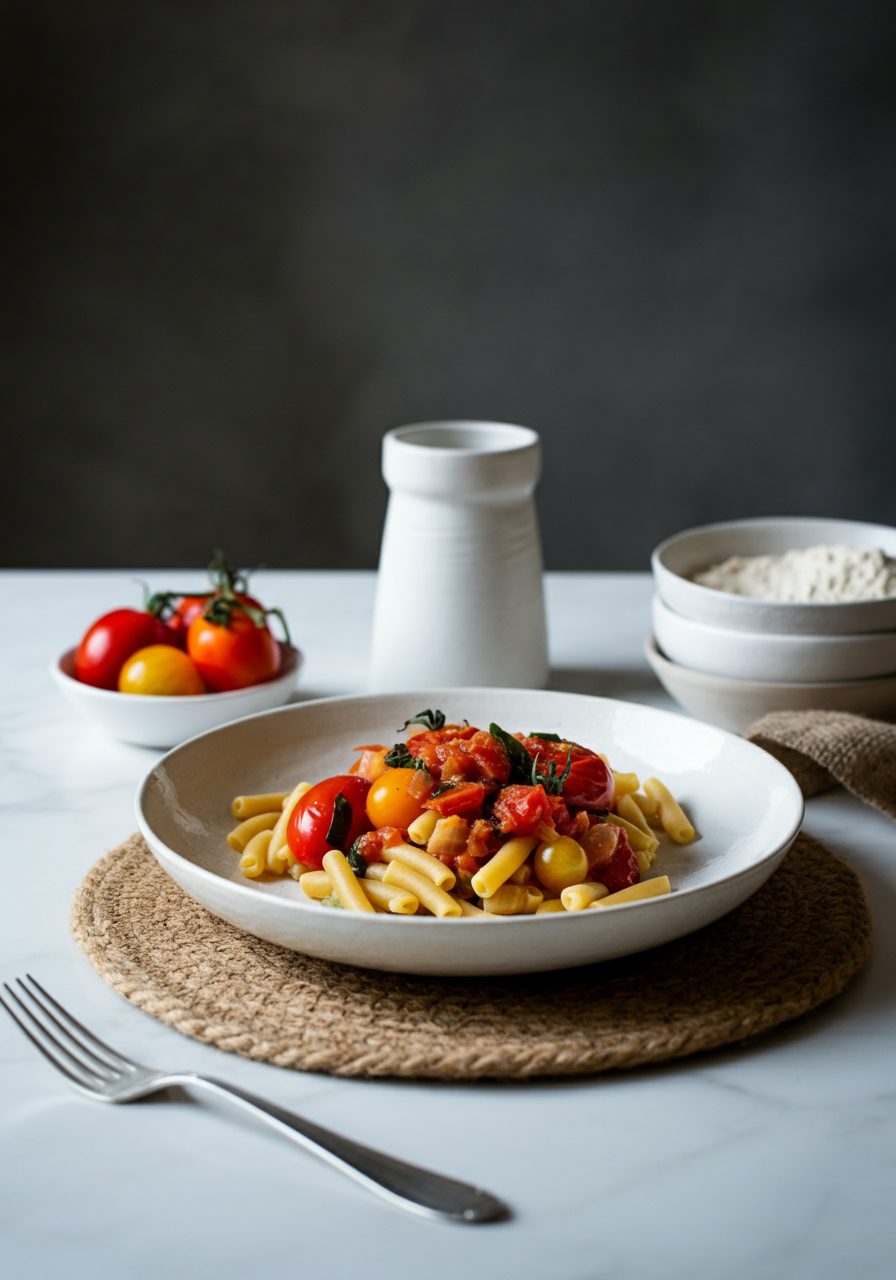
Tuscan pici pasta is a traditional dish made with handmade pasta. Pici are robust and can take on any kind of sauce to compliment their unique texture.
Pici is a rustic handmade pasta from Tuscany’s Val d’Orcia. Called pici in Cortona and Montepulciano, and pinci in Montalcino, they are a long, irregular spaghetti, best when “fatta a mano” or “fatta in casa”, made by hand, or in house. The name pici comes from the term “appiciare”, which refers to the traditional manual technique used to form these long, thick noodles. Ancient in origin, dating back to the Etruscans, they were made from only flour and water, the poor everyday pasta of the Sienese peasants. Including a small amount of egg was the rich version, reserved for Sundays and holidays.
There are several different ways of producing pici, all of which require only your hands, a wooden board, and optionally a rolling pin – no pasta machine needed. The traditional “appiciare” technique involves rolling out a larger quantity of dough into a sheet around 1/4 to 1/2 inch thick. You cut a strip of dough about 1/4” thick from this sheet, grasp one end in your fingers to hold, then, using a flat palm, roll the noodle back and forth on a floured wooden board to round and lengthen. 
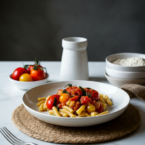
Tuscan Pici Pasta with Tomato and Garlic
- Total Time: 70 minutes
- Yield: Serves 2
- Diet: Omnivore
Description
Rustic Tuscan pasta dish showcasing fresh, seasonal ingredients. Simple to make, yet bursting with flavor.
Ingredients
- 1 3/4 cups (417 ml) all-purpose flour
- 1 3/4 cups (417 ml) semolina flour
- 1 1/2 teaspoons salt
- 1 cups plus 3 tablespoons warm water
- 5-6 medium fresh heirloom tomatoes (or a mix of full size and cherry tomatoes)
- 2 tablespoons extra virgin olive oil (plus more for drizzling)
- 1 teaspoon hot red pepper flakes
- 4 large cloves garlic (minced)
- 10 basil leaves (chiffonade)
- Kosher salt
Instructions
- For the Pasta
- Place the flours and salt in a small bowl and stir to combine.
- Pour the flour out on a clean counter, and form a well in the middle.
- Pour the warm water into the well.
- Using a fork, begin to scrape some of the flour from the inner sides of the well into the water, slowly incorporating more and more of the flour.
- The water in the middle will thicken and become a soft dough. Eventually, you will be able to use your hands instead of the fork.
- Keep incorporating the flour as needed to prevent the dough from sticking to your hands and the countertop. Do not use all of the flour; the amount needed will depend on the type of flour, humidity, and other variables. Aim for a soft dough that is not too sticky.
- Knead the dough for about 10 minutes, adding a bit more flour only if it begins to stick. Cover the dough and let it rest for 30 minutes.
- Pinch off a small piece of dough and roll it between your palms or on a wooden board to form 1/4-inch round snakes.
- Place the formed pici on a sheet pan dusted with semolina flour. Do not let them touch, as they will stick together.
- For the Sauce
- Coarsely chop and seed the fresh tomatoes.
- Bring a large pot of water to a boil.
- In a large sauté pan, heat the olive oil and red pepper flakes. Add the tomatoes and garlic, and cook over medium heat until the tomatoes soften, release their juice, and begin to thicken, about 15–20 minutes. Season with salt.
- Once the water is boiling, season it with salt and add the fresh pici. Cook until al dente; you want some bite to the pici, not mushy. Drain.
- Combine the pici and the sauce in the sauté pan, then serve in large bowls, drizzling liberally with more olive oil and garnishing with basil strips.
Notes
- For a richer flavor, use a mix of heirloom tomatoes in varying colors and ripeness.
- If you don’t have a wooden board, you can use a lightly floured clean countertop to roll the pici.
- Leftover pici pasta can be stored in an airtight container in the refrigerator for up to 3 days. Reheat gently in a pan with a little olive oil.
- Prep Time: 45 minutes
- Cook Time: 25 minutes
- Category: Main Course
- Method: Simmering
- Cuisine: Italian
Nutrition
- Serving Size: 1 1/2 cups
- Calories: 450
- Sugar: 10
- Sodium: 600
- Fat: 20
- Saturated Fat: 4
- Unsaturated Fat: 16
- Carbohydrates: 70
- Fiber: 6
- Protein: 12
- Cholesterol: 10
Frequently Asked Questions
What type of flour works best for making pici pasta?
For traditional pici, use all-purpose flour or a mix of semolina and all-purpose flour to achieve the right texture.
How do I properly use the ‘appiciare’ technique for shaping pici?
To use the ‘appiciare’ technique, roll a strip of dough back and forth on a floured wooden board using your palm to lengthen and round the noodle.
Can I add eggs to the pici dough, and if so, how would it change the recipe?
Yes, adding a small amount of egg to the dough creates a richer version of pici, which is ideal for special occasions, but the basic recipe only requires flour and water.