
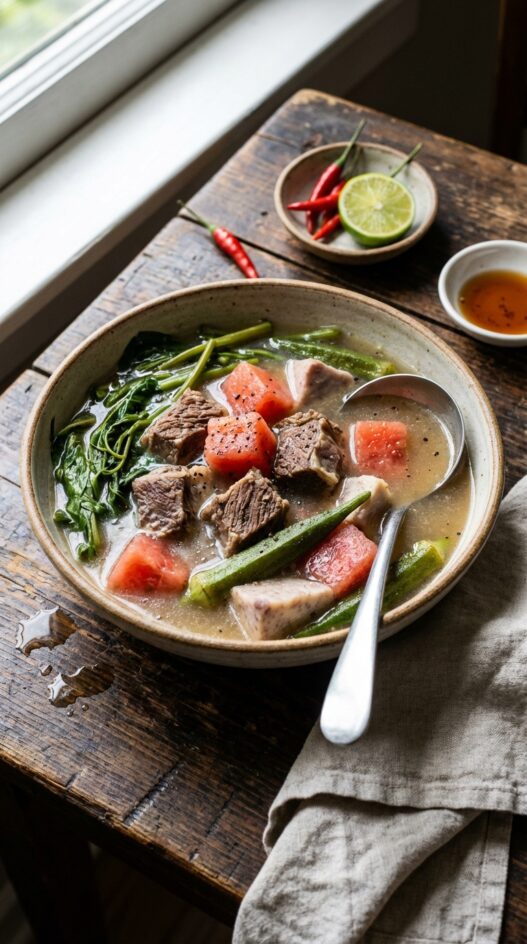
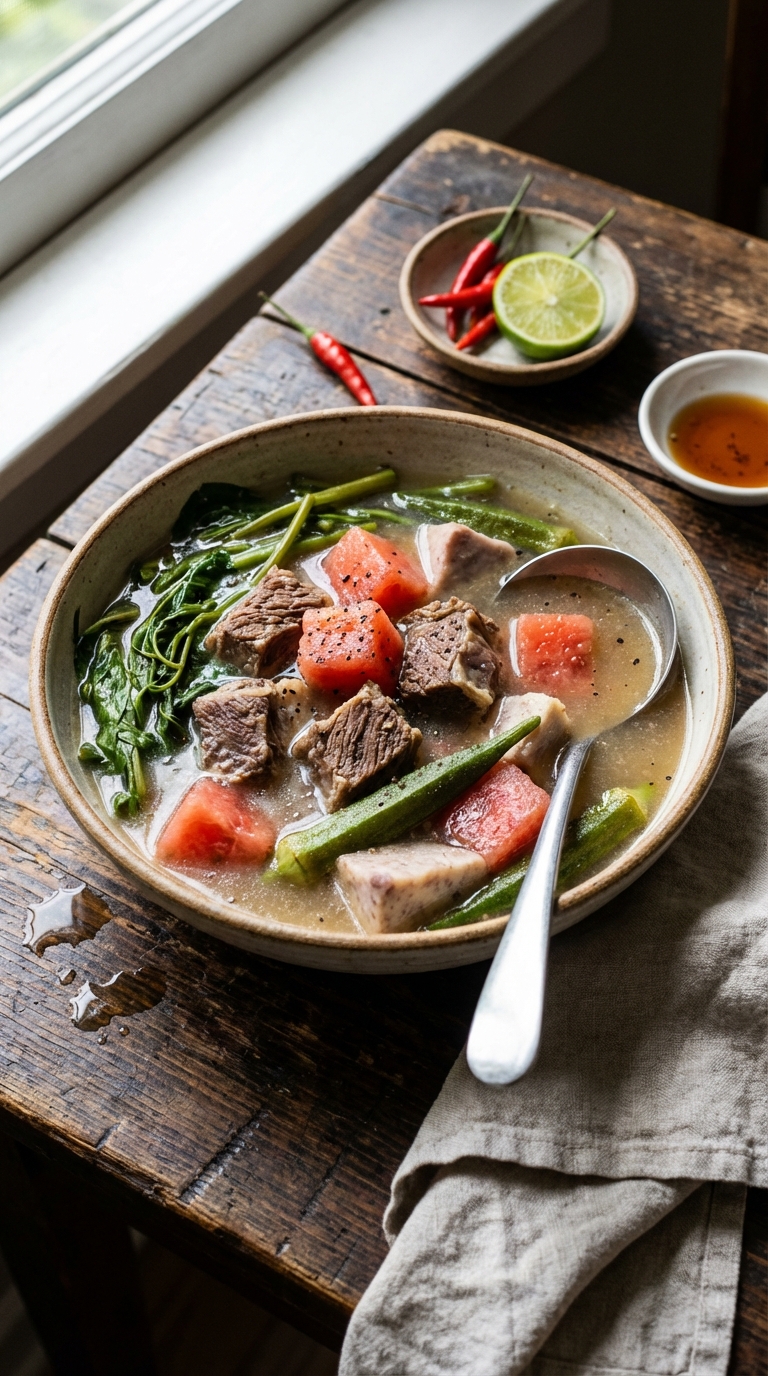
Sinigang is a Filipino sour soup dish prepared with tamarind and meats like pork belly, gabi, beef, chicken, pork ribs, fish and prawns. It’s often also also made with different vegetables like kangkong, taro, radish, green beans, okra, bok choi, green chillies, tomatoes and eggplant.
A true Filipino dish that can be traced back even before the Spanish came to the Philippines, as suggested by food historians its origins are most likely indigenous hence there is no documentation of where and what is the origin of sinigang is.
Having said that there are similar dishes on neighboring countries like the Malaysian Assam Pedas Ikan, Indonesian Sayur Asem, Vietnamese Canh Chua and Thai Tom Yum which can be an origin of Sinigang.
Through time this sour broth dish had evolved into many forms where souring agents were changed; from tamarind to different fruits like guava, raw mango, green mango, calamansi, lemon, kamias and santol to name some. But there is this new kid on the block where fruits are used, not as a sour element, but to enhance the flavor by adding a sweet profile to it – hence strawberries and even watermelon is used.
At first I was a bit skeptical on this new style of sinigang but after I tried it, the dish makes sense as the sweet flavor adds to the complexity at the same time complements the already existing sour, savory and sometimes hot profile.
Sinigang sa Pakwan like the name suggest, it’s a sinigang but with pakwan added (watermelon), it still uses the same tamarind souring agent but with the addition of other ingredients that contributes to its fresh taste like the ginger and lemongrass. I love this dish – in fact I don’t think I can go back to the usual beef or pork sinigang recipe; the sweetness gives so much flavor it’s even more addicting than the original version.
Print
A Traditional Filipino Dish – Sinigang
- Total Time: 120 minutes
- Yield: Serves 6
- Diet: Omnivore
Description
A heartwarming Filipino sour soup, bursting with the flavors of tamarind, tender beef, and seasonal vegetables. Perfect for a cozy night in!
Ingredients
- 2 lbs (907 g) beef brisket
- 1 large seedless watermelon, peeled and cubed
- 8-10 pcs round small taro
- 12-15 pcs okra
- 1 bunch water spinach
- 1 large white onion
- 1 thumb sized ginger
- 2 stalk lemongrass
- 4 pcs green finger chili peppers
- 40 g packet sinigang (tamarind mix or 400 g tamarind)
- fish sauce
- freshly ground black pepper
Instructions
- Boil beef in a large pot of water for 10 minutes to remove scum, then rinse under running water.
- Place the peeled and cubed watermelon at the bottom of the pot, top with beef, onion, ginger, and lemongrass. Add enough water to cover everything. If using tamarind, place it in a muslin cloth and tie the ends.
- Bring to a boil, then simmer for 1 hour.
- Add taro and simmer for 30 minutes.
- Add sinigang mix, or if using tamarind, extract all the juice by wringing the muslin cloth. Remove the lemongrass.
- Add green finger chilies and okra; cook for 5 minutes.
- Add kangkong leaves, cover, and turn off the heat.
- Season with freshly ground black pepper and fish sauce.
Notes
- For a richer broth, use beef shanks instead of brisket.
- If watermelon isn’t available, substitute with 1 cup of tamarind paste and 1 cup of water.
- Store leftover sinigang in an airtight container in the refrigerator for up to 3 days. The flavors will deepen overnight.
- Prep Time: 20 minutes
- Cook Time: 100 minutes
- Category: Soup
- Method: Braising
- Cuisine: Filipino
Nutrition
- Serving Size: 1.5 cups
- Calories: 350
- Sugar: 15
- Sodium: 600
- Fat: 15
- Saturated Fat: 5
- Unsaturated Fat: 10
- Carbohydrates: 40
- Fiber: 5
- Protein: 25
- Cholesterol: 80
Frequently Asked Questions
Can I use fruits other than tamarind to sour my sinigang?
Yes, you can use various fruits like guava, green mango, or calamansi as souring agents in your sinigang.
What type of meat works best for sinigang?
Pork belly and pork ribs are traditional choices for sinigang, but you can also use beef, chicken, or even fish and prawns.
How does adding watermelon change the flavor of sinigang?
Adding watermelon enhances the dish’s flavor by introducing a sweet profile that complements the existing sour and savory elements.
If You Liked This Recipe, You’ll Love These
- Lemon and Butternut Squash Soup
- French Onion Soup with Braised Short Ribs and Gruyère
- Rustic Italian Meatball and Potato Soup
- Brisket Ho Fun Rice Noodle Soup








Hi I just love cooking especially making this..the timing is so perfect for cold weather sipping hot spicy singing stew.
I am in medical dental field,, My happiness or my outlet is cooking.
I have to take one weekend and try this dish. I would love to cook this for my family this weekend. Thanks..