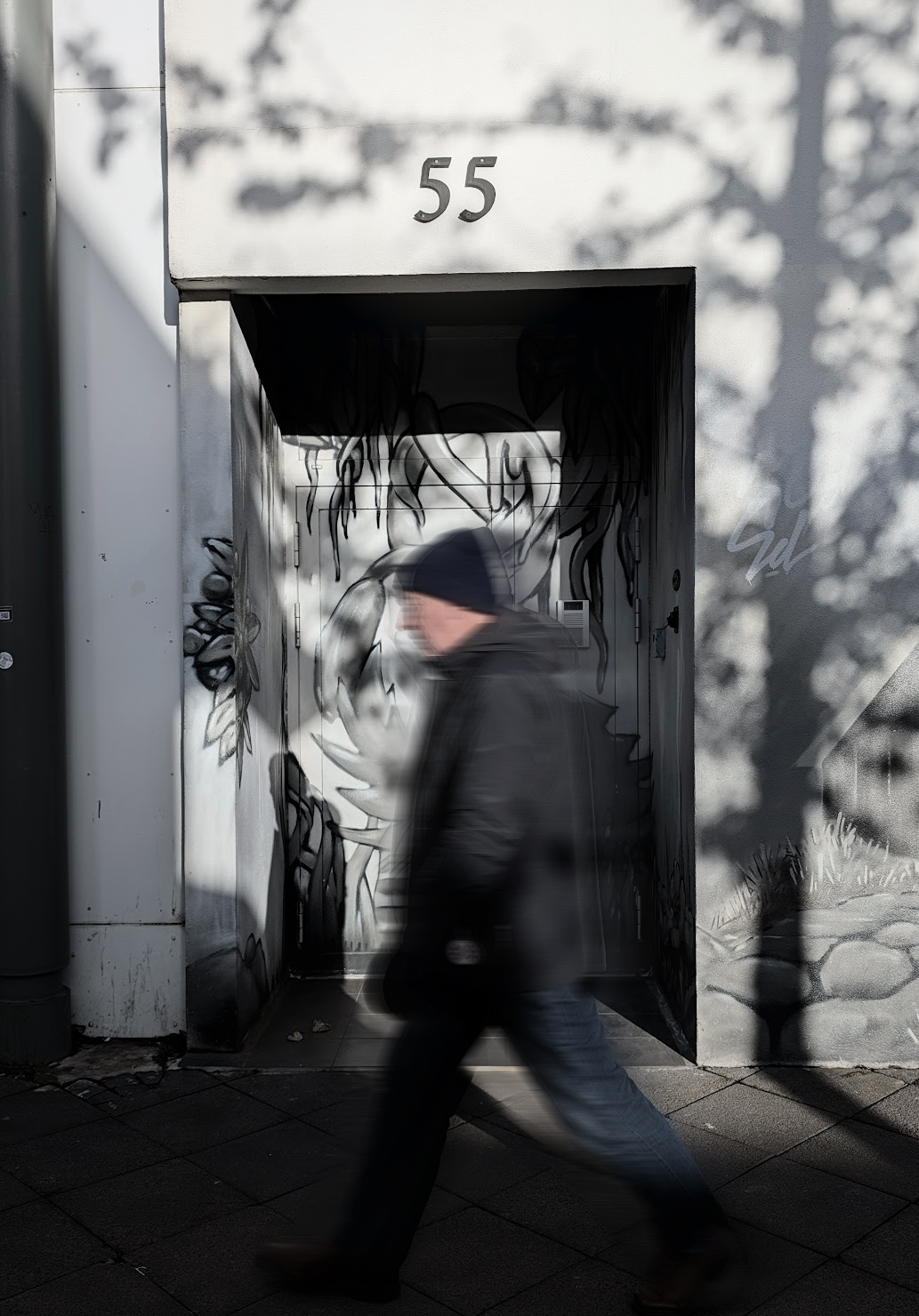
That is what happens at 55 Laugavegur, the street that runs like a spine through the center of the Icelandic capital. You push the door and you land in the 1970s. You walk through another and you are inside ÓX, the one-Michelin-star restaurant of Thrain Freyr Vigfusson, and inside an extraordinary vision of what a restaurant can be. And from there, without leaving your seat, you cross Iceland, from the volcanic ground beneath Geysir to the lamb of the highlands to the cold water off every coast.
All of it behind one door, all of it at once.
Amma Don: A Time Travel
The time travel starts immediately. You pass down a hallway full of mist, a Sigur Ros song hanging in the air, a scent made to order that suggests the harsh and hypnotic Icelandic landscape, and black-and-white photographs telling you the story of a chef. You descend a flight of stairs, and after a warm welcome, a host opens the doors to an Icelandic house of the 1970s. You have just walked into Amma Don, Reykjavik’s first speakeasy, and the stage for the first act of a memorable dinner.
The name is a family joke that stuck, Amma is grandmother in Icelandic, and this one was Thrain’s, up north, where he grew up. Don is the mafia Don, the title her grandchildren gave her because she was, unmistakably, the boss of the family. She did not find it funny at first, but over the years she grew into it, and by the end she rather enjoyed being the Don.
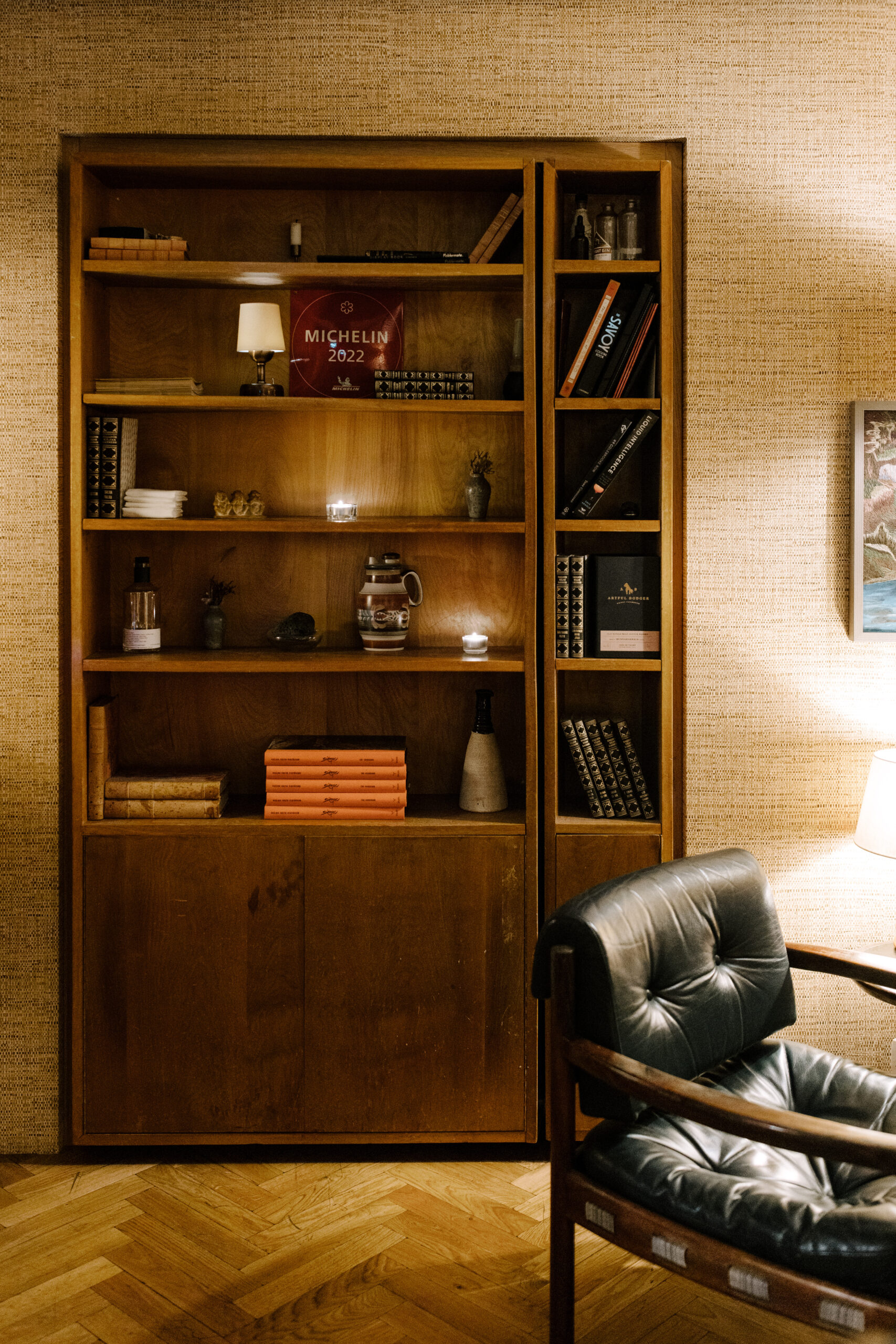
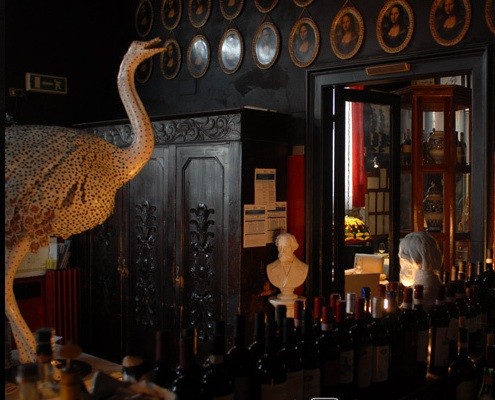
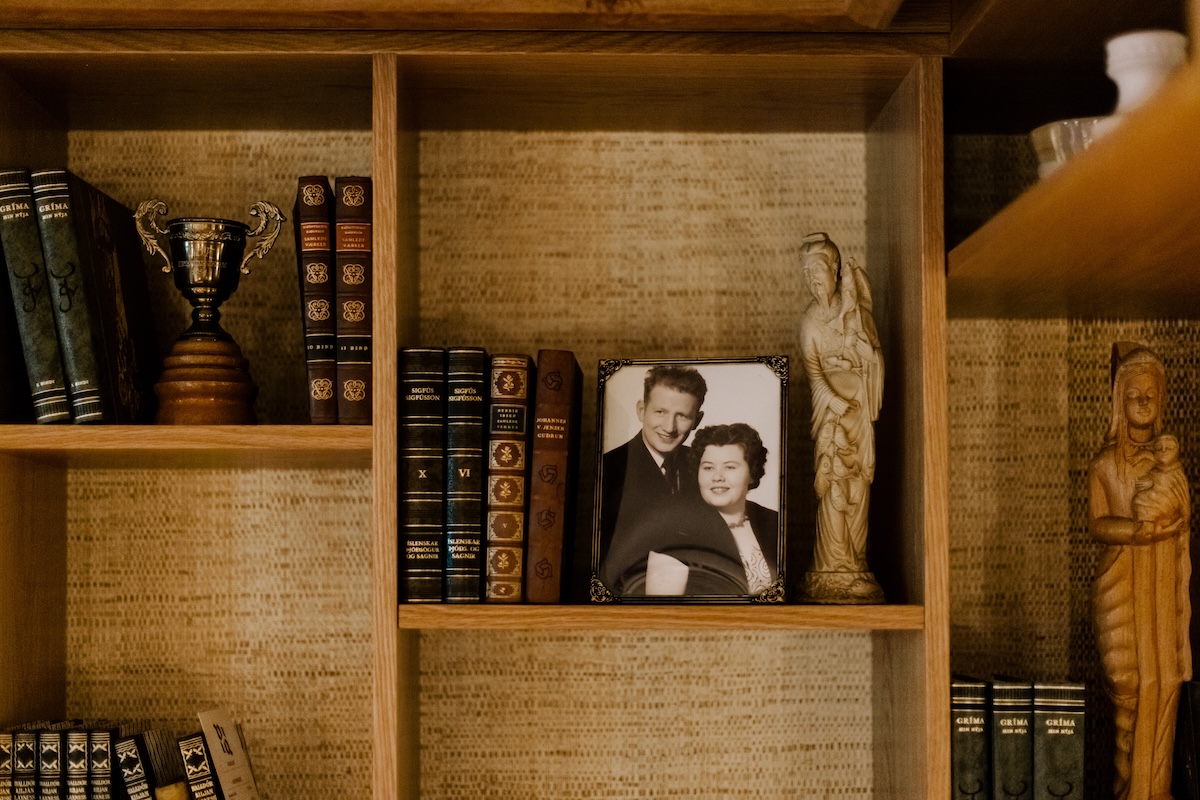
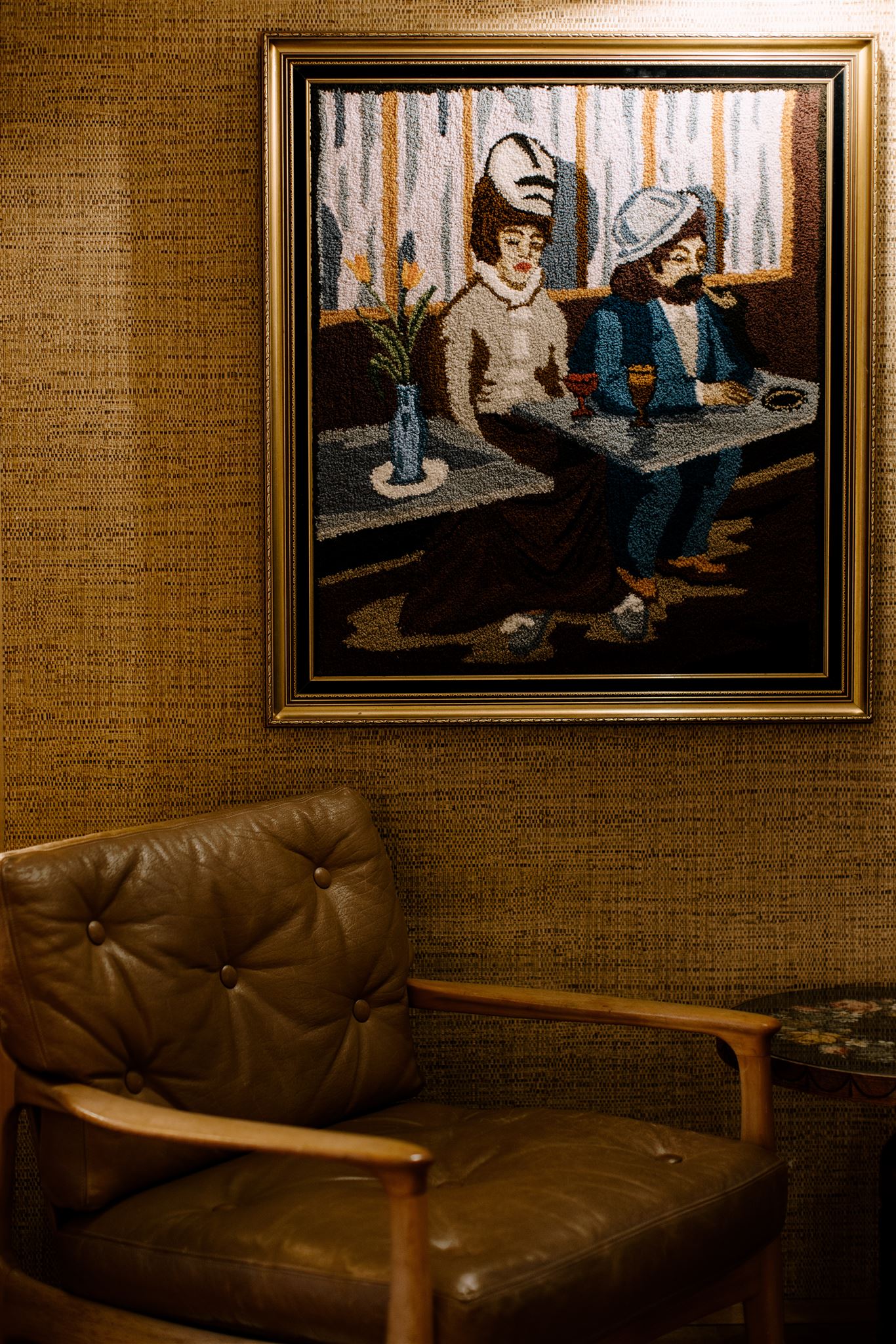
What waits downstairs is not a bar that gestures at mid-century style, it is a living room from the 1970s, reassembled with the devotion of someone who actually remembers it. Much of the furniture came out of the chef’s grandmother’s house: her tables, her pictures, her things. Patterned wallpaper. Soft browns and burnt oranges. Vintage furniture and white marble tabletops and crystal vases. Kitsch paintings hung on the wall. Lamps throwing warm pools of light. An old television in the corner playing talk shows from another era.
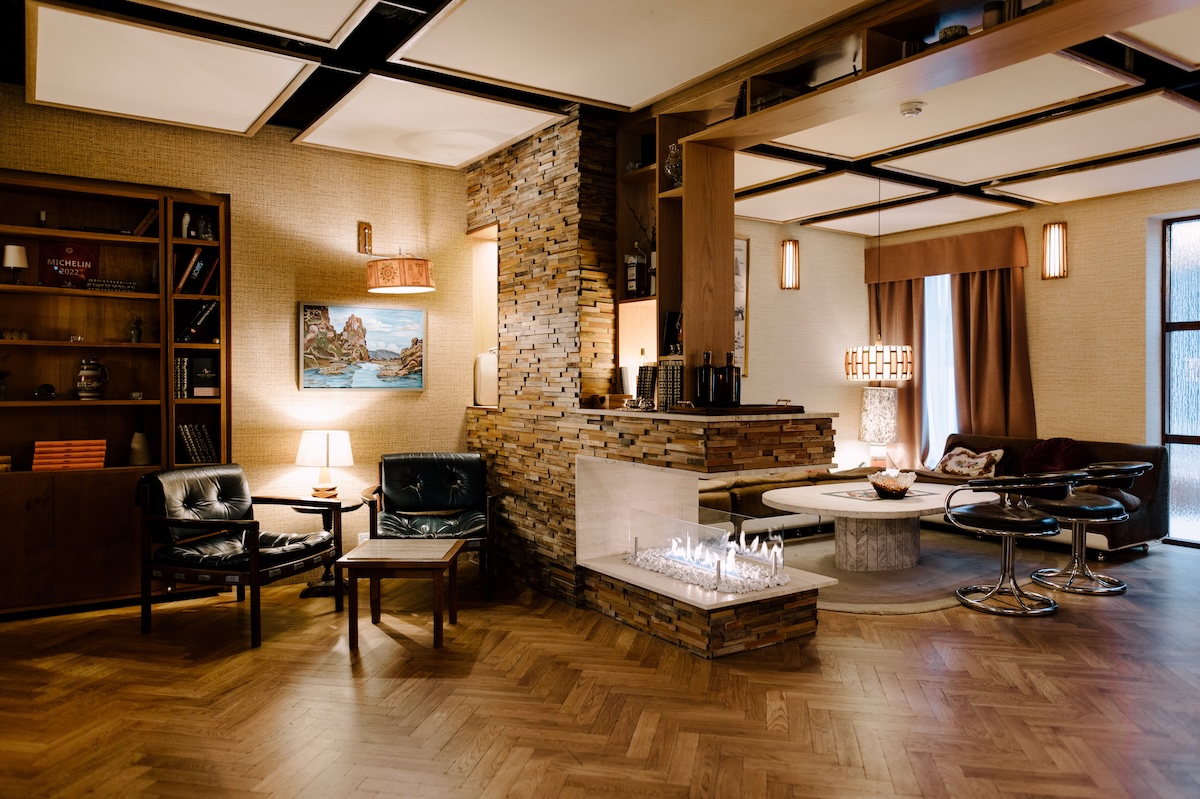
The effect is the particular comfort of a northern Icelandic home of that decade, and the distinct sensation of having been let into a place you were not supposed to find.
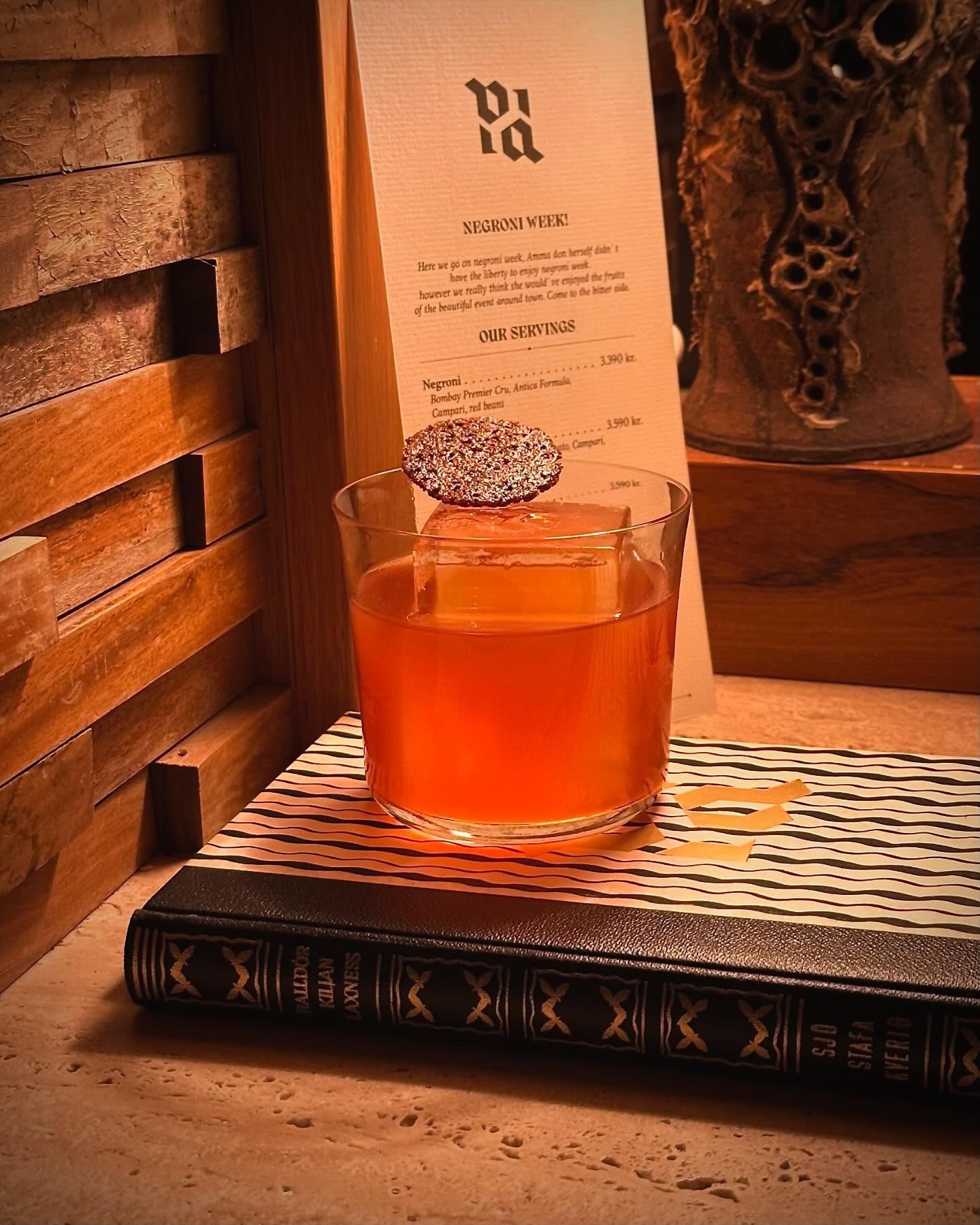
You can come here for a drink and nothing else. The brief Thrain gave his bar team is the same one he gives his kitchen: classics reworked with Icelandic ingredients, and no fuss. Nothing decorative. One to order is the Negroni infused with rye bread and brown butter, bitter, toasted, faintly sweet, and unmistakably of this place rather than of the international cocktail circuit.
The wine list leans European, gathering recognized classics alongside newer names worth knowing, and it has twice been named Best Short List of the Year at the Star Wine List International Open. Earlier this year, the Reykjavik Grapevine’s panel made Amma Don the city’s best cocktail bar by unanimous decision. On a shelf somewhere among the books, ÓX’s Michelin plaque sits where you might expect a framed photograph.
Because if you are dining at ÓX, Amma Don is the opening movement. Guests arrive around six, and the first five courses of the menu are served here. They come in ceramics the color of wet stone, small and heavy and pleasing in the hand. The first bite of the evening is a golden cracked choux, capped with a dark disc over duck egg and Feykir, the sharp Icelandic sheep’s cheese from the north. It is as good as it can be: sweet, umami and smoke, held in perfect balance.
Then a rippled tartlet balanced on a ceramic sphere, filled with scallop, finger lime and apple, strewn with tiny leaves. Then Rossini caviar over a foaming emulsion with scallop and dulse, served in a bowl you could cup in one palm, the North Atlantic contained in two spoonfuls. Then oyster mushrooms with figs and sunchokes, a first move inland, away from the sea and toward the earth.
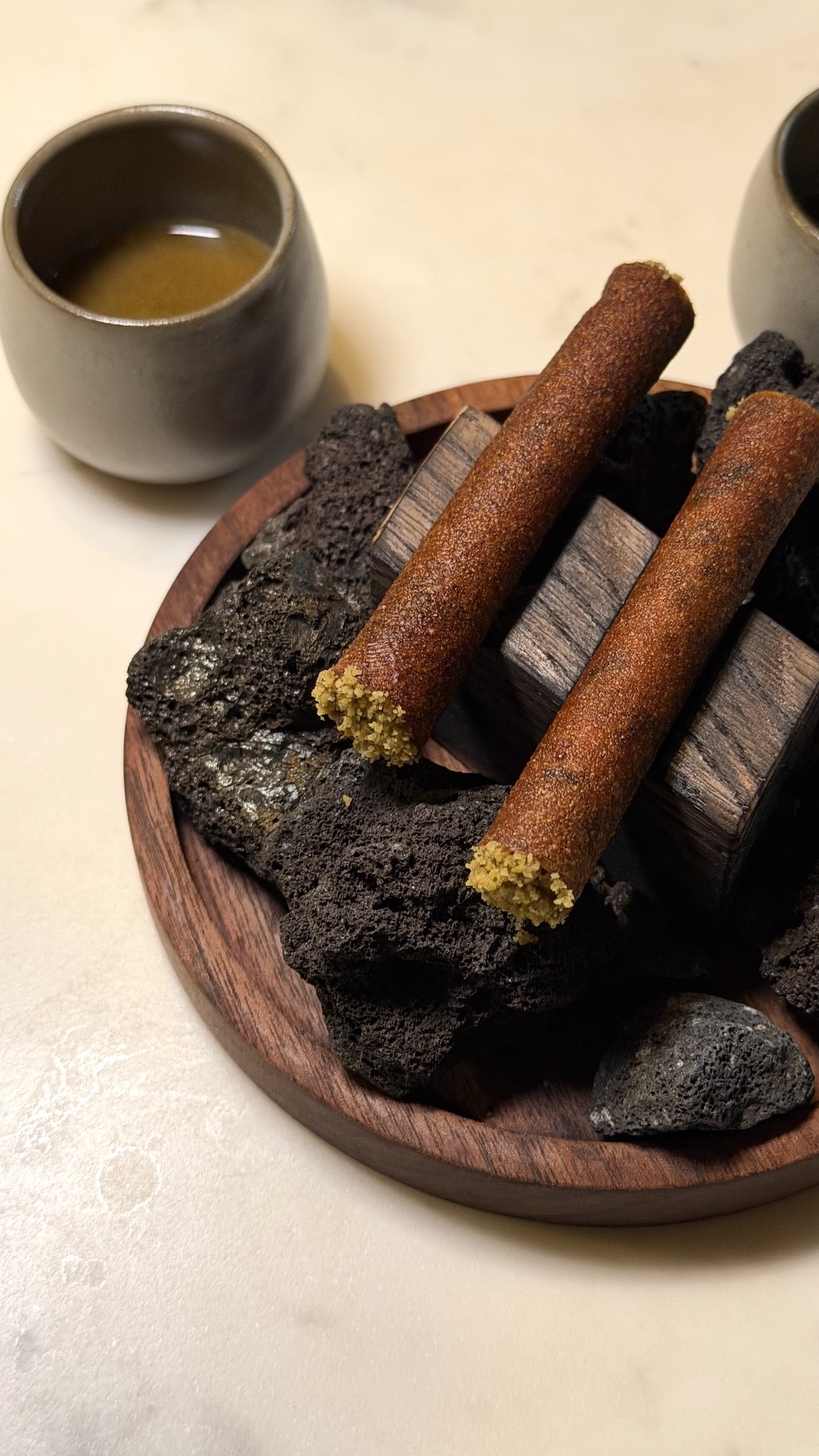
And finally the course that reveals how much fun this kitchen is having: a slim golden cigar laid across a bed of black lava rock on a wooden tray, mushroom with noisette and truffle. Acidity, umami and sweetness in balance, and a joke about smoking that nobody, not even the Amma, is going to object to.
Five courses in, you have not yet seen the restaurant.
Then a Door Opens
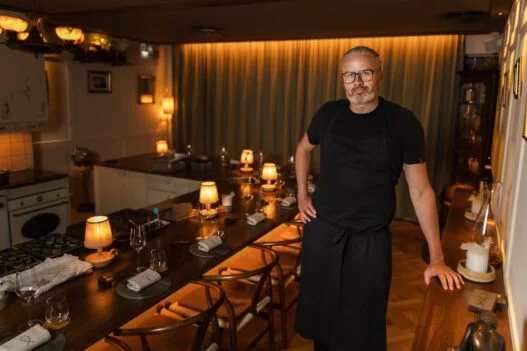
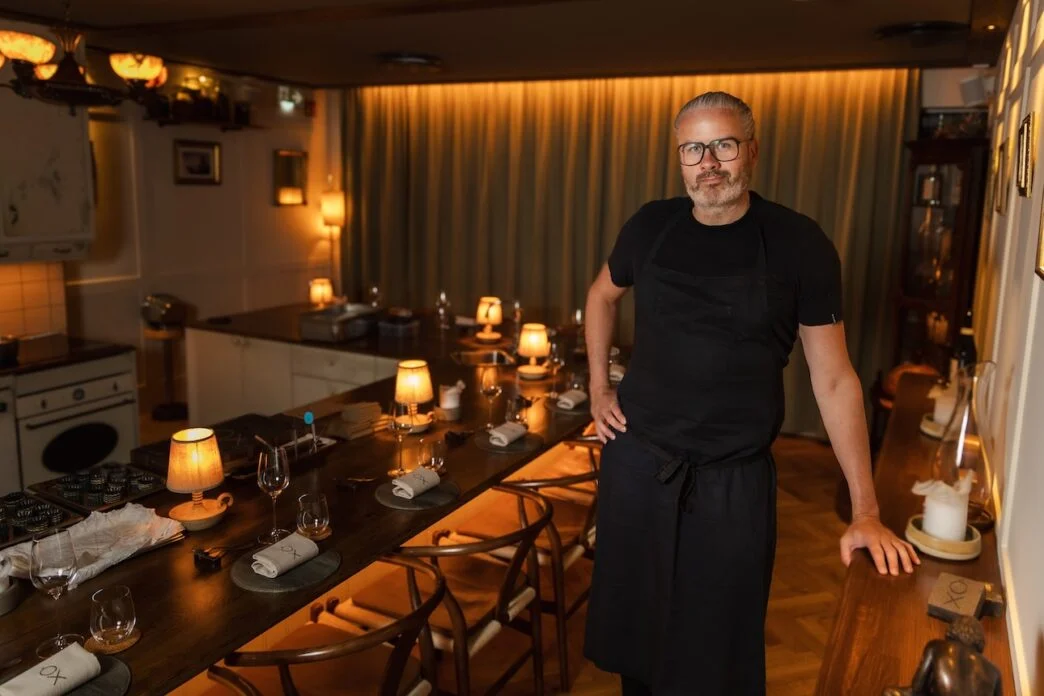
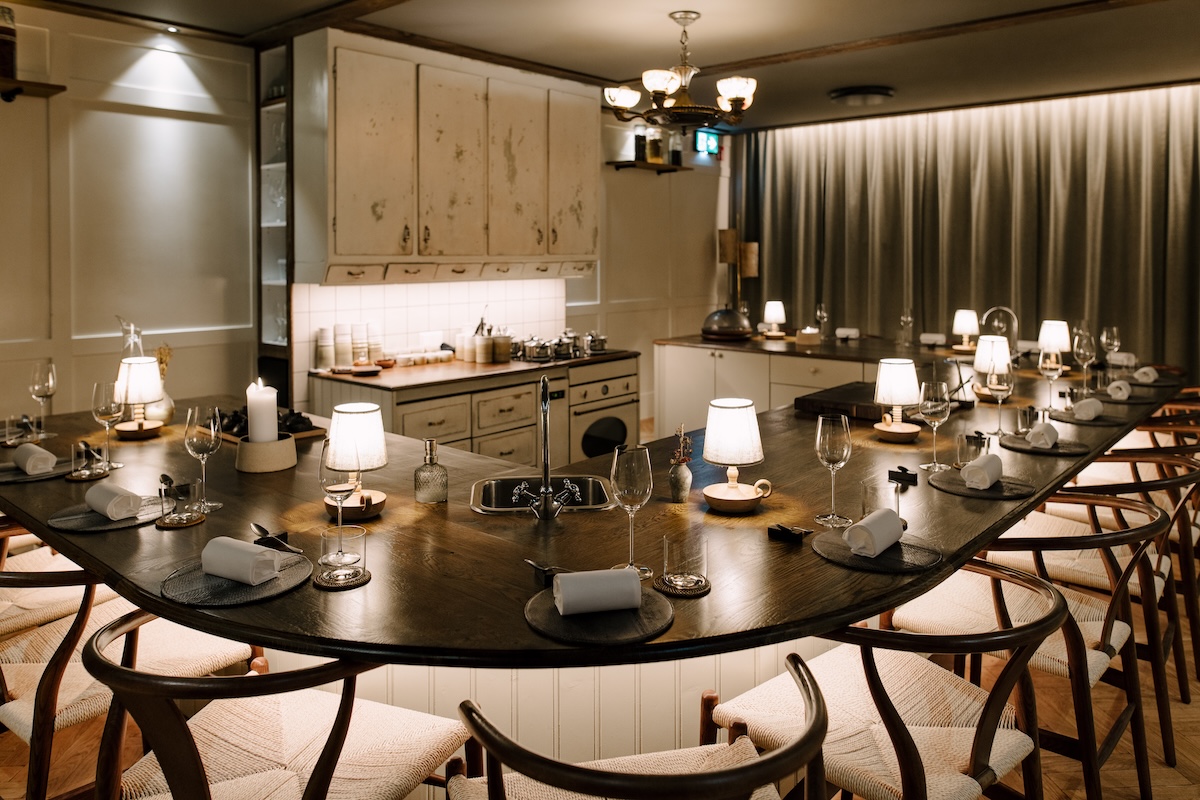
I will not describe what happens next; a good magician’s trick survives on the understanding that the audience doesn’t get the blueprint. What I can say is that on the other side of a secret door there are seventeen of you, strangers to one another, seated at a counter that wraps in a horseshoe around the cooks, who work in the middle.
The dining room still looks like a house, and the reason is literal. The old range pushed against the wall belonged to Thrain’s grandparents, out in the countryside. He found it sitting in their cold storage, having never once seen it used as a kitchen, and asked his cousin, who was about to renovate the farm, to keep it for him rather than throw it out. It spent half a year in a barn, which is no place to store an interior, and it is some forty years old. When ÓX moved from its first address to this one, the kitchen was the only thing that came along.
Lamps rather than spotlights. Wood rather than steel. Dried flowers in a black vase. A little table lamp with a pleated shade that your own grandmother might have owned.
You are in somebody’s home, pulled up around the stove, and the people cooking are close enough to hand you the plate themselves. Which is precisely what they do.
A Band That Plays Food
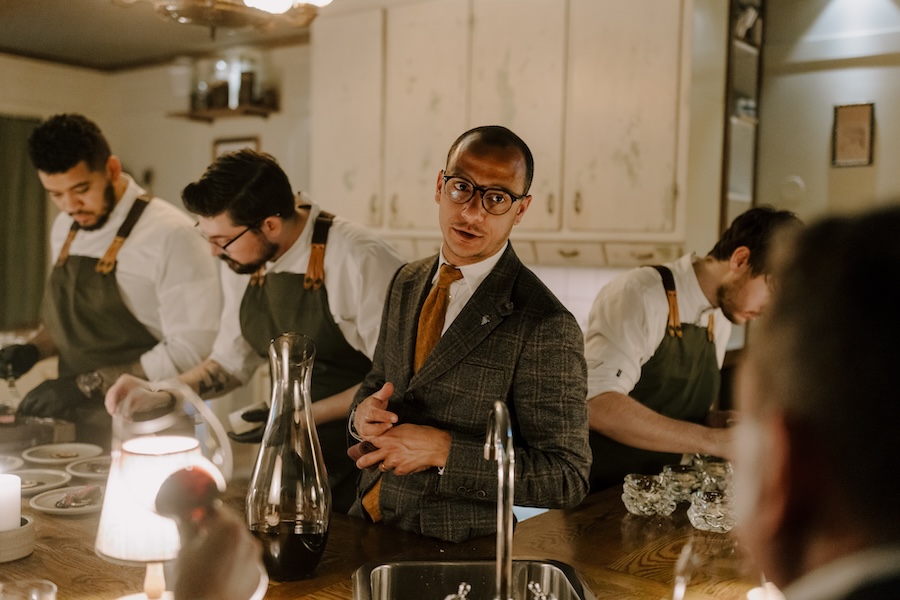
There are five people inside the horseshoe, four cooks and the sommelier, a culinary rock band.
One of the chefs takes the center, and introduces every single member of the group by name, the way a frontman introduces the rest of the musicians halfway through the set. Then each of them takes turns serving and explaining their own dishes to the seventeen of us sitting on the other side of the counter: what it is, where it came from, how it was made, what they were thinking… And meanwhile, Thrain Freyr Vigfusson stays largely out of it.
Thrain has a magmatic temperament, like Iceland itself. On the surface, nothing appears to be happening. Underneath, everything is moving with enormous energy, and every night it erupts through the service in bursts of creativity, his, and that of the cooks he has spent years training to carry it on his behalf. He does not need to stand in front of you to be the reason you are there.
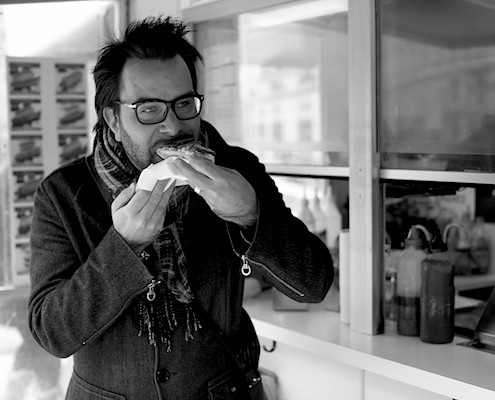
Vigfusson was born in Saudarkrokur, on the northern coast. His mother was a chef, which meant he grew up eating well enough to notice when food was not good: he still remembers telling her, as a small boy at his grandparents’ farm in the countryside, that the sauces there were not right. He started at fourteen in the kitchen of his father’s summer hotel, open only from June to August, where he watched grown men hurl overcooked food into the sink and found the whole business thrilling. He did not go to culinary school at sixteen, as Icelandic chefs do. He waited until he was almost twenty, played football, and then went all in.
An apprenticeship in a steakhouse led to Grillid, then the fine dining room of Iceland and the place most of the country’s top chefs came from. Then France, a one-star kitchen in a small town near Lyon. Then a national Chef of the Year competition he entered once, to see what it was like, and won. Then years on the Scandinavian competition circuit, then Kolabrautin at Harpa, then the Blue Lagoon, where he was slated to run the kitchen at what would become Moss. He walked away from that to chase a twenty-year-old idea instead.
The idea had come to him in a fishing lodge, where he took his holidays to cook and earn some money. Ten or fourteen guests would arrive, stay three days in the same house, drink wine, fish, and talk. Because he was cooking in that house, he got to know them, which in a restaurant he never could. The thought lodged and would not leave: A small kitchen, a shared table with a handful of people. Something simple, served close.
Sumac, his Middle Eastern restaurant on the same street and a Michelin Guide recommendation opened first, partly because he knew ÓX could never finance itself from day one. The two rooms were ready together. He spent half a year cooking private groups behind closed doors, working out the menu, before opening ÓX to the public.
The philosophy that came out of that fishing lodge still governs the counter. “It should be relaxed,” he says. “We sit down next to the guest.” The service here is not the hushed choreography you expect at a starred restaurant. It is a performance: entertaining, unusual, and entirely without ceremony. Somewhere in the middle of the meal you look up and realize that seventeen strangers have become a house party. Everybody is talking, nobody is sitting up straight.
Asked to describe ÓX in a line, he offers two. “Intimate and friendly,” for the hospitality. “Flavor focused,” for the food.
ÓX: A Journey Across Culinary Iceland
And here the second journey begins. Sitting still in a basement on Laugavegur, you are about to cross the whole country. What they are passing across that counter works its way through the Icelandic larder with a confidence that never once tips into solemnity. Icelandic ingredients, modern techniques, traditional thinking, and no obligation to tick any boxes: there is no cod on the menu because a guidebook expects cod, and no whale at all.
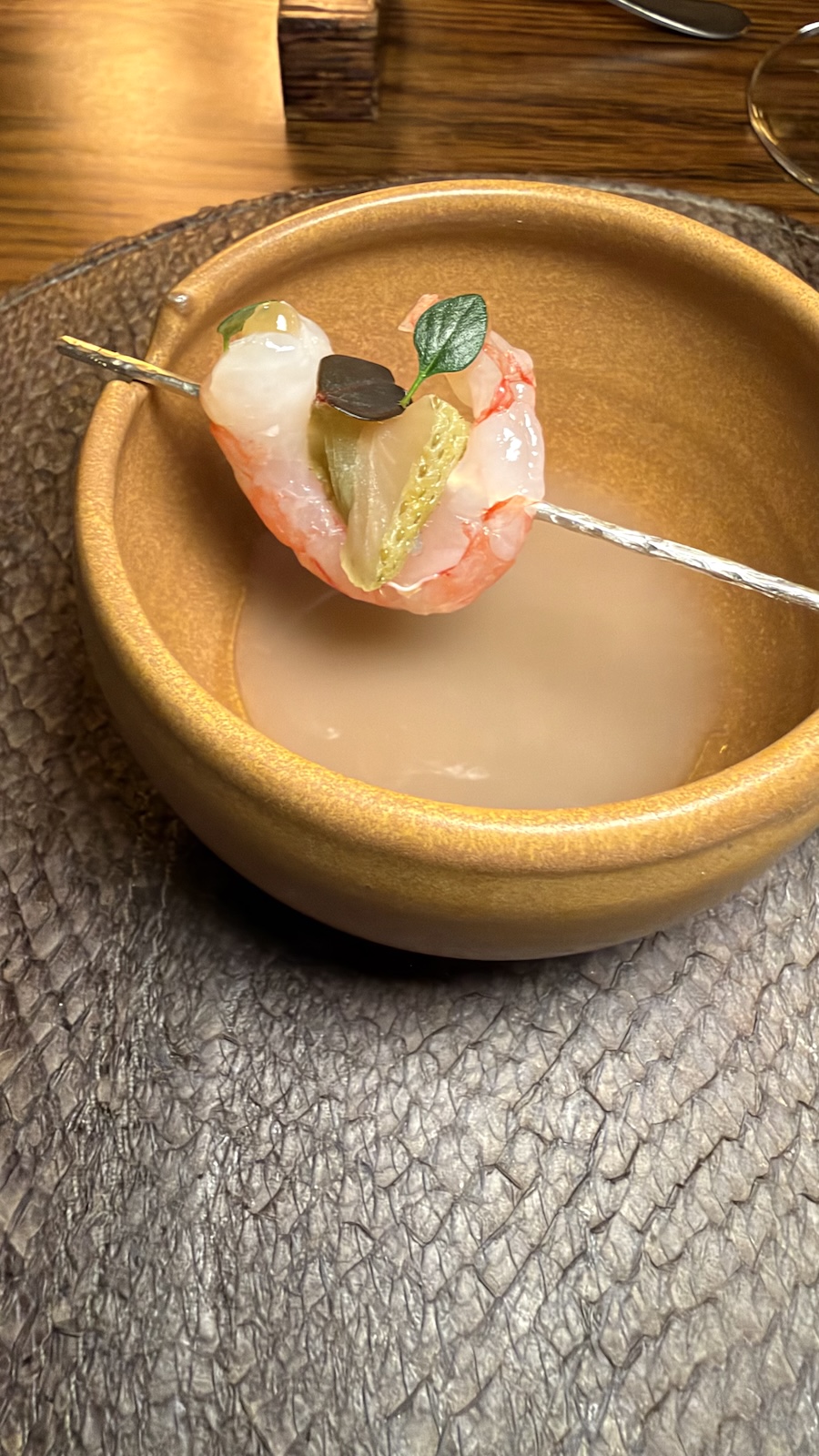
The shrimp course, with preserved strawberries and saffron, finds a partner in the glass so precise that the match feels rehearsed for months. Then the salmon with tomatoes and roses, a plate of deep red beneath purple and green leaves and a scattering of petals, pitched high on salt, meets a sauvignon that lifts the whole thing somewhere else entirely, the wine’s green edge cutting through the salinity and then settling into the roses.
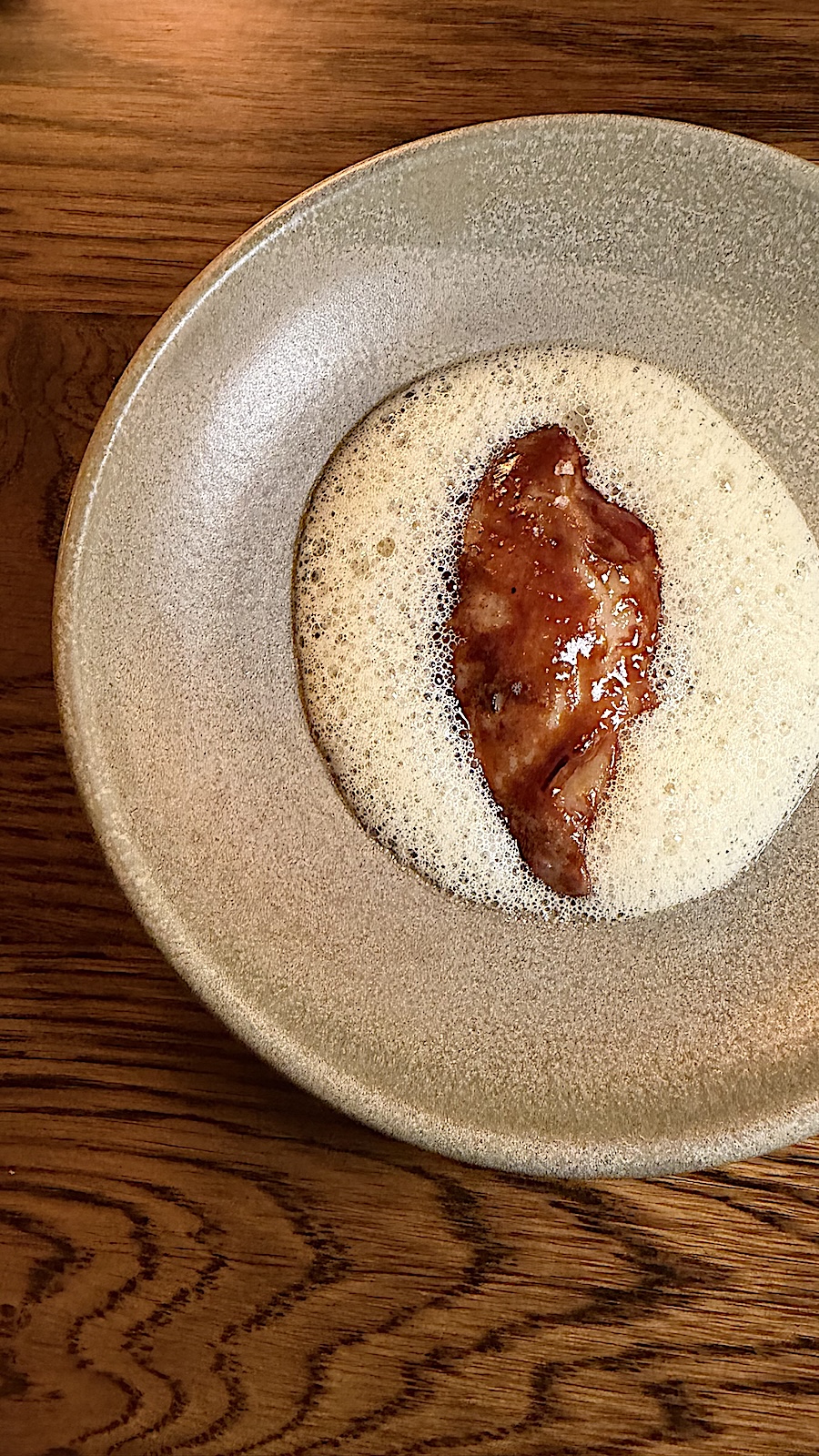
Rutabaga with skyr and sourdough is unapologetically generous with butter, but the textures are marvelous and the flavor more than earns the richness. Potato, Gouda and quail egg arrives in a black ceramic bowl, dotted with toasted grains, and tastes, inexplicably, delightfully, like Christmas. Cod comes with pernod and grilled kombu. Quail follows with vermouth and sherry, the breast seared golden and floating on a pale foam, its sauce comforting and excellent. Chanterelles with mustard seeds follow, seared dark and set on a delicious cream.
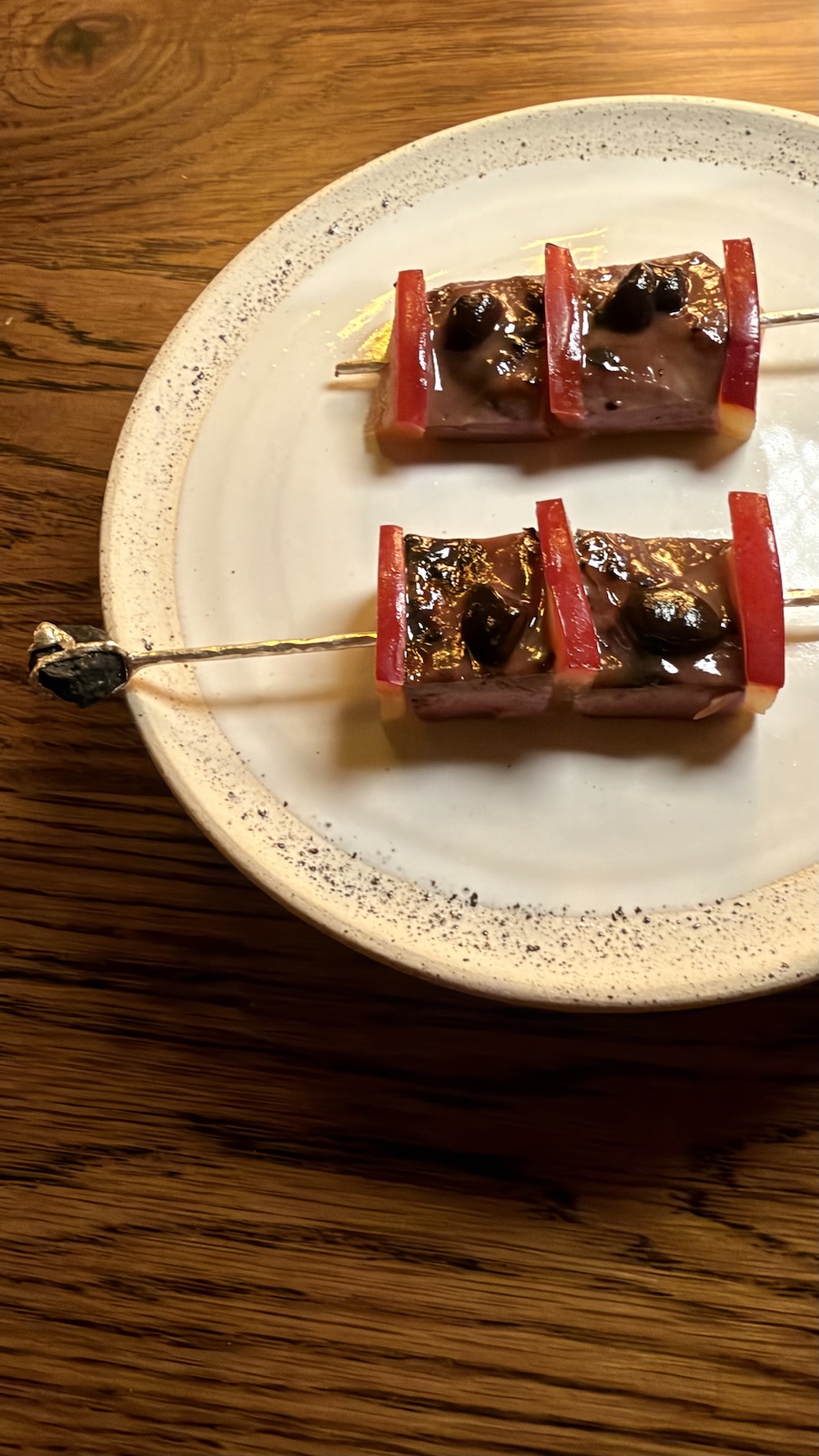
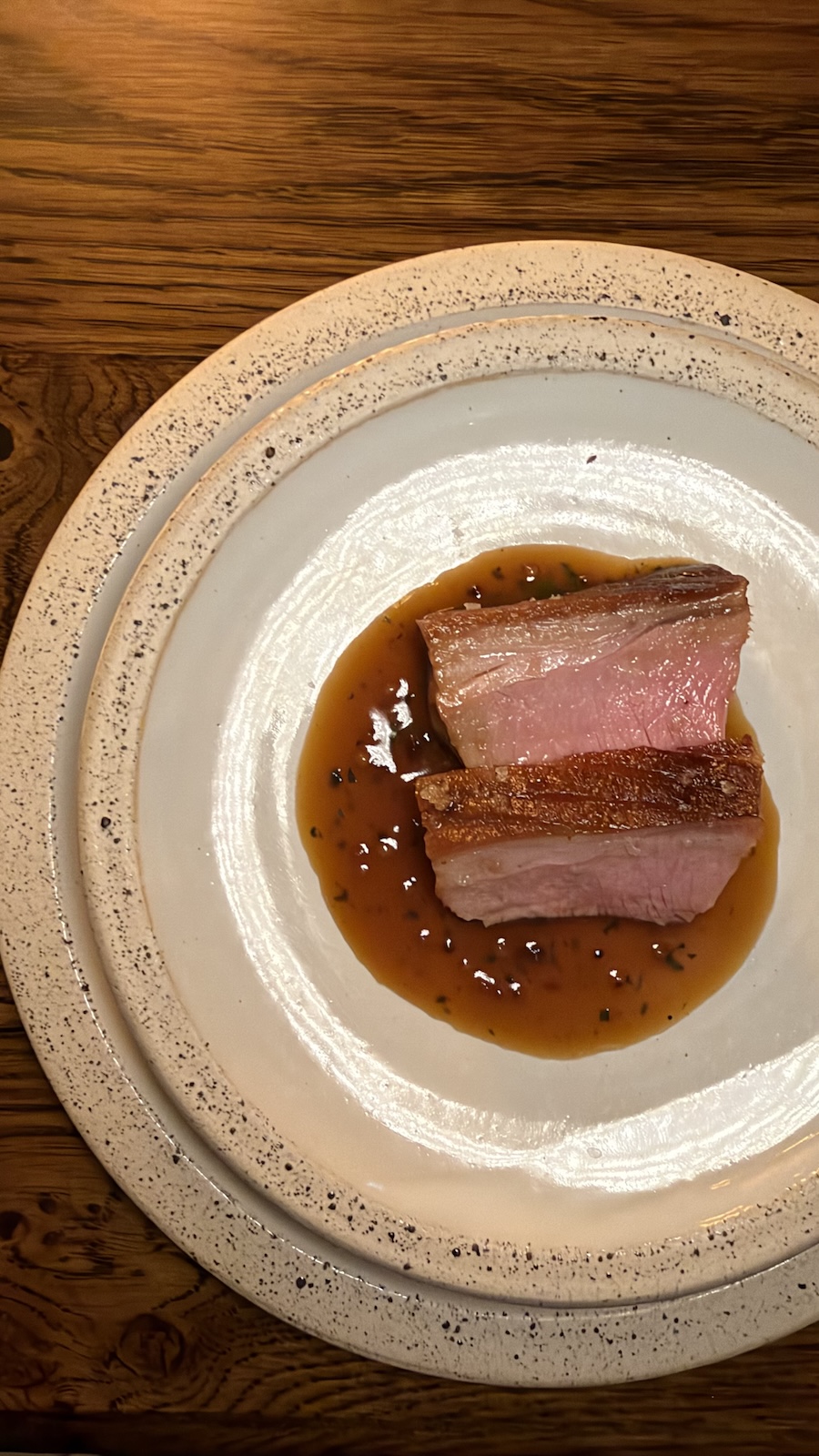
And then the lamb, Iceland’s pride and the one meat Thrain will defend against all comers, which arrives twice: as skewers of dark glazed heart and as two rosy, fat-capped pieces resting in their own juices on a white plate. The hearts are no accident. The kitchen salts and dries hearts and tongues through the autumn, the way this island has always kept what it could, and in January and February, when Iceland celebrates its old food, that preserving tradition becomes the inspiration for the whole menu. I have eaten a great deal of lamb in my life, in a great many countries, much of it very good. This was the most beautiful I have ever been served.
By the time the sweet courses arrive, the room has long since stopped behaving like a restaurant. The dessert sequence is long and deliberately strange. Sea buckthorn with white chocolate and fennel. Rutabaga with cacao nibs and pumpkin seeds. Wasabi and skyr pressed between macarons the color of moss. A delicious madeleine with whey and caramel. Miso with cepes and whiskey. Barley, malt and sea salt to close.
The textures in the first two desserts are chewy in a way that asks something of the diner rather than soothing them, though the flavors hold up throughout.
But the dish the chef himself wants you to remember comes at the exact midpoint of the evening, and it is none of these.
Breaking Bread With The Chef
There is exactly one dish Thrain presents himself.
It is the rye bread. Course nine of twenty, dead center of the menu, and he will tell you, flatly, without a trace of irony I could detect, that it is the main course. The most important thing he serves all night. This is a startling claim for a loaf of rye in a restaurant that also serves caviar, lamb and truffle. It is also the one dish that has never come off the menu, and he does not expect it ever will.
The bread is made by Bjarki Hilmarsson, chef at Hotel Geysir, from a hundred-year-old family recipe handed down from Sigrun and Sigurdur Greipsson. It is slow-baked for twenty-four hours deep in the ground, right beside the great Geysir itself, using nothing but the heat of the earth. No oven, no fuel, just geology.
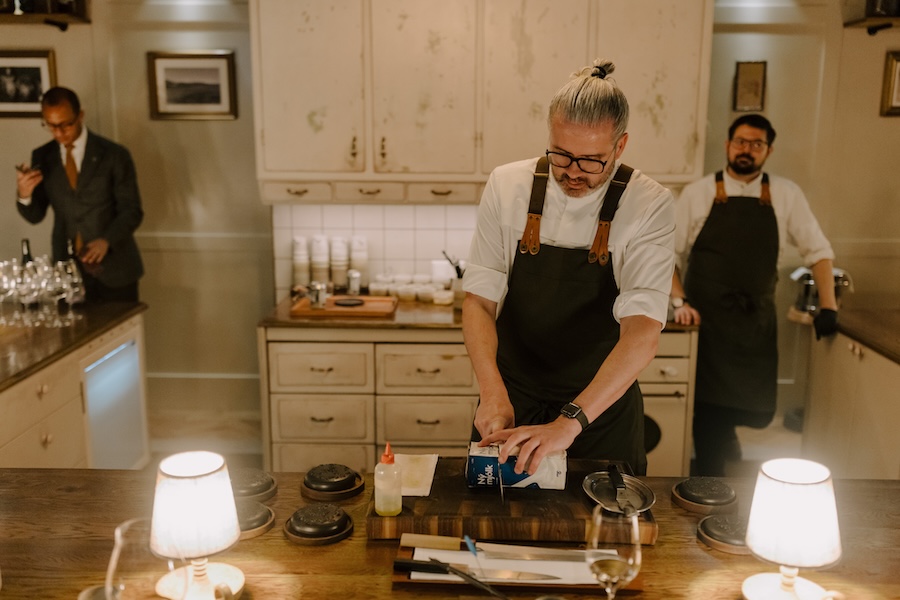
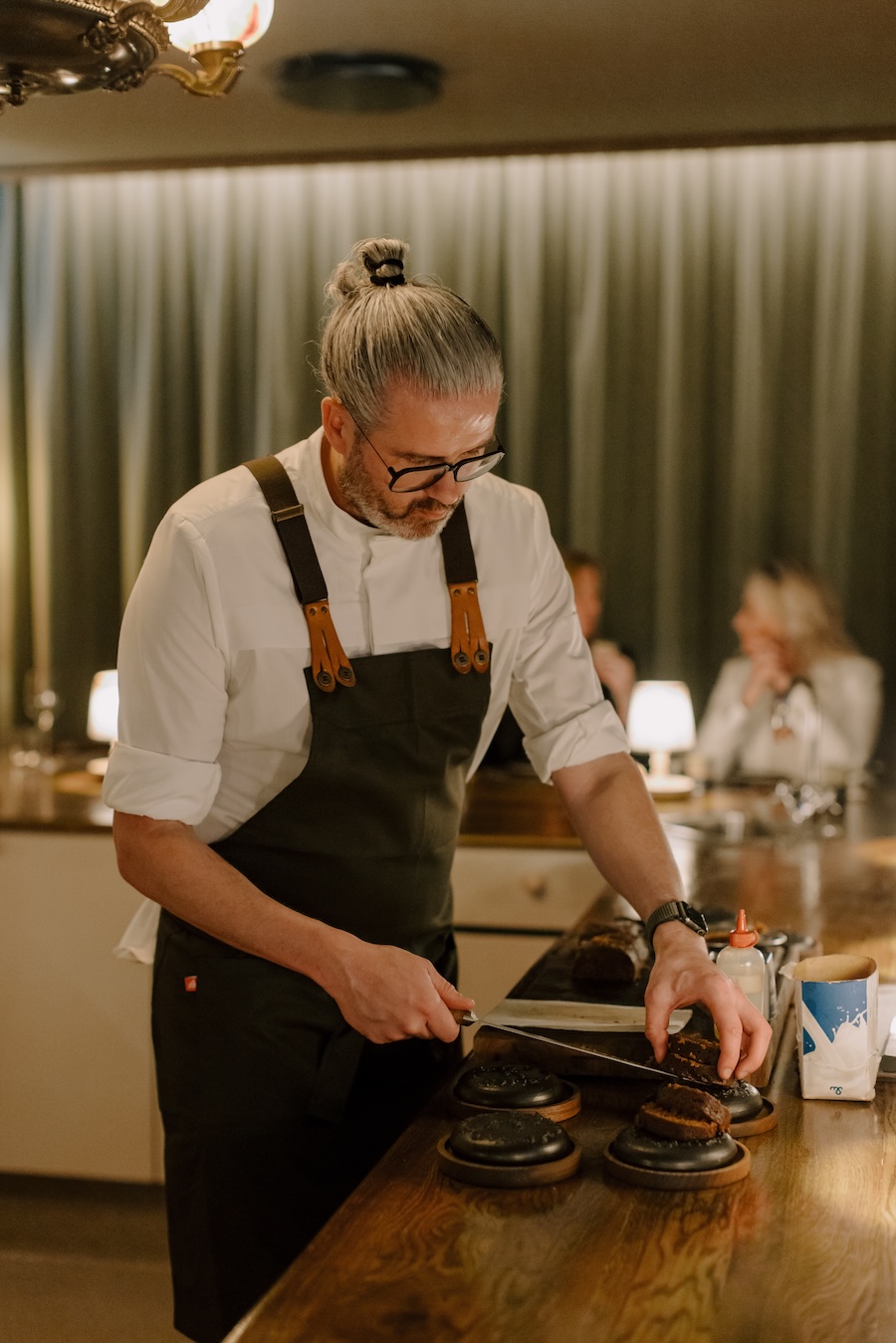
The presentation is as good as the bread, and that is saying a great deal. Thrain produces a white sack, the same one that goes into the ground, faintly stained by sulfurous steam, and from the sack he pulls a milk carton, inside which the dough has baked. He cuts it open in front of you, and the room leans in.
The crumb is dark and dense and slightly sticky, almost gummy in the best sense of that word, faintly damp, tasting of caramel and malt, with a sweetness that creeps up and then stays. It comes with butter and trout, served on a small wooden board, and it is, without exaggeration, one of the finest bread services I have had in any starred restaurant anywhere.
A Very Generous Pairing
Maybe sharing the loaf is why, by the end of the night, some of those strangers are hugging goodbye? It may well be, but the pairing has something to do with it too.
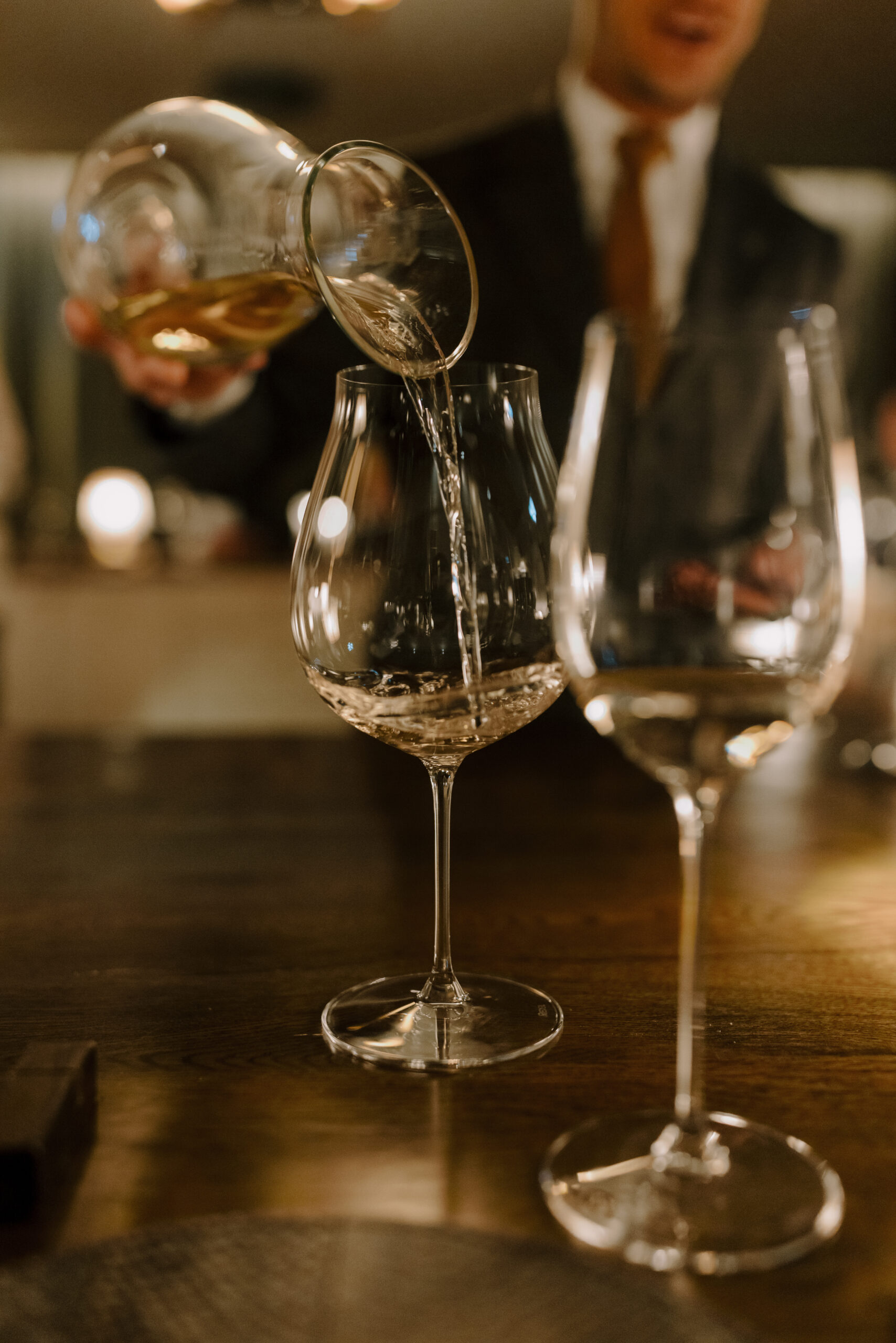
The pairing at ÓX is generous to the point of recklessness. Glasses are refilled before you have registered that they were emptying, but generosity is the least interesting thing about it. The remarkable part is that it works at a level you would expect from a house carrying considerably more hardware than this one.
There is an interesting non-alcoholic menu too, built with the same curiosity rather than offered as a consolation, which matters in a room where the point is that everybody stays at the table together.
What the Guides Say
ÓX means to grow. The restaurant earned its Michelin star in 2022, the second in Iceland’s history, after Dill, at the Nordic ceremony in Stavanger, and added a Green Star in 2025, now carried as a Mindful Voices distinction.
The sustainability credentials are not decorative. The kitchen sources much of its produce locally, down to the vegetables, duck, quail and dairy. It knows its guest numbers for the week and cooks for exactly that many. A single ingredient will appear in two or three different dishes in different guises. Coffee grounds are re-infused for caramel and then used to polish the copper pots. Leftover rye bread becomes cocktails, and becomes the restaurant’s own rye miso.
Both Journeys End Where They Started
The night ends where it began. You go back into Amma Don, and if you still have the appetite for it there is a last cocktail waiting among the lamps and the wallpaper and the television murmuring its old talk shows. It is the right ending, because it closes the circle the evening opened. You can cheer one last time with your new friends.
And you leave with cake. Every guest is given a box containing Thrain’s grandmother’s cocoa cake, the one she baked for him as a boy. He never liked the icing on top, so she always made it half iced and half plain, just for him. The box holds both halves, and a QR code with the recipe, in case you want to bake it yourself.
He has heard the stories of what happens afterward. One night at the old address, eleven seats and ten guests, among them an Icelandic widower in his seventies whose children had given him the dinner as a gift. By the end of the evening he had left with the rest of the table, a couple from Italy, a group of Americans, and the night ended in a bar at four in the morning. Guests have gone on to visit each other in other countries.
Ask Thrain what he hopes people carry out the door and the answer is modest: “Something they will take with them out of the restaurant.”
Three or four hours after walking in, people who had never met are saying goodbye with their arms around each other, out on Laugavegur, in the wind.
That is a journey you will take home.
ÓX & Amma Don. Laugavegur 55, 101 Reykjavík, Iceland. www.ox.restaurant / www.ammadon.is