
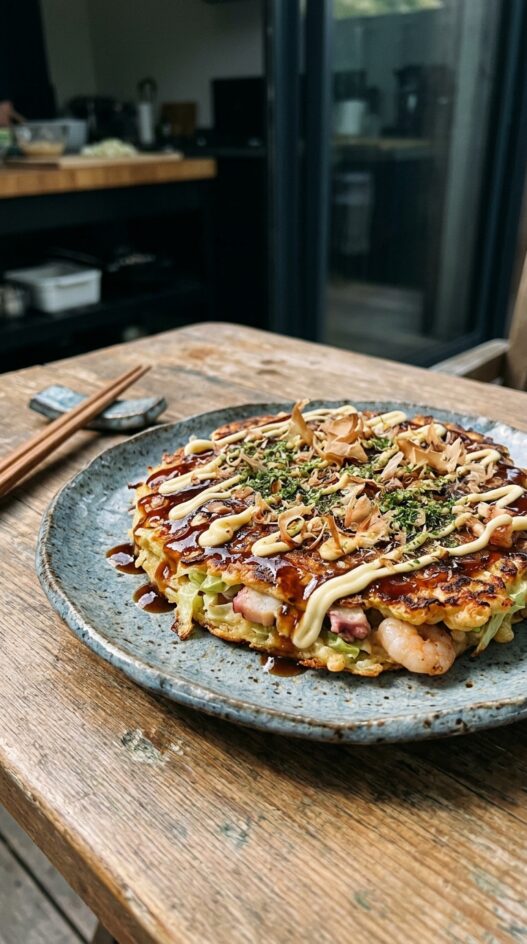
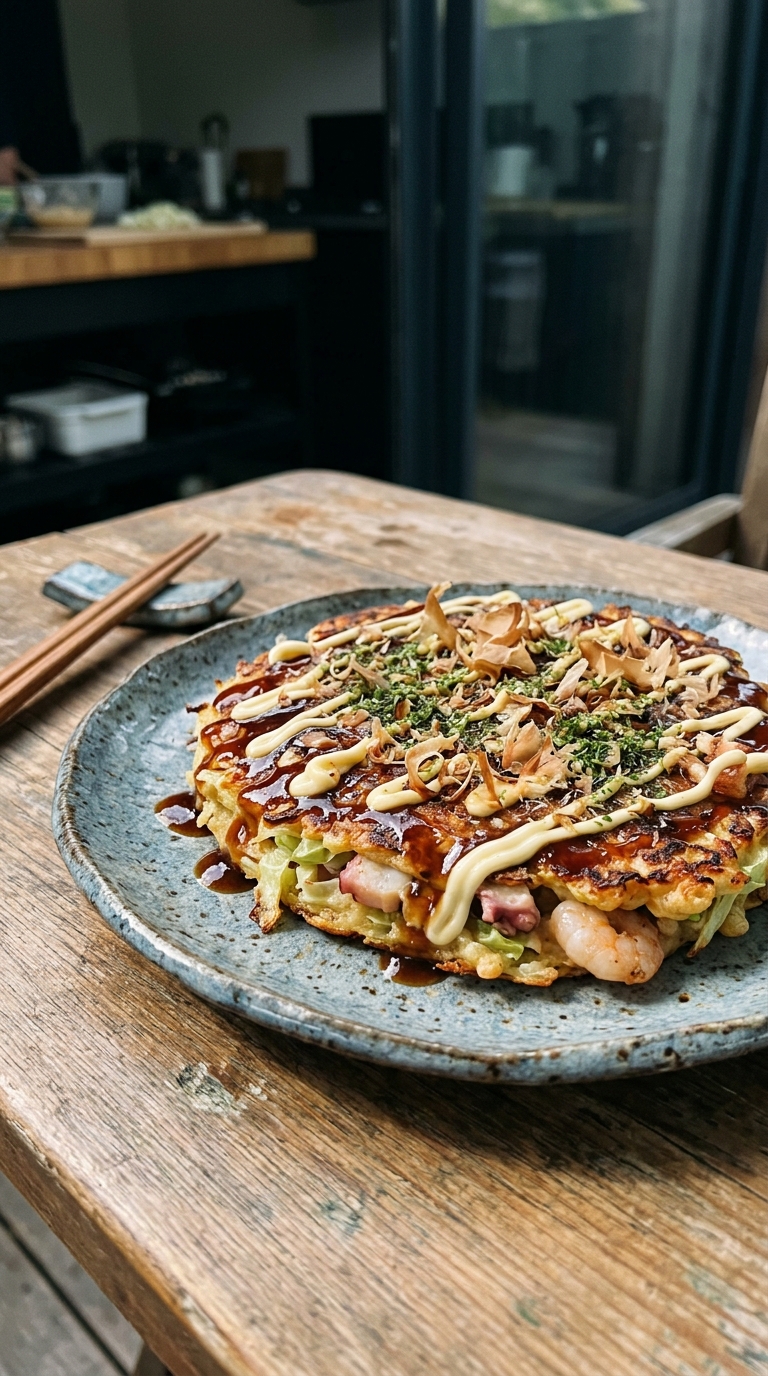
When I first stumbled upon Okonomiyaki I thought it was a greasy heavy and messy food, I couldn’t imagine how such different ingredients could blend together without covering each other. Then I was told it was a really healthy food, so one night I faced my prejudices and, at the top floor of Kyoto station mall, I decided it was the right time to try it.
The restaurant was amazing, everyone could see what was happening in the kitchen and each table had a large hotplate to keep the okonomiyaki warm. I ordered it and it was absolutely delicious. I imagined I was about to eat a huge mix of flavours packed in a soggy pancake. I couldn’t be more wrong.
Starting from the smell.. it was yummy and mouthwatering, it was covered with a thick sauce similar to tonkatsu (a sort of fruity ketchup – each restaurant has its own) and then topped with a little mayonnaise, aonori (dried seaweed) and bonito flakes. The outside was crispy while the inside was juicy and fluffy and, most of all, it was not at all greasy or heavy.
If you think that pork belly, mayonnaise and eggs can turn this dish into a liver-killer, I assure you it’s nothing of that kind, actually this is a really healthy dish, low in calories and rich in nutrients. The word okonomi-yaki literally means “your favourite – cooked” so it means that you can use whatever you like to prepare this dish, so you can also choose the amount of calories and fats.
Around Japan you will find countless recipes made mainly with local ingredients, from oysters to noodles. The basic dough is made with cabbage, and cabbage is known to help our health in many ways (is mostly known to be really active in cancer prevention), then you can add whatever you like and try to develop your own okonomiyaki recipes.
Now let’s go prepare a great okonomiyaki.
Print
Japanese home cooking: Okonomiyaki
- Total Time: 20 minutes
- Yield: 2 servings
Description
Experience the authentic taste of Japan with homemade Okonomiyaki, a savory pancake filled with cabbage, octopus, and shrimp, topped with a rich sauce and bonito flakes.
Ingredients
- 100 g all-purpose flour
- 140 ml dashi stock (available at Asian grocery stores)
- 1/4 tsp baking powder
- Pinch of salt
- 200 g cabbage, washed and cut into 7mm strips
- 50 g boiled octopus, chopped
- 8 shrimps, peeled and deveined
- 2 eggs
- Tenkasu (optional, little beads of tempura fried batter)
- Beni Shoga (pickled ginger)
- Okonomiyaki sauce
- Mayonnaise
- Aonori (dried seaweed)
- Bonito flakes
Instructions
- Sift the flour into a bowl and add the baking powder. Mix well.
- Gradually add the dashi stock to the flour mixture, stirring constantly, until you achieve a silky batter. Add a pinch of salt and mix thoroughly.
- Fold the cabbage, chopped octopus, shrimps, and finely chopped Beni Shoga (pickled ginger) into the batter. If using, add tenkasu for extra texture.
- Add the eggs and mix until the batter ingredients are evenly blended. Do not overmix, or the okonomiyaki will become gummy.
- Heat a non-stick pan over medium heat and lightly oil it.
- Pour half of the batter into the pan, spreading it out to form a pancake about 2cm thick.
- Cook for 4-5 minutes on one side until the bottom is golden brown and crispy.
- Flip the pancake and cook for another 4-5 minutes until the other side is also golden brown and the inside is cooked through.
- Transfer the okonomiyaki to a plate and keep warm while you cook the second pancake with the remaining batter.
- Drizzle the cooked okonomiyaki with okonomiyaki sauce and mayonnaise. Sprinkle with aonori and top with bonito flakes before serving.
Notes
- Okonomiyaki is versatile; you can customize it with your favorite ingredients like pork belly or oysters.
- The dish is low in calories and rich in nutrients, thanks to the cabbage base.
- Serve immediately for the best texture.
- Store leftovers in the fridge for up to 2 days and reheat on a hotplate or in a pan to retain crispiness.
- Prep Time: 10 minutes
- Cook Time: 10 minutes
- Category: Main Course
- Cuisine: Japanese
Nutrition
- Serving Size: 1 pancake
- Calories: 350
- Sugar: 3
- Sodium: 800
- Fat: 12
- Carbohydrates: 40
- Fiber: 4
- Protein: 18
- Cholesterol: 100
If You Liked This Recipe, You’ll Love These
- Koi: Asian Fusion is Alive and Well in NYC
- Japanese-Inspired Beef and Rice Gyudon Bowls
- Cooking Japanese Food at Home
- Mochiko Chicken Tacos with Pickled Japanese Plum Aioli
Frequently Asked Questions
What does “okonomiyaki” actually mean?
“Okonomi-yaki” literally translates to “your favourite – cooked,” meaning you can use whatever fillings you like. I use octopus and shrimp, but swap in pork belly, oysters, noodles, or other proteins depending on what you prefer or what’s local to you.
What is dashi stock and where do I find it?
Dashi is a Japanese stock made from dried fish and seaweed and is the liquid base for the batter (140 ml in this recipe). It is available at Asian grocery stores — you can typically find it as instant dashi powder or in shelf-stable liquid form.
Is okonomiyaki actually healthy despite containing pork belly and mayonnaise?
I was surprised to find the dish is low in calories and rich in nutrients, largely because the base is 200g of cabbage — which is particularly associated with cancer prevention benefits. Since I use octopus and shrimp rather than pork belly, it skews even lighter at approximately 350 calories per pancake.
Can I store and reheat leftover okonomiyaki?
Yes — leftovers keep in the fridge for up to 2 days. To retain the crispy exterior, reheat on a hotplate or in a pan rather than a microwave. For the best texture, serve immediately.




Elisa you NAILED this, obsessed.