
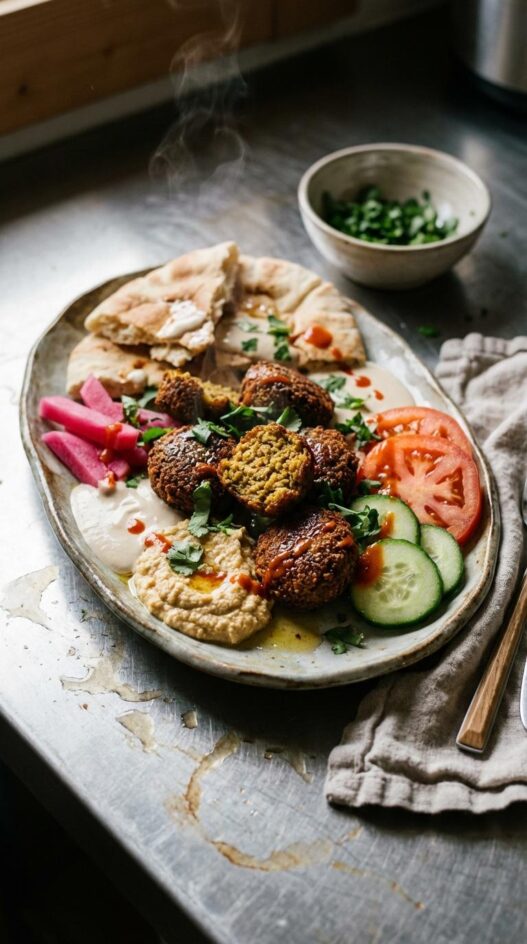
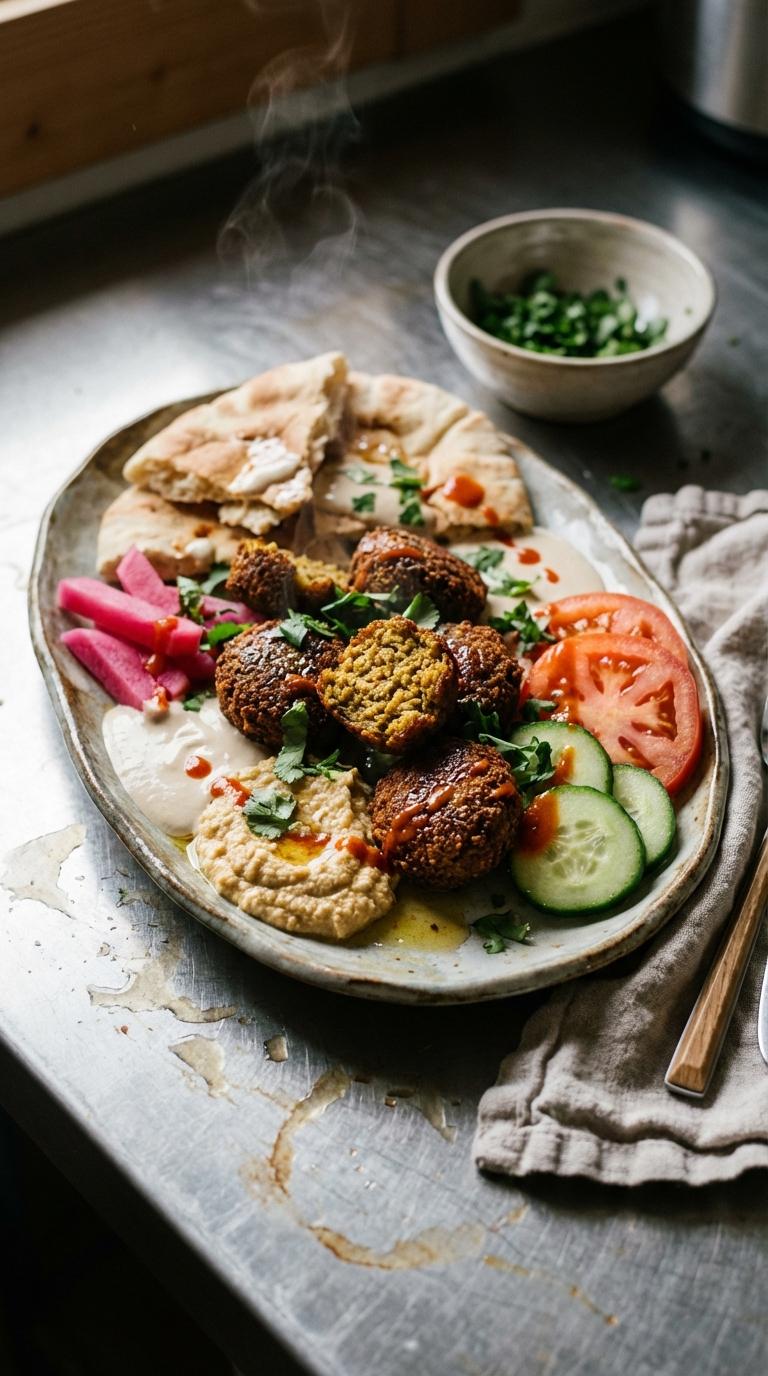
Real falafel starts with dried chickpeas that have been soaked overnight, not the canned ones sitting in your pantry. This is one of those distinctions that actually matters. Canned chickpeas are already cooked and full of moisture, which means they fall apart in hot oil and produce a mushy interior. Raw soaked chickpeas give you that signature craggy, crisp exterior and a bright green, herb-flecked center that holds together with just the right amount of crumble when you bite into it. The food processor grinds the chickpeas with a full cup each of parsley and cilantro, plus cumin, coriander, and garlic, into that coarse green paste.
The texture you want is coarse and damp, like wet sand, not a smooth paste. A short rest in the fridge firms up the mixture so shaping is easy. Fry them in batches at 350 degrees for just a few minutes and you get a crust that shatters. That’s it. Serve them as a platter with tahini, hummus, pickled turnips, and warm pita, or stuff them into sandwiches. They are best eaten within an hour of frying, so plan your timing around that. We fought over the last one.
Baking Powder Goes In After the Processor, Not Before
Once the chickpeas are ground down to that coarse, damp-sand texture, the mixture moves to a bowl and only then gets baking powder and a couple tablespoons of flour stirred in — not pulsed into the food processor with everything else. Skip that order and you lose the lift baking powder is supposed to give: those tiny air pockets are what keep the inside of a fried falafel light instead of dense and pasty. It’s a small step that happens after the loud part of the process, not during it.
Shape Firm, Fry in Batches of Five or Six
Roll the mixture into balls about an inch and a half across, pressing firmly enough that they hold together the second they hit the oil. Work in batches of five or six at 350°F — crowd the pot with more than that and the oil temperature drops fast, which trades a crisp shell for a greasy one. Three to four minutes, turning once, gets deep golden color all over. Drain on a wire rack rather than paper towels, so steam can escape from underneath instead of turning the bottoms soft.
If the Chickpea Mix Won’t Hold Its Shape
If it falls apart when you try to form a ball, work in flour a tablespoon at a time until it holds. If it feels too dry and crumbly instead, a few drops of water loosens it back up. Either fix takes seconds, and it’s worth testing one falafel before you commit the whole batch to hot oil.
Print
Falafel Plate
- Total Time: 60 minutes
- Yield: 4 servings (about 20 falafel)
Description
Proper falafel — the kind sold from carts in Cairo, Amman, and Tel Aviv — is made from raw, soaked chickpeas, never canned. The difference is fundamental: raw chickpeas produce a falafel that is craggy and deeply crisp on the outside with a vivid green, herb-flecked interior that stays moist and tender. This is one of those dishes where the technique has to be right.
Ingredients
- 1 pound dried chickpeas, soaked overnight in cold water (do NOT use canned)
- 1 medium yellow onion, roughly chopped
- 4 cloves garlic
- 1 cup packed fresh flat-leaf parsley
- 1 cup packed fresh cilantro
- 1 teaspoon ground cumin
- 1 teaspoon ground coriander
- 1/2 teaspoon cayenne pepper
- 1 teaspoon kosher salt
- 1/2 teaspoon freshly ground black pepper
- 1 teaspoon baking powder
- 2 tablespoons all-purpose flour
- Vegetable oil for frying
- For serving: pita bread, tahini sauce, hummus, pickled turnips, sliced tomatoes, sliced cucumber, hot sauce
Instructions
- Drain the soaked chickpeas thoroughly. They should be slightly swollen but still firm and raw in the center — this is correct. Do not cook them.
- Combine the chickpeas, onion, garlic, parsley, cilantro, cumin, coriander, cayenne, salt, and pepper in a food processor. Pulse in long bursts, scraping down the sides, until the mixture is finely ground but still has texture — not a smooth paste. It should look like coarse, damp sand.
- Transfer the mixture to a bowl. Add the baking powder and flour. Stir to combine. Cover and refrigerate for at least 30 minutes and up to overnight. This firms up the mixture and makes it easier to form.
- Shape the mixture into balls about 1 1/2 inches in diameter, pressing firmly so they hold together. You can also use a falafel scoop if you have one. Place them on a parchment-lined sheet pan.
- Fill a deep pot or Dutch oven with 3 inches of vegetable oil. Heat to 350°F. Working in batches of 5-6, carefully lower the falafel into the oil. Fry for 3-4 minutes, turning once, until deeply golden brown and crisp all over. Drain on a wire rack set over a sheet pan.
- Serve the falafel on a platter or stuffed into pita bread with tahini sauce, hummus, pickled turnips, sliced tomatoes, cucumber, and hot sauce.
Notes
- Never use canned chickpeas for falafel — they are already cooked and contain too much moisture. The falafel will fall apart in the oil and have a mushy, pasty interior.
- The baking powder is added just before frying — it creates tiny air pockets that keep the interior light and fluffy rather than dense.
- If the mixture feels too wet to hold its shape, add flour one tablespoon at a time. If too dry, add a few drops of water.
Nutrition
- Serving Size: 1 serving
- Calories: 670
- Fat: 32 g
- Carbohydrates: 75 g
- Protein: 23 g
Frequently Asked Questions
Why can I not use canned chickpeas for falafel?
Canned chickpeas are already cooked and contain too much moisture. They produce falafel that is mushy inside and falls apart in the frying oil. Raw, soaked chickpeas hold their shape and fry into a craggy, crisp exterior with a green, herb-flecked interior.
How long should I soak the chickpeas?
Overnight, 12 to 18 hours in cold water. The chickpeas should be swollen but still raw and firm when you bite into one. If they are too soft, they have soaked too long and will produce a pasty texture.
At what temperature should I fry falafel?
350F (175C). Use enough oil for the falafel to float freely. Fry for 3 to 4 minutes, turning once, until deep golden brown on all sides. Lower heat produces greasy falafel, higher heat burns the outside before the inside cooks through.

Chickpeas are in water for tomorrow, first time doing it from dried.