
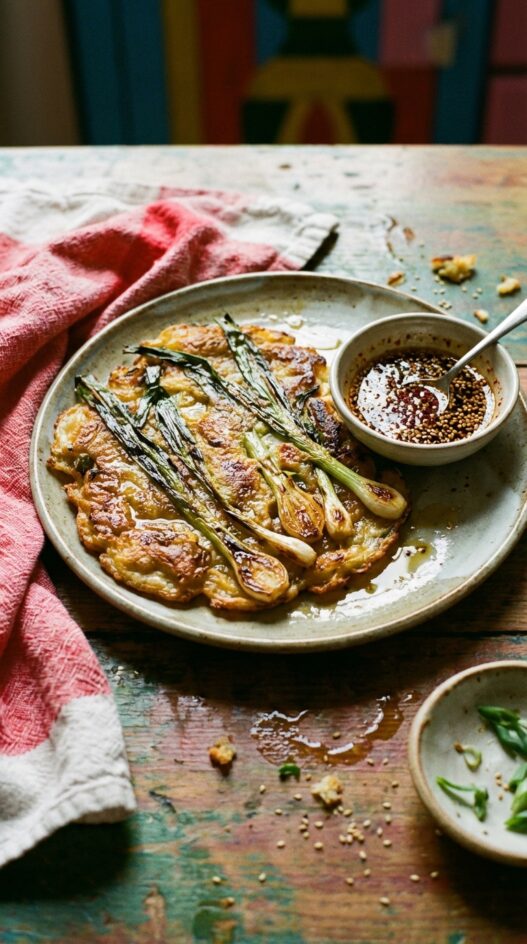
During the first few months I lived in Seoul, I didn’t hesitate to try every new food when dining out, but I approached Korean cookery with less aplomb. For months, if I cooked, I stuck to the basic comfort foods, including many a BLT. One day feeling bold, I bought a bag of flour for pajeon and made pancakes with the week’s leftover vegetables. They were okay, but the pajeon at restaurants were better. Pushed aside, the flour joined the ranks of neglected fodder at the back of the cupboard. Until recently.
My friend Hye Rae is a self-taught cook. Since we met, she’s shared much of her kitchen wisdom with me, like how to make good pajeon. Though she remembers wet, soft pajeon from her childhood, she likes a chew that’s both crunchy and soft. For this, she insists on a combination of two kinds of flour. Buchim garu is seasoned flour, the foundation of all Korean pancakes. Twigim garu is a frying flour, and it’s what gives pajeon its addictive, exquisite crunch. Try this recipe while spring onions are in season, and substitute any other seasonal vegetable (especially carrot, red pepper, or storage onions) when they’re not. To be proper, eat while drinking with makgeolli, preferably on a rainy day. If you’ve never before cooked Korean food, this is an excellent place to begin.
Print
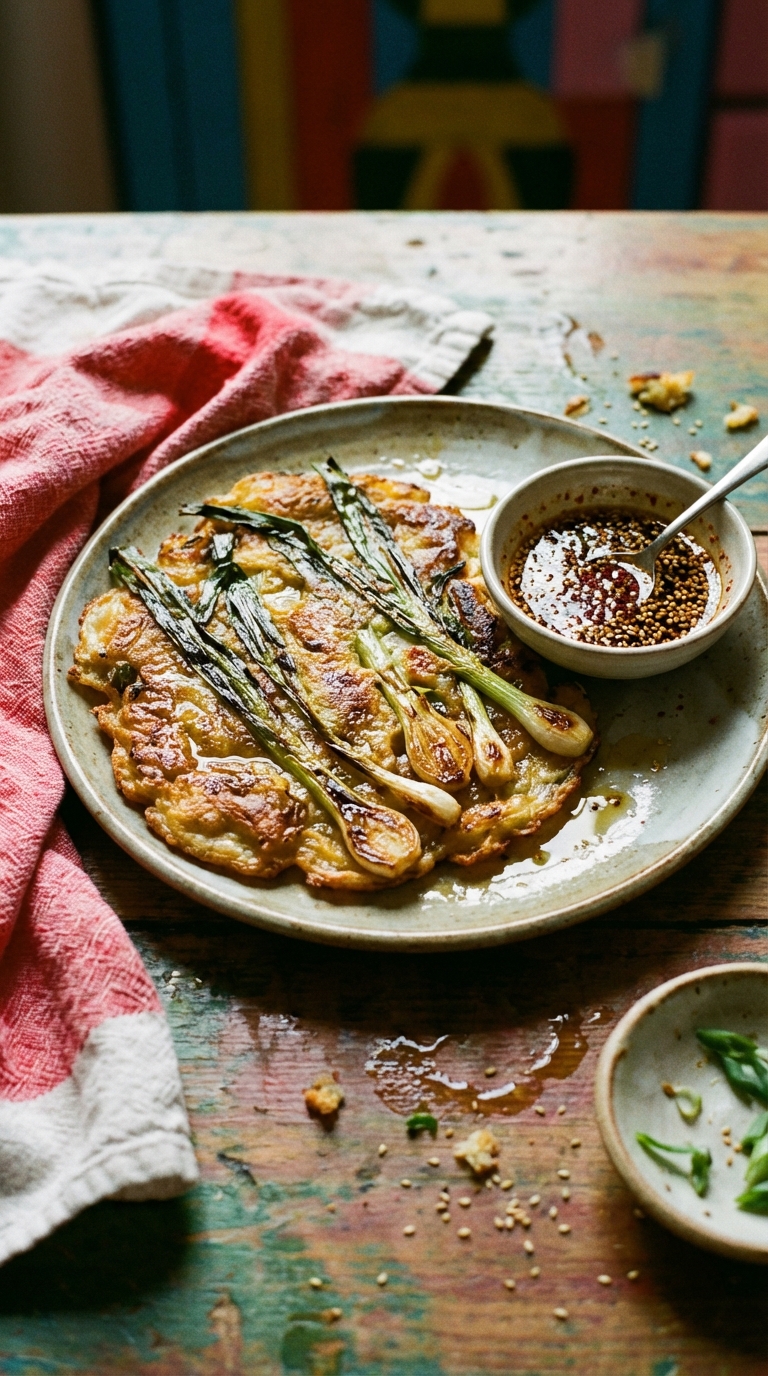
Pajeon: Korean Scallion Pancake
- Total Time: 25 minutes
- Yield: Serves 2
- Diet: Vegetarian,Omnivore
Description
Crispy savory pancakes packed with spring onions, a simple Korean classic. Serve with a vibrant sesame dipping sauce.
Ingredients
- 1/2 cups (50 g) buchim garu (Korean pancake flour)
- 1/2 cups (50 g) twigim garu (Korean frying flour)
- 1 cups (250 ml) water
- 1 bunch spring green onions
- canola oil
- 1 tablespoon soy sauce
- 1 teaspoon sesame oil
- 1/2 teaspoon sesame seeds
- 1/4 teaspoon gochugaru (Korean red pepper flakes)
Instructions
- Prep the onions: Cut the tops from the bunch so that their lengths match the length of your pan. Press the bulbs of the onions with a knife, as you would a garlic clove.
- Meanwhile, stir together the soy sauce, sesame oil, sesame seeds, and gochugaru in a small bowl to make the dipping sauce; set aside.
- In a large bowl, mix flours with water until well blended. Check the viscosity with a spoon; the batter should produce a steady, smooth stream when lifted from the bowl. Adjust with more flour (equal parts of both) or water, bit by bit, if necessary.
- Heat a non-stick pan and brush lightly with canola oil.
- When the oil ripples, add a single layer of onions across the pan.
- Pour the batter evenly over the onions.
- Cover and cook on medium-low heat until the pancake turns golden.
- Using a spatula or two, attempt to flip the pancake while keeping it in one piece.
- Cook until the second side has browned.
- Serve hot or at room temperature with dipping sauce.
Notes
- For a crispier pancake, add a tablespoon of cornstarch to the batter.
- If buchim garu and twigim garu are unavailable, substitute with a 1:1 blend of all-purpose flour and cornstarch.
- Store leftover pancakes in an airtight container at room temperature for up to 2 days; reheat gently in a pan or microwave.
- Prep Time: 10 minutes
- Cook Time: 15 minutes
- Category: Side Dish
- Method: Pan-Frying
- Cuisine: Korean
Nutrition
- Serving Size: 1 pancake
- Calories: 300
- Sugar: 5
- Sodium: 400
- Fat: 15
- Saturated Fat: 2
- Unsaturated Fat: 12
- Carbohydrates: 45
- Fiber: 2
- Protein: 5
Frequently Asked Questions
What is the right ratio of spring onions to batter for pajeon?
A generous amount of spring onions relative to batter is what makes pajeon distinct. The green onions should be densely packed so you see them throughout every bite rather than scattered lightly.
How do I get the edges crispy without burning the center?
Cook over medium-low heat with enough oil to coat the pan well, and keep the pan covered while it cooks so the center cooks through evenly without burning. Flip only once the pancake has turned golden on the underside.
Can I add other ingredients like seafood to the pajeon?
Yes, haemul pajeon is a popular variation that includes squid, shrimp, or oysters mixed into the batter. Add the seafood raw and it will cook through with the pancake.

Pajeon is one of my favorite Korean foods, but have only ever enjoyed it in makgeolli bars and restaurants. You may have inspired me to try cooking it on my own. Thanks for the recipe.