
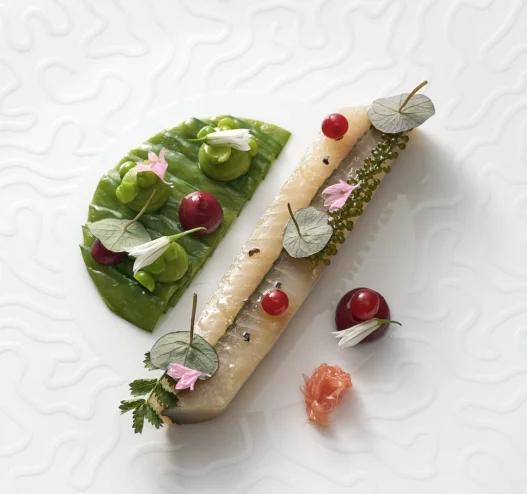
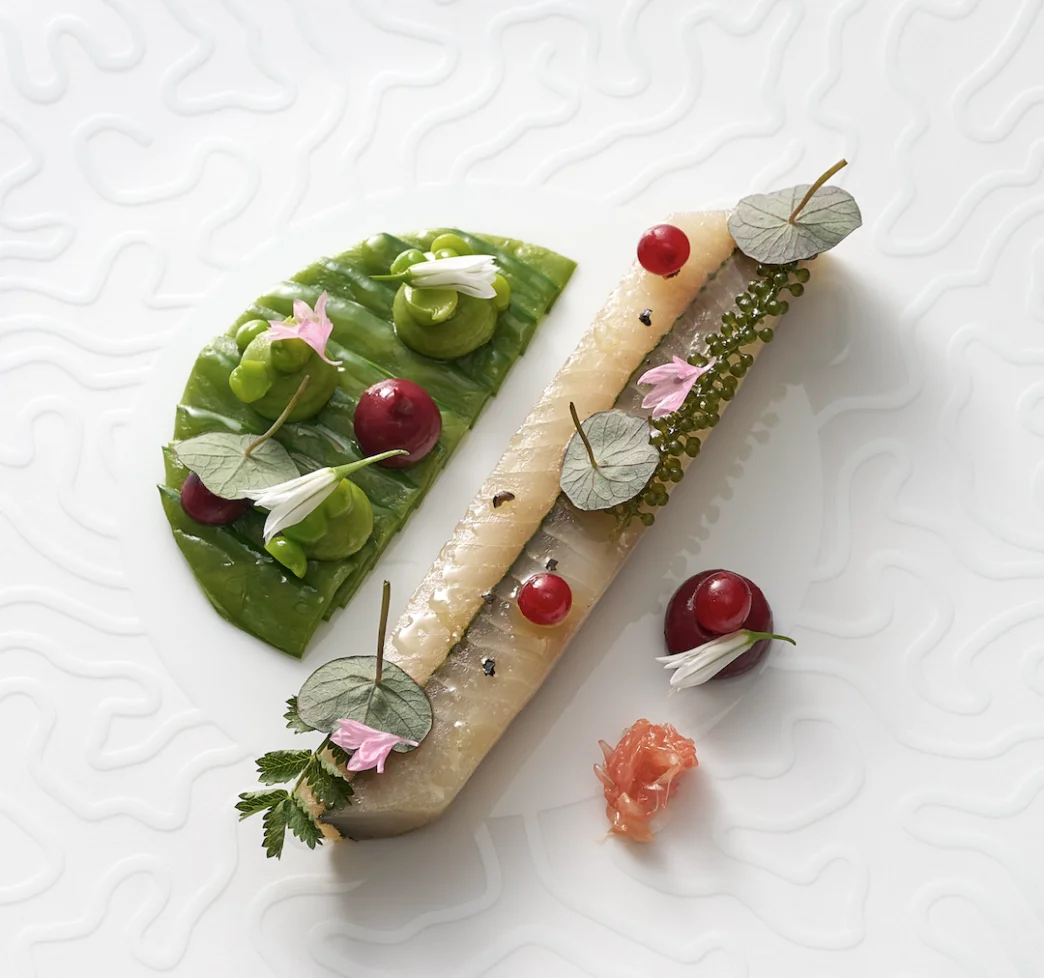
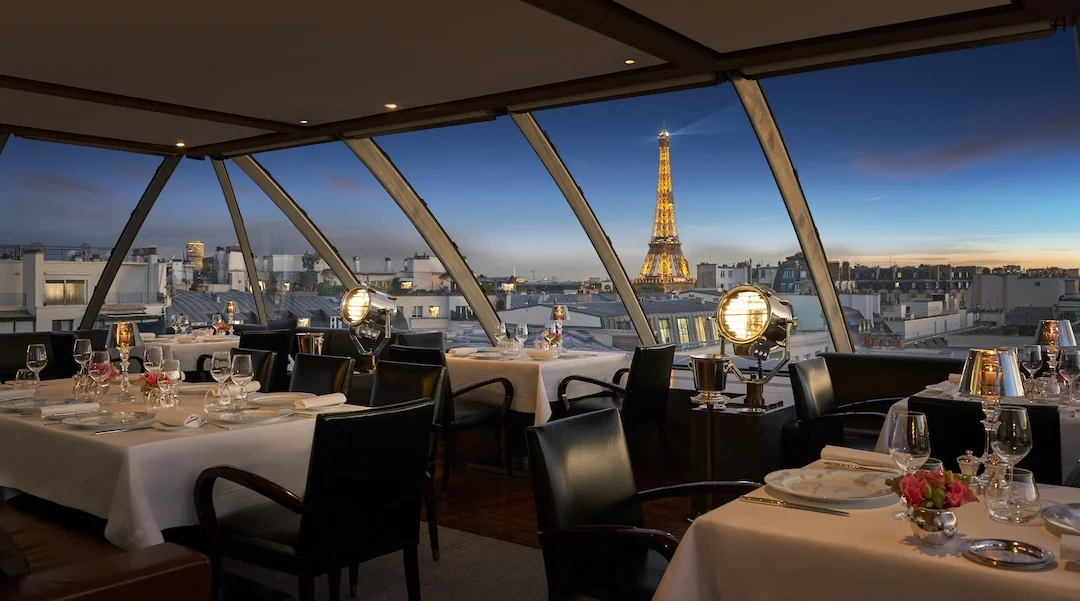
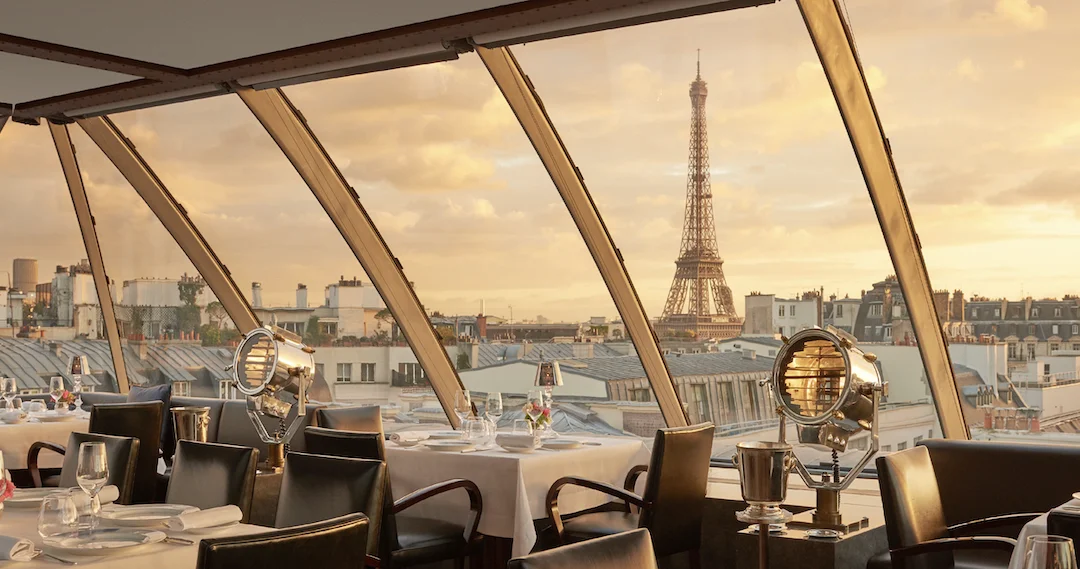
There comes a point in every fine dining journey when you find yourself sitting down at a two-Michelin-star restaurant. For me, that moment came in Paris, high above the city at L’Oiseau Blanc inside The Peninsula Paris.
We went for lunch and opted for the €325 Travel Book tasting menu, adding the wine pairing alongside it. Because moments like these call for the wine pairing. The ‘Travel Book’ is the restaurant’s more expansive tasting experience, giving us the chance to explore quite a few different sides of Chef David Bizet’s cooking over the course of the afternoon.
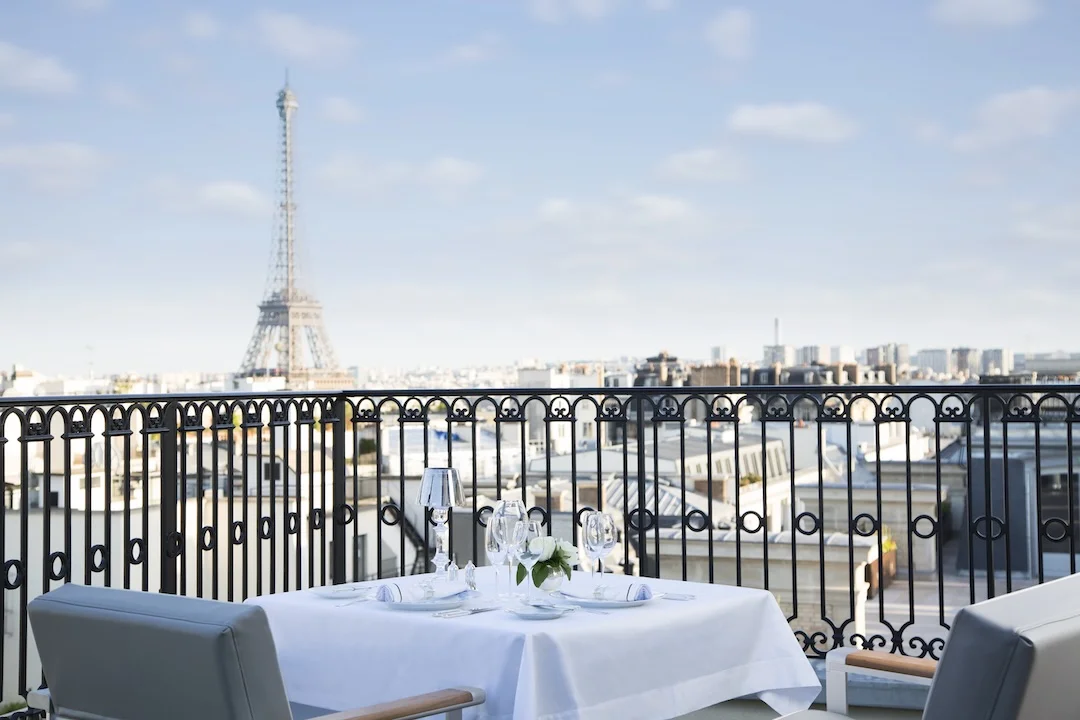
And explore is the right word. We strapped in for a 2.5 hour tasting, where the menu was essentially a journey through France. We began in Normandy, then headed south to Nice and Corsica, passing through Champagne and Bordeaux, and eventually arriving in Alsace for dessert.
Sometimes the references were obvious. Other times, a dish had been stripped down to a handful of French flavors and reconstructed into something entirely different, occasionally sending me down a Google rabbit hole. For the breadth of what we tasted, the scene overlooking the Eiffel Tower and the dishes I’m still thinking about, it was an incredibly memorable experience, and entirely worth the price of admission.
The Concept
At the center of L’Oiseau Blanc is Chef David Bizet, a Normandy native whose cooking is rooted in French culinary tradition but rarely content to leave it untouched. Since earning two Michelin stars at the restaurant in 2022, Bizet has built his menus around a fairly simple philosophy: start with exceptional ingredients, understand where they come from, and find new ways to express them without losing what made them special in the first place.
That means seasonality plays a major role here. Bizet works closely with farmers, fishermen and producers, favoring local ingredients and shorter supply chains wherever possible. Some of those ingredients come from even closer to home, like the organic rooftop garden at The Peninsula, where herbs are picked by the kitchen team before service.
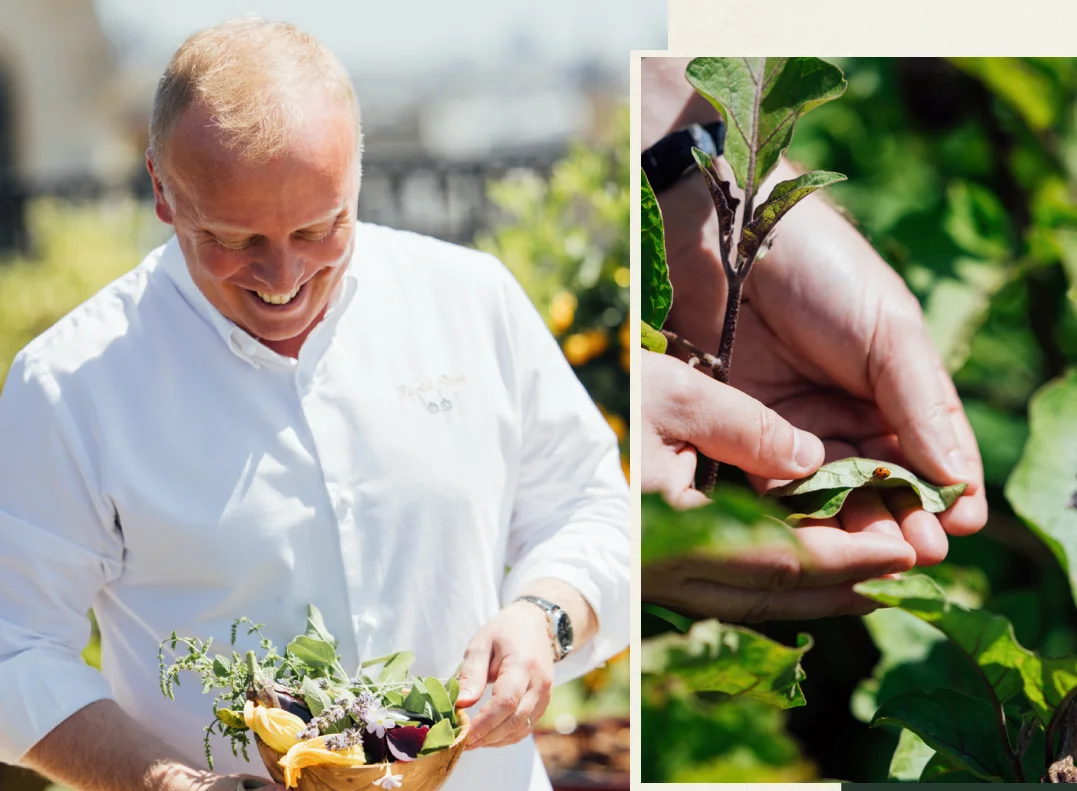
There’s a strong sense of French tradition running through the cooking, but it doesn’t necessarily appear in the form you expect. Regional dishes, ingredients and techniques become starting points rather than rules. Bizet might take the flavors that define a classic dish and completely rethink how they arrive on the plate, or put an overlooked ingredient at the center of a course. It’s an approach that makes the menu feel very French without being stuck in the past
The Tasting Menu
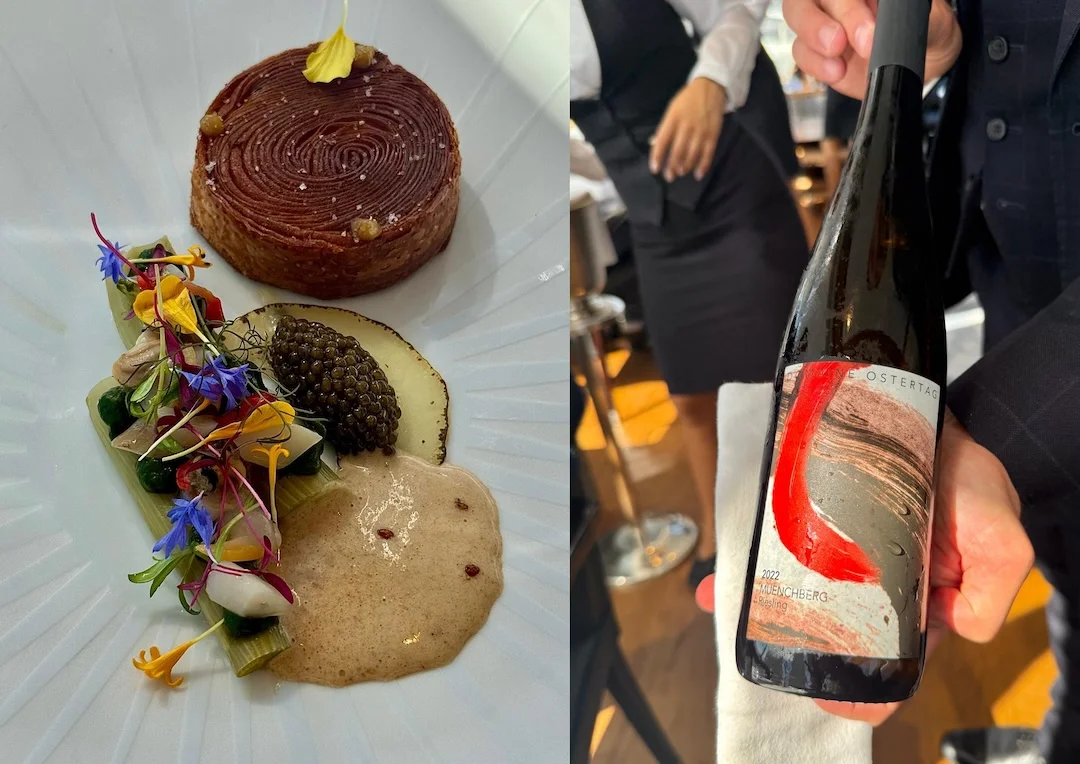
Our first course took us to Normandy, where Chef David Bizet was born. Oscietra Caviar sat with glazed fennel and shellfish, alongside toasted grains for a nutty edge and liquorice marigold for some bitterness. A roasted buckwheat emulsion held it all together, with dill and a touch of lemon keeping things bright. Instead of the usual blini, the caviar came with something a little more French, a croissant-style bread that stayed crisp and buttery, the layers almost hypnotic to look at. We were told to spoon the caviar on top and eat it in one bite.
The course was paired with a 2022 Muenchberg Riesling from Domaine Ostertag in Alsace, France. Grown on volcanic soil, notes of tangerine and plum, and the wine’s mineral edge worked well to cut through the butteriness of the croissant and the salinity of the caviar.
The second course, Red Onion, took its cues from pissaladière, the tart from Nice, France traditionally built around caramelized onions, anchovies and olives. At L’Oiseau Blanc, that whole idea was boiled down to one red onion, caramelized slowly in a reduction until sweetness became the point of the dish. Anchovy and black olive were tucked inside for the salty hit pissaladière needs, while fresh herbs and a truffle vinaigrette kept things from getting too heavy. The onion did all the work, running from sweet to salty to earthy with truffle, anchovy and olive tugging it back toward the Mediterranean the whole way. I hadn’t eaten anything like it before.
Wine-wise, a 2016 Clos Nicrosi from Corsica kept the theme going. The estate it comes from sits on the Cap Corse peninsula with vineyards facing the sea. Accordingly, the wine had a subtle spice, which complemented the sweeter caramelized onion perfectly. The minerality of it all felt right at home with the anchovy and black olive.
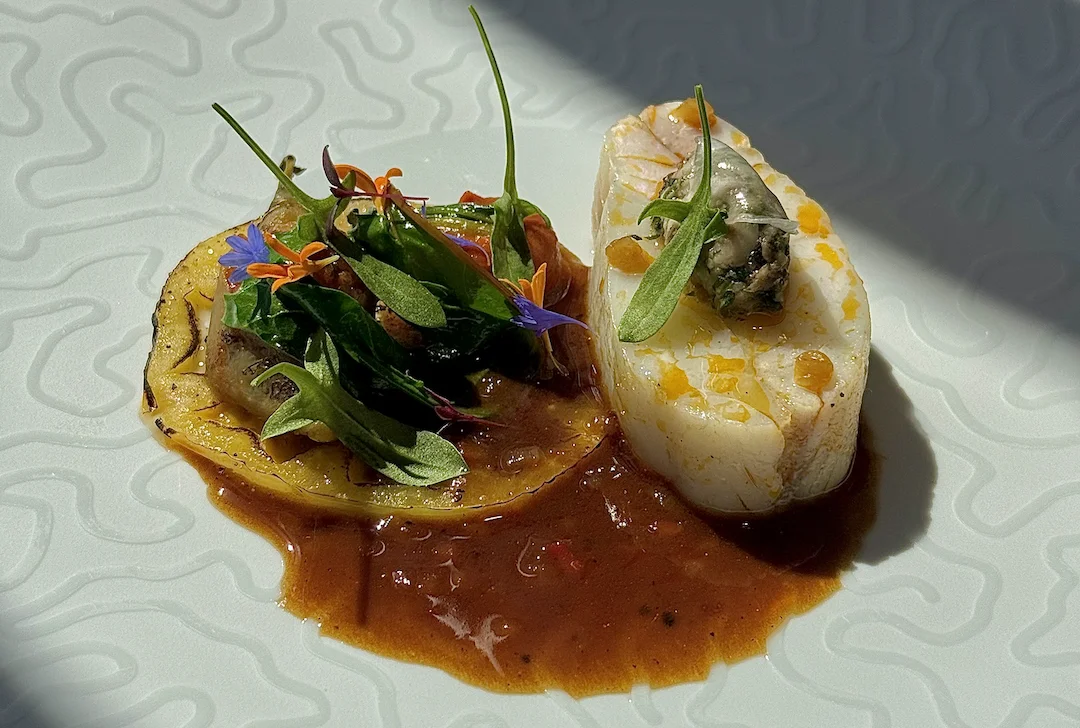
The Turbot, fish course, arrived under a paprika diable sauce, plated with bell pepper, black Krim tomato, and a mild chili pepper, spicy in flavor only, since the seeds had been left out entirely. The fish itself was cooked à la nage, tomato confit sitting alongside, and a gravy built from the fish bones stole the show.
To pair, our sommelier poured something rare to me, a still wine from Champagne, a region known for its bubbles. This 2022 Rosé des Riceys came from Les Riceys, a small village in the southern part of France, notorious for its Pinot Noir. It popped in the glass as bright and red-berried.
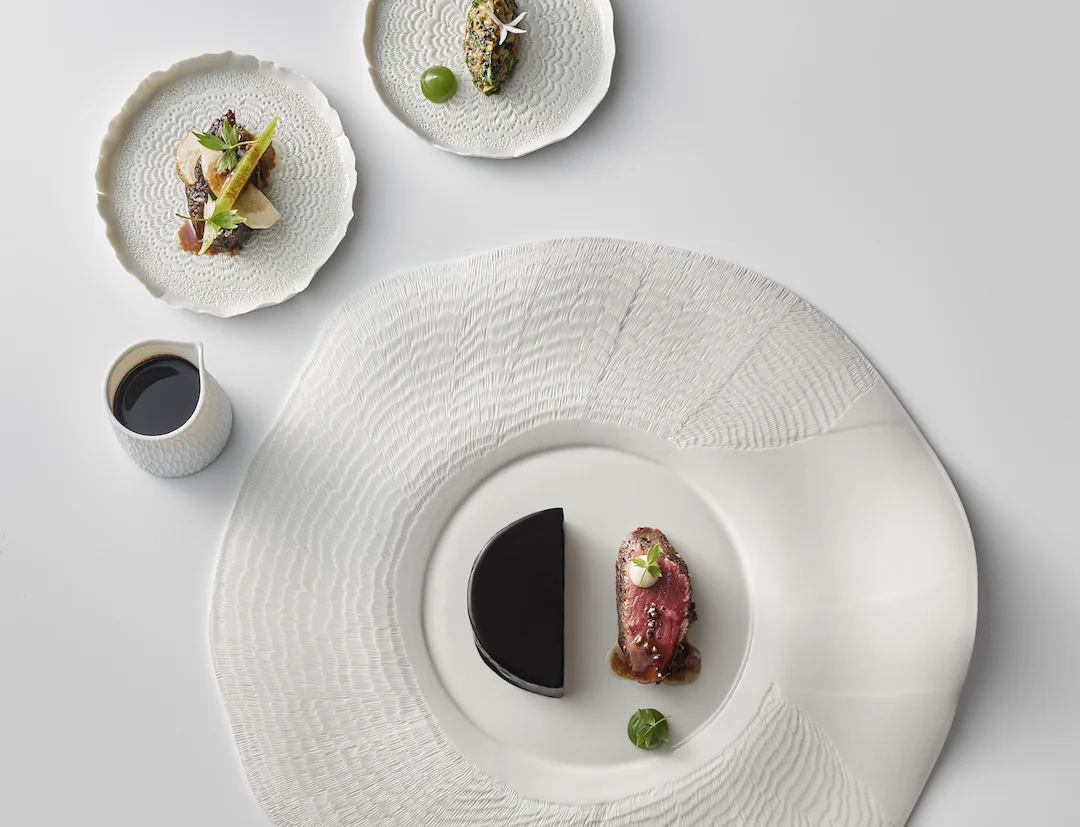
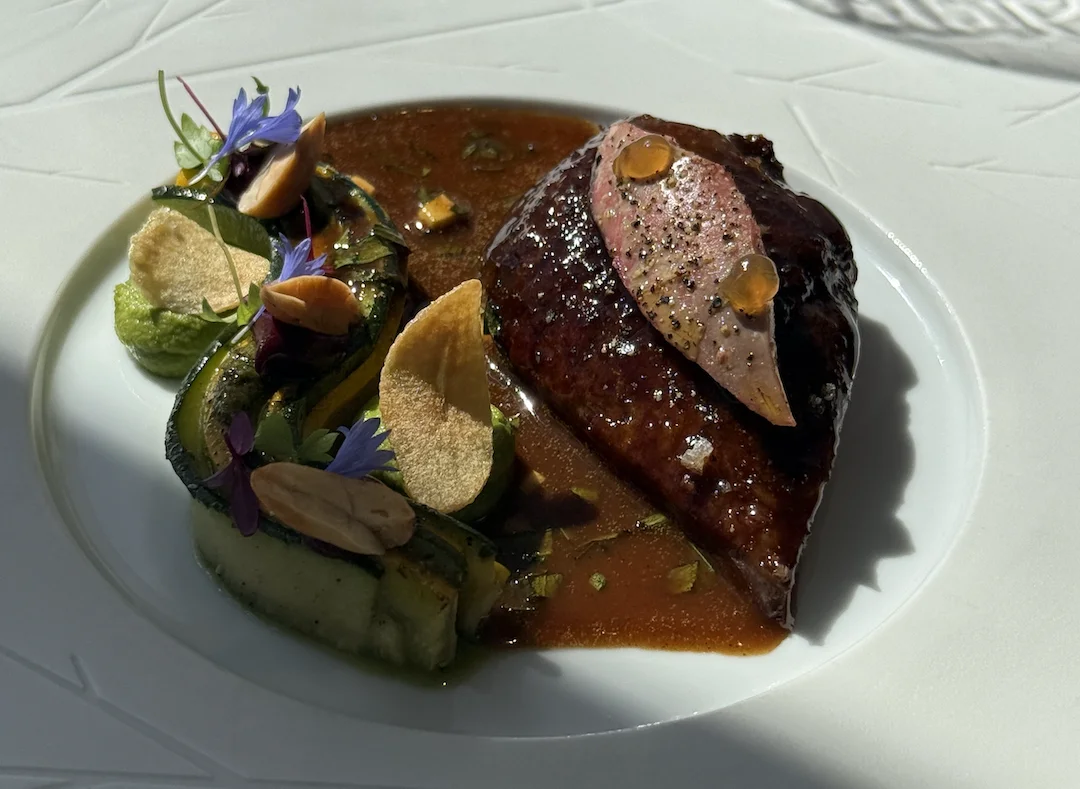
The Roasted Pigeon course was a study in using the whole bird, and a test of my ability to try something new. A roasted fillet, cut from just beneath the breast was the centerpiece, served alongside zucchini carpaccio with mint and almonds, tomato, and a second more delicate preparation of thinly sliced zucchini. Underneath, shredded pigeon added depth, and sitting on top was the sot-l’y-laisse — the bird’s “oyster,” a small, prized cut near the thigh that rarely makes it onto a plate at all. Rather than treating it as a garnish, L’Oiseau Blanc gave the often-overlooked cut a starring role.
Along with it was a glass of Velours 2021, a Bordeaux blend of five grapes that lived up to its name. Velvety in texture, with a spice character the sommelier traced somewhere between Rhône Syrah and Loire Cabernet Franc. A wine I would’ve gladly drank on its own repeatedly.
With fewer diners reaching for a digestif these days, the kitchen worked one directly into dessert. The star was a white raspberry eau-de-vie from Alsace, made from white raspberries grown in Florence and distilled into an intensely aromatic spirit. Rather than serve it straight, the team diluted it in front of us with high-altitude spring water from the Savoie mountains, softening the alcohol without losing the perfume of the fruit.
That same raspberry carried onto the plate, with crushed frozen berries layered over marzipan alongside kinako praline, kombucha foam and oyster leaf. Tarragon and elderflower came through in the foam, adding a grassy edge to all that sweetness. It was part dessert, part digestif, and a clever way to finish the meal without resorting to the usual glass poured on the side.
The Verdict
What stayed with me most was how much curiosity there was behind the meal. There were ingredients I’d never encountered, wines I probably never would have heard of, overlooked cuts of meat given their own moment, and familiar French dishes rebuilt to something new. There’s also a confidence to cooking this intricate without making it feel like an intellectual exercise. You don’t need to know how to pronounce pissaladière or understand the history of Champagne to enjoy what’s in front of you. But if you’re the kind of diner who likes asking questions (and inevitably Googling a few things afterward) there’s plenty here to unpack and enjoy.
And maybe that’s the best measure of a tasting menu at a two-Michelin star like this, not whether every course was your favorite, but whether you leave wanting to know more about what you just ate. A few days later, I was still looking up grapes, regions and dishes I’d encountered at L’Oiseau Blanc. For a meal built around discovery, that feels like exactly the point.
L’Oiseau Blanc
The Peninsula Paris
19 Av. Kléber, Paris, France
This looks amazing!! WOW!
Reducing a whole pissaladiere down to one onion takes some nerve. I would not have thought to hide the anchovy and olive inside it.