
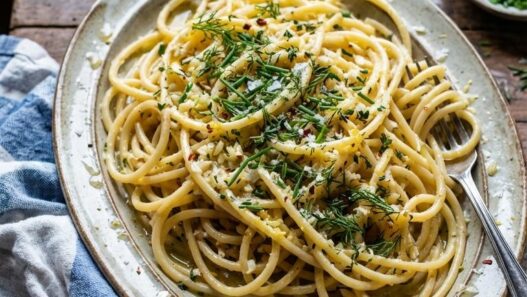




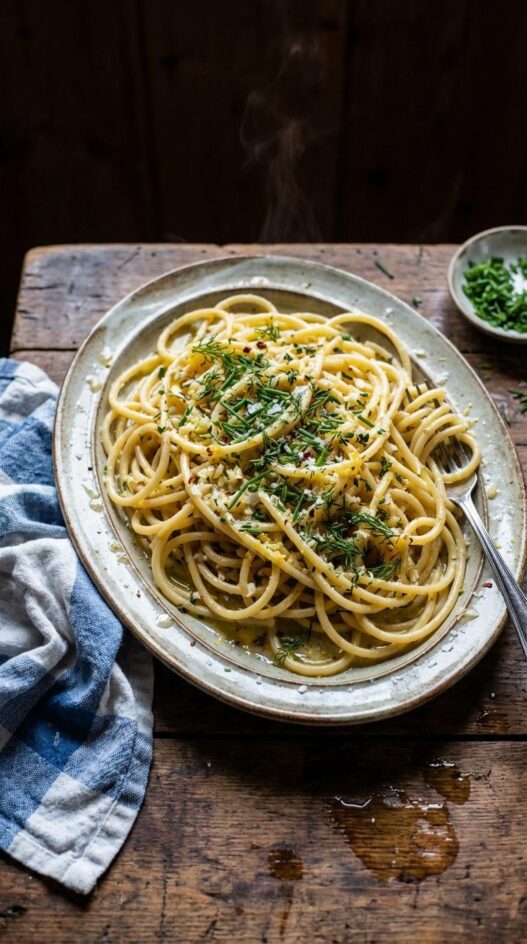
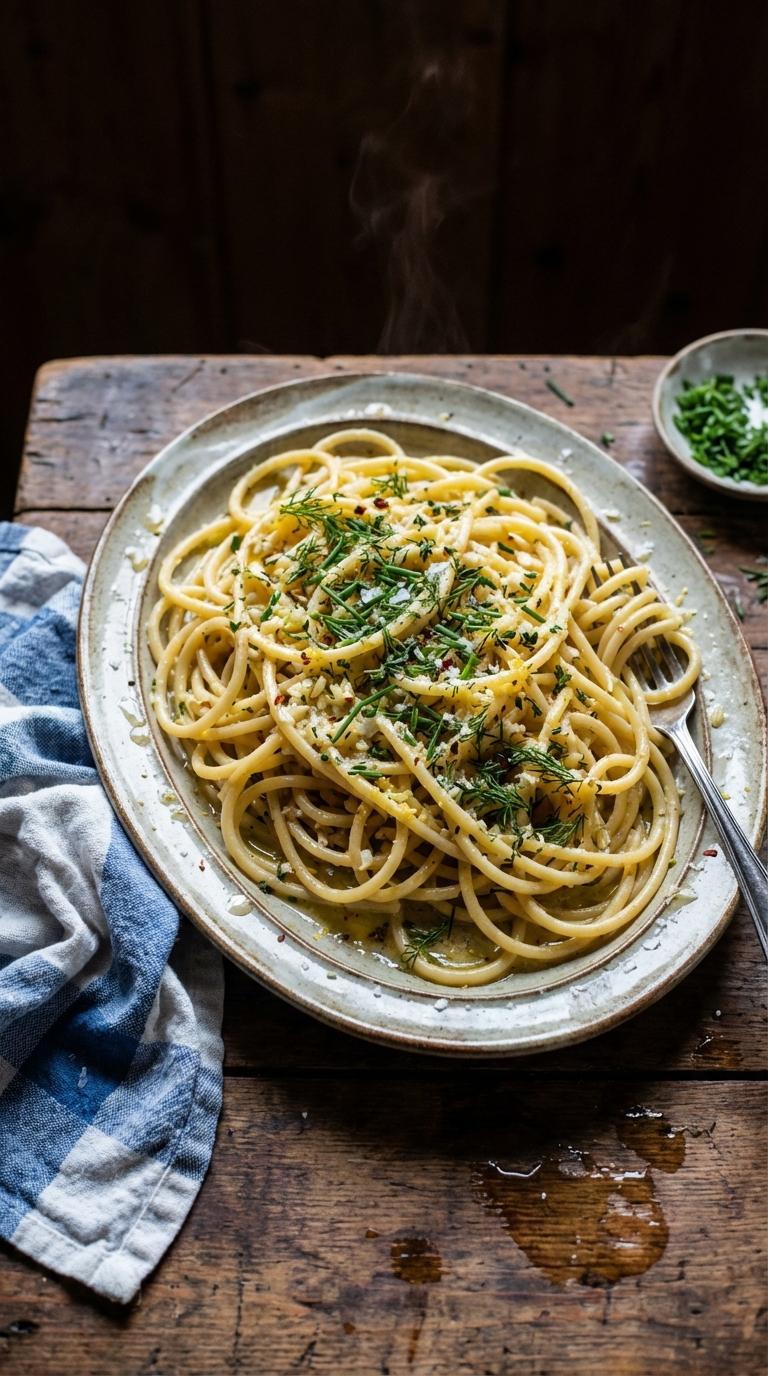
The butter board trend made the rounds on social media for a very simple and very reasonable reason: compound butter is frickin’ delicious, and people want to put it on everything. Fair enough, but this recipe takes that idea and does something even betterwith it. Instead of spreading flavored butter on a board for dipping, you toss it with hot pasta and heat it up. The butter melts into a glossy, herb-flecked sauce that coats every strand, and dinner is on the table in about 20 minutes.
The compound butter is the foundation here, so make it well. Mash softened butter with garlic, fresh chives, dill, thyme, lemon zest, honey, and red pepper flakes until everything is evenly distributed. When you toss it with drained bucatini or spaghetti, the residual heat and some starchy pasta water create an emulsion that clings to the noodles. A generous handful of Parmesan melted in makes it even better. This is a great base recipe to riff on. Swap the herbs for whatever you have, add toasted walnuts or pine nuts for crunch, or finish with a handful of arugula. The compound butter can be made up to three days ahead and kept wrapped in the fridge.
How to Make Butter Board Pasta
Making the Compound Butter
Let your butter come to full room temperature until it is soft and spreadable but not melted. This is important because melted butter will not emulsify properly with the pasta water. 
Mash the soft butter with finely grated garlic, honey, lemon zest, chopped chives, dill, thyme, red pepper flakes, flaky salt, and black pepper. Use a fork or spatula to thoroughly combine everything until the herbs and aromatics are evenly distributed throughout the butter. The garlic should be finely grated, not minced, so it melts into the sauce without leaving harsh raw garlic chunks.
Cooking the Pasta
Bring a large pot of heavily salted water to a boil. The water should taste like the ocean, ok?
Cook bucatini or spaghetti until al dente according to package directions.
Before draining, scoop out at least a cup of the starchy pasta water and set it aside. This starchy water is what allows the butter to emulsify into a sauce instead of just coating the pasta with grease.
Drain the pasta but do not rinse it. You want that surface starch to help bind the sauce.
Emulsifying the Sauce
Return the drained pasta to the pot over low heat.
Add all the compound butter and toss vigorously until it melts and begins coating the pasta.
Add the grated Parmesan and a quarter cup of the reserved pasta water.
Keep tossing, adding more pasta water a tablespoon at a time, until the sauce becomes glossy and creamy and sticks to every strand. This emulsification is what creates restaurant-quality pasta.
Transfer to a serving platter, finish with extra flaky salt, a drizzle of honey, and a fistful of fresh herbs.
Butter Board Pasta
- Total Time: 20 minutes
- Yield: 4 servings 1x
Description
The butter board trend — softened butter spread across a board and topped with herbs, honey, and flaky salt for bread dipping — was fun, but it always felt like it needed a next step. This is that step. The same compound butter concept gets tossed with hot pasta, where it melts into a glossy, herb-flecked sauce that clings to every noodle. Simple, luxurious, and done in twenty minutes.
Ingredients
- 1 lb bucatini or spaghetti
- 1/2 cup (1 stick) unsalted butter, softened
- 3 cloves garlic, finely grated
- 1 tablespoon honey
- 1 tablespoon lemon zest
- 2 tablespoons fresh chives, finely chopped
- 2 tablespoons fresh dill, chopped
- 1 tablespoon fresh thyme leaves
- 1/2 teaspoon red pepper flakes
- 1 teaspoon flaky sea salt
- 1/2 teaspoon freshly ground black pepper
- 1/2 cup freshly grated Parmesan
- Reserved pasta water
Instructions
- Cook the pasta in heavily salted boiling water until al dente. Reserve 1 cup of pasta water before draining.
- While the pasta cooks, mash the softened butter with the garlic, honey, lemon zest, chives, dill, thyme, red pepper flakes, salt, and pepper until thoroughly combined.
- Drain the pasta and return it to the pot over low heat. Add the compound butter and toss vigorously until the butter melts and coats every strand.
- Add the Parmesan and 1/4 cup of the reserved pasta water. Toss until the sauce is glossy and emulsified, adding more pasta water a tablespoon at a time if needed.
- Transfer to a serving platter. Finish with extra flaky salt, a drizzle of honey, and more fresh herbs.
Notes
- The butter must be fully softened — not melted, softened. Room-temperature butter emulsifies with the pasta water into a creamy sauce; melted butter just pools.
- Pasta water is the secret sauce here. The starch in the water binds with the fat and creates that glossy, restaurant-quality coating.
- Bucatini is the ideal shape because the hollow center traps the butter sauce inside each noodle, but spaghetti works well too.
- Prep Time: 5 minutes
- Cook Time: 15 minutes
- Category: Main Course
- Cuisine: Italian-American
Nutrition
- Serving Size: 1 serving
- Calories: 510
- Sugar: 5
- Sodium: 580
- Fat: 22
- Carbohydrates: 64
- Fiber: 2
- Protein: 14
- Cholesterol: 55
Frequently Asked Questions
Can I use melted butter instead of softened?
No. Melted butter will pool and separate instead of emulsifying into a creamy sauce. The butter must be softened to room temperature but still solid.
Why is pasta water so important?
Pasta water contains starch from the noodles. That starch binds with the fat in the butter, creating an emulsion that coats the pasta evenly. Without it, you just have greasy noodles.
Can I make the compound butter ahead?
Yes. Make the butter mixture up to three days ahead and refrigerate. Let it come to room temperature before tossing with hot pasta.