If you have ever made a gravy, a bechamel, or a pot of gumbo, you have made a roux. Equal parts fat and flour, cooked together until they form a smooth paste that thickens whatever liquid you add to it. It is one of the first things taught in culinary school and, we would argue, the most useful thing nobody teaches you deliberately at home. Understanding how a roux works, and how cooking time changes its behavior, will improve dozens of dishes in your repertoire. A white roux cooked for just a minute or two gives you maximum thickening power with a neutral flavor, perfect for bechamel and cheese sauces. Once you can eyeball the color, you will never measure a thickener from a box again.
Cook it a few minutes longer to a golden blond stage and you get a nutty flavor suited to veloutes and lighter gravies. Take it all the way to deep peanut-butter brown and you have the foundation of Cajun and Creole cooking, where flavor matters more than thickening power. One important rule to remember: match the temperature of your liquid to the temperature of your roux when combining them. Warm into warm, cold into cold. This prevents lumps and saves you from starting over.
Melt Fat and Add Flour
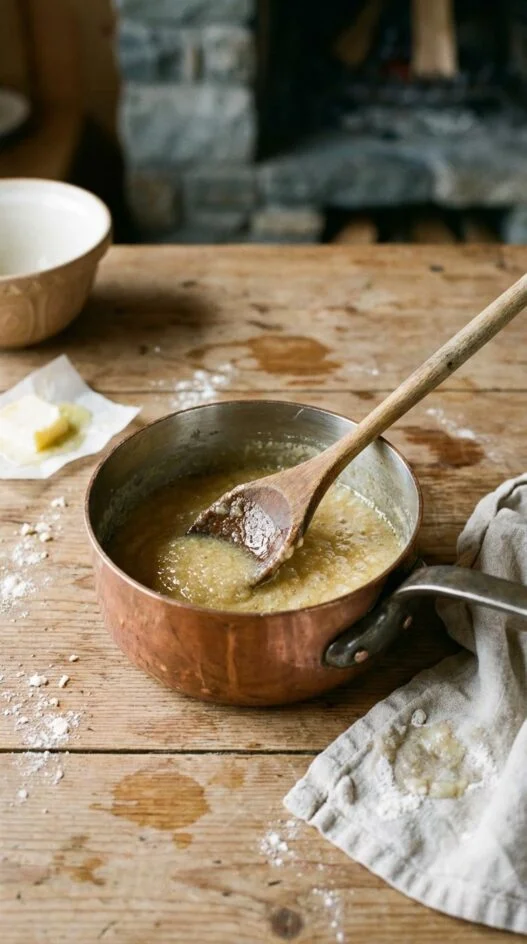
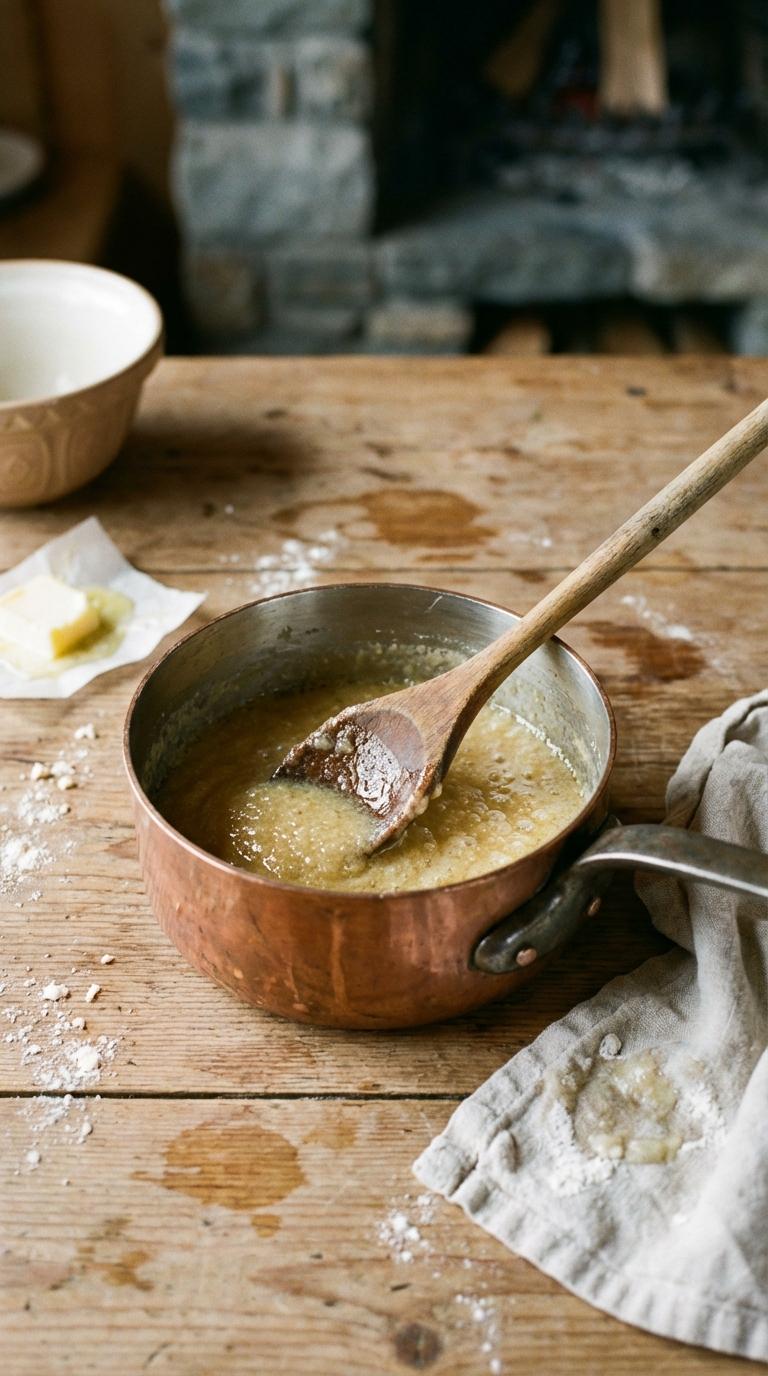
Melt butter in a small saucepan over medium heat until it foams. Add the flour all at once. Stir constantly with a whisk or wooden spoon to fully combine into a smooth paste with no dry spots. The ratio is always equal parts fat to flour by weight. This initial combination is critical for preventing lumps later.
Cook to Desired Color
For a white roux, cook stirring constantly for one to two minutes until the raw flour smell has cooked off but the roux is still pale. For a blond roux, continue cooking for three to four minutes until light golden and slightly nutty. For a brown roux, continue cooking for six to eight minutes, stirring constantly, until deep peanut-butter brown with a rich, toasted aroma. Stir constantly to prevent burning.
Use or Store
Remove from heat and use immediately in your recipe, or let it cool and store refrigerated for up to a week. Always add warm liquid to warm roux, or cold liquid to cold roux. Mixing temperatures that are the same prevents lumps. The darker the roux, the less thickening power it has, so you need more of a brown roux than a white roux to achieve the same thickness.
Print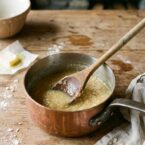
Basic: White, Blond and Brown Roux
- Total Time: 10 minutes
- Yield: 1/4 cup
Description
A roux is a cooked mixture of equal parts fat and flour that serves as the thickening base for sauces, soups, and gravies. It is one of the most fundamental techniques in French cooking. By varying how long you cook it — white, blond, or brown — you control both the thickening power and the flavor.
Ingredients
- 2 tablespoons unsalted butter
- 2 tablespoons all-purpose flour
Instructions
- Melt the butter in a small saucepan over medium heat until it foams.
- Add the flour all at once. Stir constantly with a whisk or wooden spoon to fully combine into a smooth paste with no dry spots.
- For a white roux (strongest thickening, mildest flavor): Cook, stirring constantly, for 1-2 minutes until the raw flour smell has cooked off but the roux is still pale. Use for bechamel and white sauces.
- For a blond roux (moderate thickening, nutty flavor): Continue cooking for 3-4 minutes until the roux turns a light golden color and smells slightly nutty. Use for veloutés and light gravies.
- For a brown roux (least thickening, deepest flavor): Continue cooking for 6-8 minutes, stirring constantly, until the roux turns a deep peanut-butter brown and has a rich, toasted aroma. Use for gumbo and dark Cajun dishes.
- Remove from heat and use immediately in your recipe, or let it cool and store refrigerated for up to a week.
Notes
- The ratio for a roux is always equal parts fat to flour by weight. Two tablespoons of each will thicken about 1 cup of liquid into a medium-consistency sauce.
- Stir constantly to prevent burning — once a roux burns, it turns bitter and must be discarded.
- Always add warm liquid to a warm roux, or cold liquid to a cold roux. Mixing temperatures that are the same prevents lumps.
- The darker the roux, the less thickening power it has, so you will need more of a brown roux than a white roux to achieve the same thickness.
- Category: Main Course
- Cuisine: French
Nutrition
- Serving Size: 1/4 cup (the whole batch)
- Calories: 260
- Sugar: 0
- Sodium: 5
- Fat: 23
- Carbohydrates: 12
- Fiber: 0
- Protein: 2
Frequently Asked Questions
What’s the difference between white, blond, and brown roux?
White roux is barely cooked and has the strongest thickening power with mildest flavor. Blond roux is cooked until golden with nutty flavor. Brown roux is cooked until deep brown with toasted flavor but the least thickening power. Use the right one for your dish.
Why do I need to stir a roux constantly?
Constant stirring prevents burning. Once a roux burns, it turns bitter and must be discarded. There’s no saving burnt roux. The flour needs to cook evenly throughout, which only happens with constant motion.
How do I prevent lumps when adding liquid to roux?
Always add warm liquid to warm roux, or cold liquid to cold roux. Mixing temperatures that are the same prevents lumps. Also, add the liquid gradually while whisking constantly, especially at first.
If You Liked This Recipe, You’ll Love These
- Stove Top Mac and Cheese
- Warming Winter Soup – Leek and Potato Velouté
- Corn Chowder from a Vermont Kitchen
- Croque Madame – French Ham, Cheese and Egg Sandwich