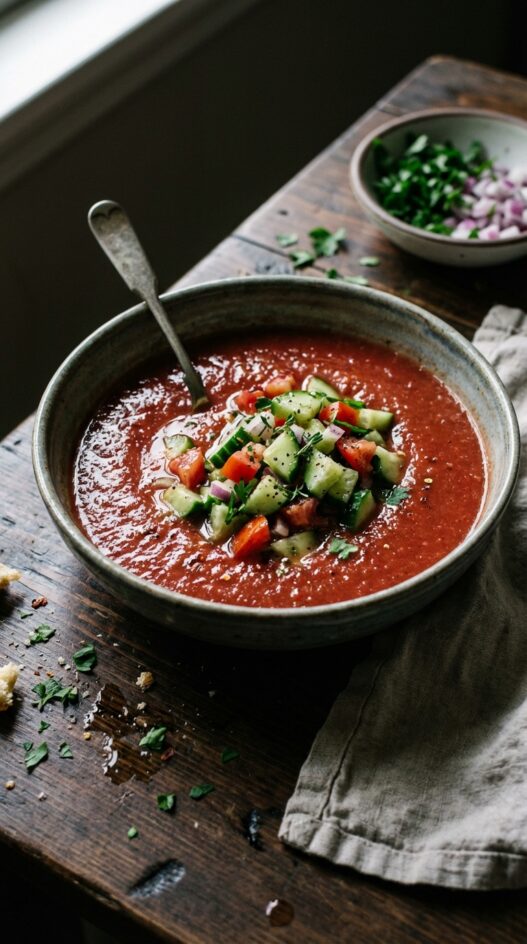
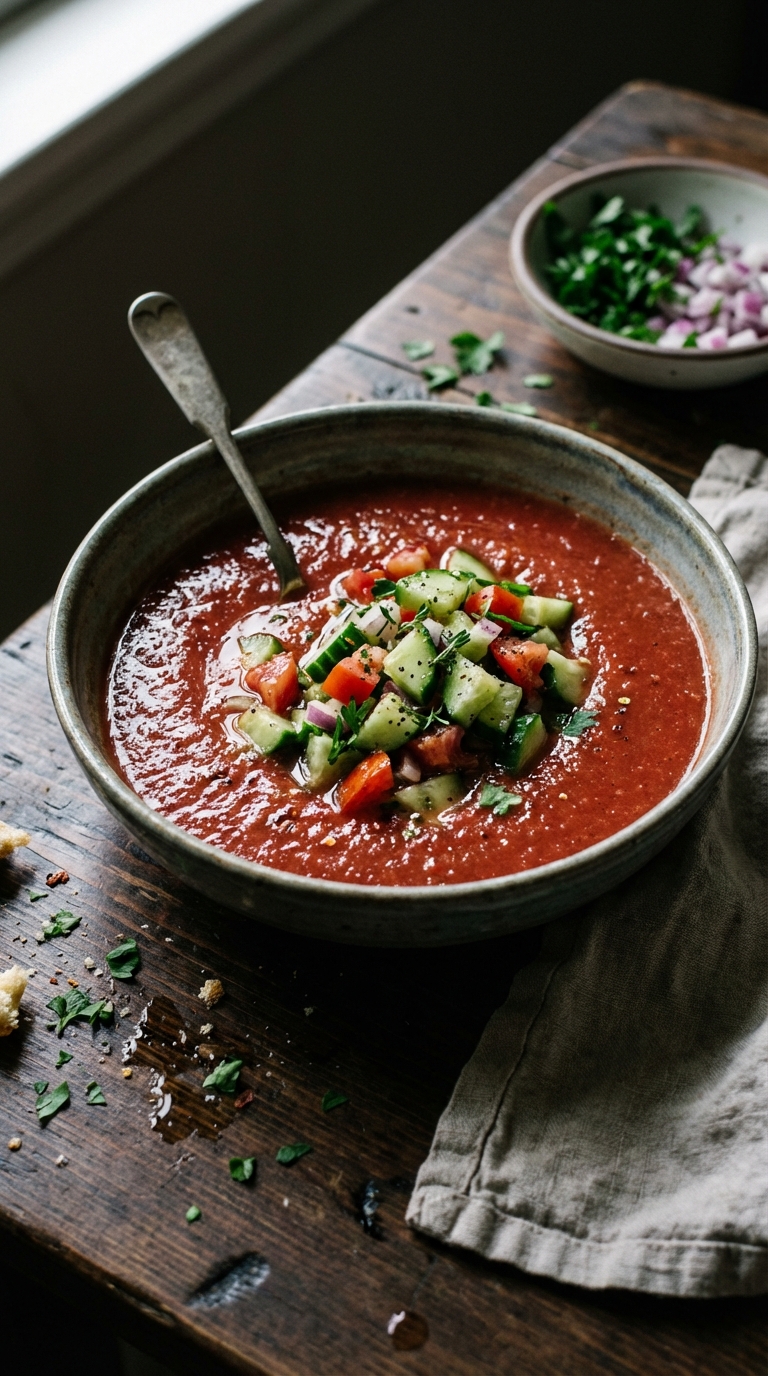
Ah, a bowl of cold and spicy gazpacho. The answer to a soup lover’s summer woes, when traditional warm soups are too hot for the heat but you’re craving a simple soup from the season’s fresh vegetables.
Gazpacho is a simple, yet often overlooked, summer favorite. Made from fresh tomatoes, vegetables, herbs, and spices, it is an easy (only 15 minutes!) recipe that is always a crowd pleaser.
Ready for a delicious, and ridiculously simple, summer gazpacho? Let’s get to it!
What is gazpacho and where does it originate?
Gazpacho is a cold raw tomato and vegetable soup that is cool and refreshing, and is typically served in Spain and Portugal in the warm summer months. Traditional gazpacho is a tomato base and includes garlic, onion, vinegar, oil, and salt but can also include cucumber, cream, fruit, and other produce.
Though the Southern Spanish state of Andalusia (which is home to the cities Seville and Grenada) is most typically thought of as the home of modern gazpacho, the basis for the cold soup actually originated in Ancient Rome and was brought to current day Spain.
How do you make gazpacho?
Gazpacho is a super simple cold soup that requires very little preparation–and no cooking! It can be made in as little as 15 minutes, and most of that time is actually spent cutting vegetables.
First, the fruit and vegetables are collected and cut into small pieces (size doesn’t typically matter, just a size that is easy to blend later). The produce, oil, vinegar, herbs, and spices are then added to a blender and pulsed until desired consistency. Some gazpachos are served thin as a soup, and other are chunky with pieces of chewable vegetables throughout. Both are delicious and I recommend trying both ways to see which you prefer.
To make gazpacho even easier, you can use strained tomatoes in place of fresh.
After blending, the soup can be served immediately at room temperature, but typically it is chilled and served cold with a side of bread and is sometimes served in small drinkable glasses. Gazpacho (sometimes referred to as “gaspacho”) is the perfect cool and refreshing soup for warm weather months!
Gazpacho variations
There are many different variations of traditional Spanish gazpacho, including:
Arranque roteno: a thicker and creamier version of gazpacho that uses less water and oil, which was essential in times of drought
Cojondongo: a mixture of vegetables and bread that is served as both light soup and with less liquid as a salad (similar to panzanella), typically made in the Extremadura region of Spain
Gazpacho Manchego: made in the La Macha region, this gazpacho includes meat and and bread and is served warm
Gazpacho Castilliano: hailing from the Castilla region, this type of gazpacho is served cold but is chunkier than other versions because it is filled with pieces of fresh vegetables
Salmorejo: a thick and creamy bread and tomato puree from the Cordoba region of Andalusia, Spain
Many other cultures around the world have cold soups similar to gazpacho such as the bread and tomato soup arjamolho in Portugal, beet and vegetable borscht from Russia and the Ukraine, and the cold or hot tomaattikeitto from Finland.
More modern versions of gazpacho include creative ingredients such as watermelon, avocado, and cucumber (which I used in this Simple Spicy Gazpacho recipe). Get creative with gazpacho and use fresh vegetables such as leeks, fennel, or spicy peppers and switch up the color by using gold or green tomatoes.
Gazpacho is about as easy soup recipe as you can make, however there are a few simple tools that will make preparing this cold soup even easier. First, a good set of quality kitchen knives is key for cutting vegetables. Second, a good traditional quality blender is necessary to puree vegetables, however a handheld immersion blender can also be used.
I also like to cut corners on time, but not on freshness, so at times I use strained tomatoes instead of fresh. This also allows you to enjoy gazpacho and other tomato soups throughout the whole year!
And finally, a large soup pot to store and chill the gazpacho. A great soup pot is a kitchen essential in the fall and winter cold weather months, but making cold gazpacho allows you to utilize it in the summer heat as well!
Craving more simple soup recipes? Check out our vegan Roasted Tomato Leek Soup and Vegan Roasted Corn Potato Soup recipes, both use seasonal summer vegetables and are great for freezing and eating into the fall and winter.
Did you make this Simple Spicy Gazpacho? Leave a comment below and rate the recipe to let us know how it turned out. Save this gazpacho recipe for later by pinning to your favorite soup Pinterest board and make sure to tag me on Fork in the Road’s Instagram to show me your gazpacho creations!
Print
Easy, Spicy Gazpacho
- Total Time: 20 minutes
- Yield: Serves 4
- Diet: Vegetarian, Gluten-Free
Description
A vibrant, chilled soup perfect for a hot day. Easy to make and bursting with fresh flavor.
Ingredients
- 1 English cucumber (cut in 1/2 inch pieces)
- 1 cups (237 ml) roma tomato
- 1 cups (237 ml) red onion
- 1 cups (237 ml) chopped parsley
- 1/4 cups (59 ml) fresh thyme
- 1 lemon
- 1/4 teaspoon kosher salt
- 1/4 teaspoon ground black pepper
- 1 quarts (946 ml) strained tomatoes
- 2 teaspoons balsamic vinegar
- 2 cups (473 ml) bell pepper
- 1/2 teaspoon crushed red pepper flakes
Instructions
For Cucumber Salad Garnish
- Combine 1/2 cup of cut cucumber, 1/2 cup of cut tomato, 1/4 cup of red onion, 1/4 cup of parsley, 1/8 cup of fresh thyme, 1/2 cup of lemon juice, 1/8 teaspoon of salt, and 1/8 teaspoon of pepper in a medium bowl.
- Mix to combine and set aside.
For Simple Spicy Gazpacho
- In a large soup pot, add strained tomatoes, balsamic vinegar, bell pepper, and crushed red pepper flakes with remaining cucumber, tomato, red onion, parsley, lemon juice, salt, and pepper.
- Blend with an immersion blender or a traditional blender until smooth.
- Adjust spices to taste and chill for a minimum of 2 hours.
To serve
- Serve chilled soup with Cucumber Salad Garnish on top.
Notes
- For a smoother gazpacho, remove the skins from the tomatoes and bell peppers before blending.
- If you prefer a less spicy gazpacho, reduce the amount of crushed red pepper flakes or omit it altogether.
- Leftover gazpacho can be stored in an airtight container in the refrigerator for up to 3 days; the flavors will deepen over time.
- Prep Time: 20 minutes
- Category: Soup
- Method: No-Cook
- Cuisine: Spanish
Nutrition
- Serving Size: 1 cup
- Calories: 150
- Sugar: 5
- Sodium: 200
- Fat: 5
- Saturated Fat: 1
- Unsaturated Fat: 3
- Carbohydrates: 25
- Fiber: 5
- Protein: 3
Frequently Asked Questions
Can I use fresh tomatoes instead of strained tomatoes for this gazpacho?
Yes, you can use fresh ripe tomatoes, but the consistency may vary; strained tomatoes provide a smoother texture.
What type of cucumber works best for this Easy, Spicy Gazpacho?
English cucumbers are recommended because they have fewer seeds and a thinner skin, making them ideal for a smooth soup.
How can I adjust the spiciness of the gazpacho?
You can increase the spiciness by adding more hot peppers or a dash of hot sauce, depending on your heat preference.
If You Liked This Recipe, You’ll Love These