The complaint about natural wine is always delivered as a compliment: “Lovely stuff and so alive. Drink it now”. Underneath sits a real charge: that these are wines for the moment because no added sulfur means no protection, no filtration means no stability. Natural wines are seen as charming as fragile, and finished within a few years. It is not a small accusation and it is hard to test, because almost nobody holds these bottles long enough to find out. But there are places that do.
Taubenkobel, in Schützen am Gebirge, offers three pairings alongside its menu: four glasses of wine, five glasses of house-made non-alcoholic drinks, and a third line that reads simply “5 glasses rare wine pairing Gut Oggau.” That third option is a flight of older vintages from a biodynamic estate ten minutes up the road.
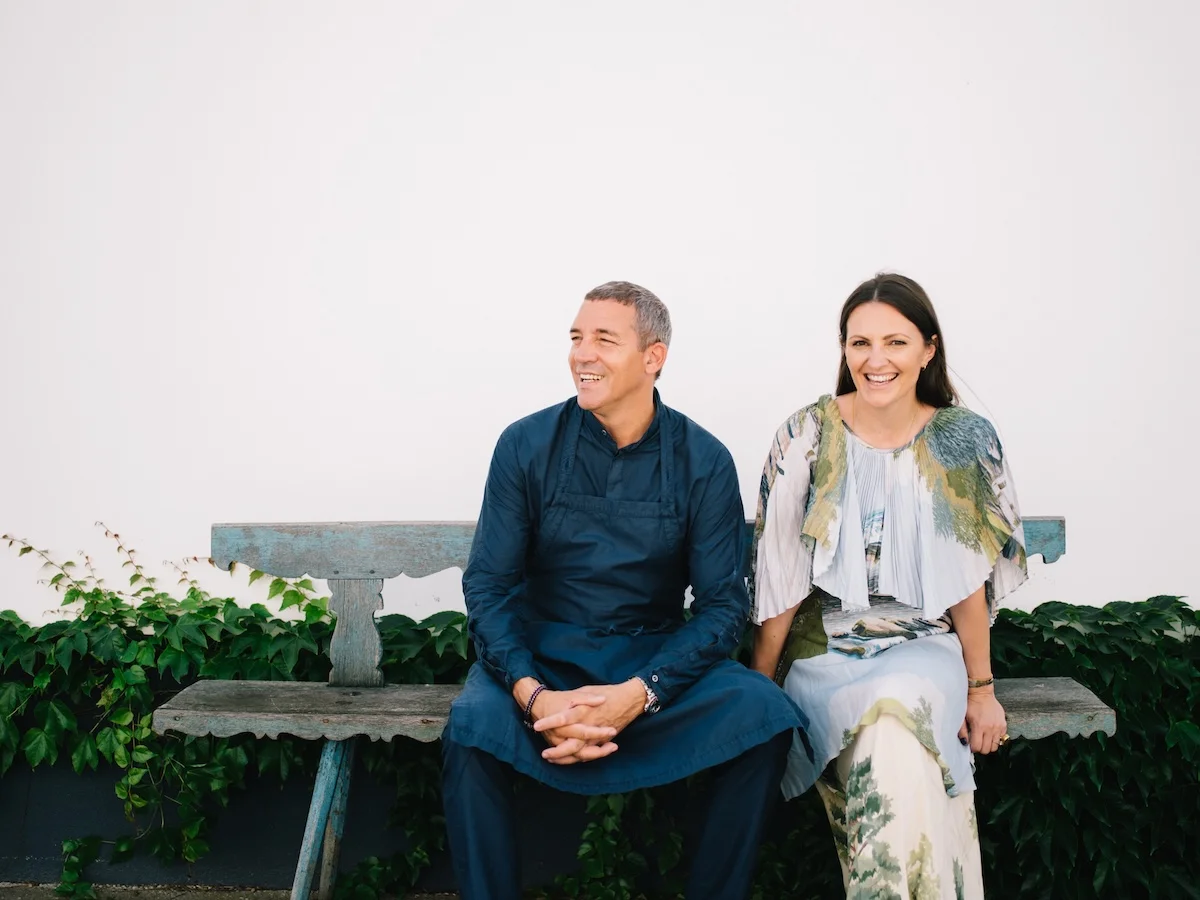
The two houses are family. Gut Oggau was founded in 2007 by Eduard Tscheppe and Stephanie Tscheppe, and Stephanie is the sister of Barbara Eselböck, who runs Taubenkobel with her husband, the chef Alain Weissgerber.
Here is what the flight did to my assumptions.
The Bottle That Settled It
The wine was Atanasius 2012.
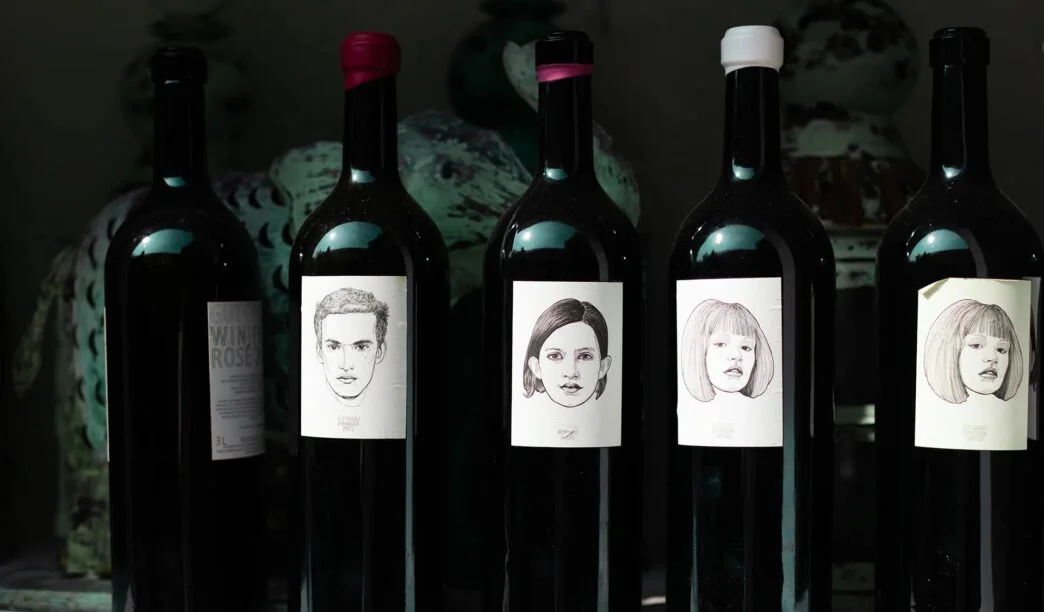
Gut Oggau sells wine differently from other wineries. There is no quality pyramid. Instead the estate invented a family: every bottle is a person, with a drawn face on the label and a biography of its own, arranged across three generations. The grandparents, Mechthild and Bertholdi, come from the oldest parcels. The parents, Timotheus, Josephine, Emmeram and Joschuari, come from riper sites and are denser. The young ones, Theodora, Winifred and Atanasius, come from younger vines, and the estate itself describes them as fresh, light-footed and easy to drink.
Atanasius is the house’s designated youngster, a Tuesday night bottle; this is why nobody cellars Atanasius.
But at fourteen years old, it had not merely survived. It was still juicy, the fruit intact, with a clean layer of tertiary notes laid over the top. The face on the label is a young man, but the wine inside had grown up.
If natural wine cannot age, the estate’s most casual bottle had just proved otherwise.
A White With No Excuse
But a red has tannins working for it. Fine. Consider a white.
An older Emmeram came later in the flight. Emmeram is Gewürztraminer, and aromatic whites are not supposed to last. The received wisdom is that they run on primary aroma and turn flabby and faintly bitter within a few years. This one also carried no added sulfur.
It was crisp. Not merely drinkable, but still holding tension through the middle of the palate, the varietal perfume softened into something more interesting than it would have been on release.
Taste It To Believe It
These bottles do not open on command. Poured, they give away very little, and an impatient drinker decides something is wrong. Then they start to move. Over ten minutes, twenty, an hour, the aromas arrive in sequence instead of all at once.
This is because the musts ferment spontaneously on the vineyard’s own yeasts, mostly in wooden casks of 500 to 1,500 liters, with eight to eighteen months on the lees. Bottling is unfined, unfiltered and without added sulfur. A wine built that way can seem closed at first and will keep developing for hours. That slowness is the same reason it is alive at fourteen: nothing was stripped out of it.
But the glass is the end of the story, not the beginning. To make wine of real quality without additives, you have to get two things right, and in order.
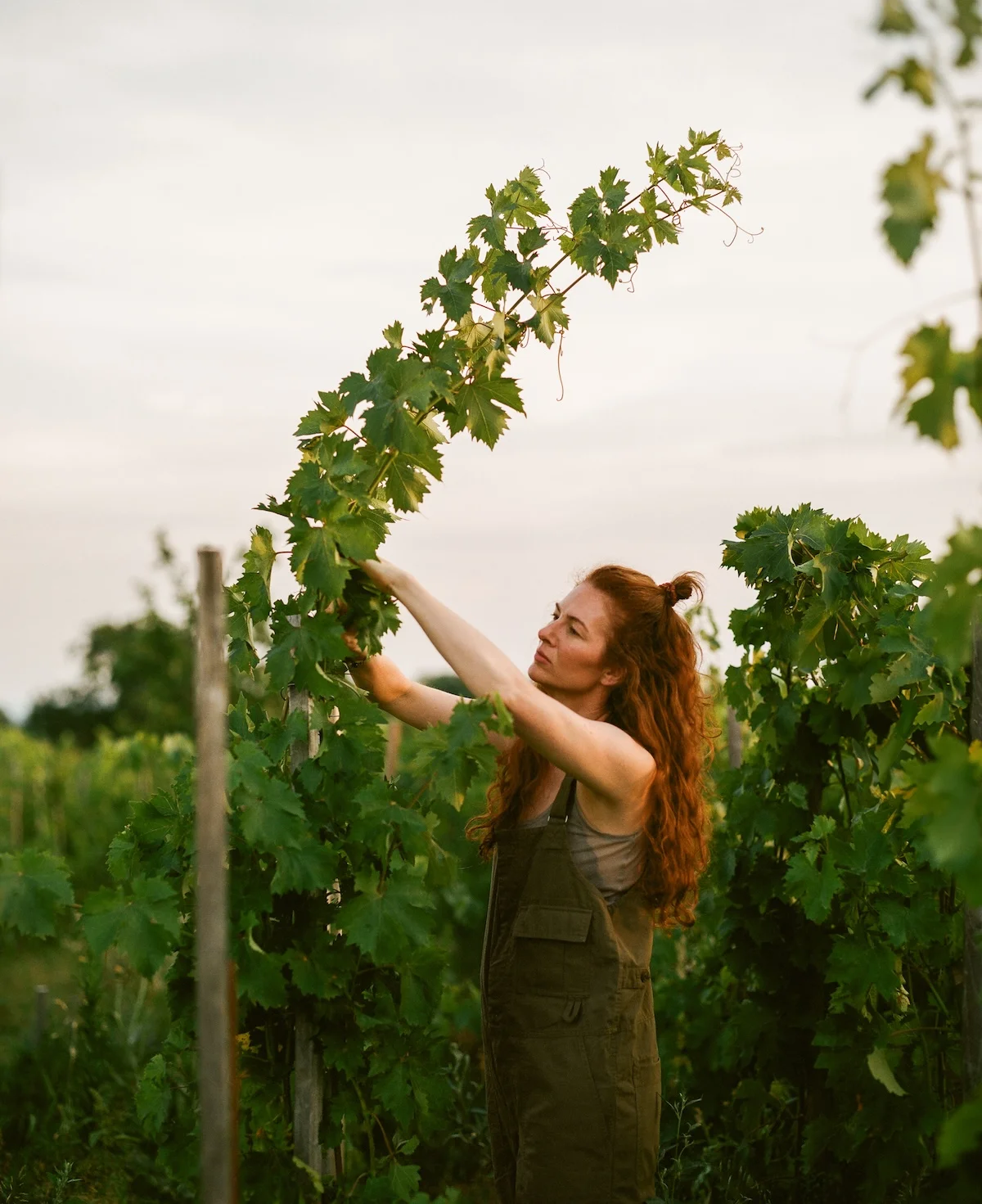
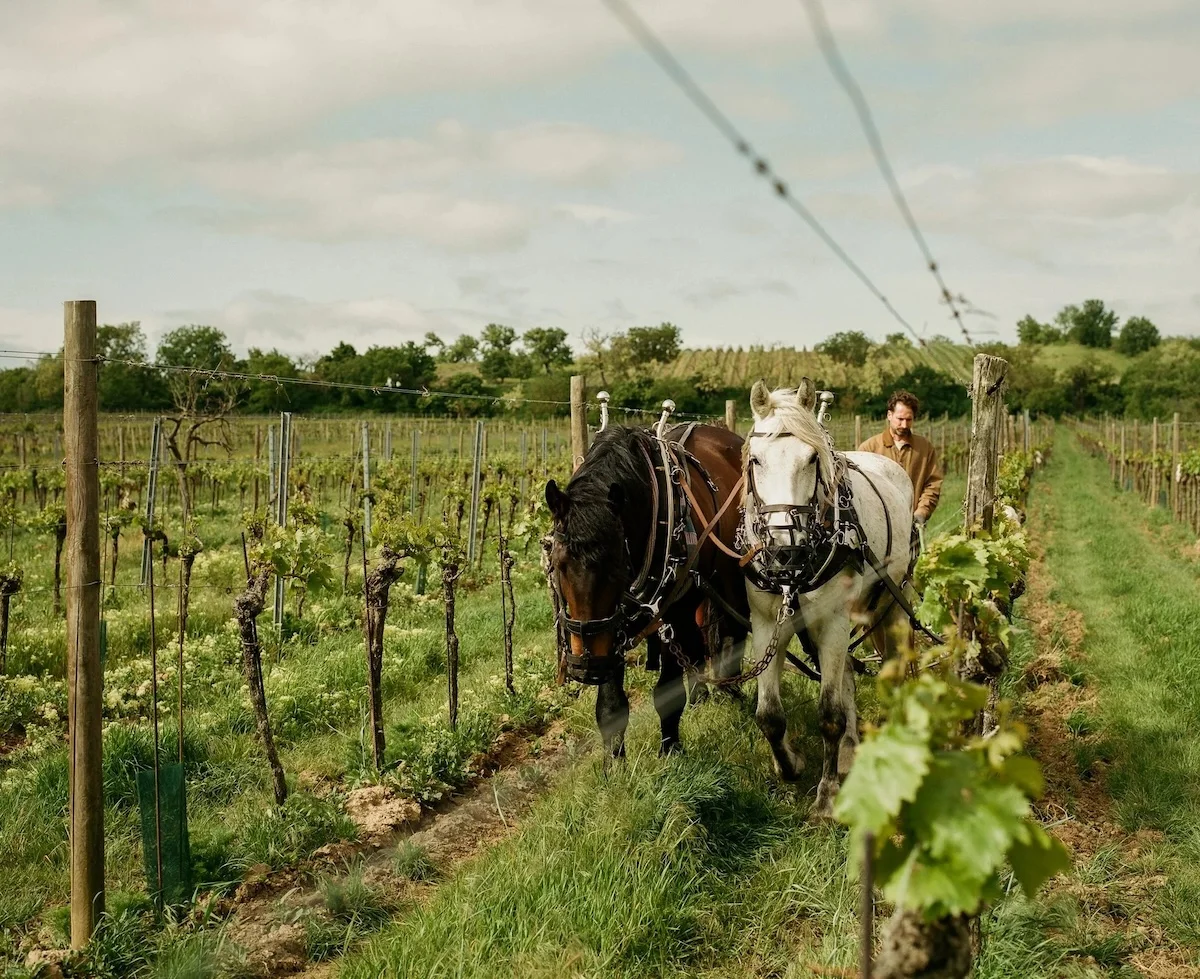
First the vineyard, because you cannot fix what you harvest. At Gut Oggau that means Demeter-certified biodynamics on every parcel, compost and preparations, low yields, hand harvesting, healthy grapes, and vines between thirty and sixty years old on the limestone and slate of the Leithaberg, with Lake Neusiedl moderating the temperature and stretching out the ripening. Then the cellar, where the job is the opposite of intervention. It is hygiene, pursued obsessively.
Conventional winemaking can mask both. Additives are a safety net: a fix for a stuck fermentation, a stabilizer, a filter, sulfur to hold the wine still at a convenient moment. Which raises a question I will leave open. If a wine made with nothing added can do this, where is the greater merit? In the cellar that can correct its way out of trouble, or in the one that has to be right the first time?
The Kitchen Dates Its Dishes, Too
Alain Weissgerber, named chef of the year in 2024 and holding two Michelin stars, makes the same argument. No smoke, no tweezers, no restless novelty. What arrives is composed and mature, and it reads the landscape it sits in: pikeperch from Lake Neusiedl, Pomeranian duck, potato with clay and nettle, apricot with thyme and lemon.
And every dish on the printed menu carries a year beside it. 2023. 2024. 2025. The kitchen dates its own work the way a winery dates bottles, and presents the menu as a collection built across its own vintages, older dishes kept on because they earned their place.
A kitchen that thinks in vintages, serving wines from a family arranged as generations. Both halves are saying the same thing: let the place speak, then get out of the way and let time do the rest.
So, can natural wine age? Absolutely. The better question is why we ever assumed that the wine with nothing added to it would be the one to fail.
Gut Oggau. Oggau am Neusiedler See, Burgenland, Austria. www.gutoggau.com
Taubenkobel. Hauptstraße 33, Schützen am Gebirge, Burgenland, Austria. www.taubenkobel.com