Few things taste of summer like a great, freshly made basil pesto. Every year, given the abundance of basil in the garden, I make a lot of it, and its grassy, garlicky and fragrant scent fills rooms and enhances appetites. Liking it quite powerful, I tend to use as much as I can in the days following the pesto-making session. Whatever seems too much ends up in the freezer, ready to be taken out and thrown on top of some pasta whenever I fancy some summer breeze out of season. I am usually quite faithful to the classic recipe of pesto alla genovese, which calls for Ligurian type basil, pine nuts, garlic, Ligurian extra virgin olive oil, and a mix of Parmigiano and pecorino cheese. However, sometimes I like to twist things a bit, maybe because I don’t have all the proper ingredients, or simply because I fancy a change –so, I go for different combinations of nuts and cheese. As for its usages, I enjoy it on pasta, especially linguine and trofie shape, but it works great also as a spread,on a slice of toasty bread, or as a salad dressing.
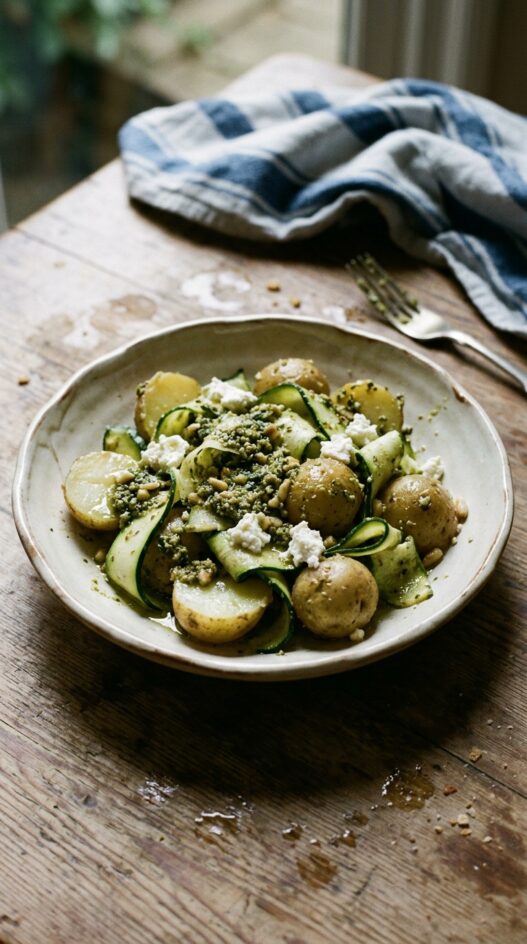
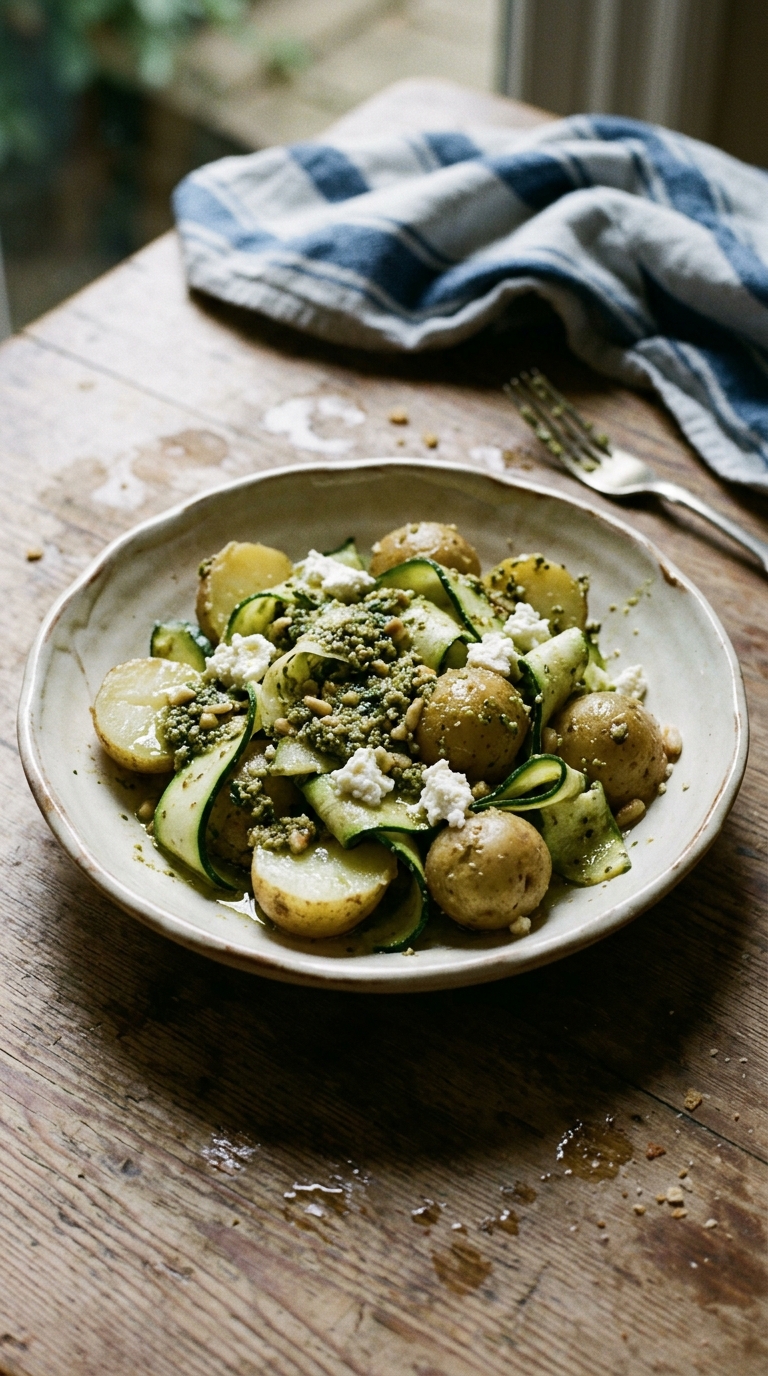
In this case, a classic pesto recipe becomes a great seasoning to a simple salad made with boiled new baby potatoes and raw zucchini ribbons –one of the best ways to enjoy very fresh zucchini. The combination of textures and flavors between sweet, soft potatoes, crisp zucchini, savory grassy pesto and some salty ricotta salata works just great, and results in a well balanced dish, filling yet fresh and light. Seasonal, healthy and satisfying.
Print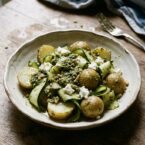
Summer-y Pesto Potato Salad with Zucchini Ribbons
- Total Time: 35 minutes
- Yield: 4 servings
Description
This summery salad combines boiled baby potatoes and raw zucchini ribbons with a fragrant basil pesto, topped with salty ricotta salata for a fresh and satisfying dish.
Ingredients
For the Pesto
- 4 cups fresh basil leaves
- 2 small chunks Parmigiano cheese
- 1/2 garlic clove, minced
- Pinch of salt
- 2 tbsp pine nuts
- 1/4 cup (60 ml) extra virgin olive oil, plus more to taste
For the Salad
- 500 grams baby new potatoes
- 2 medium zucchinis, sliced into ribbons
- 1/2 tsp fine grain sea salt
- 2 tbsp extra virgin olive oil
- 100 grams ricotta salata, crumbled
- fresh basil leaves, for garnishing
Instructions
- To make the pesto, place basil, Parmigiano, garlic, salt, and pine nuts in a blender or mortar and pestle. Pulse or crush until a coarse mixture forms.
- Slowly add the olive oil while blending or stirring until the pesto reaches your desired consistency. Adjust seasoning with more salt or olive oil if needed.
- Boil the baby new potatoes in salted water for about 15-20 minutes, or until tender. Drain and let them cool slightly.
- Slice the zucchinis into thin ribbons using a vegetable peeler or mandoline.
- In a large bowl, combine the potatoes and zucchini ribbons, and season with the extra virgin olive oil and fine grain sea salt.
- Add the pesto and toss gently to coat everything evenly.
- Top the salad with crumbled ricotta salata and fresh basil leaves before serving.
Notes
- For a twist, try using different nuts or cheese in the pesto.
- Store leftover pesto in the freezer for future use.
- This salad is best enjoyed fresh but can be stored in the refrigerator for up to 2 days.
- Prep Time: 15 minutes
- Cook Time: 20 minutes
- Category: Salad
- Cuisine: Italian
Nutrition
- Serving Size: 1 serving
- Calories: 320
- Sugar: 3
- Sodium: 220
- Fat: 20
- Carbohydrates: 28
- Fiber: 4
- Protein: 8
- Cholesterol: 10
If You Liked This Recipe, You’ll Love These
- Authentic Swabian Potato Salad (Schwäbischer Kartoffelsalat)
- Spanish Potato Salad with Boquerones and Tuna
- Italian-Style Potato Salad with Swiss Chard
- Potato Salad with Crème Fraîche
Frequently Asked Questions
Why are the zucchinis sliced into ribbons rather than rounds or chunks?
I use a peeler or mandoline to create thin zucchini ribbons that stay raw or just barely wilted from the warm potatoes. Ribbons have a delicate texture that contrasts with the creamy potatoes and coat evenly with pesto, while rounds or chunks would stay firmer and not integrate as well into the salad.
Should the pesto be made in a blender or a mortar and pestle?
Either works — the mortar gives a coarser, more textured pesto; the blender produces a smoother result. Personally, I like pesto “quite powerful” with plenty of garlic and Parmigiano, so don’t under-season.
Can I freeze leftover pesto from this recipe?
Yes — store leftover pesto in the freezer for future use. I routinely freeze batches from my summer basil harvests to enjoy out of season, particularly over pasta.