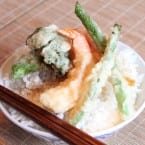
Description
Enjoy a light and crispy seafood and vegetable tempura, featuring a delicate batter and a variety of fresh ingredients, perfect for a delightful Japanese meal.
Ingredients
Units
Scale
- 1 egg yolk
- 2 cups (480 ml) ice water
- 1/8 tsp baking soda
- 1 2/3 cups (400 ml) flour, sifted
- Canola oil for deep-frying
- 1 cup (240 ml) dashi broth (fish stock)
- 3 tbsp soy sauce
- 2 tbsp sugar
- Shrimp, peeled and deveined
- Sweet potatoes, thinly sliced
- Carrots, thinly sliced
- Green beans
- Broccoli
- Asparagus
Instructions
- De-vein and peel the shrimp, removing all of the shell except for the last part with the tail.
- Slice off the tips of the tails, pressing out the liquid. (Any liquid will cause the oil to sputter while frying.)
- Make three short slits across the belly of the peeled shrimp and open the cuts with your hands to straighten the body. (This will prevent the shrimp from curling as it cooks.)
- Peel the sweet potato and cut it into 1/4-inch thick medallions. Soak the medallions in water for 5 minutes to remove the bitterness. Dry the medallions thoroughly.
- Prepare the dipping sauce by mixing the fish stock, soy sauce, sugar and mirin in a saucepan. Bring the sauce to a boil and then let it simmer for a couple of minutes.
- Remove the sauce from the heat and let it cool to room temperature.
- Prepare the batter by mixing the egg yolk with the ice-cold water. Mix the baking soda with the sifted flour.
- Add the flour mixture to the egg yolk and water, quickly and lightly stirring it until it is just blended, being careful not to over-mix it. The batter should be runny and lumpy.
- Place the bowl of batter in an ice water bath to keep it cold while you are frying the tempura.
- Heat the oil in a large pan or a wok. For vegetables, the oil should be 320 degrees; for seafood it should be 340 degrees. It is more difficult to maintain a steady temperature and produce consistent tempura if you don’t have a thermometer, but it can be done. You can test the oil by dropping a piece of batter into the hot oil. If it sinks a little bit and then immediately rises to the top, the oil is ready.
- Start with the vegetables, such as sweet potatoes, that won’t leave a strong odor in the oil. Dip them in a shallow bowl of flour to lightly coat them and then dip them into the batter. Slide them into the hot oil, deep frying only a couple of pieces at a time so that the temperature of the oil does not drop.
- Place finished tempura pieces on a wire rack so that excess oil can drip off. Continue frying the other items, frequently scooping out any bits of batter to keep the oil clean and prevent the oil (and the remaining tempura) from getting a burned flavor.
- Serve the tempura immediately. It is best when it is crispy and piping hot.
Notes
- Keep the batter cold to ensure a crispy texture.
- Do not over-mix the batter to maintain its lightness.
- Thinly slice vegetables for even cooking.
- If making a large batch, change the oil if it becomes dark or develops a strong flavor.
- Serve with rice and dipping sauce, or over rice for tempura donburi.
- Prep Time: 30 minutes
- Cook Time: 15 minutes
- Category: Main Course
- Cuisine: Japanese
Nutrition
- Serving Size: 1 serving
- Calories: 450
- Sugar: 8
- Sodium: 1200
- Fat: 20
- Carbohydrates: 60
- Fiber: 5
- Protein: 15
- Cholesterol: 70