
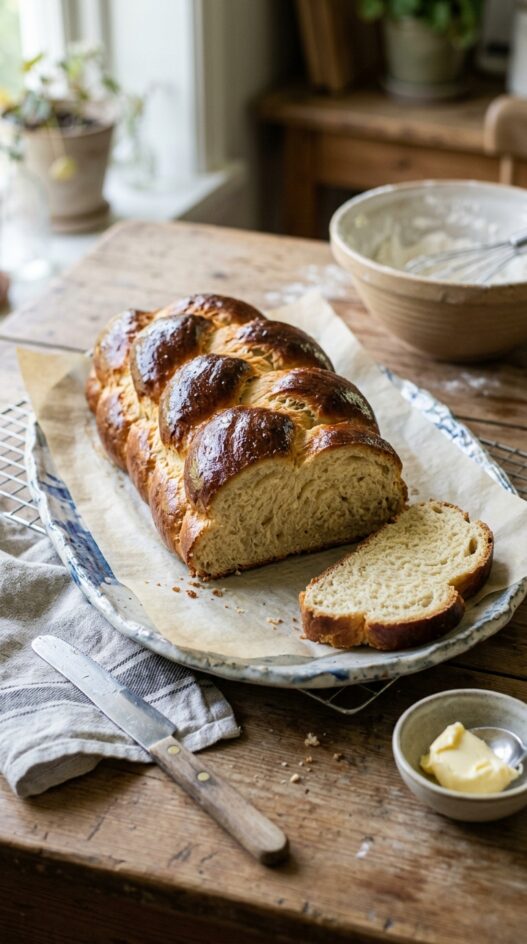
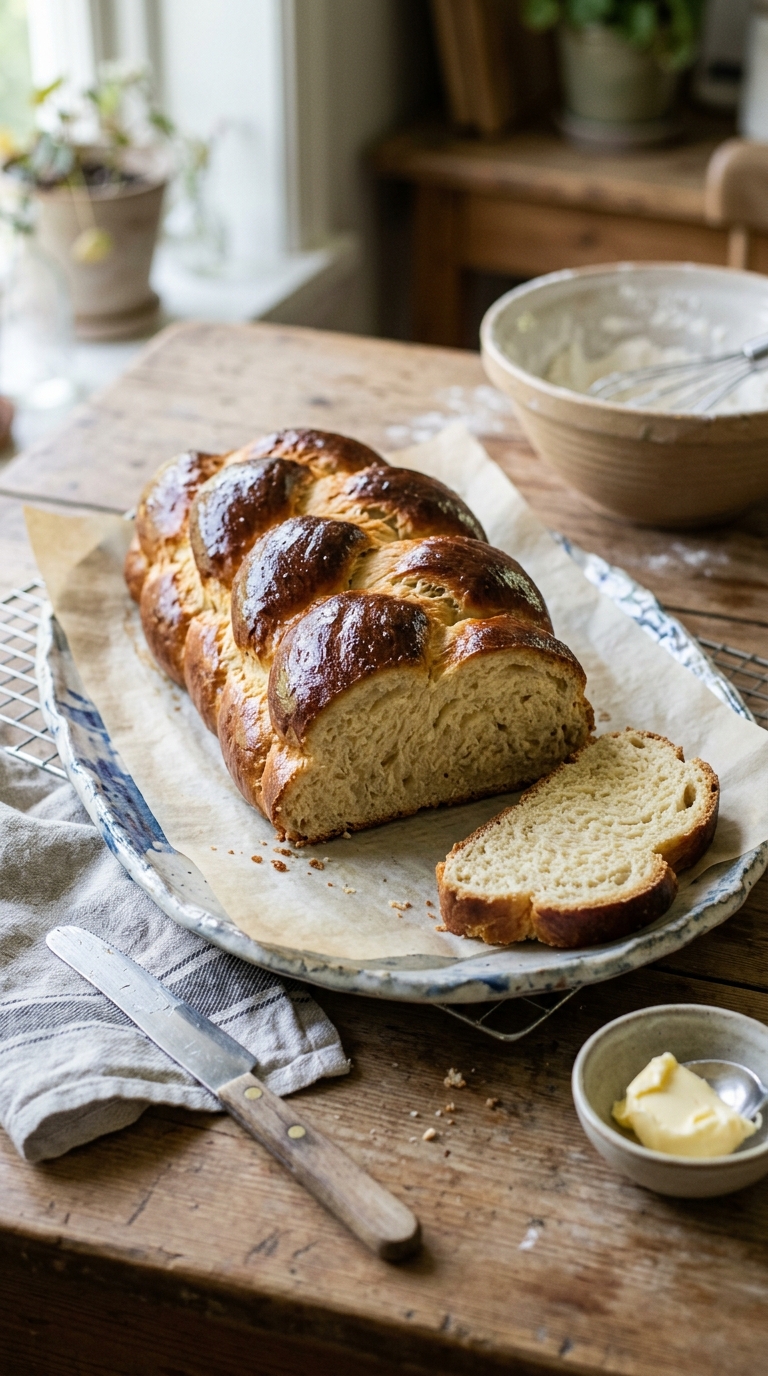
I’m excited to share a traditional family recipe for kalács, a sweet braided bread that’s deeply rooted in Hungarian heritage. This isn’t just any bread; it’s a recipe passed down from mothers to daughters, a symbol of warmth and family gatherings. I can’t quite remember the first time I tasted it, but I vividly recall where: at my grandmother’s house. She would bake it with such care, putting her heart and soul into every loaf, and somehow, it showed in the tender, pillowy texture that I’ve yet to fully recreate.
Kalács, pronounced “ko-laach,” has a long history in Hungary and is a staple at family celebrations. While it can be enjoyed year-round, it’s especially meaningful during holidays, where its braided shape and soft, sweet crumb hold a special symbolism.
Making kalács from scratch is a bit of an art, but it’s also a wonderful ritual. The process of kneading the dough, letting it rise, and braiding it brings back memories of generations before me. It’s a chance to connect with tradition, to bring a piece of my heritage to the table, and to savor a bread that’s not just food but a piece of my family’s story.
Why I Love This:
Family recipes are an obsession of mine, and this is such a beautiful traditional recipe that weaves together holidays, family and culture in a unique way. It is also absolutely delicious!
– Kalle Bergman
How to Make Kalács – Braided Sweet Hungarian Bread
Bring the Ingredients to Room Temperature
Remove the milk, butter, eggs, and yeast from the refrigerator about 1 hour before beginning. The ingredients should be at room temperature, and the milk should be lukewarm rather than hot.
Proof the Yeast
Pour 1/3 cup plus 1 tablespoon (100 ml) of the lukewarm milk into a small bowl. Add the 1/2 teaspoon sugar and crumble in the fresh yeast. If using active dry yeast, sprinkle it over the milk.
Stir gently and leave in a warm place for 10–15 minutes, until the mixture looks creamy and foamy.
Mix the Wet Ingredients
In a large mixing bowl, whisk the egg with the remaining 3 tablespoons plus 2 teaspoons sugar and the salt.
Add the proofed yeast mixture and the remaining 1 1/4 cups (300 ml) lukewarm milk. Whisk briefly to combine.
Begin the Dough
Add approximately 3 1/2 cups (430 g) of the flour. Mix vigorously with a sturdy wooden spoon or the dough hook of a stand mixer until no dry patches remain. The mixture will be very soft at this stage.
Add the Butter
Add the melted butter gradually, a little at a time, mixing thoroughly after each addition.
Continue mixing for approximately 8–10 minutes. The dough should become smoother, shinier, and begin pulling away from the sides of the bowl.
Add the Remaining Flour and Knead
Gradually add the remaining flour while kneading. Knead by hand for 10–15 minutes, or with a dough hook for 7–10 minutes, until the dough is smooth, elastic, and slightly glossy.
The finished dough should be soft and supple. It may feel slightly tacky, but it should not stick heavily to your hands. Depending on the flour and humidity, you may not need every last spoonful of flour — too much flour can make the bread dry.
First Rise
Shape the dough into a ball and return it to the mixing bowl. Cover with a clean kitchen towel and place in a warm, draft-free area.
Let rise for 30–40 minutes, or until approximately doubled in size. One traditional method is to warm the oven very briefly, turn it off completely, and place the covered bowl inside.
Divide the Dough
Line one large or two standard baking sheets with parchment paper.
Gently press the risen dough down to release excess air. Turn it onto a lightly floured work surface and knead it briefly. Divide the dough into two equal portions — one half for the braided loaf, the other half for eight brioche rolls.
Shape the Braided Loaf
Divide the first half of the dough into three equal pieces. Roll each piece into a rope approximately 16–18 inches (40–45 cm) long.
Arrange the ropes next to one another and pinch them together firmly at one end. Braid the ropes, keeping the braid even but not overly tight. Pinch the ends together and tuck both ends underneath the loaf. Transfer the braid to the prepared baking sheet.
Shape the Brioche Rolls
Divide the remaining half of the dough into eight equal pieces. Roll each piece into a rope approximately 10–12 inches (25–30 cm) long.
Shape each rope into a loose coil, knot, or small spiral. Tuck the end underneath so the roll holds its shape. Place the rolls on the prepared baking sheet, leaving several inches between them.
Second Rise
Cover the shaped loaf and rolls loosely with a clean kitchen towel. Let rise in a warm place for 15–20 minutes — they should look noticeably puffed but do not need to double.
Meanwhile, preheat the oven to 360°F (180°C).
Apply the Egg Wash
Brush the braided loaf and rolls generously with the beaten egg. Be careful not to press down on the risen dough.
Bake
Bake the brioche rolls for approximately 20–25 minutes, until deeply golden. Bake the braided loaf for approximately 30–40 minutes, until golden brown and cooked through.
If baking everything at the same time, begin checking the rolls after 20 minutes and remove them when ready, continuing to bake the loaf as needed. If the loaf browns too quickly, cover it loosely with aluminum foil for the remainder of the baking time.
The loaf is done when it sounds hollow when tapped underneath or reaches an internal temperature of approximately 190°F (88°C).
Cool
Transfer the loaf and rolls to a wire rack. Allow the bread to cool for at least 30 minutes before slicing — the crumb will continue to set as it cools.
Kalács – Braided Sweet Hungarian Holiday Bread
- Total Time: 1 hour 15 mins
- Yield: 1 medium braided loaf and 8 brioche rolls
Description
Kalács is a traditional Hungarian braided bread, beloved for its soft, fluffy texture and delicious flavor. Made with milk, butter, and a touch of sweetness, kalács is perfect for special occasions, family gatherings, or holiday feasts.
Ingredients
For the dough:
- 1 2/3 cups (400 ml) whole milk, lukewarm, divided
- 1/2 teaspoon granulated sugar, for proofing the yeast
- 25 g fresh yeast, crumbled, or 2 1/4 teaspoons (7 g) active dry yeast
- 1/4 cup (60 g) unsalted butter, melted and cooled slightly
- 5 1/4 cups (650 g) all-purpose flour, sifted, divided
- 1 large egg, at room temperature
- 3 tablespoons plus 2 teaspoons (approximately 45 g) granulated sugar
- 1/4 teaspoon fine salt
For the egg wash:
- 1 large egg, beaten
Instructions
Bring the Ingredients to Room Temperature
Remove the milk, butter, eggs, and yeast from the refrigerator about 1 hour before beginning. The ingredients should be at room temperature, and the milk should be lukewarm rather than hot.
Proof the Yeast
Pour 1/3 cup plus 1 tablespoon (100 ml) of the lukewarm milk into a small bowl. Add the 1/2 teaspoon sugar and crumble in the fresh yeast. If using active dry yeast, sprinkle it over the milk. Stir gently and leave in a warm place for 10–15 minutes, until the mixture looks creamy and foamy.
Mix the Wet Ingredients
In a large mixing bowl, whisk the egg with the remaining 3 tablespoons plus 2 teaspoons sugar and the salt. Add the proofed yeast mixture and the remaining 1 1/4 cups (300 ml) lukewarm milk. Whisk briefly to combine.
Begin the Dough
Add approximately 3 1/2 cups (430 g) of the flour. Mix vigorously with a sturdy wooden spoon or the dough hook of a stand mixer until no dry patches remain. The mixture will be very soft at this stage.
Add the Butter
Add the melted butter gradually, a little at a time, mixing thoroughly after each addition. Continue mixing for approximately 8–10 minutes. The dough should become smoother, shinier, and begin pulling away from the sides of the bowl.
Add the Remaining Flour and Knead
Gradually add the remaining flour while kneading. Knead by hand for 10–15 minutes, or with a dough hook for 7–10 minutes, until the dough is smooth, elastic, and slightly glossy. The finished dough should be soft and supple. It may feel slightly tacky, but it should not stick heavily to your hands. Depending on the flour and humidity, you may not need every last spoonful of flour. Avoid adding more than necessary, as too much flour can make the bread dry.
First Rise
Shape the dough into a ball and return it to the mixing bowl. Cover with a clean kitchen towel and place in a warm, draft-free area. Let rise for 30–40 minutes, or until approximately doubled in size. One traditional method is to warm the oven very briefly, turn it off completely, and place the covered bowl inside.
Divide the Dough
Line one large or two standard baking sheets with parchment paper. Gently press the risen dough down to release excess air. Turn it onto a lightly floured work surface and knead it briefly. Divide the dough into two equal portions. One half will be used for the braided loaf. The other half will make eight brioche rolls.
Shape the Braided Loaf
Divide the first half of the dough into three equal pieces. Roll each piece into a rope approximately 16–18 inches (40–45 cm) long. Arrange the ropes next to one another and pinch them together firmly at one end. Braid the ropes, keeping the braid even but not overly tight. Pinch the ends together and tuck both ends underneath the loaf. Transfer the braid to the prepared baking sheet.
Shape the Brioche Rolls
Divide the remaining half of the dough into eight equal pieces. Roll each piece into a rope approximately 10–12 inches (25–30 cm) long. Shape each rope into a loose coil, knot, or small spiral. Tuck the end underneath so the roll holds its shape. Place the rolls on the prepared baking sheet, leaving several inches between them.
Second Rise
Cover the shaped loaf and rolls loosely with a clean kitchen towel. Let rise in a warm place for 15–20 minutes. They should look noticeably puffed but do not need to double. Meanwhile, preheat the oven to 360°F (180°C).
Apply the Egg Wash
Brush the braided loaf and rolls generously with the beaten egg. Be careful not to press down on the risen dough.
Bake
Bake the brioche rolls for approximately 20–25 minutes, until deeply golden. Bake the braided loaf for approximately 30–40 minutes, until golden brown and cooked through. If baking everything at the same time, begin checking the rolls after 20 minutes and remove them when ready. Continue baking the loaf as needed. If the loaf browns too quickly, cover it loosely with aluminum foil for the remainder of the baking time. The loaf is done when it sounds hollow when tapped underneath or reaches an internal temperature of approximately 190°F (88°C).
Cool
Transfer the loaf and rolls to a wire rack. Allow the bread to cool for at least 30 minutes before slicing. The crumb will continue to set as it cools.
Notes
The recipe’s original metric measurements should be treated as the primary measurements, particularly for the flour, milk, butter, and sugar.
Fresh yeast is traditional. When using active dry yeast, make sure the yeast becomes foamy before continuing.
The dough should remain soft. Adding too much flour will produce a firmer, less feathery bread.
Kalács is best served on the day it is baked. Store leftovers tightly covered at room temperature for up to 2 days.
The bread can also be sliced and frozen for up to 2 months. Thaw at room temperature and warm briefly before serving.
- Prep Time: 35 mins
- Rising Time: 50-60 mins
- Cook Time: 20-40 mins
- Category: Baking
- Method: Baking
- Cuisine: Hungarian
Nutrition
- Serving Size: 1 slice
- Calories: 220
- Sugar: 6g
- Sodium: 180mg
- Fat: 7g
- Saturated Fat: 4g
- Unsaturated Fat: 3g
- Trans Fat: 0g
- Carbohydrates: 32g
- Fiber: 1g
- Protein: 5g
- Cholesterol: 40mg
Find it online: https://honestcooking.com/kalacs-hungarian-sweet-braided-bread/
** Another technique how to form brioche.
Frequently Asked Questions
What is the importance of proofing the yeast before making kalács?
Proofing the yeast ensures that it is active and will help the dough rise properly, resulting in the tender, pillowy texture that kalács is known for.
Can I use different fillings for the kalács, or should I stick to traditional ones?
While the recipe doesn’t specify fillings, you can experiment with traditional options like nut or poppy seed fillings; just be mindful that they may alter the overall flavor and texture.
What is the best technique for braiding the kalács dough?
To braid the dough, divide it into three equal pieces, roll them into long strands, and then cross them over each other in a simple three-strand braid, ensuring it’s tight enough to hold its shape during baking.
If You Liked This Recipe, You’ll Love These
- Mákos Kifli – Hungarian Poppyseed Cream Filled Cookies
- 100 Year Old Recipe: Hungarian Plum Pie
- Hungarian Layered Potatoes








I made these recipe a few times last year and the metrics were correct, however they have since changed and the bread I made was ruined, 150g of sugar made it sickly sweet, I wish I could have the original recipe in Hungarian for my partner to translate for me, this was my favourite go to recipe, came out perfect every time. So sad the metrics have completely changed
Hello Claudia!! So sorry for your issues, the recipe was updated because some of the formatting was broken – and in that, one of our automatic converters went a little bananas. We have reverted to Zitas original recipe, and this should be more recognizable to you! Thank you so much for bringing this to our attention!
Thankyou so much! That is a lot how I remember it! we will have a happy household again!! :)
My grandmother used to make a braided sweet bread like this every Easter and I have wanted to try it myself for years. The dough was far easier to handle than I feared and the braid held its shape beautifully in the oven. It came out soft and lightly sweet with that gorgeous golden crust. So glad to have a version written down clearly, thank you!
The imperial to metric conversions here are sooo inconsistent, that I’m not sure what to prioritize or follow. 1/2 cup of butter, for example , is 114grams not 60grams. Can these metric conversions be fixed? Also, is it really 1/3 a *cup* of yeast?!
You are absolutely right Aryana! Thank you for bringing this to our attention, the automatic conversion we use when we write recipes clearly didn’t work this time. We have taken the time to control everything and update accordingly with better instructions and correct conversions. Our apologies for the issue, and thank you so much for telling us about it. We love it when our readers help us get better!!
This is so pretty!
I have made this five times since I first stumbled on this recipe and I just popped in to say that it is amazing. I am not Hungarian, but my friend in high school was, and I was invited to easter lunch at their house once. This bread was on there and it was delicious. This tastes just like I remember it!!
Another half-Hungarian here, and this brings back so many memories! Baked it yesterday, and I could literally taste my childhood! Tears in my eyes, thank you thank you thank you!!
This sounds so good but I don’t understand how the long braid and the little round braids fit together on the baking sheet. The photo doesn’t help. Can you explain?
Hi there Liz, we have updated with a new photo – and honestly, that was a typo. It is one loaf OR 8 brioches. Sorry for being unclear and thank you for bringing that issue to our attention!
Turned out really well, deliciously fluffy, perfectly sweet. Making again soon!
My family makes this but with raisins as well
Hello, I’m American but 50% Hungarian (both parents were each 50%). In the early 2000’s I spent a couple months in Hungary, mainly Budapest. I’m a vegetarian and remember a little buffet style vegetarian restaurant except it wasn’t all you can eat. I can’t remember the name for the life of me but I am curious if you know if it’s still there? There were steps down to get into it if that helps. It was my favorite place to eat (even though I remember it as not being Hungarian food)! It’s unlikely that I’ll be able to return but that trip was the highlight of my entire life! My famiy joined me for the week of Christmas and we toured around to Szeged, Eger, Gyor, Debrecen, etc. I’ll never forget it. Regarding your recipe though, do you think it would be worth trying using bread flour instead of all purpose flour?
Hi Istvan!
Bread flour has a higher protein content, which can give the kalács a slightly chewier texture and a bit more structure. However, keep in mind that traditional kalács is meant to be soft and tender, which is why all-purpose flour works so well.
My folks are 1956 refugees in the USA from Hungary. I of course grew up with Hungarian cooking of all sorts. My mother is from Kocs and I don’t know if it’s a regional thing or a family thing but what makes her Kalacs stand out for me is the inclusion of a bit of lemon zest, or in my case when making it, lemon extract, added in with the flour and egg yolks before wetting with the sweetened milk/proofed yeast slurry. The aroma and flavor it adds to the finished breads is delicious, yet subtle and distinctive,, more deliciously floral or perfumey than anything. I’ve seen her use vanilla instead, as well. Not too much of either, ever, but just enough to add a subtle hint of something different and surprisingly pleasing.
Hi there. Congrats on your great blog.
My mother and I co-authored a Hungarian recipe collection called “Helen’s Hungarian Heritage Recipes”. I not only collected recipes, I got it from my mother – the master. She was able to quote from memory over 400 recipes. She’s 86. We were just in time as now she refers to her own book for guidance.
CHEF’S SECRETS: The added glossy and silky softness comes from adding sour cream (1 cup in our case) The ratio of egg yolks to the flour is 1 to 1 (1 yolk per cup of flour). That adds another dimension of rich, fatty consistency.
Also – my mother states in our book -if you want the bread to pull away in feathery tears, you need to add a couple of extra twists before braiding.
I will happily share the recipe.
Visit my web and contact me.
Szia
Clara & Helen Czegeny
The Hot Hungarians.
I would definitely love your receipe. My grandma baked what they cal led kugelhauf with other ladies at her church each month. She passed when I was 7 so I did not get the receipe. It was made in Bundt like pans but was like a yeasty sweet bread with either cinnamon and raisin or chocolate .
I tried this once in Szeged and it was wonderful. My husband went to university there, and I’ll be looking forward to your posts so I can make him some of the Hungarian dishes he misses!
Hi Ruby,
I’m glad you like the recipe! :) Believe it or not Szeged is my hometown but I live in Budapest now! Did your husband go to medical university there? When did you live in Szeged?
I’m vegetarian and the Hungarian cuisine is very meat friendly but I’ll try to post as many Hungarian recipes as I can!
Zita, yes he did. I never lived there, only visited. I enjoyed Szeged and Budapest and can’t wait to go back again. :-)
Ruby,
let me know if you come to visit and I’ll guide you around! A professional foodie tour is guaranteed! :)