
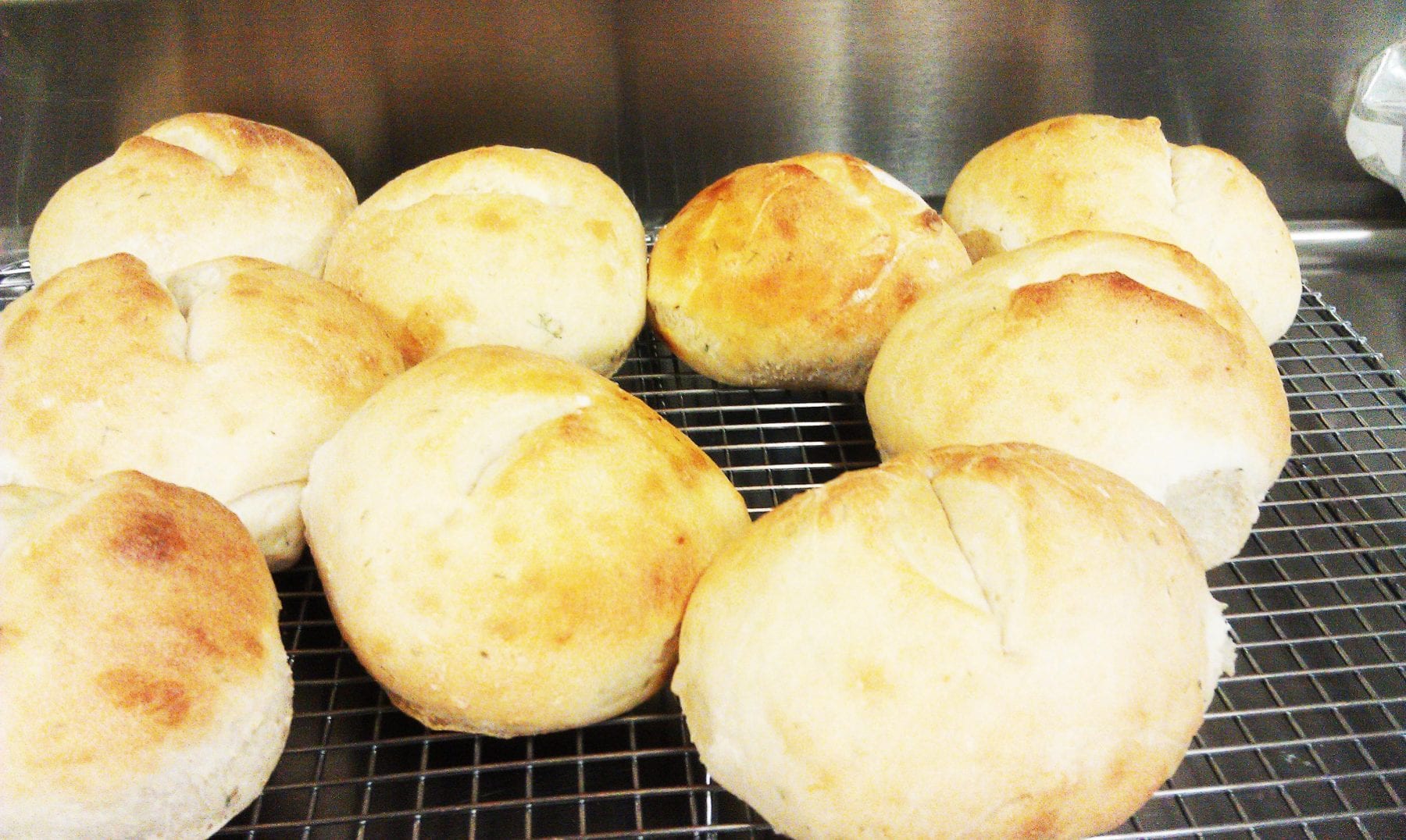
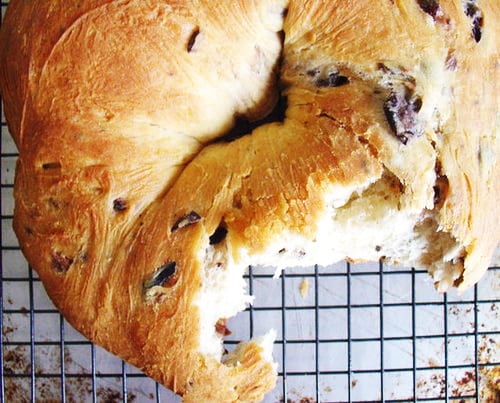
Buttermilk Potato Bread
- Total Time: 1 hour 20 mins
- Yield: 1 loaf or 20 rolls
Description
Before you embark on bread making, buy an instant read thermometer. All bread is done at 200 degrees.
Ingredients
- 1 small russet potato
- 1 tbsp dry yeast
- 1 tbsp sugar
- 1/2 cup (120 ml) buttermilk
- 1 tbsp (15 g) melted butter
- 2 tsp salt
- 1 tsp fresh dill, minced
- 3 to 3 1/2 cups (720-840 ml) of all purpose flour
Instructions
- Peel potato and cut into large pieces. Place in a saucepan, cover with water, bring to a boil and cook until soft. Drain and reserve the liquid. Mash potato and set aside.
- Cool 1 cup of the potato water to 100 degrees and then add the yeast. Proof for about 10 minutes.
- Combine mashed potato, sugar, buttermilk, butter, salt, dill and yeast mixture.
- Slowly add the flour and knead to produce a smooth, springy dough. This may be 2 1/2 cups of flour… it may be 4 … it depends on where you are, so just go by feel. You want a TACKY dough, not a dry dough and not a sticky dough.
- Place dough in a greased bowl. Cover and let rise in a warm place until doubled in volume.
- Preheat the oven to 350 degrees.
- Shape the dough into either a loaf pan or rolls (be sure to cut the top of the roll with a pair of scissors so they don’t explode in the oven).
- Bake until the internal temperature reads 200 degrees.
- Enjoy!
- Prep Time: 1 hour
- Cook Time: 20 mins
- Category: Baking
- Cuisine: American
Nutrition
- Serving Size: 1 slice
- Calories: 130
Find it online: https://honestcooking.com/buttermilk-potato-bread/
If You Liked This Recipe, You’ll Love These
- Rosemary Garlic Challah Bread
- Kalács – Traditional Hungarian Sweet Braided Bread
- Rieska – Finnish Potato Flatbread
- Soft and Fluffy Sourdough Sandwich Loaf
Frequently Asked Questions
How do I know when the bread is done baking?
Buy an instant-read thermometer and bake until the internal temperature reads 200°F. I deliberately leave out a bake time because the answer varies by oven, pan size, and altitude — temperature is the only reliable signal.
What does “tacky” dough mean, and how much flour should I use?
I call for 3 to 3 1/2 cups of flour but the actual amount depends on your location (humidity, altitude). You want a dough that is tacky — slightly sticky to the touch but not gluey and not dry. Go by feel, and avoid both a dry dough and an overly sticky dough.
Why does this recipe use potato cooking water to proof the yeast?
The reserved potato water is cooled to exactly 100°F before the yeast is added — that temperature range activates the yeast without killing it. The starch naturally present in potato water also gives the yeast extra sugars to feed on, helping the bread rise and contributing to the loaf’s soft, pillowy crumb.
Why do the rolls need to be scored with scissors before baking?
Cut the top of each roll with a pair of scissors so they don’t explode in the oven. Scoring creates a controlled release point for the expanding gases so the rolls open neatly along the cut rather than bursting from the side.





If it was Centigrade (celcius) then that would make the internal temperature 392 degrees Fahrenheit which would be tough to do since the oven is set at 350 deg Fahrenheit. The internal temperature of the bread would be less than the temperature of the oven, so she means 200 degrees Fahrenheit.
Hope this is not a stupid question Deena but is the 200 degrees centigrade? Can’t wait to try this recipe!