
Pandan leaf is used extensively in Southeast Asian cooking to add a distinct aroma to rice and dishes such as nasi lemak, kaya jam preserves, and desserts such as pandan cake. Pandan leaf can be used as a complement to chocolate in many dishes, such as ice cream.
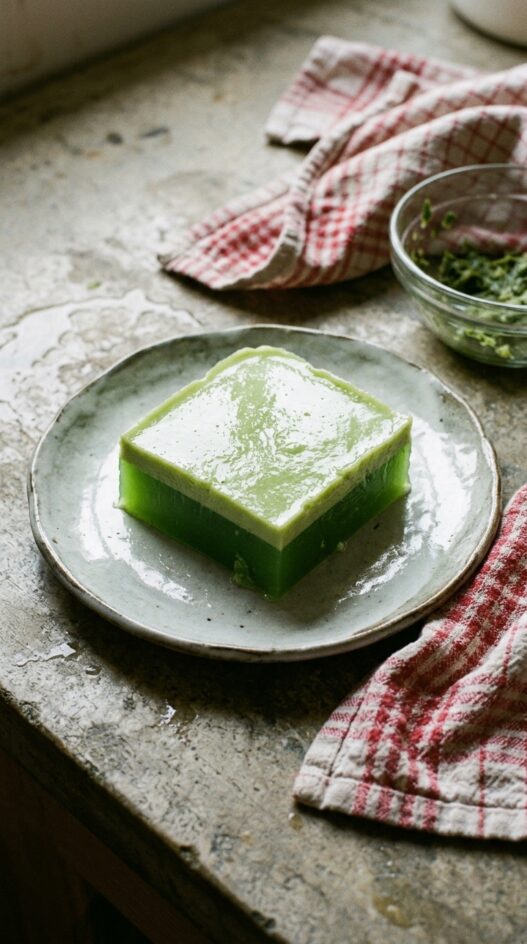
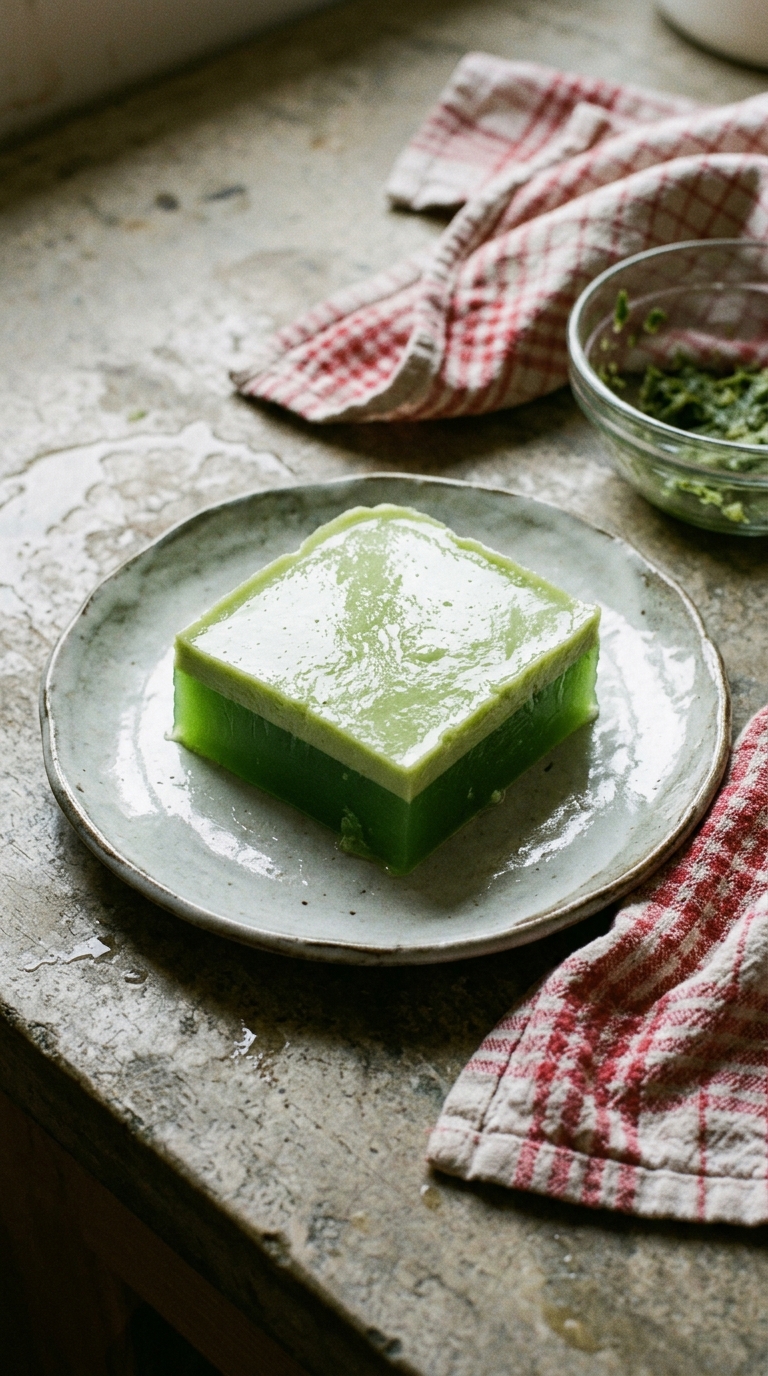
Besides the wonderful aroma, the extract from pandan leaves by blending with water gives a natural green colouring. Just like these enticing light green jelly or agar agar. Agar agar is a gelatinous substance derived from algae, commonly used in Asian desserts.
If you do not have jelly mould, you can also use muffin tray, mini tart mould or a 16cm glass dish / cake pan and cut into squares. Adding coconut milk to agar agar makes the mixture separates into 2 different layers – clear layer & milky layer, but it is not very obvious here.
Print
Pandan Agar Agar (Pandan Jelly)
- Total Time: 20 minutes
- Yield: 10 servings
Description
Pandan Agar Agar Jelly is a refreshing Malaysian dessert featuring a natural light green color from pandan extract, combined with the creamy texture of coconut milk.
Ingredients
- 500ml Water
- 3 tsp Agar-agar Powder
- 100g Sugar
- 100ml Pandan Juice
- 120ml Coconut Milk
- 8 Pandan leaves
- 150ml Water (for pandan juice)
Instructions
- Rinse 8 pandan leaves and cut them into 2 cm lengths. Blend the pandan leaves with 150 ml of water until smooth. Strain the mixture through a fine sieve to extract the pandan juice, discarding the solids.
- In a medium saucepan, combine 500ml of water, 3 tsp of agar-agar powder, and 100g of sugar. Stir well and bring to a boil over medium heat, stirring continuously to dissolve the agar-agar and sugar completely.
- Once the mixture is boiling, add 100ml of pandan juice and 120ml of coconut milk. Stir to combine and bring the mixture back to a gentle boil.
- Pour the mixture into a jelly mould, muffin tray, mini tart mould, or a 16cm glass dish/cake pan. Allow it to cool at room temperature until set, then refrigerate for at least 2 hours before serving.
- Once set, remove the jelly from the mould and serve chilled. If using a larger dish, cut the jelly into squares before serving.
Notes
- If you don’t have a jelly mould, use a muffin tray, mini tart mould, or a 16cm glass dish and cut into squares.
- Adding coconut milk creates two layers, though it may not be very distinct.
- Store the jelly in the refrigerator for up to 3 days for optimal freshness.
- Prep Time: 5 minutes
- Cook Time: 15 minutes
- Category: Dessert
- Cuisine: Malaysian
Nutrition
- Serving Size: 1 serving
- Calories: 90
- Sugar: 19
- Sodium: 10
- Fat: 2
- Carbohydrates: 21
- Fiber: 0
- Protein: 1
- Cholesterol: 0
Find it online: https://honestcooking.com/pandan-agar-agar-jelly/
If You Liked This Recipe, You’ll Love These
- Eggplant and Cauliflower Curry with Tofu
- Weeknight Chana Masala
- Crispy Avocado Tacos
- Mangú – Mashed Plantains
Frequently Asked Questions
What is agar-agar and how is it different from gelatin?
Agar-agar is a gelatinous substance derived from algae, commonly used in Asian desserts. Unlike animal-derived gelatin, it sets at room temperature and is suitable for vegetarians and vegans.
How do I extract fresh pandan juice from pandan leaves?
Rinse 8 pandan leaves, cut them into 2 cm lengths, blend with 150 ml of water until smooth, then strain through a fine sieve to extract 100 ml of pandan juice, discarding the solids.
Why does adding coconut milk create two layers in the jelly?
Adding coconut milk to the agar-agar causes the mixture to separate into a clear layer and a milky layer as it sets. The effect is subtle here — not very obvious — but it gives the dessert visual depth.
What can I use if I do not have a jelly mould?
A muffin tray, mini tart mould, or a 16 cm glass dish or cake pan works perfectly — just cut the set jelly into squares before serving.





Hi Shannon,
How are you doing? Could you please let me know where can i get nice
agar agar mould with many patterns. Please let me have the shop names
in Kuala Lumpur
Thanks
Regards
Evelyn
Definitely better without Gelatin