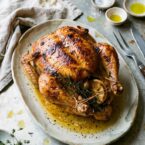
Description
A whole roast chicken is the most honest test of a cook’s skill. There is no sauce to hide behind, no complex spice blend to distract — just chicken, salt, heat, and time. Thomas Keller once said he would rather eat a well-roasted chicken than almost anything else, and many chefs agree. The goal is burnished, crackling skin stretched tight over juicy meat, achieved through high heat, thorough drying, and restraint.
Ingredients
Scale
- 1 whole chicken (3 1/2 to 4 pounds), giblets removed
- 1 tablespoon kosher salt
- 1/2 teaspoon freshly ground black pepper
- 2 tablespoons unsalted butter, softened
- 1 lemon, halved
- 1 head garlic, halved crosswise
- 4 sprigs fresh thyme
- 2 sprigs fresh rosemary
- 1 tablespoon olive oil
- Flaky sea salt for finishing
Instructions
- The day before (or at minimum 4 hours ahead), pat the chicken thoroughly dry inside and out with paper towels. Season generously all over and inside the cavity with the kosher salt. Place uncovered on a rack set over a sheet pan in the refrigerator. This dry-brining step seasons the meat throughout and dries the skin for better crisping.
- Remove the chicken from the refrigerator 1 hour before roasting to take the chill off. Preheat the oven to 425°F.
- Rub the softened butter over the breast and thighs. Season with black pepper. Stuff the cavity with the lemon halves, garlic head, thyme, and rosemary. Tuck the wing tips behind the back. Tie the legs together loosely with kitchen twine.
- Place the chicken breast-side up on a rack in a roasting pan. Drizzle with olive oil.
- Roast at 425°F for 60-75 minutes. The chicken is done when the skin is deep golden brown, the juices from the thigh run clear when pierced, and a thermometer inserted into the thickest part of the thigh reads 165°F. The breast should register 155-160°F, as it will carry over to 165°F during resting.
- Remove from the oven and transfer to a cutting board. Tent very loosely with foil and rest for 15-20 minutes. This resting period is essential — it allows the juices to redistribute through the meat.
- Carve and serve with a sprinkle of flaky salt. Spoon the pan juices over the carved meat.
Notes
- Dry-brining overnight is the single biggest improvement you can make to a roast chicken. The salt draws out moisture, which is then reabsorbed along with the seasoning, while the exposed skin dries out for superior crisping.
- Do not truss the chicken too tightly — loose ties allow heat to circulate into the inner thigh, the area that takes longest to cook.
- Resist the urge to open the oven frequently. Each opening drops the temperature and disrupts the browning process.
- Category: Main Course
- Cuisine: French
Nutrition
- Serving Size: 1 serving